
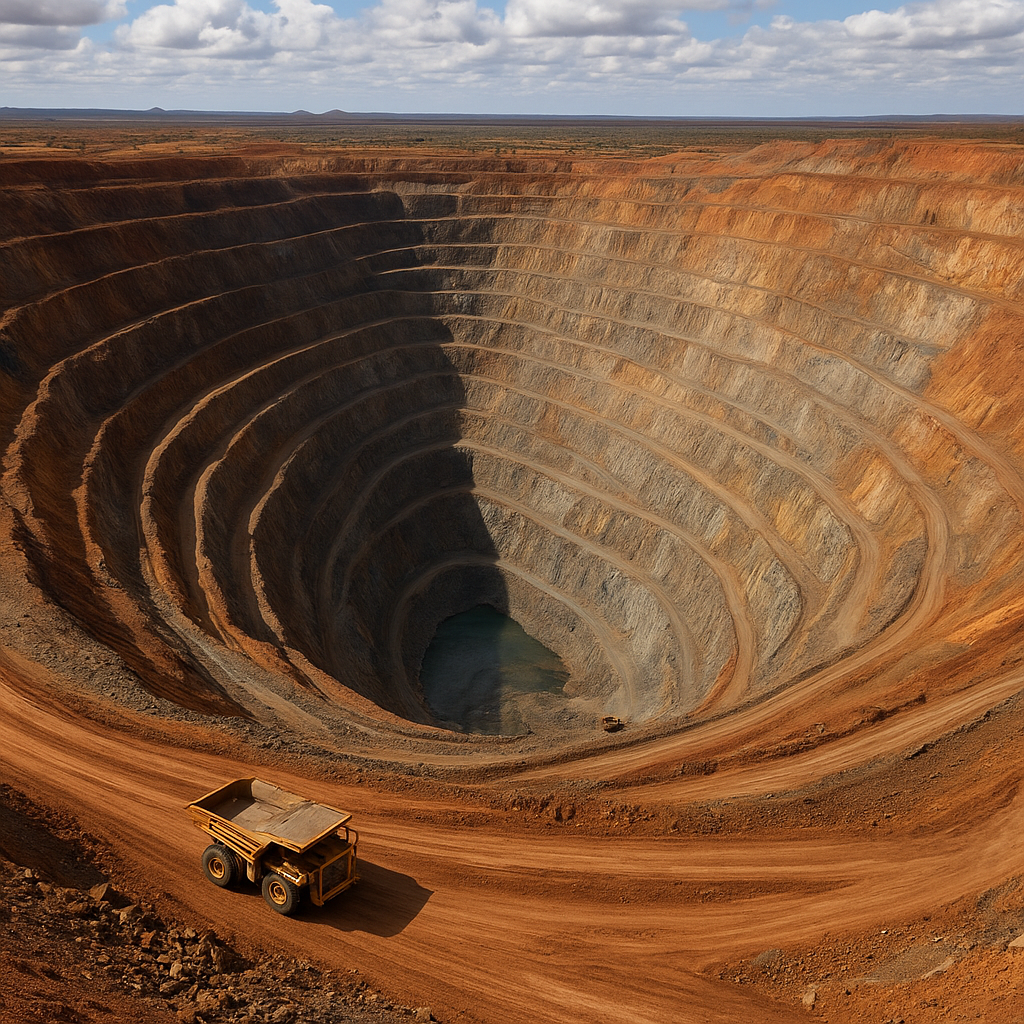
The Argyle mine in Western Australia was one of the most influential and unusual diamond operations in modern mining history. Known for producing the overwhelming majority of the world’s natural pink and red diamonds, Argyle shaped global supply, luxury markets, and regional economies for decades. Its geological uniqueness, its production profile, and its eventual closure leave a legacy that continues to affect collectors, jewellers and communities. This article explores where Argyle is located, what was extracted there, its economic significance, and a number of intriguing aspects that make Argyle exceptional.
Location and geological setting
Argyle was situated in the remote East Kimberley region of northern Australia, set within a sparsely populated, rugged landscape. The mine lay on the floodplain country of the Ord River, within reach of the small regional centre of Kununurra. Its remote setting shaped logistics, workforce arrangements, and the relationship with local communities.
Lamproite pipe — a rare host rock
What made Argyle especially notable among diamond mines was its host rock. Most commercial diamond deposits are associated with kimberlite pipes, but Argyle’s diamonds were recovered from a lamproite pipe. Lamproite is a rare volcanic rock type that can carry diamonds from the mantle to the surface under unusual conditions. The Argyle lamproite pipe produced a very large volume of diamonds, but of a quite different character from typical kimberlite-derived stones.
Origin of colour
The celebrated pink and red diamonds from Argyle are famed not for chemical impurities but for structural features in the crystal lattice. Scientists believe that intense plastic deformation and the development of graining and distortion during the diamonds’ journey or subsequent geological events produced the pink colours. Unlike many coloured gem varieties created by trace elements, the colour in Argyle stones is a product of physical deformation, which helps explain their rarity and distinctive visual properties.
Geological implications
Argyle’s geology contributed to several important scientific insights:
- Demonstrated that economically viable diamondiferous lamproite pipes exist and can be mined at scale.
- Provided material for research into the mechanisms of diamond coloration and deformation processes.
- Supplied vast quantities of diamonds that allowed comparative studies of diamond types and treatments for gemology labs worldwide.
History and mining operations
The story of Argyle began with exploration in the mid-to-late 20th century when geologists identified a diamond-bearing lamproite occurrence. The deposit was developed into a full-scale mine that was unusual both for its geology and its production profile.
From discovery to global supplier
Following discovery and development, the Argyle operation was brought into full production and for many years was a persistent global source of diamonds. The mine produced vast quantities of rough stones that supplied industrial and gem markets alike. Over the life of the operation, Argyle became synonymous with coloured diamonds, particularly pink and red examples that commanded extraordinary prices at auction.
Mining methods and phases
Argyle employed a mix of surface and underground mining techniques during its lifetime:
- Open-pit mining in the early decades extracted the upper portions of the pipe and allowed high throughput of material.
- As the pit deepened and economic conditions changed, operations transitioned to underground mining to access deeper ore zones.
- Processing facilities at site sorted, recovered and assessed millions of carats using carefully controlled methods to maximize recovery of gem-quality stones.
Closure and rehabilitation
After several decades of production, the mine reached the end of its economic life and production ceased in 2020. The operator executed a closure program that included processing of stockpiled ore, a final sale of exceptional diamonds, decommissioning of infrastructure, and progressive rehabilitation of disturbed land. Post-closure arrangements also included mechanisms to address ongoing environmental monitoring and engagement with regional stakeholders.
What was produced at Argyle
Argyle’s production profile made it unique in the diamond industry. The operation yielded enormous volumes of diamonds, but with a different mix of quality and colour than many other mines.
Volume and types
Across its operating life, Argyle produced hundreds of millions of carats of rough diamonds. Much of this material was small to medium in size and was destined for industrial or melee markets. However, embedded within that mass of stone were the extraordinary gems that built Argyle’s reputation.
- Pink and red diamonds — Argyle is most famous for producing the overwhelming majority of the world’s naturally occurring pink and red diamonds. These stones ranged from delicate pinks to intense magenta and rare true red specimens.
- Brown, champagne and cognac diamonds — a large proportion of Argyle’s production fell into desirable brown colour categories. The trade developed popular names and marketing around these tones.
- White and near-colourless stones — although less publicised, Argyle also produced white diamonds used in mainstream jewellery markets.
Special lots and tenders
Argyle became well-known for its annual tenders of select pink diamonds, events that attracted high-end collectors and luxury houses worldwide. These tenders showcased the rarest and most valuable stones recovered at site and helped build a distinct market for Argyle’s coloured gems. Individual pink diamonds from Argyle often sold for prices per carat far exceeding those of comparable colourless diamonds, particularly at auction.
Economic significance and market impact
The Argyle mine was economically important on multiple scales, from the regional workforce to the global luxury market.
Regional and national economic contributions
- Employment — The mine provided hundreds of direct jobs during operation, along with many indirect roles in logistics, maintenance, and services. Fly-in fly-out labour patterns and local hiring strategies shaped the regional labour market.
- Supply chain effects — Local suppliers, contractors and service providers benefited from sustained contracts, while state and national governments realised benefits through royalties and taxes.
- Community investment — Operators established programs for community development, infrastructure support and training in local towns. Even as the mine closed, funds and programs supported transition planning.
Global market effects
Argyle’s production exerted outsized influence on the coloured diamond market. Because it was the dominant source of pink and red diamonds, the mine effectively controlled supply and helped establish pricing benchmarks for rare coloured stones. The predictable annual release of select pink diamonds via tenders created a ritualised market mechanism that cemented Argyle’s brand identity in the world of luxury gems.
Economic scale and value
Although a great proportion of Argyle’s output was lower-value by carat, the rare gem-quality pink and red material generated tremendous value. Exceptional pieces fetched multi-million-dollar prices, and a handful of historically important stones sold at auction for prices that illustrated the extraordinary premium placed on scarce coloured diamonds. The combination of high-volume production and periodic release of high-value gems created a complex economic footprint.
Environmental, social and cultural dimensions
Mining in remote regions like the Kimberley brings interwoven environmental and social considerations. Argyle’s presence required sustained attention to rehabilitation, Indigenous relations, and biodiversity protection.
Land and water
Operating in a sensitive tropical landscape, the mine implemented measures to manage water usage, control erosion, and rehabilitate disturbed areas. Rehabilitation plans aimed to restore native vegetation and landforms, while ongoing monitoring sought to evaluate the success of rehabilitation efforts over time.
Engagement with Traditional Owners
Argyle’s operations intersected with the lands and cultural heritage of local Indigenous peoples. Over the mine’s life, there were efforts to negotiate agreements, provide employment opportunities and support cultural heritage management. The complex legacy of these arrangements includes both benefits and challenges; closure required careful negotiation about future land access, heritage protection, and potential economic opportunities for Traditional Owners.
Rehabilitation and future land use
Mine closure presented an opportunity to rehabilitate and potentially return land to traditional custodians. Rehabilitation included reshaping the landscape, revegetation with native species, and long-term plans for ecological monitoring. Decisions about future land use—whether conservation, tourism, or traditional use—were influenced by regional stakeholders and government frameworks.
Interesting facts, cultural resonance and legacy
Argyle left a number of striking and unusual imprints on gemology, culture and popular imagination.
Some notable facts
- Argyle supplied a huge percentage of the world’s natural pink diamonds during its operating life, making it the most important single source for these gems.
- Many pink diamonds from Argyle were small in carat weight but exceptionally valuable per carat. Even tiny stones could command extraordinary prices.
- The mine produced a colloquial lexicon—terms like champagne and cognac diamonds became standard in trade descriptions for Argyle browns.
- Argyle’s annual pink diamond tender became a cultural event for collectors, designers and auction houses, driving high-profile sales and media attention.
Impact on jewellery and design
Designers and luxury brands adapted to the availability of Argyle stones, creating lines and bespoke pieces that highlighted pink and brown diamonds. The aesthetics of Argyle diamonds influenced trends, and jewellery that used Argyle pinks often became emblematic of exclusivity. The scarcity created by Argyle’s closure elevated the collectability of existing stones and bolstered market interest in antique Argyle pieces.
Scientific and educational contributions
Because Argyle produced such a high volume of diamonds with distinctive properties, researchers gained a wealth of material for study. Gemological labs, universities and museums benefited from access to Argyle stones when researching colour origins, cutting strategies, and treatments. Exhibitions showcasing Argyle’s rare pinks helped educate the public about natural diamond diversity and geological processes.
Collecting and investment
After Argyle’s closure, many observers predicted an increase in the monetary and collectible value of surviving Argyle pink diamonds. The finite nature of supply—combined with well-established provenance through Argyle’s tender and grading systems—enhanced investor and collector interest. Pink diamonds with clear Argyle provenance became part of institutional and private collections worldwide.
Concluding observations on Argyle’s continuing influence
Although production at Argyle has ended, the mine’s influence endures in markets, science and regional communities. Its geological uniqueness as a lamproite-hosted diamond deposit, the extraordinary phenomenon of naturally occurring pink and red diamonds, and the scale of its output make Argyle an enduring case study in mining history. The economic footprint—both the high-value tenders and the mass-market supply of smaller stones—shaped global diamond flows for decades.
Environmental rehabilitation, legacy arrangements with regional stakeholders and the cultural significance of Argyle stones will continue to unfold over years to come. For gemologists, collectors and the wider public, Argyle remains a touchstone for what makes natural diamonds both scientifically fascinating and culturally resonant: rarity, geological mystery, and the human desire to preserve and celebrate exceptional natural beauty.

