
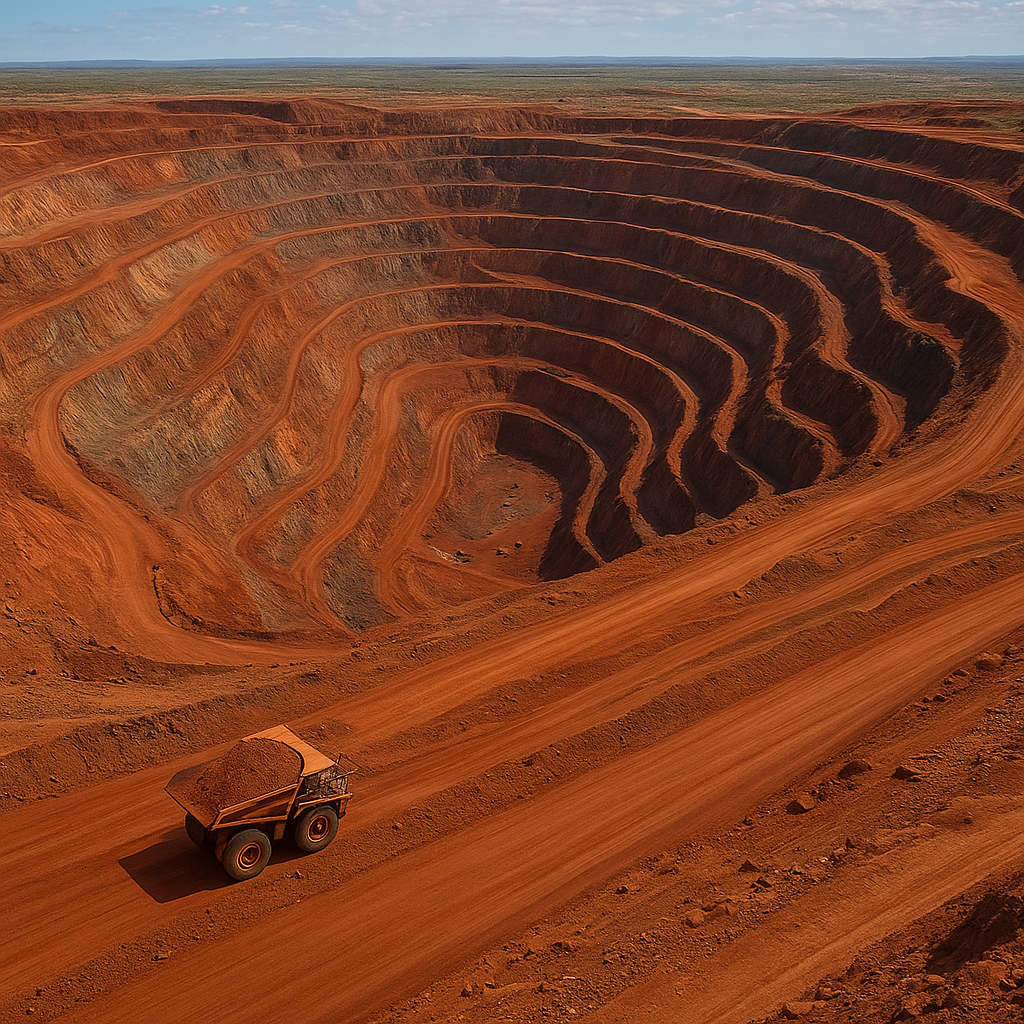
The Cloudbreak mine is one of the most significant iron ore operations in Western Australia, combining large-scale open-cut mining with extensive logistics and export infrastructure. Located in the mineral-rich Pilbara region, Cloudbreak has played a central role in the rapid rise of its operator to global prominence. This article explores where the mine is situated, what is extracted, its broader economic importance and several notable aspects that make Cloudbreak an interesting case in contemporary mining.
Location and geological setting
Cloudbreak is situated in the Pilbara region of northwestern Australia, an area renowned for some of the world’s richest iron ore deposits. The mine sits within the Chichester Ranges, a terrain characterized by rocky hills and valleys that host extensive banded iron formation deposits. The geology of the site is dominated by high-grade, sedimentary iron-rich rocks, principally composed of hematite and goethite minerals. These deposits are commonly amenable to direct shipping ore (DSO) treatment, meaning the ore can be transported and exported with minimal processing.
The Pilbara itself forms part of the ancient Yilgarn and Pilbara cratons, and the iron formations hosted here are among the oldest on Earth. This geological endowment has encouraged large-scale open-pit operations like Cloudbreak because the ore occurs in thick, near-surface bands suitable for bulk mining. Climatically, the region experiences arid to semi-arid conditions, with a distinct wet season and periodic tropical cyclones that can influence operations and logistics.
What is extracted and how it is produced
Cloudbreak primarily produces high-grade iron ore, largely in the form of hematite that meets the quality specifications demanded by steelmakers worldwide. The mine focuses on bulk production of direct shipping ore that requires crushing, screening and blending rather than intensive beneficiation. This approach allows for rapid throughput and cost-efficient export of large volumes of ore.
Mining method and processing
- Open-pit mining: Cloudbreak is developed as a giant open-cut pit, using conventional drilling and blasting, followed by loading with large excavators and haul trucks.
- Crushing and screening: Extracted ore is processed through primary and secondary crushing circuits and screening to achieve required size fractions for market standards.
- Blending: Different ore streams and benches within the pit are blended to produce consistent quality product that matches customer contracts.
- Stockpiling and dispatch: Finished material is stored in stockpiles and loaded onto rail wagons for transport to port.
The mine’s design has prioritized economies of scale: high-frequency truck movements, large-capacity crushers and substantial stockyard capacity enable continuous, high-volume dispatch. The emphasis on DSO minimizes the need for energy- and water-intensive processing, which is advantageous in the Pilbara’s arid environment.
Logistics and infrastructure
A critical dimension of Cloudbreak’s success is the transport and export chain that links the mine to global steelmakers. The operation is connected to the coast by a private heavy-haul railway and uses purpose-built port facilities to load ships bound primarily for East Asian markets.
Rail and port
- Rail: A dedicated standard-gauge heavy-haul railway transports ore from the mine to the coast. The private rail corridor was designed to support large, heavy trains running multiple times per day, optimizing throughput and lowering per-tonne transport costs.
- Port: At the export end of the chain, bulk-handling terminals and berths handle ore loading onto Capesize and Panamax vessels. Investments in ship loading equipment and stockyard infrastructure ensure rapid turnaround.
This full supply-chain integration—from pit to port—permits greater control over costs, scheduling and quality, a key competitive advantage for the mine’s operator and a major reason why Cloudbreak has been able to scale quickly and reliably to meet international demand.
Economic significance
Cloudbreak’s economic role is multifaceted. At the company level, it has been central to the growth of its operator into a major global iron ore supplier. At the regional and national levels, the mine contributes to employment, royalties, export earnings and local infrastructure investment.
Company and market impact
The mine underpinned the rapid expansion of its operator from a new entrant into the iron ore market to a major exporter. By combining a low-cost operating model with significant initial capital investment in rail and port, the operator was able to scale output and secure long-term commercial relationships with steel producers, particularly in Asia. Cloudbreak’s production has contributed materially to the company’s revenue and market positioning.
Regional and national benefits
- Employment: The mine supports thousands of jobs directly in operations, maintenance and logistics, and many more indirectly in services and supply chains. The workforce is largely FIFO (fly-in fly-out), a model common across remote Australian mines.
- Revenue and royalties: Cloudbreak generates significant export earnings, and royalties paid to the State of Western Australia contribute to public finances used for community services and infrastructure.
- Local investment: Infrastructure built for the mine—roads, rail and port facilities—also benefits regional economies by creating long-term transport capacity and opportunities for future development.
On the global stage, shipments of Cloudbreak ore feed the raw material needs of steelmaking in countries like China, Japan and South Korea. Iron ore prices and demand cycles therefore influence the mine’s operational tempo and profitability, interlinking the site to macroeconomic trends in manufacturing and construction worldwide.
Social, environmental and governance considerations
Operating a large open-pit mine in a remote, ecologically sensitive area requires careful social and environmental management. Cloudbreak has been subject to both scrutiny and the implementation of measures designed to reduce impacts and deliver benefits to local communities.
Indigenous engagement and land access
Mining in the Pilbara intersects with native title and the traditional lands of Indigenous Australian groups. Over the years, agreements and partnerships have been negotiated to provide compensation, employment opportunities, cultural heritage protection and business development for Indigenous communities. These agreements are vital for social license to operate and for enabling local participation in the economic benefits the mine generates.
Environmental management
- Rehabilitation: Progressive rehabilitation of disturbed land, including topsoil management and recontouring of pit benches, is a long-term obligation and a feature of responsible mine closure planning.
- Water and dust control: Given the arid environment, water is managed carefully to minimize consumption and to control dust through sprays, pavements and vegetative buffers where feasible.
- Biodiversity: Baseline ecological surveys and ongoing monitoring aim to protect flora and fauna, and to minimize impacts on habitats and regional biodiversity corridors.
Regulatory frameworks at both state and federal levels impose standards for environmental performance, and Cloudbreak’s management activities are shaped by compliance requirements as well as voluntary initiatives and reporting.
Operational challenges and innovations
Large-scale mining operations like Cloudbreak face ongoing challenges—volatile commodity prices, extreme weather, remoteness and the technical demands of high-throughput logistics. In response, the mine has adopted various innovations and operational strategies.
Automation and efficiency
To improve efficiency and safety, modern mines increasingly deploy automation and remote monitoring technologies. Cloudbreak’s operator has invested in systems that optimize train scheduling, material handling and maintenance regimes, reducing downtime and improving cost metrics. While full autonomy of every element is not universal, incremental automation of fleet management, predictive maintenance and processing controls has been integral to enhancing productivity.
Resilience to natural events
Tropical cyclones and seasonal storms present recurrent operational risks in the Pilbara. Mines in the region, including Cloudbreak, maintain contingency plans, hardened infrastructure, and scheduling flexibility to mitigate disruption. This resilience includes stockpiling products ahead of weather events and designing drainage and erosion controls to deal with intense rainfall when it occurs.
Interesting facts and lesser-known aspects
Cloudbreak is more than a large hole in the ground; it is a focal point for stories about entrepreneurship, regional development and technological change in mining. A few points of interest:
- Strategic integration: The mine’s success demonstrates how integrating mine, rail and port can create a cost advantage that transforms a relatively late entrant into a major global supplier.
- Rapid ramp-up: From discovery and approval to full-scale exports, the operation achieved a fast ramp-up compared to many large mine projects, reflecting strong project management and committed capital investment.
- Workforce dynamics: The reliance on FIFO workforces has created unique social and logistical systems—camps, charter flights and roster patterns—that support remote operations.
- Market sensitivity: Even as a large-volume producer, Cloudbreak’s economics are highly sensitive to global steel demand and iron ore pricing, which can lead to rapid changes in operating tempo.
- Role in company identity: As the flagship mine for its operator, Cloudbreak helped shape corporate culture and ambition, enabling subsequent investments and expansions across the Pilbara.
Future outlook
The future for Cloudbreak will depend on a mix of geological, economic and policy factors. Continued demand for steel in developing economies supports a long-term market for iron ore, but the industry must navigate decarbonization pressures, fluctuating prices and increasing expectations for environmental and social governance. Technological improvements—such as greater automation, improved energy efficiency and advances in rehabilitation techniques—are likely to influence the mine’s operating profile.
At the regional level, Cloudbreak will continue to shape employment patterns, infrastructure development and regional revenues. Maintaining constructive relationships with Indigenous communities, regulators and local stakeholders will remain central to sustaining operations over the coming decades.
Closing observations
Cloudbreak stands as an emblematic modern iron ore operation: geologically fortunate, logistically ambitious and economically significant. Its combination of high-volume extraction, integrated transport and export infrastructure, and evolving social and environmental practices make it a revealing example of how resource projects operate in remote regions today. The mine’s story is one of rapid industrial scaling, market integration and the ongoing balancing act between resource development and responsible stewardship of land and communities.

