
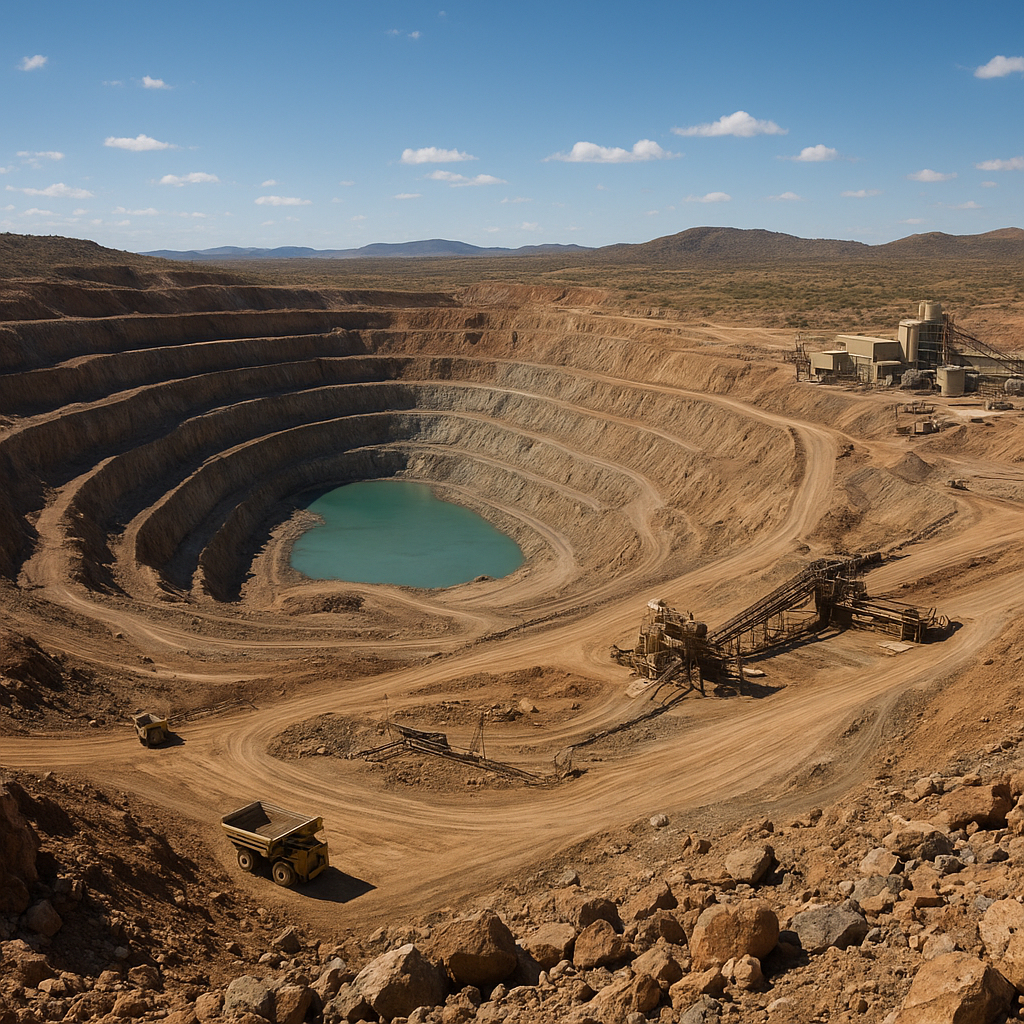
The Smith Ranch-Highland complex is a notable example of modern uranium production in the United States. Located in the central-western part of the country, the project has helped sustain domestic supply chains for nuclear fuel and illustrates how technological approaches to mining can reduce surface disturbance while still accessing significant mineral resources. This article examines where Smith Ranch-Highland is located, what is extracted there, its economic role, the methods and environmental practices used, and several interesting or lesser-known aspects of the operation that highlight its place within the broader nuclear and mining sectors.
Location and Geological Setting
Smith Ranch-Highland is situated in the state of Wyoming, within the broad sedimentary basins that host some of the United States’ most important uranium occurrences. The project lies in a region characterized by thick sequences of sandstone and other sedimentary layers deposited in ancient fluvial and coastal environments. Those sandstones frequently contain the type of uranium mineralization known as roll-front deposits, where uranium was transported in oxidized groundwater and precipitated when conditions changed to more reducing chemistry. The geology of the area is favorable for these deposits because permeable sandstone layers act as both host rock and fluid pathways, concentrating uranium into recoverable zones.
The local stratigraphy and groundwater systems are central to both the presence of the resource and to the chosen extraction technology. Because the uranium occurs in relatively shallow, permeable formations, the deposit is well suited to below-ground leaching methods rather than conventional open-pit or underground mining. The location also benefits from proximity to transportation corridors and regional infrastructure, which simplifies logistics for moving produced uranium to processing and conversion facilities.
What Is Mined: Uranium and Its Form
The commodity produced at Smith Ranch-Highland is uranium, generally recovered in the chemical form of uranium oxide, commonly called U3O8 (uranium oxide concentrate, also known as „yellowcake”). This concentrate is the starting material for the nuclear fuel cycle; it can be converted and enriched for use in power reactors or used in other civilian and industrial applications. The deposit does not consist of high-grade veins but rather disseminated uranium minerals hosted in sandstone pores and along subtle geochemical fronts, which is why hydrometallurgical recovery methods are preferred.
Extraction yields are expressed in pounds or tonnes of U3O8 and are used to benchmark production over time. While annual output may vary with market conditions, wellfield performance, and regulatory decisions, the Smith Ranch-Highland complex has historically been one of the more consistent contributors to U.S. uranium production when active. The product is typically processed on-site or nearby to produce a stable concentrate that meets industry specifications for transport and further refinement.
Mining Method and Operational Details
Smith Ranch-Highland employs in-situ recovery (ISR), also called in-situ leach (ISL), which is the dominant method at the site because of the host rock characteristics and water chemistry. ISR involves injecting a lixiviant (a fluid that dissolves uranium) into an ore-bearing aquifer through a network of injection wells, allowing the fluid to mobilize uranium from the host rock. The uranium-laden solution is then pumped to the surface through production wells and processed to recover uranium oxide. The process avoids large open pits or extensive underground workings and keeps surface disturbance relatively low compared with traditional mining.
Operationally, wellfields are developed in stages: pilot testing, expansion, and production. Each wellfield has an array of injection and extraction wells designed to control flow, maximize contact with mineralized zones, and limit the spread of reagents beyond the targeted area. Onsite processing typically uses ion-exchange columns or precipitation techniques to concentrate uranium, followed by drying and packaging the final U3O8. Skilled personnel manage the chemistry of the circulating fluids and monitor hydrogeologic conditions closely to ensure efficient recovery and regulatory compliance.
The site’s management also emphasizes water management, reagent handling, and monitoring to minimize environmental footprint. Modern ISR operations like Smith Ranch-Highland often incorporate automated monitoring systems, real-time data collection, and integrated hydrogeologic models to optimize recovery and anticipate any off-target movement of fluids.
Ownership, Workforce and Infrastructure
Smith Ranch-Highland has been operated by established companies in the uranium sector; current and past operators have included national and international firms with experience in ISR technology. The project relies on a local and regional workforce with specialized skills in drilling, hydrogeology, chemical engineering, and mine operations. Employees include field technicians, process plant operators, environmental specialists, and administrative staff. Because the project is often remote, companies invest in on-site facilities, regional supply chains, and transportation logistics to maintain continuous operations.
Infrastructure supporting the operation includes roads, power supply, water handling systems, and processing equipment. Proximity to rail and highways assists in shipping U3O8 to conversion and enrichment facilities or to storage and distribution centers. The presence of an experienced operator—such as Cameco Resources in recent years—and a trained workforce helps maintain consistent production, regulatory compliance, and community engagement.
Economic Significance
The economic importance of Smith Ranch-Highland spans local, regional, and national dimensions. Locally, the operation supports jobs and generates tax revenue and royalty payments to landowners and governmental entities. It also supports local service providers—drilling contractors, chemical suppliers, equipment maintenance firms, and transportation businesses—creating multiplier effects in the regional economy. For communities near the project, these economic linkages can be significant, especially in rural areas where large employers are limited.
At the national level, Smith Ranch-Highland contributes to energy security by providing a portion of the domestic uranium supply used in nuclear power plants. Domestic production of uranium reduces reliance on imports and supports a secure, diversified fuel chain for civil nuclear energy. The operation also has strategic value in preserving industrial capability in uranium mining and ISR technology within the United States, which can be important for national policy and for responding to future changes in supply-demand dynamics.
- Jobs: Direct and indirect employment supports local economies.
- Revenue: Taxes and royalties fund public services and infrastructure.
- Supply chain: Domestic production stabilizes fuel supply for reactors.
- Technology retention: ISR expertise maintains a national skill base.
Environmental Management and Regulation
One of the defining features of modern ISR operations is the environmental regime that governs them. The Smith Ranch-Highland project is subject to rigorous state and federal oversight, including permitting and monitoring by agencies such as the U.S. Nuclear Regulatory Commission (NRC) and state environmental departments. Key environmental priorities include protecting groundwater, limiting surface disturbance, controlling emissions during processing, and restoring affected aquifers after mining activities conclude.
Restoration is a central regulatory requirement: after productive wellfields are exhausted, operators must return groundwater to baseline or to acceptable post-mining standards. This often involves flushing and chemical adjustment of aquifers, long-term monitoring, and institutional controls to ensure future water uses remain safe. The site’s environmental program typically includes baseline environmental studies, continuous monitoring wells, groundwater chemistry analysis, and public reporting. Because ISR does not produce large tailings piles or open pits, its potential environmental impacts are different from conventional mining, but they must still be managed carefully.
Market Context and Production Trends
Uranium market prices, global demand for nuclear fuel, and national policy all influence production at Smith Ranch-Highland. When uranium prices are strong or when utility companies seek to increase domestic sourcing, production ramps up. Conversely, when prices fall, operators may curtail operations or place wellfields on care-and-maintenance. The project’s flexibility to expand or contract production is partly a function of ISR technology and of permitting scopes for individual wellfields.
In a broader sense, Smith Ranch-Highland exemplifies how U.S. uranium production has evolved: a shift away from high-impact mines toward targeted, lower-surface-impact operations that can be scaled according to market conditions. This responsiveness benefits companies seeking to match production to demand while maintaining compliance with environmental and safety standards.
Interesting Facts and Technical Highlights
Several technical and historical details make Smith Ranch-Highland noteworthy:
- Scale and design: The project integrates multiple wellfields, each engineered for efficient recovery and groundwater control. The modular nature of these wellfields allows staged development and targeted reclamation.
- Hydrogeologic science: Understanding the movement of groundwater and the geochemical behavior of uranium is critical. Operators employ geochemical modeling, tracer tests, and continuous monitoring to optimize recovery and limit off-target movement.
- Low surface footprint: Compared with open-pit mines, the land surface impact is small; most infrastructure is compact and reversible, an appealing feature for landowners and regulators.
- Community engagement: Operators typically run outreach programs, compensation arrangements with surface owners, and workforce development initiatives that tie the project to local socio-economic goals.
- Legacy and continuity: The area’s history dates back to earlier waves of uranium exploration and mining, and Smith Ranch-Highland represents continuity of uranium production adapted to modern environmental and technical standards.
Challenges and Considerations
While Smith Ranch-Highland brings benefits, there are challenges common to uranium ISR projects. These include the technical difficulty of restoring aquifers to baseline conditions in some cases, the sensitivity of operations to long-term uranium price trends, and the need to maintain public trust through transparent environmental reporting. Additionally, evolving regulatory frameworks and community expectations drive operators to invest in monitoring, research, and technology upgrades.
Another consideration is the global nature of the uranium market. Even with domestic production, the United States participates in global trade and price setting. As a result, the viability of projects like Smith Ranch-Highland depends on a mix of technical performance, regulatory fidelity, and economic conditions both at home and internationally.
Final Observations
Smith Ranch-Highland stands as an instructive example of modern uranium production in the United States. Its use of in-situ recovery, its location within Wyoming’s favorable geological setting, and its role supplying U3O8 for the nuclear fuel cycle highlight its multi-faceted importance. The project links technical innovation with economic opportunity while navigating environmental responsibilities and market realities. For anyone interested in how contemporary mining practices reconcile resource extraction with environmental management and community needs, Smith Ranch-Highland offers practical lessons and an illustrative case study.

