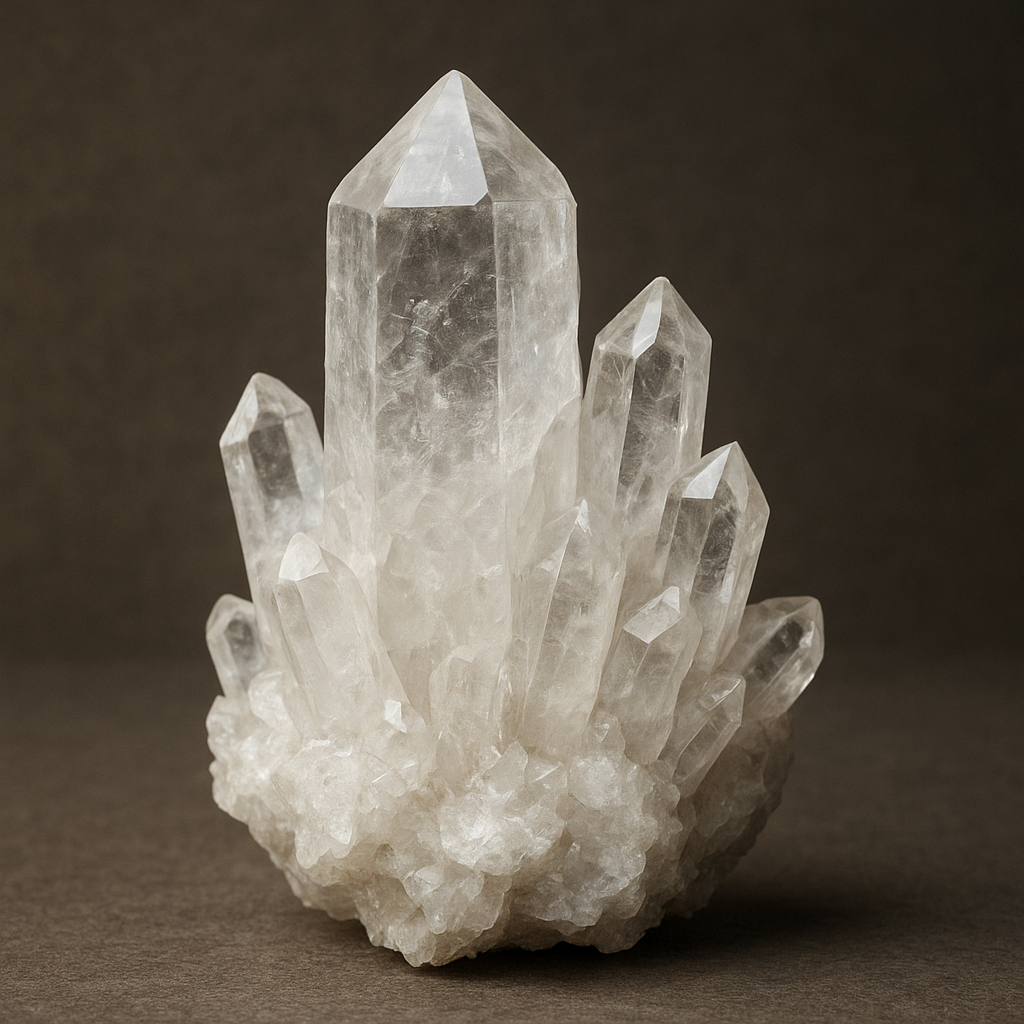
Cancrinite is a striking yet underappreciated member of the feldspathoid family, notable for its distinctive cage- and channel-bearing framework and its ability to host a variety of anions and molecules. It is both a mineralogical curiosity and a subject of active research because of its unique structure, occurrence in highly alkaline rocks, and potential technological applications. Below you will find a comprehensive exploration of its occurrences, physical and chemical characteristics, uses, and several intriguing research directions connected to this mineral.
Occurrence and Geological Settings
Cancrinite typically forms in environments where silica is relatively depleted and alkalis are abundant. It is most commonly associated with highly alkaline igneous rocks such as nepheline syenites, phonolites, and related intrusive and extrusive suites. These settings favor the crystallization of feldspathoids instead of the more silica-rich feldspars and quartz. The mineral also appears in hydrothermal veins, in contact-metamorphosed limestones (skarns), and as a secondary alteration product when volcanic glass or feldspathoids interact with late-stage fluids.
Typical host rocks and paragenesis
- Alkaline intrusive rocks (e.g., nepheline syenite, syenite, phonolite): cancrinite often crystallizes late in the magmatic history, sometimes filling cavities or replacing earlier feldspathoids.
- Skarns and contact-metasomatic zones: where carbonate-bearing rocks are invaded by alkali-rich fluids, cancrinite may form along with zeolites and other secondary phases.
- Hydrothermal veins and cavities: low-temperature, Na-Ca-rich fluids can precipitate cancrinite in open spaces, frequently as well-formed crystals or crystalline crusts.
Some of the most famous localities that have produced fine crystals or notable specimens include the Kola Peninsula (Russia), Mont Saint-Hilaire (Quebec, Canada), Ilímaussaq (Greenland), and Magnet Cove (Arkansas, USA). In the Kola and Ilímaussaq complexes, cancrinite occurs within the extensive alkaline pegmatitic and metasomatic assemblages that are also famous for rare minerals and unusual chemistry. Mont Saint-Hilaire is especially noted for superb crystals and unusual color varieties often enriched with trace elements or organic inclusions.
Crystal Structure, Chemistry and Physical Properties
Cancrinite belongs to a group of framework silicates that share structural similarities with zeolites: both have open frameworks containing channels and cages that accommodate extra-framework ions and molecules. The idealized formula for cancrinite is often given as Na6Ca2[Al6Si6O24](CO3)2·2H2O, but natural specimens show considerable chemical variability. The channels can contain a range of anions (carbonate, chloride, sulfate, or even nitrate) and varying amounts of water. Because of this compositional flexibility, cancrinite is better thought of as a family of related minerals rather than a single fixed composition.
Key structural and compositional features
- Crystal system: hexagonal to pseudo-hexagonal; crystals can be prismatic or tabular and often show a blocky habit.
- Framework: interconnected Al–Si tetrahedra form cages and channels large enough to host complex anions or molecular groups.
- Extra-framework occupants: carbonate is common, but chloride, sulfate and other anions occur frequently; interstitial cations (Na+, Ca2+) help balance charge.
- Hardness and density: moderate hardness (about 5–6 on Mohs) and relatively low specific gravity (around 2.45–2.55), typical of framework silicates with open structures.
- Physical appearance: colors range from white and pale yellow to orange, brown, and sometimes greenish; luster is typically vitreous to resinous.
Cancrinite’s structural openness leads to several important implications. First, the ability to incorporate diverse anions allows the mineral to record the chemistry of the fluids present during formation. Second, the channels can trap organic molecules, volatiles, or rare-earth elements, which sometimes gives specimens distinctive luminescent properties or unusual chemical signatures. Third, this uptake flexibility makes synthetic and natural cancrinite interesting for technological uses that exploit ion exchange or molecular adsorption.
Optical and spectroscopic characteristics
Under plane-polarized light cancrinite is typically colorless to pale-colored in thin section, and its refractive indices are modest. Some specimens show strong fluorescence under ultraviolet light — a phenomenon that has attracted attention from mineral collectors and scientists alike. Fluorescence may arise from trace impurities (rare-earth elements or Mn2+) or from organic inclusions trapped within the channels. Infrared and Raman spectroscopies are valuable for identifying the types of anions present (e.g., carbonate vs. sulfate) and for probing the water content and hydrogen-bonding environments.
Uses, Applications and Technological Relevance
Despite being visually attractive and interesting structurally, cancrinite does not have widespread industrial applications like quartz or common feldspars. However, its unique properties make it relevant in several niche areas of research and potential practical use.
Collector and gemstone use
Well-formed crystals and vividly colored specimens of cancrinite are prized by mineral collectors. Some translucent to transparent, deep-orange to reddish varieties can be fashioned into occasional cabochons or display stones, though their relative softness and potential cleavage limit broader use in jewelry. Collectible specimens often command higher prices when they show distinct crystal faces, unusual inclusions, or strong fluorescence.
Zeolite-like applications
Because cancrinite has a porous framework and ion-exchange capabilities similar to zeolites, researchers have explored its potential for:
- Adsorption and gas separation — the channels can host small molecules, suggesting potential for selective adsorption, though practical implementation competes with well-established zeolites and metal-organic frameworks (MOFs).
- Ion-exchange processes — the exchangeable Na+, Ca2+, and trapped anions make cancrinite a candidate for removing specific ions from solutions in laboratory settings.
- Carbon dioxide chemistry — carbonate-bearing cancrinite demonstrates how CO2 (or carbonate) can be incorporated into silicate frameworks; this has inspired research into mineral-based CO2 sequestration strategies.
Environmental and waste immobilization
There is ongoing research into using cancrinite-type phases for immobilizing problematic anions or radionuclides because cancrinite can incorporate a variety of anionic species. For example, synthetic analogues have been investigated for encapsulating sulfate, carbonate, and halides, potentially stabilizing these species in durable solid forms. Several studies have considered cancrinite-like phases as hosts for iodine or for locking chloride and sulfate in materials derived from nuclear waste streams; however, further development is needed to match the performance of established waste-form materials.
Building materials and cement chemistry
Cancrinite-like phases sometimes form during the hydration and alteration of alkali-activated materials and cements. Their presence can influence pore structure, alkalinity, and the long-term stability of such materials. Understanding cancrinite formation is therefore relevant in the study of cementitious systems, particularly when alkali-rich environments and carbonate sources are present. This intersection between mineralogy and materials science is a growing area of applied research.
Interesting Phenomena, Research Directions and Mineralogical Puzzles
Cancrinite sits at an intersection of classical mineralogy and modern materials research, and several topics make it particularly compelling:
Fluorescence and inclusions
Bright fluorescence in some cancrinite specimens has puzzled collectors and scientists. The phenomenon is sometimes linked to trace rare-earth elements (cerium, europium, etc.), to manganese activators, or to organic hydrocarbons trapped during growth. Fluorescent cancrinite from localities such as Mont Saint-Hilaire has been used as a case study in how mineralizing fluids and trapped organics can influence mineral optical properties.
Role as a recorder of fluid chemistry
Because the channels in cancrinite capture anions and volatiles, detailed chemical analyses of individual crystals can reconstruct aspects of the fluid composition during mineral growth. Isotopic studies (e.g., carbon and oxygen isotopes in carbonate-bearing specimens) can distinguish between magmatic, metamorphic, or meteoric sources of fluids. Trace-element patterns can tell geochemists about late-stage fractionation processes in alkaline magmas.
Synthetic cancrinite and framework engineering
Laboratory syntheses of cancrinite and related framework phases are valuable both for basic crystallography and for potential applications. Researchers have explored how to direct anion occupancy (carbonate vs. chloride vs. sulfate), how to tailor channel sizes and connectivities, and how to stabilize cancrinite-like phases under various pH and temperature regimes. These studies advance our understanding of microporous materials and may yield new sorbents or catalysts inspired by natural cancrinite.
Geological significance as an indicator mineral
In petrology, finding cancrinite in a rock signals specific conditions of formation: high alkali-to-silica ratios, relatively low silica activity, and often enrichment in volatile components such as CO2 or halogens. Its presence helps geologists reconstruct magmatic processes, such as extreme fractional crystallization, immiscibility of carbonatite-like melts, or late-stage metasomatic additions. The mineral thus acts as a petrological marker of unusual magmatic chemistry.
Open questions and challenging problems
- Mechanisms of anion selection: What governs whether carbonate, chloride, or sulfate becomes the dominant occupant in natural settings?
- Stability under surface conditions: How stable are carbonate-bearing cancrinites when exposed to weathering, and what secondary minerals form from their alteration?
- Scalability of synthetic routes: Can synthetic cancrinite analogues be produced economically and at scale for adsorption or sequestration applications?
Practical notes for collectors and researchers
Collectors should look for well-formed prismatic or blocky crystals displaying distinctive colors and, ideally, fluorescent behavior under ultraviolet light. Specimens that combine cancrinite with associated minerals such as nepheline, sodalite, eudialyte, or aegirine are particularly valued because they illustrate the unique paragenesis of alkaline complexes.
Researchers aiming to study cancrinite should consider a multi-method approach:
- X-ray diffraction (XRD) to characterize the framework and distinguish cancrinite from closely related feldspathoids.
- Electron microprobe and LA-ICP-MS for major and trace-element chemistry.
- Infrared and Raman spectroscopy to identify channel anions and water content.
- Stable isotope analyses for insights into fluid origins and temperatures of formation.
Because cancrinite may appear similar to related minerals like sodalite or other feldspathoids, careful analytical verification is important. The presence of carbonate or other anions in channel sites can be decisive diagnostic information.
Concluding observations on cultural and scientific value
Although cancrinite is not a household-name mineral, its combination of an open silicate framework, chemical flexibility, and occurrence in unusual magmatic and hydrothermal environments gives it outsized scientific interest. It serves as a natural example of how framework silicates can host an array of guests — from inorganic anions and rare-earth elements to organic inclusions — and thereby preserve a record of the conditions under which they formed. For collectors, well-crystallized and fluorescent specimens are prized; for scientists, cancrinite continues to inspire studies in petrology, materials science, and environmental mineralogy. Its role as a bridge between natural mineralogy and engineered porous materials makes cancrinite a subject worthy of continued attention in the decades to come.