
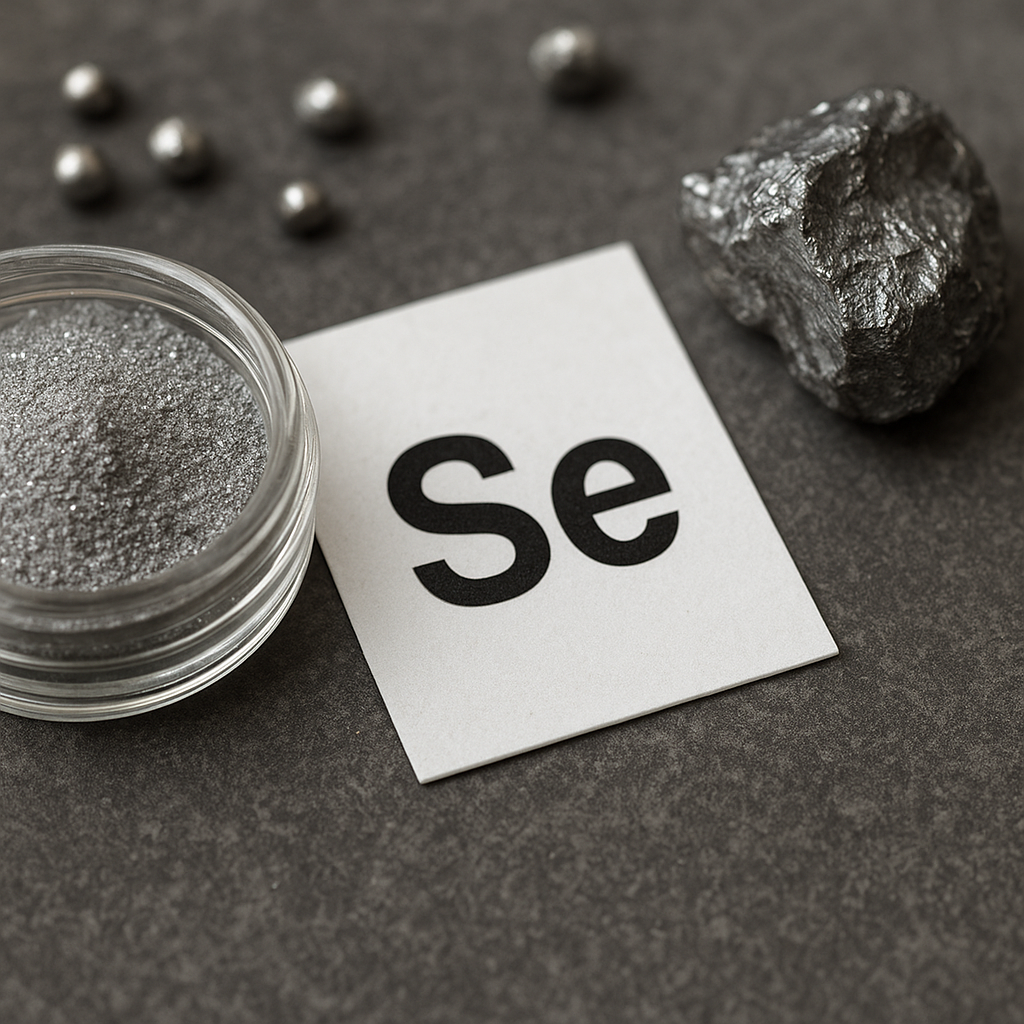
The element at the crossroads of chemistry, biology and technology carries a name that evokes both ancient myth and modern utility. This article explores the many faces of selenium: where it is found in the Earth and in living systems, how humans extract and apply it across industries, the fascinating physical and chemical properties that make it useful, and a few surprising contemporary topics that connect this element to nanoscience and computing. The text aims to offer a broad yet detailed view suitable for science enthusiasts, students and professionals curious about how one trace element can be so influential.
Origins, Discovery and Basic Properties
Discovered in 1817 by the Swedish chemist Jöns Jakob Berzelius, the element receives its name from the Greek selene (moon), chosen partly because of its chemical similarity to sulfur and partly as a companion to tellurium (from Latin tellus, earth). In the periodic table it occupies group 16, between sulfur and tellurium, and commonly exhibits oxidation states of -2, +4 and +6. In its elemental form it appears in several allotropic forms: a red amorphous powder, a gray metallic conductor, and various crystalline forms.
Key physical and chemical attributes that determine its usefulness include significant photoconductivity, a moderate melting point (221 °C for gray selenium), semimetal-to-semiconductor behavior depending on allotrope, and the ability to form stable bonds with carbon, hydrogen and oxygen in organic molecules. These attributes underpin both its technological and biological roles.
Where Selenium Occurs in Nature
Geological Occurrence
In the Earth’s crust, selenium is relatively scarce, typically occurring at concentrations of about 0.05 mg/kg. It seldom exists as a native element; instead it is most often found incorporated into sulfide minerals such as pyrite, where selenium atoms substitute for sulfur. Selenium is enriched in some sedimentary rocks and organic-rich shales and can be concentrated by hydrothermal processes. Mining and smelting of sulfide ores (notably copper and lead ores) are common anthropogenic sources of selenium release.
Soils, Water and Plants
Soil selenium content varies greatly by region, driven by bedrock composition and weathering history. In some agricultural regions soils are selenium-deficient, giving rise to low levels in crops and livestock; conversely, other regions show elevated selenium that can lead to environmental toxicity for animals and plants. In aquatic systems selenium exists in several forms — selenate (SeO4 2-), selenite (SeO3 2-) and organic selenium species — and its solubility and mobility depend on redox conditions and pH. Plants take up selenium from soils, often assimilating it into amino acids such as selenomethionine and selenocysteine, which are important for transfer through food webs.
Biological Distribution
Biologically, selenium is a trace but essential element. It is incorporated into proteins as the unusual amino acid selenocysteine and plays roles in antioxidant defense, thyroid hormone metabolism and redox signaling. Most organisms — from bacteria to humans — have evolved biochemical pathways that use selenium in catalytic or structural contexts. The presence and speciation of selenium in diets thus have direct consequences for human health.
Biological Roles and Nutritional Aspects
Selenoproteins and Biochemistry
The most distinctive biological use of selenium is as a component of selenoproteins. These proteins contain selenocysteine residues at their active sites; the selenium atom imparts unique reactivity compared to sulfur analogues. Examples include glutathione peroxidases, which reduce peroxides and protect cells from oxidative damage; thioredoxin reductases, which regulate cellular redox balance; and iodothyronine deiodinases, which are essential for activation and deactivation of thyroid hormones.
Deficiency and Toxicity
Selenium is a classic example of a micronutrient with a narrow beneficial range. Dietary deficiency can lead to compromised antioxidant defenses, impaired immune function, and in specific contexts diseases such as Keshan disease (a cardiomyopathy linked to selenium-poor soils). On the other hand, chronic excess intake causes selenosis, symptoms of which include hair loss, nail brittleness, gastrointestinal disturbances, and neurological abnormalities. Because the line between deficiency and toxicity is relatively thin, monitoring and balancing intake is important.
Dietary Sources and Supplementation
Dietary selenium sources include cereals, nuts (notably Brazil nuts, which can be exceptionally rich in selenium), seafood, organ meats and eggs. Bioavailability depends on the chemical form: organic forms such as selenomethionine are generally more bioavailable than inorganic forms. In agricultural contexts, selenium fertilizers are sometimes applied in deficient regions; livestock diets are supplemented to ensure animal health and to provide a secure source of selenium in human food chains.
Industrial and Technological Applications
Glassmaking, Pigments and Ceramics
One of the oldest uses of elemental selenium is in glassmaking and ceramics. Small additions of selenium can decolorize glass by counteracting the green tint produced by iron impurities, or conversely produce rich red colors when used in larger quantities; the red coloration results from colloidal selenium particles dispersed in the glass matrix. Selenium compounds are also used as pigments and in the coloring of glazes.
Electronics, Photoreceptors and Solar Energy
The semiconductor behavior of certain selenium allotropes has historically been exploited in photocells, photoconductors and xerography. Selenium photoconductors were crucial in early photocopying technology: electrostatic charges on a selenium-coated drum could be selectively discharged by light, forming the latent image that becomes the copy. Modern electronics have largely moved to silicon-based technologies, but selenium and its compounds remain of interest in niche electronic applications, particularly where photoconductive properties are useful.
In the realm of renewable energy, selenium-containing compounds have been explored in thin-film photovoltaic cells (for example in copper indium gallium selenide, CIGS, solar cells), where selenium contributes to efficient light absorption and charge transport. Research continues into optimizing selenium-based absorber layers and into the role of selenium at interfaces and in defect chemistry, because such insights can improve cell efficiency and stability.
Metallurgy and Alloys
Selenium is used as an additive in steel and copper alloys to improve machinability and physical properties. Trace selenium in lead-acid batteries can influence performance characteristics. In welding and metallurgy, selenium-containing compounds may act as deoxidizers or modify microstructures.
Specialty Chemicals and Pharmaceuticals
Selenium chemistry supports the synthesis of organoselenium compounds used as reagents and catalysts in organic synthesis. In pharmaceuticals, organoselenium compounds are investigated for antioxidant, anticancer and antimicrobial properties. Although no broad pharmaceutical selenium panacea exists, the unique redox chemistry of selenium continues to inspire drug discovery research.
Environmental Cycling, Contamination and Remediation
Bioaccumulation and Ecotoxicology
Selenium has a tendency to bioaccumulate and biomagnify in aquatic food webs under certain conditions. In wetlands, estuaries and reservoirs, inorganic selenium species can be transformed by microbes into organic forms that are readily taken up by primary producers and then concentrated in fish and bird tissues. Elevated selenium has been implicated in reproductive failures in fish and aquatic birds at contaminated sites near mining and agricultural runoff sources. The duality of selenium as essential yet toxic complicates environmental regulation.
Remediation Strategies
Remediation approaches for selenium-contaminated sites include natural attenuation (where conditions favor conversion to less bioavailable forms), constructed wetlands that promote microbial reduction of selenate/selenite to elemental selenium, adsorption onto engineered sorbents, and phytoremediation using plants that accumulate selenium. Advanced methods such as electrochemical reduction and bioreactors optimized for selenium-reducing bacteria are areas of active development.
Analytical Techniques and Speciation
Understanding environmental and dietary selenium requires sensitive analytical methods capable of distinguishing oxidation states and organic forms. Common techniques include inductively coupled plasma mass spectrometry (ICP-MS) for total selenium, coupled methods such as HPLC-ICP-MS for speciation (separating selenate, selenite, selenomethionine, selenocysteine), hydride generation atomic absorption (HG-AAS) for volatile selenium species, and X-ray absorption spectroscopy for oxidation state and bonding environment insights. Isotope ratio measurements (e.g., 77Se/78Se) are also used to trace sources and biogeochemical transformations.
Advanced and Emerging Topics
Nanotechnology and Selenium Nanoparticles
Research into nanoparticles of selenium explores their antimicrobial, antioxidant, and anticancer activities. Nanoscale selenium can offer lower toxicity and enhanced biological activity compared to bulk forms, adding potential for applications in medicine and agriculture. Synthesis methods include green chemistry approaches using plant extracts, microbial synthesis, and controlled chemical reduction, and the resulting nanoparticles are characterized by size, surface charge and crystallinity, factors that influence biological interactions.
Isotopes and Nuclear Applications
Selenium has several stable and radioactive isotopes that are of interest in research. Radioisotopes such as 75Se have been used as tracers in metabolic studies, and isotope fractionation studies help unravel redox transformations in the environment. While selenium itself is not a major player in nuclear energy, its isotopic behavior can be informative in geochemical and environmental investigations near nuclear facilities.
Role in Agriculture and Food Security
Selenium’s nutritional importance has prompted programs to biofortify crops in selenium-deficient regions. Strategies include soil amendment with selenium fertilizers, foliar application and breeding crops that efficiently accumulate selenium. Since selenium can influence plant resistance to pests and abiotic stress, there is interest in leveraging it to improve crop resilience while avoiding excessive residue levels that threaten food safety.
Related Topic: Selenium in Computing and Test Automation
Beyond the chemical element, the word „Selenium” has become widely known in software development as the name of an open-source suite for automating browsers — WebDriver being its most prominent component. Selenium (the software) enables developers and testers to write scripts that drive web browsers for automated testing of web applications, perform repetitive tasks, and run cross-browser compatibility checks. The toolset includes language bindings for Java, Python, C#, Ruby and others, and supports parallel execution through Selenium Grid. Its use is pervasive in quality assurance teams and continuous integration pipelines.
It is an interesting linguistic and conceptual coincidence that both the element and the software share the same name: one used to shape and color glass, the other used to inspect and validate web “interfaces” — both concerned with surface interactions, detection and response to light or input.
Historical and Cultural Notes
Historically, selenium’s photoconductive properties spurred early innovations in electronics and imaging. The element has also featured in folklore around plants and soils; in certain regions, knowledge about “white gold” or toxic soils informed grazing and land use choices long before modern analysis. In literature of science, selenium serves as a recurring example of a micronutrient that can be either a remedy or a poison depending on dose — a theme that resonates with broader public health and environmental management challenges.
Practical Considerations and Safety
Working with selenium and selenium compounds requires attention to safety because inhalation or ingestion of certain forms can be hazardous. Industrial hygiene practices include proper ventilation, personal protective equipment when handling powders or fumes, and monitoring of workplace exposure. Environmental controls seek to minimize selenium discharge from mining and industrial processes. In dietary contexts, regulatory agencies provide recommended daily intakes and upper tolerable limits; public health policies must balance deficiency prevention and avoidance of overexposure.
Closing Observations and Future Directions
Ongoing research areas for the element include improved understanding of selenoprotein function in human health and disease, optimization of selenium use in photovoltaics and electronics, environmentally sound remediation techniques for contaminated sites, and careful deployment of selenium in agriculture to secure nutrition without harming ecosystems. The cross-disciplinary nature of selenium — spanning geochemistry, biology, materials science and even information technology through shared naming — makes it a particularly compelling subject for continued study.
Whether encountered in a handful of soil, a cell’s enzyme active site, a red glass bead, a thin-film solar cell or a line of automated test code, selenium connects disparate domains through its chemical versatility and historical legacy. Its story is one of subtlety: a trace element with outsized influence, whose benefits and hazards are both intimately tied to context, concentration and form.