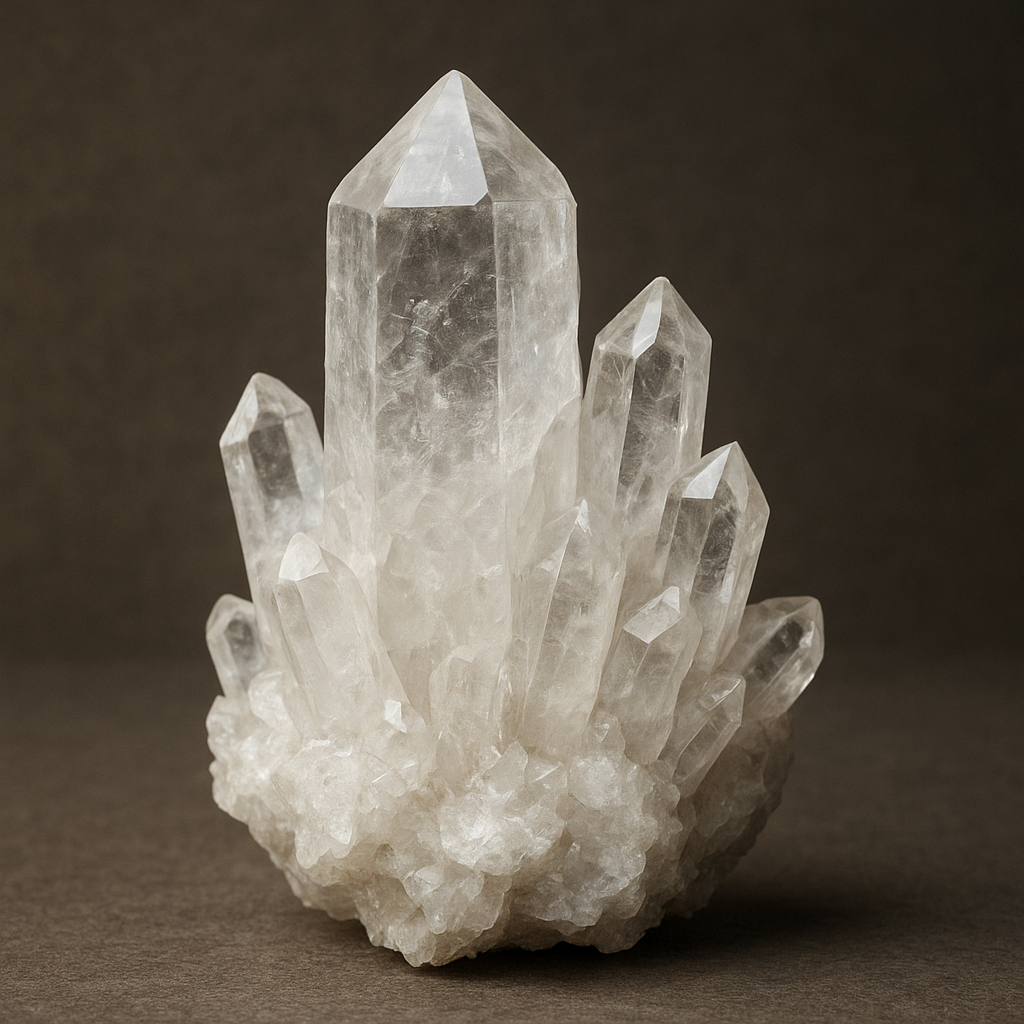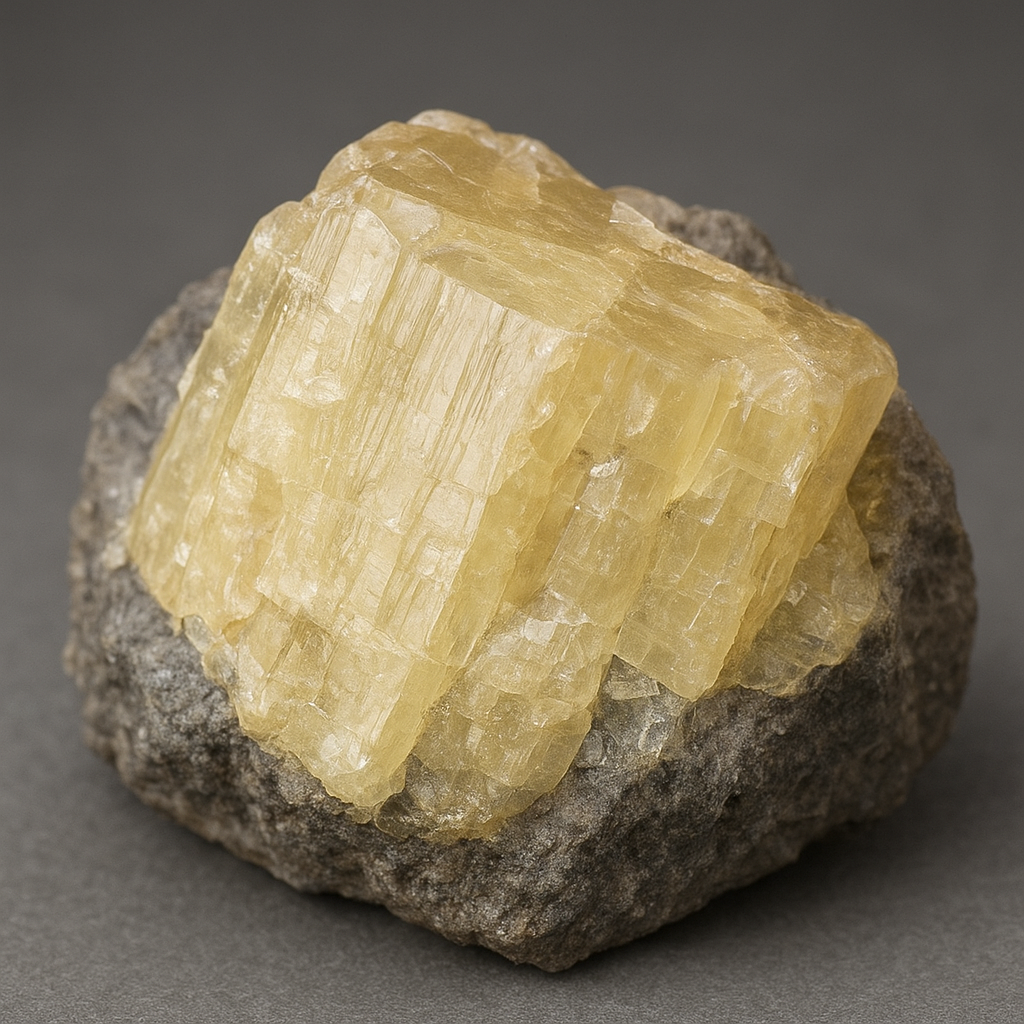
Bytownite is a striking member of the plagioclase group whose mineralogical identity and geological significance reach from backyard geology into planetary science. Although often overshadowed in popular descriptions by its better-known relatives, bytownite plays a crucial role in interpreting magmatic histories, metamorphic processes and even the composition of other planetary bodies. This article explores where bytownite occurs, its properties, practical and scientific uses, and several intriguing aspects that make it a favorite of collectors and researchers alike.
Occurrence and geological setting
Bytownite belongs to the solid-solution series that connects sodium-rich albite and calcium-rich anorthite. Classified as a plagioclase feldspar, it is one of the more calcium-rich members of that series. Its composition is typically given in terms of the anorthite component; bytownite generally falls in the range An70–An90, placing it between labradorite and anorthite in chemical character. This calcium dominance has implications for the rocks in which it forms: bytownite preferentially crystallizes from magmas with higher calcium activity and is stable under conditions that favor calcium incorporation into the plagioclase lattice.
Typical host rocks include:
- Intermediate to mafic intrusive rocks such as gabbro and norite.
- Basalts and related volcanic rocks when cooling conditions and bulk composition push plagioclase compositions toward the calcium-rich end.
- Anorthosites and cumulate rocks where plagioclase is a dominant phase.
- Metamorphosed equivalents of these igneous rocks, particularly where recrystallization preserves or enhances the calcium-rich character.
Major localities where bytownite has been described include parts of Canada (the namesake area near Ottawa/Bytown and regions with anorthositic complexes), Scandinavia, parts of the United States (notably New England and some western exposures), Madagascar and select occurrences in Russia and Finland. In many of these places bytownite occurs as well-formed crystals or as large plagioclase cumulate bodies that can be studied in outcrop and thin section. Though global distribution is wide, truly gem-quality or specimen-grade bytownite that attracts collectors is comparatively rare.
Physical and crystallographic properties
At the mineralogical level, bytownite shares many characteristics with other plagioclase minerals but possesses features diagnostic of its higher calcium content and crystallographic habits. It crystallizes in the triclinic system and commonly shows the polysynthetic twinning and striations that are a hallmark of plagioclase feldspars. Important identification features in hand sample and thin section include hardness, cleavage, specific gravity and optical behavior under polarized light.
Common diagnostic traits
- Cleavage: two directions of perfect cleavage at nearly right angles, producing blocky fragments.
- Hardness: around 6 to 6.5 on the Mohs scale.
- Density: moderately high for silicates, typically in the range 2.7–2.8 g/cm³ depending on composition and impurities.
- Optical properties: in thin section bytownite shows characteristic twinning (albite and polysynthetic lamellae) and extinction angles that vary systematically with anorthite content — a key way for petrographers to estimate composition.
On the microscopic and microchemical level, bytownite is often zoned, showing variation in composition from core to rim. These zoning patterns are records of changing magmatic conditions during crystal growth and can be read using electron microprobe analysis to reconstruct cooling histories. Twinning and zoning are therefore not just identification aids; they carry crucial petrogenetic information.
Uses and applications
Bytownite itself is not a major industrial mineral in the way that common feldspar (as a class) is, but its importance comes from its role in scientific study and, occasionally, in ornamental use. Broader uses and applications include:
Petrology and geochemistry
- Geothermobarometry: The exact calcium-to-sodium ratio in plagioclase is temperature- and composition-dependent. Measuring the anorthite content of bytownite can help constrain crystallization temperatures and the composition of coexisting melts.
- Magmatic evolution: Since plagioclase composition evolves during fractional crystallization, bytownite occurrences help reconstruct magmatic differentiation, magma mixing and the sequence of mineral crystallization.
- Isotopic and trace element studies: Plagioclase can incorporate trace amounts of elements and isotopes that are useful for age dating and for understanding mantle and crustal processes.
Industrial and decorative uses
- Feldspar minerals as a group are important in glass and ceramics manufacturing because they act as fluxes. Bytownite is not specifically quarried for these industries, but calcium-rich feldspar material from plagioclase-bearing rocks can contribute to industrial feedstock.
- Specimen and lapidary use: Large, clean crystals of bytownite can be polished and used as collector specimens or occasionally in cabochons. While it lacks the universal gem appeal of quartz or tourmaline, some specimens with attractive cleavage faces or play of light find their way into mineral collections.
Planetary geology
Beyond Earth geology, high-calcium plagioclase phases akin to bytownite and anorthite are central to understanding planetary crusts. The light-colored anorthositic highlands of the Moon, for example, are dominated by plagioclase rich in anorthite. Studying terrestrial bytownite and its formation environment helps in interpreting lunar, meteoritic and planetary igneous processes, offering analogues for crust formation elsewhere.
Identification techniques and analytical methods
Modern petrology relies on a suite of methods to identify and analyze bytownite. Visual inspection and classical optical petrography often provide first-order identification, but precise composition and origin require instrumental approaches.
- Polarized light microscopy: Twinning patterns, extinction angles and pleochroism (rare in plagioclase) are evaluated in thin sections.
- Electron microprobe analysis (EMPA): Gives quantitative major-element compositions, allowing accurate determination of the anorthite percentage and hence clear classification as bytownite.
- X-ray diffraction (XRD): Confirms crystal structure and can help detect subtle structural variations or polymorphs.
- Scanning electron microscopy (SEM) and cathodoluminescence: Useful to reveal growth zoning, exsolution textures and trace-element partitioning.
- Laser ablation inductively coupled plasma mass spectrometry (LA-ICP-MS): For trace-element analysis that informs magmatic sources and processes.
These methods combine to create a detailed picture of a crystal’s life history — from nucleation and growth in a magma chamber through subsequent alteration, metamorphism or transport. In particular, the anorthite content derived from EMPA or microprobe analysis is the definitive way to classify a plagioclase as bytownite rather than labradorite or anorthite.
Associated minerals and textural relations
Bytownite rarely occurs in isolation. Its mineral associations and textural relations provide context for the conditions of formation:
- Coexisting mafic minerals such as olivine, pyroxene and amphibole are common in gabbroic and basaltic systems.
- Accessory phases like magnetite, ilmenite and sulfides may indicate oxygen fugacity and magmatic differentiation processes.
- Intergrowths with other plagioclase compositions can form zoned crystals where the interior is more calcium-rich and the rim becomes more sodic as the magma evolves.
- Exsolution lamellae and symplectitic textures can develop during cooling or later metamorphic events, sometimes producing distinctive visual effects.
These associations help petrologists interpret cooling rates, crystal settling in magma chambers and post-crystallization histories such as metasomatism or deformation. In layered intrusions, bytownite-rich cumulates are particularly informative about the processes of magmatic segregation and crystal accumulation.
Collecting, gemological interest and care
Although not a mainstream gemstone, bytownite attracts attention from collectors for its crystalline forms, cleavage surfaces and occasionally attractive optical effects. When cut and polished, high-quality plagioclase can display a subtle sheen; in rare, structurally altered specimens some iridescence reminiscent of labradorescence can appear, although true labradorescence is more typically associated with labradorite.
Collectors should be aware of practical considerations:
- Cleavage makes bytownite somewhat fragile when subjected to knocks, so specimens should be padded and stored carefully.
- Caring for polished pieces requires only mild cleaning; avoid harsh acids or abrasive cleaners that could alter surface polish.
- Transparent to translucent, gem-quality pieces are uncommon; most collector interest centers on crystal form and geological context rather than jewelry applications.
Interesting scientific and historical notes
The name bytownite commemorates Bytown, the historical name of Ottawa, linking the mineral to its early occurrences and the history of geological exploration in Canada. Its place in the plagioclase series makes it a key mineral for exploring the chemical and thermal evolution of magmas. Here are a few particularly interesting angles:
- Because plagioclase composition records the melt from which it grew, bytownite crystals can serve as archives of magmatic evolution — oscillatory zoning, for instance, reflects fluctuating conditions during crystallization.
- In lunar and meteoritic studies, calcium-rich plagioclase analogues inform models of crust formation and differentiation on bodies with compositions different from Earth’s. The presence of high-An plagioclase in extraterrestrial samples helps constrain histories of early planetary crusts.
- Advanced imaging of bytownite and related plagioclase can reveal nanoscale exsolution and strain patterns that illuminate cooling rates and subsequent deformation — microscopic stories that complement field-scale observations.
- Specimens from well-studied anorthosite massifs provide textbook examples of cumulate processes and help teach students how minerals record geological time and processes.
For those fascinated by planetary materials, terrestrial lunar anorthosites analogues and calcium-rich plagioclase like bytownite are compelling subjects. They bridge everyday field geology and high-stakes planetary science, underlining how a seemingly ordinary mineral can be instrumental in decoding the history of rock formation across the Solar System.
Research frontiers and unanswered questions
Despite decades of study, ongoing research continues to refine our understanding of bytownite and related plagioclase phases. Some active areas of investigation include:
- High-resolution compositional mapping to better understand growth rates and the dynamics of magmatic chambers.
- Experimental petrology to reproduce bytownite crystallization under controlled pressure, temperature and composition conditions, improving models of natural magma systems.
- Isotope geochemistry targeting plagioclase-hosted inclusions to unravel source characteristics and timescales of magmatic processes.
- Interdisciplinary studies that compare terrestrial bytownite to high-calcium plagioclase in meteorites and lunar samples, refining comparative planetology frameworks.
As analytical tools become more precise, even the subtle variations within a single bytownite crystal can be read as chapters of geological history. Researchers continue to unlock the full potential of such minerals as both chronometers and thermometers of the deep Earth and beyond.