
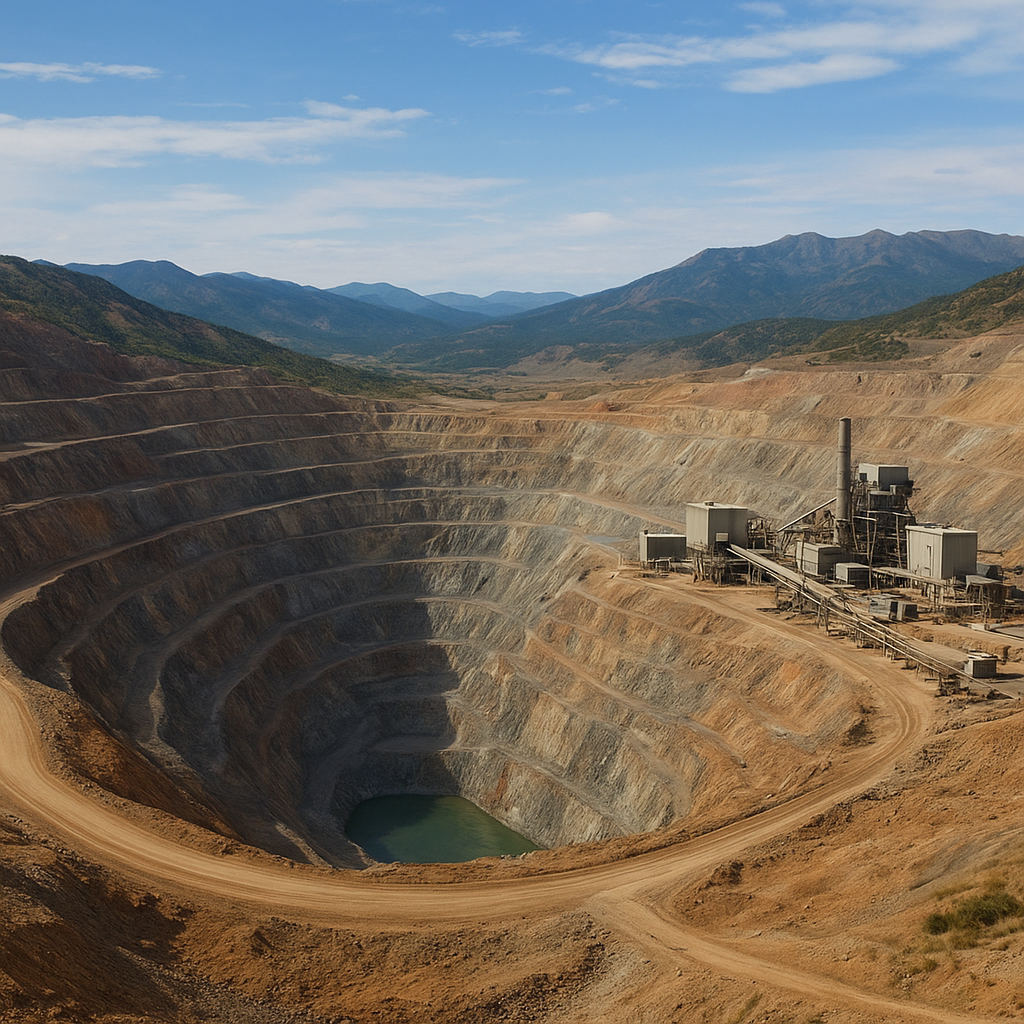
The Henderson Mine is one of the most important primary sources of molybdenum in the United States. Located high in the Rocky Mountains of Colorado, the operation has for decades supplied industry with molybdenite concentrates and downstream products that are critical for modern steelmaking, high-temperature alloys, and specialty chemical applications. This article examines where Henderson sits in the landscape, what is mined and how it is processed, its broader economic role, and a number of technical and human-interest details that make the site notable.
Location and geological setting
The Henderson Mine lies in west‑central Colorado, in a mountainous zone that is typical of Rocky Mountain porphyry-style mineralization. It is situated near the Continental Divide in an area of high elevation terrain, accessible by industrial roads and a network of support infrastructure developed specifically for mineral extraction and transport. The mine sits within a host of intrusive rocks and altered wallrock where molybdenum-bearing minerals accumulated through hydrothermal processes millions of years ago.
Geology and ore characteristics
At Henderson the principal ore mineral is molybdenite (MoS2), a naturally occurring sulfide of molybdenum. Molybdenite commonly forms in porphyry-type systems associated with granitic intrusions and their alteration halos. The Henderson deposit exhibits disseminated molybdenite spread through a large, low-to-moderate grade body rather than concentrated veins. This geological style favors large-scale, bulk-mining methods because the mineralization is widespread and consistent over broad volumes.
Topography, climate, and access
The mine’s high-altitude location brings cold winters, short construction seasons, and an emphasis on winterization for equipment and facilities. Accessibility historically depended on purpose-built roads, conveyor and transport links to processing facilities, and links to regional rail or highway networks for onward shipping of concentrate. Proximity to mountain towns and service centers has shaped workforce patterns, commuting arrangements, and emergency response planning.
Mining methods and processing
Henderson has been developed primarily as a large-scale open-pit operation. The deposit geometry and the disseminated nature of the molybdenite make open-pit mining efficient and economical on a large scale. Typical mining activity at a mine like Henderson includes drilling, blasting, loading with shovels or wheel loaders, and hauling by large trucks to a processing plant where ore is crushed and concentrated.
Comminution and concentration
Once extracted, the ore undergoes staged crushing and grinding to liberate molybdenum-bearing particles. The finely ground material is then subjected to froth flotation, a separation method that concentrates molybdenite into a slurry that contains significantly higher percentages of molybdenum than the original ore. The common commercial product leaving the concentrator is a molybdenite concentrate—a dense slurry or dried product that is then dried, bagged or bulk-handled for transport to a smelter or roast facility.
Downstream processing and product forms
The molybdenite concentrate is often converted to more refined materials through roasting and chemical processing. Roasting molybdenite produces molybdenum oxide (MoO3), which is a feedstock for metallic molybdenum production, ferro‑molybdenum alloys, and chemical compounds used as catalysts and lubricants. Many consumers purchase a concentrate or oxide that is further refined or alloyed, depending on end-use requirements.
Economic importance and market role
Henderson’s significance stems from its role as a stable, large-scale source of primary molybdenum. Molybdenum is an essential alloying element in steel and other alloys because it improves strength, toughness, and corrosion resistance at elevated temperatures. Industries that rely on molybdenum include construction, energy (including oil and gas and power generation), aerospace, and specialty chemical production. Mines that can reliably produce concentrates influence global supply, pricing, and downstream manufacturing stability.
Supply chain and industrial uses
- Steel and alloying: small additions of molybdenum significantly enhance mechanical and thermal properties of steels, enabling infrastructure and equipment to operate under extreme conditions.
- High-temperature applications: molybdenum is used in superalloys for jet engines, gas turbines, and high-performance industrial equipment.
- Chemicals and catalysts: molybdenum oxides and salts function as catalysts in petroleum refining and chemical synthesis.
- Electronics and lubricants: specialised molybdenum compounds serve in electronics and as solid lubricants in high-temperature contexts.
Because a relatively small mass of molybdenum can have an outsized effect on an alloy’s properties, swings in supply can have amplified economic effects. A single large operation like Henderson therefore has an influence beyond its physical footprint: it helps stabilize the availability of molybdenum for critical industrial chains.
Local and regional economic impacts
At the community level, the mine supplies employment, contractor opportunities, and tax revenue that support local services and infrastructure. Typical economic benefits include direct jobs in mining, processing and management; indirect jobs in transportation, maintenance, and local retail; and induced impacts as wages are spent in nearby towns. In regions with limited alternative heavy industry, the presence of a major mine can underpin municipal budgets and regional planning decisions.
Environmental management and reclamation
Modern mining operations must balance production with environmental stewardship. Henderson-style operations commonly implement a suite of mitigation and reclamation measures to reduce impacts on water, land, and ecosystems. It is standard practice to monitor water quality, manage tailings and waste rock to limit acid generation, and progressively reclaim disturbed areas to stabilize soils and promote revegetation.
Water and tailings management
Managing water is critical in high-elevation mining. Mines of this type typically collect, treat, and re-use process water to minimize discharge. Tailings from flotation must be stored in engineered facilities with liners, seepage controls, and monitoring systems. Progressive reclamation—recontouring waste rock dumps and tailings, covering them with growth medium, and planting native vegetation—reduces long-term maintenance needs and improves landscape recovery.
Reclamation and closure planning
Closure planning is an integral part of mine life-cycle management. Operators design final landforms, long-term water treatment systems, and maintenance plans that will persist after active operations cease. Reclamation goals often include restoring wildlife habitat, creating stable topography, and enabling post-mining uses such as recreation or conservation lands. Financial assurance mechanisms (reclamation bonds or funds) are typically required by regulators to ensure closure obligations are met.
Workforce, safety and community relations
Large operations demand skilled workforces ranging from heavy-equipment operators to metallurgists, environmental scientists, and logistics specialists. Safety is a paramount concern: mines implement training programs, hazard identification systems, and strict procedures to minimize the risks of heavy equipment operations, blasting, and processing plants. Community relations are also central—regular stakeholder engagement, emergency planning with local authorities, and programs to support local businesses and education help maintain social license to operate.
Technological evolution and automation
Over time, mines like Henderson have integrated more automation, remote equipment operation, and data-driven process control systems. Automation can improve safety by distancing workers from hazardous operations and increase efficiency through optimized ore handling and processing. Digital monitoring and predictive maintenance reduce downtime and enhance the lifespan of expensive assets, contributing to sustained economic performance.
Historical and interesting facts
The story of a major molybdenum mine is often as much about people, engineering and markets as it is about geology. Mines of Henderson’s scale are typically discovered, developed and expanded over decades, adapting to price cycles and technological change. Several features commonly attract attention:
- Scale: Such mines are often among the world’s largest primary molybdenum producers by annual output—large enough to affect global supply dynamics.
- Lifecycle economics: Production phasing and care-and-maintenance periods reflect molybdenum price volatility; many mines pause production during prolonged price weakness and restart when markets improve.
- Engineering feats: Building processing plants, tailings dams and access roads at high elevations requires specialized engineering and logistics, especially in winter conditions.
- Legacy and reclamation: Long-term plans to return disturbed areas to beneficial uses illustrate how mining and environmental goals can be aligned over the multi-decade life of a project.
Strategic metal considerations
Molybdenum is often classed with metals that have strategic importance for national industrial bases. Its role in defense applications, energy infrastructure, and high-performance alloys gives it a profile beyond simple commodity status. Maintaining domestic sources or reliable allies can be a factor in policy decisions, and major mines therefore intersect with broader economic and strategic planning.
Challenges and future outlook
Mines like Henderson face a set of ongoing challenges that shape their future. Commodity price cycles determine revenue and investment levels; environmental regulations evolve and can raise operational costs; community expectations demand higher standards for transparency and remediation. Conversely, technological advances—better ore sorting, energy efficiency improvements, and recycling—can extend mine life and reduce environmental footprints.
Market dynamics and price sensitivity
Molybdenum prices are influenced by global steel demand, industrial cycles, and the output of other molybdenum producers worldwide. As a consequence, the operation of large primary mines may flex with market realities. Diversification of product streams, hedging strategies, and long-term supply contracts are common risk-management tools used by operators and buyers alike.
Innovation and sustainability trends
Increasing emphasis on sustainability is driving changes in how mines are designed and operated. Energy use, greenhouse gas emissions, water efficiency, and life-cycle impacts of metal production are being monitored and reduced where possible. Advances in recycling and substitution can affect long-term demand, while improved metallurgical techniques can increase recoveries and reduce waste. Integrating these innovations can help large mines remain competitive and responsible contributors to regional economies.
Concluding observations
Henderson-style operations illustrate the multi-faceted nature of modern mining: geological opportunity turned into industrial product through engineering, workforce skill, and logistics. The mine’s contribution to the supply of molybdenum has clear downstream effects in steel and alloy manufacturing, energy systems, and specialized chemical industries. At the same time, long-term economic viability depends on balancing production with environmental care, community expectations, and evolving market realities. Observers interested in the intersection of natural resources, technology and regional development will find in Henderson a rich example of how a single mineral deposit can shape industries and places for generations.

