
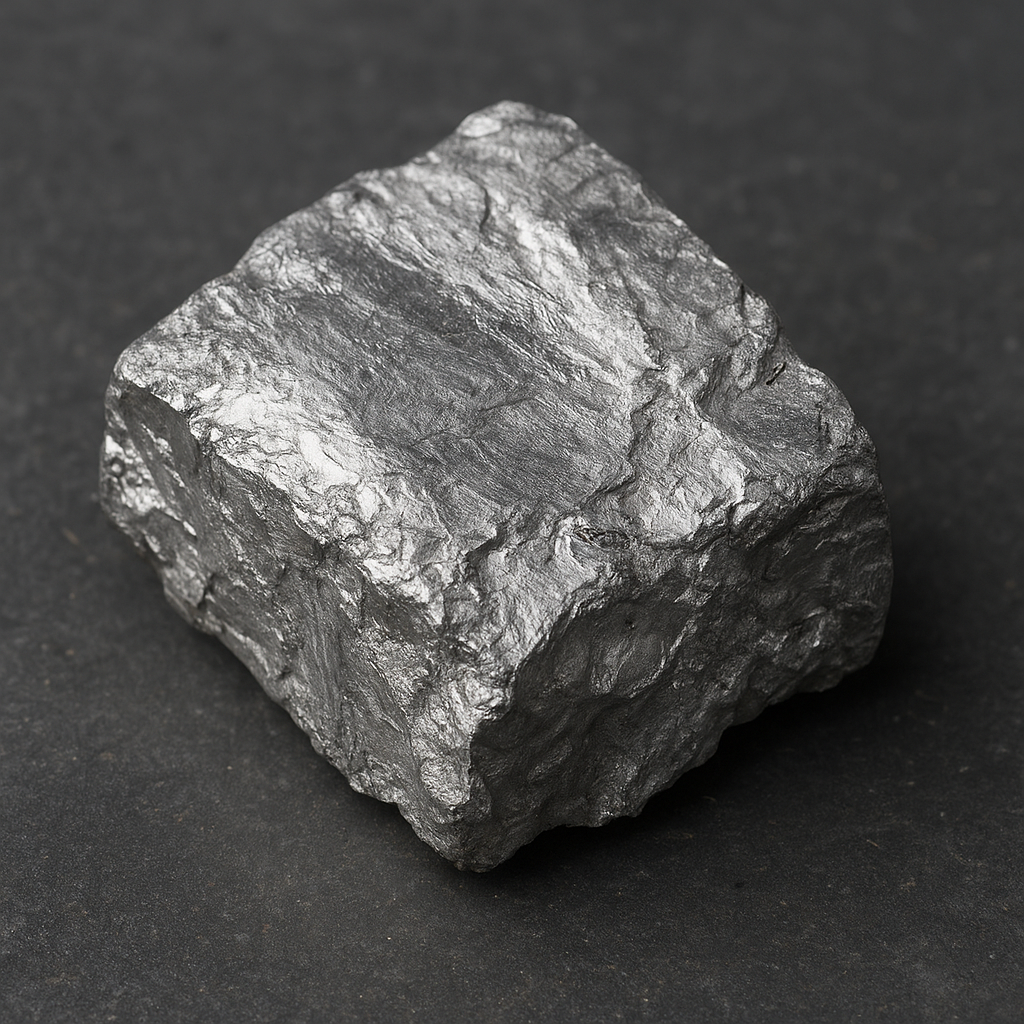
Barium sits among the heavier members of the alkaline earth group and attracts attention for its contrasting roles in industry, medicine and the environment. This article explores where barium can be found in nature, how it behaves chemically and physically, the many ways humans extract value from it, and the safety considerations that accompany its use. Along the way, we will examine mineral occurrences, technological applications, analytical techniques and some surprising historical and cultural notes. Expect a mix of practical detail and broader context that highlights why this element continues to matter across disciplines.
Natural occurrence and geochemistry
Barium is a naturally occurring element that rarely appears in its free form because of its high reactivity. Instead, it is most commonly locked within minerals. The most abundant and economically important barium-bearing mineral is barite (BaSO4), often found in veins and sedimentary deposits. Another significant mineral is witherite (BaCO3), historically important but less abundant than barite in modern mining.
Barite commonly forms in hydrothermal veins, in association with lead and zinc sulfides, and in sedimentary sequences as a result of biological and chemical processes. Marine sediments, in particular, concentrate barium in nodules and layers where organic matter and sulfate-reducing conditions promote precipitation. Because barium has a strong tendency to combine with sulfate, barium-rich zones often indicate past or present geochemical conditions favorable to sulfate availability.
From a geochemistry perspective, barium behaves in ways that reflect its ionic radius and charge (Ba2+). It is moderately mobile in low-salinity waters but becomes less soluble where sulfate concentrations are high. This precipitation control is one reason barite accumulates in certain basins and why barium is often used as a tracer in paleoceanographic and sedimentary studies. Weathering of barium-bearing rocks releases Ba2+ into soils and groundwater, and the presence of sulfate or carbonate phases controls whether the element remains dissolved or is immobilized.
Physical and chemical properties
Barium is a soft, silvery-white metal in the alkaline earth family, located below calcium and strontium in the periodic table. It has a relatively low melting point for a heavy metal and is quite ductile when freshly cut, though it tarnishes rapidly in air due to oxidation. The element has an atomic number of 56 and commonly exhibits a +2 oxidation state in compounds.
Chemically, barium is more reactive than calcium, rapidly combining with water to form barium hydroxide and hydrogen gas if in sufficiently fine or activated form. Because of this reactivity, metallic barium is normally handled under oil or in inert atmospheres. In aqueous environments, the barium ion forms complexes with various ligands, but its strong affinity for sulfate is the dominant controlling factor in many natural and industrial settings. Barium sulfate is extremely insoluble (a trait exploited in many applications), while barium carbonate and barium chloride are more soluble and reactive.
Optically and physically, barite exhibits a high density (about 4.5 g/cm3) for a non-metallic mineral, which makes it useful where high specific gravity is required. Barium compounds can produce characteristic flame colors—most notably a green color—which historically assisted in qualitative analysis and still finds niche use in pyrotechnics.
Industrial applications
Barium’s commercial importance rests largely on its compounds, especially barite and barium sulfate. The diversity of applications is notable: from heavy fluids used in drilling to contrast agents in medical imaging and specialized glass and electronics. Below are key sectors where barium plays a central role.
Oil and gas drilling (barite as a weighting agent)
One of the largest uses of mined barite is as a weighting agent in drilling muds. When drilling deep wells, maintaining hydrostatic pressure in the wellbore is critical to prevent blowouts and control formation fluids. The high specific gravity of barite allows drillers to increase the density of drilling fluids without drastically changing fluid chemistry. Barite’s chemical inertness and resistance to dissolution in common drilling fluids make it well suited for this role. Global demand from the oil and gas industry has historically driven barite markets.
Medicine and radiology
Barium sulfate (BaSO4) is the cornerstone of many medical imaging procedures of the gastrointestinal tract. Suspensions of barium sulfate are ingested or introduced rectally to provide contrast in X-ray and CT imaging because barium sulfate is highly radiopaque—it absorbs X-rays strongly—yet it remains insoluble and chemically inert inside the body when used correctly. This property allows clinicians to visualize the shape and motion of the esophagus, stomach and intestines without systemic absorption of barium. Strict formulation and dosing protocols make these contrast studies safe for most patients, though contraindications and precautions exist for individuals with suspected perforations or certain allergies.
Paints, plastics and rubber
Finely ground barite serves as a filler and extender in paints, coatings and plastics. Adding barite to paint increases density, improves brightness and can enhance sound-dampening properties while reducing production costs by replacing a portion of more expensive pigments and resins. In plastics and rubber, barite contributes to dimensional stability and can adjust mechanical and thermal properties. The inert nature of barite helps maintain long-term stability in many formulations.
Glass, ceramics and electronics
Barium compounds are used to modify glass refractive index and ultraviolet absorption spectra. Barium-containing glass finds use in certain optical components and specialty glass where increased density and altered optical properties are desirable. In ceramics, barium carbonate can serve as a flux or to introduce desired phases during firing. Some electronic components exploit barium-containing dielectric materials, where controlled crystal chemistry can yield favorable permittivity and stability traits.
Pyrotechnics and specialty chemicals
Barium compounds are used in pyrotechnics to generate green colors and to influence burn characteristics. Because some barium salts are toxic, formulations are carefully controlled and often use less soluble compounds to limit environmental and health impacts. Barium chemicals like barium chloride and barium hydroxide have niche uses in chemical synthesis, analytical chemistry and laboratories, but require careful handling due to toxicity concerns.
Biological interactions and toxicology
While many barium compounds are relatively inert (notably barium sulfate), other soluble barium salts are toxic if ingested or inhaled. Toxicity is primarily due to the free Ba2+ ion, which can interfere with biological processes by blocking potassium channels and disrupting muscle and nerve function. Acute exposure to high concentrations of soluble barium salts can cause gastrointestinal distress, muscle weakness, cardiac arrhythmias and in severe cases, respiratory paralysis.
Because of this dichotomy, safety practices and regulatory limits distinguish between insoluble and soluble barium compounds. Barium sulfate, the medical contrast agent and many industrial barite uses, is considered safe when properly formulated because it remains insoluble and passes through the digestive tract. Conversely, barium chloride, nitrate and carbonate are handled with care in labs and industry, and their use is tightly regulated to minimize occupational exposure and environmental release.
Environmental behavior depends on local chemistry. In soils and waters with abundant sulfate, barium is readily precipitated as barite and immobilized. In sulfate-poor groundwater or acidic conditions, more soluble forms might persist and pose higher bioavailability. Monitoring programs in mining and industrial regions often measure total barium and soluble fractions to assess potential risks to drinking water and ecosystems. Occupational exposure limits for barium compounds are established by agencies such as OSHA and national health authorities to guide safe workplace practices, including ventilation, protective equipment and hygiene.
Isotopes, analytical methods and modern research
Barium has several stable isotopes—among them 130, 132, 134, 135, 136, 137 and 138—and a few radioactive isotopes used in research. Isotopic analysis of barium can be a useful tool in geochemistry and cosmochemistry. For example, variations in barium isotope ratios in sediments and minerals help reconstruct processes such as barite formation, diagenesis and fluid-rock interactions. Radiogenic isotopes and decay products can also provide insight into geological timescales and provenance studies.
Analytically, barium is measured using techniques such as atomic absorption spectroscopy (AAS), inductively coupled plasma mass spectrometry (ICP-MS) and inductively coupled plasma optical emission spectroscopy (ICP-OES). In mineral studies, X-ray diffraction (XRD) identifies barite and related phases, while electron microprobe and scanning electron microscopy (SEM) reveal microtextures and trace element associations. For environmental monitoring, sequential extraction protocols help distinguish between readily mobilizable barium and fractions bound in stable mineral forms.
Contemporary research touches on several active areas: developing greener extraction and processing methods for barite, investigating nanoscale barium compounds for electronic or catalytic applications, and improving medical contrast media to optimize safety and imaging resolution. Researchers also explore barium chemistry in extreme environments—such as hydrothermal vents and deep-sea sediments—where barium cycles can record paleoceanographic signals important for reconstructing past climate and ocean chemistry.
History, cultural notes and interesting facts
The name barium derives from the Greek word barys, meaning “heavy,” a nod to the high density of barite and barium compounds compared to many other non-metallic minerals. Historically, witherite and barite were recognized and used in various contexts: witherite in early optical glassmaking and barite in decorative and practical uses. The green flame produced by some barium compounds captured attention in older pyrotechnic traditions.
Barite mining has had local cultural and economic impacts in many regions, from small-scale quarries to large industrial operations. While the element itself is not rare, economically recoverable deposits concentrate in certain geological settings, creating regional industries and associated infrastructure. As with any mined commodity, modern operations balance extraction benefits with environmental stewardship and community considerations.
Interesting technical tidbit: because barium sulfate is so opaque to X-rays, it can be used as a simple, non-invasive indicator to study fluid movement in porous media during laboratory experiments—effectively serving as a tracer that is easily detected by radiography. Another curiosity is the use of barium isotopes in forensic geology to trace the origin of materials or to study provenance in archaeology when barium-bearing materials are present.
Selected quick-reference points
- Barium is an alkaline earth element (atomic number 56) that typically forms Ba2+ ions.
- Barite (BaSO4) is the most important barium mineral and has high density and low solubility.
- Radiology relies on barium sulfate for gastrointestinal contrast because it is radiopaque yet insoluble.
- Alloys and specialty glasses sometimes use barium compounds to modify physical and optical properties.
- Isotopes and modern analytical techniques make barium a useful tracer in geochemical and environmental research.
- Toxicology concerns center on soluble barium salts, while insoluble barium sulfate is generally safe in controlled uses.
- Geochemistry of barium is strongly influenced by its affinity for sulfate and carbonate phases.