
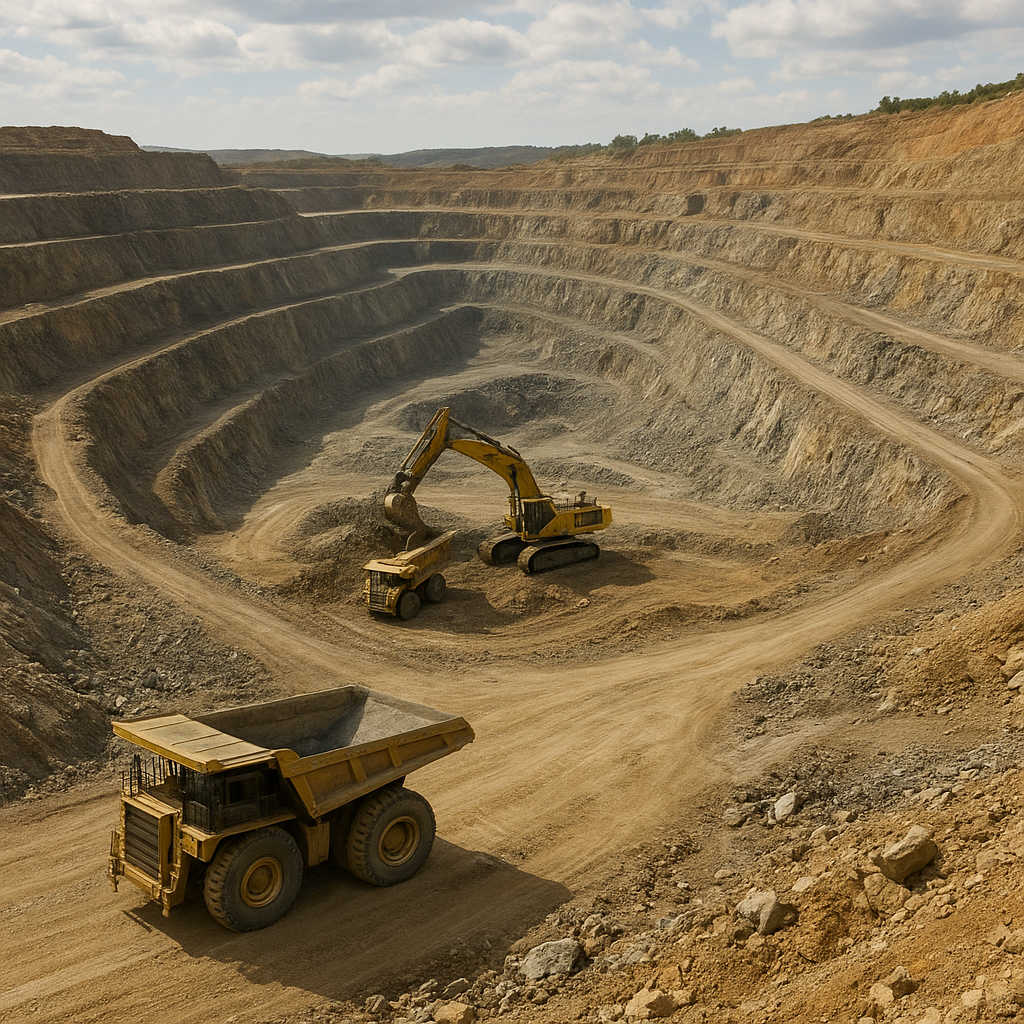
The Stillwater Mine, set against the rugged backdrop of south-central Montana, is a cornerstone of North American production of the rare and economically crucial platinum group metals. As one of the few large-scale producers of palladium and platinum outside of southern Africa and Russia, the mine plays a distinctive role in global supply chains, regional economies, and evolving technologies that depend on catalytic and industrial uses of these metals. This article explores where the mine is located, what is extracted there, its economic significance, and a selection of striking and lesser-known facts about its geology, operations, and future outlook.
Location and Geological Context
The Stillwater mining complex lies in Montana, concentrated near the towns of Nye and Absarokee in Stillwater County. The deposits are hosted by the Stillwater Complex, a layered mafic–ultramafic igneous intrusion that formed through magmatic processes long ago and that bears a strong geological resemblance to the famous Bushveld Complex in South Africa. These layered intrusions concentrate the platinum group elements (PGEs)—chiefly palladium, platinum, and rhodium—alongside associated base and precious metals such as nickel, copper, gold, and silver.
Geologically, the mineralization at Stillwater occurs in distinct layers and zones within the intrusion where sulfide liquids segregated and trapped PGEs during solidification. The deposit’s layered nature has allowed mining engineers to target relatively high-grade zones with underground methods designed to follow narrow but metal-rich horizons. The complex also provides geologists with a valuable natural laboratory for studying magmatic fractionation, sulfide immiscibility, and the processes that create the world’s most important PGE deposits.
What Is Mined: Commodities and Processing
The primary products recovered from the Stillwater operations are palladium and platinum, with meaningful byproduct credits in rhodium, gold, silver, nickel, and copper. Palladium and platinum are members of the platinum group metals (PGMs), prized for their chemical inertness and unique catalytic properties. At Stillwater, the ore is extracted using conventional underground mining methods, then transported to on-site concentrators where crushing, grinding, flotation, and other physical separation techniques produce a sulfide concentrate enriched in PGMs and base metals.
Further metallurgical processing converts the concentrate into intermediate products that are refined to separate and purify the individual metals. Refining often occurs off-site at specialized facilities capable of handling PGMs to high purity. The metals then enter global markets: palladium and platinum are traded on commodity exchanges and sold to industrial consumers, traders, and jewelry manufacturers.
Economic Importance: Local, National, and Global
Stillwater’s economic impact operates on multiple scales. Locally, the mine is a significant employer in a rural area of Montana, providing wages, contracts for suppliers, and contributions to municipal and county tax bases. The presence of a large mining operation supports contractors in drilling, tunneling, equipment maintenance, transportation, and a variety of service industries. In many ways, the mine anchors the local economy and supplies stable, relatively high-paying jobs compared with alternative employment opportunities in the region.
Nationally and globally, Stillwater matters because the market for PGMs is both specialized and concentrated. Only a handful of regions worldwide produce large quantities of platinum group metals. Disruptions in supply or changes in production at significant operations can influence prices and availability. For example, palladium is a key input for automotive catalytic converters used to control tailpipe emissions in gasoline engines; fluctuations in palladium supply therefore have direct implications for the automotive industry’s compliance strategies and costs.
The mine also contributes to strategic considerations around critical minerals and supply-chain resilience. As governments and industries seek to diversify sources of essential commodities, a domestic producer of PGMs becomes a strategic asset. Stillwater’s output reduces dependence on imports, complements recycling and substitution efforts, and contributes to national policy discussions about domestic mining and refining capacity for high-value specialty metals.
Operations, Mining Methods, and Technology
Underground extraction at Stillwater employs a mix of drift-and-fill, longhole stoping, and other selective mining techniques designed to follow narrow PGM-bearing horizons. These methods minimize dilution and optimize recovery by targeting ore-rich layers rather than bulk-mining lower-grade host rock. The concentrator facilities incorporate modern comminution and flotation technologies to maximize metal recovery and produce a high-quality sulfide concentrate for downstream processing.
Technological advances have been gradually adopted at the mine to improve safety, efficiency, and environmental performance. Automation and remote monitoring systems are used in drilling and material handling to reduce worker exposure in hazardous environments and to increase operational consistency. Metallurgical innovations aim to enhance recoveries for specific PGMs, refining processes are continuously optimized for better separation of rhodium and other valuable byproducts, and tailings handling systems are improved to reduce environmental footprint.
Environmental Management and Reclamation
Mining operations inevitably raise environmental concerns, and Stillwater has implemented a suite of programs to manage water, tailings, and land reclamation. Water management includes treatment of process water and careful monitoring of groundwater and surface-water interactions. Tailings, which hold fine-grained processing residues, are handled with engineered containment systems, and the company typically works under regulatory oversight and permitting processes that require progressive reclamation and post-closure plans.
Community engagement is an important component of the mine’s environmental strategy. Regular communication with local stakeholders, transparency on monitoring data, and investment in reclamation research help to build trust and accountability. While no large mine is without environmental challenges, the emphasis on reclamation, continuous monitoring, and compliance with modern environmental regulations aims to limit long-term impacts and restore mined areas where possible.
Historical Development and Ownership
The platinum group deposits of the Stillwater Complex have been of geological interest for decades. Commercial-scale development occurred as exploration and mining techniques matured and as global demand for PGMs increased. In recent corporate history, the asset has been integrated into global mining portfolios, reflecting the strategic value of North American PGM production. The company that controls operations is part of a larger group with international reach, aligning Stillwater’s output with global marketing, refining, and risk-management capabilities.
This corporate integration has benefits and trade-offs: access to capital, advanced technologies, and global marketing channels can support operational improvements, but local decision-making and community expectations sometimes evolve as corporate structures change. Throughout these changes, the core asset—high-quality PGM-bearing rock in a stable jurisdiction—remains attractive to international investors and industrial consumers.
Interesting Facts and Lesser-Known Features
- The Stillwater Complex is one of the few PGM-bearing layered intrusions outside of southern Africa, making it a geologically significant site for comparative studies.
- Some mineral zones at Stillwater are extremely narrow but exceptionally rich, which requires precise mining methods to extract value without excessive dilution.
- Rhodium, a byproduct at Stillwater, can command exceptionally high prices and therefore materially influences the economics of the operation despite its low volumetric presence.
- Unlike many large open-pit mines, Stillwater’s underground character reduces surface disturbance area but raises unique challenges in ventilation, local subsidence, and underground water control.
- Historically, PGMs were prized for jewelry and corrosion resistance, but their modern value is dominated by catalytic and electronic applications—an industrial pivot that boosted the strategic value of mines like Stillwater.
- Geologists use the Stillwater Complex as a natural analog for studying magma chamber processes that concentrate economically important metals; lessons learned here inform exploration worldwide.
Market Dynamics and the Future
Demand for PGMs is shaped by several converging trends. Automotive emissions regulations have been a primary driver of demand for palladium and platinum, but the transition to battery-electric vehicles (BEVs) poses a complex picture: BEVs reduce demand for catalytic converters, yet growth in hybrid vehicles and continued use of internal combustion engines in many regions maintains PGM demand. Meanwhile, platinum has an important role in burgeoning fuel-cell technologies—especially for hydrogen fuel cells—offering a potential new avenue for demand should hydrogen mobility scale up.
Recycling and substitution also affect market balances. The recycling of spent catalytic converters recovers significant quantities of PGMs and can offset some primary supply needs. Technological research aims to reduce PGM loadings in catalysts or to find substitutes in certain applications, but the unique chemical properties of PGMs often make them difficult to replace without performance or durability trade-offs.
For Stillwater, future prospects will depend on a combination of geological performance (extent and grade of remaining reserves), operational efficiency, and external market forces. Continued investment in processing and recovery technologies, along with adaptive strategies to shifting automotive and industrial demand, will determine the mine’s long-term value. The mine’s role as a domestic source of PGMs also positions it well in policy dialogues about supply-chain resilience and strategic mineral sourcing.
Social and Economic Considerations
Beyond direct economic metrics, Stillwater’s presence reshapes the social fabric of its host communities. The mine supports local schools, infrastructure projects, and charitable initiatives, while also creating occupational cultures around mining trades and technical expertise. Workforce training and education programs often accompany modern mining operations, building local capacity in engineering, geology, and environmental science.
At the same time, mining presents challenges related to labor cycles, boom-and-bust commodity prices, and long-term land use planning. Successful community-mining partnerships focus on economic diversification, workforce transition planning, and transparent discussion about mine life and post-closure land uses. In regions that rely heavily on one industrial employer, planning for sustainability and resilience beyond the mine’s operational lifespan is a key policy consideration.
Conclusion and Forward View
Stillwater is more than a mine: it is a strategic industrial asset embedded in a unique geological setting, a vital link in PGM supply chains, and a major economic engine for its region. The interplay of geology, technology, markets, and community considerations shapes both the present operations and the future trajectory of this operation. As demand patterns for PGMs evolve—driven by automotive regulations, energy transitions, recycling dynamics, and technological innovation—Stillwater will remain an important case study of how a modern mine can navigate complexity while delivering high-value commodities to global markets.

