Barite is a mineral that quietly plays an outsized role in many modern industries. Often overlooked by the general public, its physical and chemical characteristics make it indispensable in fields ranging from oil and gas exploration to medicine and environmental protection. This article explores the mineral’s nature, where it forms in the Earth, its varied applications, and several lesser-known but fascinating aspects of its uses and global significance.
What is barite? Composition and properties
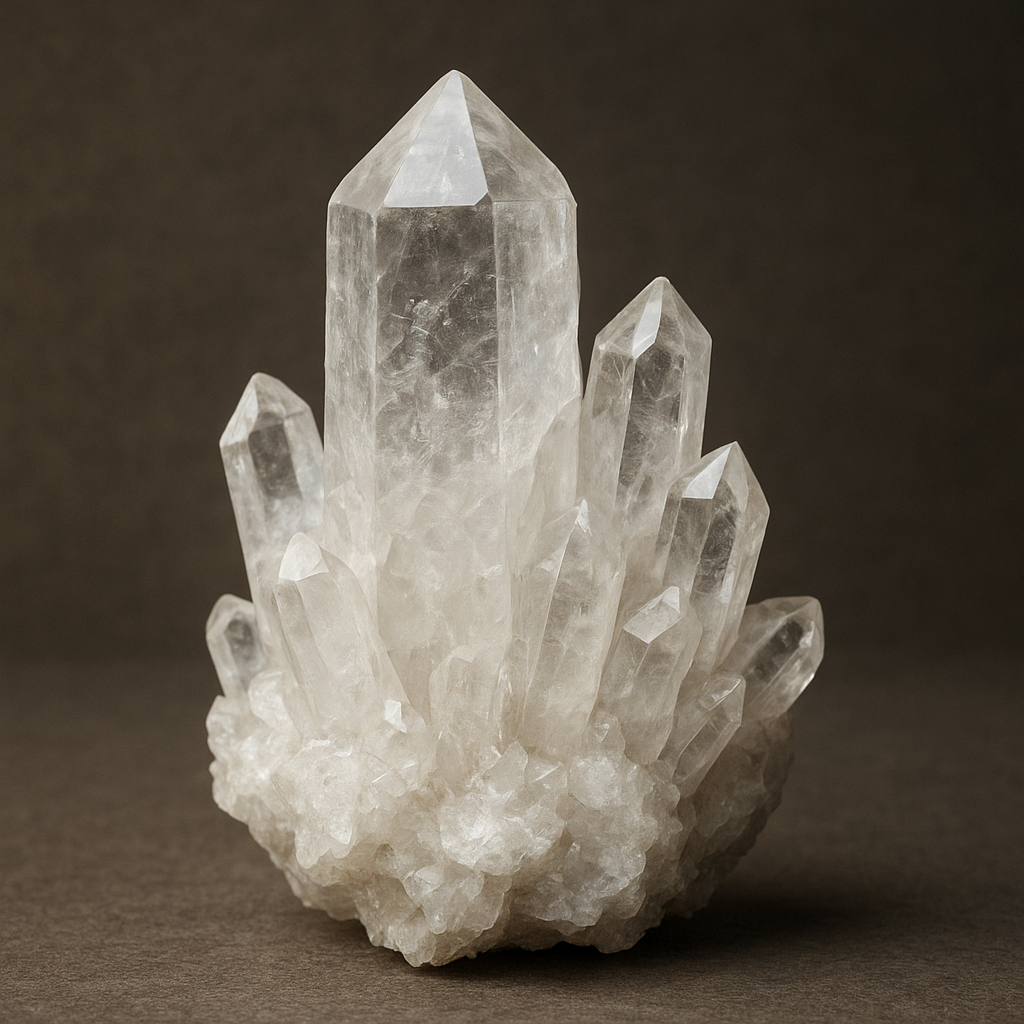
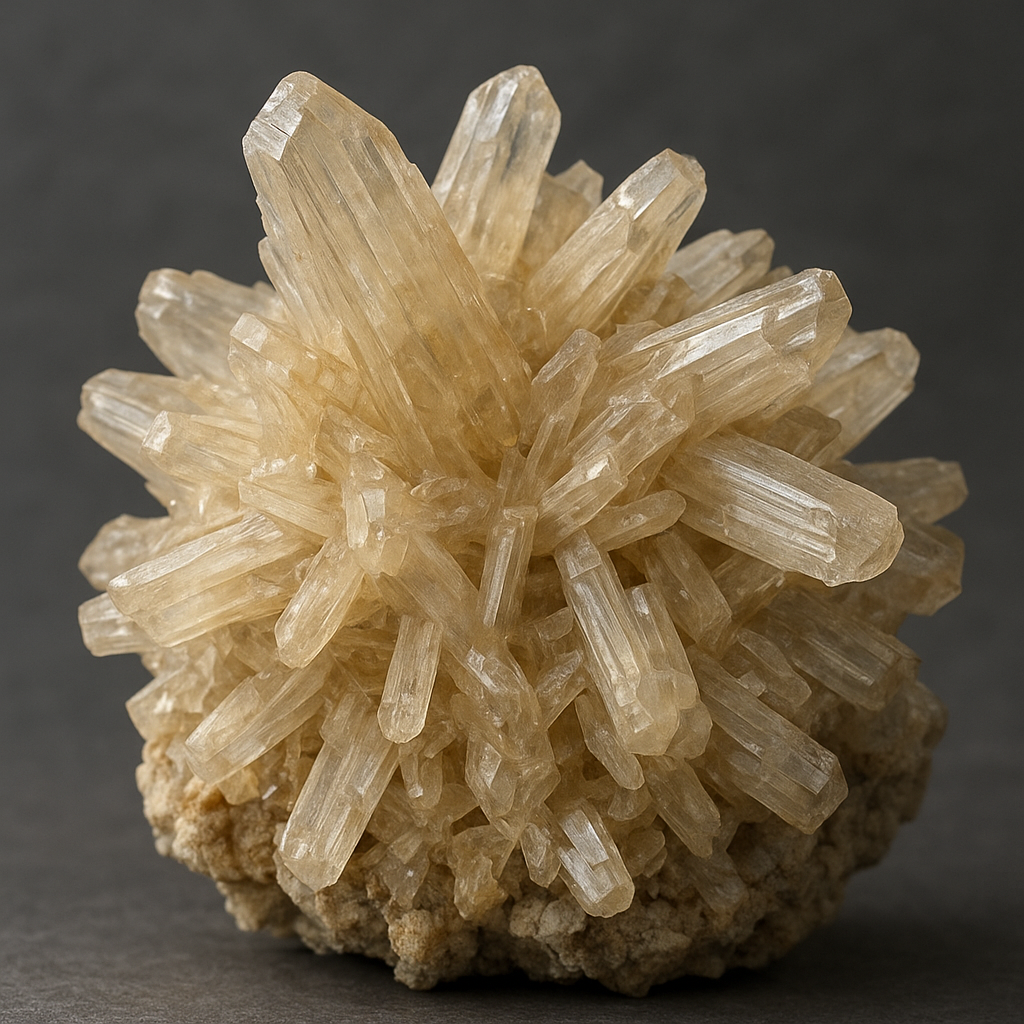
The mineral commonly called barite is the crystalline form of barium sulfate with the chemical formula BaSO4. It belongs to the sulfate mineral group and typically forms tabular, prismatic, or bladed crystals. Barite is known for its high specific density (typically around 4.4–4.6 g/cm3), which is exceptionally high for a non-metallic mineral. This characteristic is central to many of its industrial uses.
Key physical and chemical properties include:
- Crystal system: Orthorhombic.
- Hardness: 3–3.5 on the Mohs scale (relatively soft).
- Cleavage: Perfect in one direction, good in another, which often produces tabular fragments.
- Color: Typically white or colorless when pure, but impurities yield shades of blue, brown, yellow, or gray.
- Luster: Vitreous to pearly on cleavage surfaces.
- Chemical behavior: Chemically inert and insoluble in water and dilute acids—qualities that make it stable in many environments.
Because barite is composed of heavy barium bound to sulfate, it does not dissolve readily, which is valuable in applications that require material to remain inert under pressure, heat, or chemical exposure.
Where barite occurs: geological settings and notable deposits
Barite forms in a variety of geological environments, and its occurrence is often associated with specific host rocks and mineral assemblages. Common settings include:
- Hydrothermal veins: Precipitated from hot, mineral-rich fluids moving through fractures and cavities. These veins often contain sulfide minerals such as galena and sphalerite.
- Residual deposits and weathering horizons: Secondary concentrations formed by the chemical weathering of barium-bearing rocks and the subsequent accumulation of resistant barite grains.
- Sedimentary bedded deposits: Fine-grained barite can accumulate in marine basins where barium precipitates from seawater, sometimes forming thick layers associated with organic-rich shales.
- Replacement deposits: Where barite replaces limestone, sandstone, or other substrates through chemical reactions between barium-rich fluids and carbonate rocks.
Some countries are well known for large or high-quality barite deposits. Major producers include China, India, Morocco, the United States, Mexico, and Turkey. Morocco and China are particularly important sources of high-purity crystalline barite used in specialty markets. In the United States, significant production comes from states such as Nevada, Missouri, and Georgia, with deposits often tied to hydrothermal activity.
Primary industrial applications
The high specific density and chemical inertness of barite underpin its most important uses. The following list highlights the principal applications and why barite is chosen.
Drilling fluids in oil and gas
The single largest use of barite worldwide is as a weighting agent in drilling muds for oil and gas exploration. When drilling deep wells, keeping control over formation pressures is critical to prevent blowouts or loss of wellbore integrity. Adding ground barite increases the density of drilling fluids, allowing engineers to counterbalance formation pressures safely without introducing corrosive or reactive components.
Specifications for drilling-grade barite include strict limits on particle size, density, and chemical contaminants. Producers crush and grind barite to meet these industry standards; powders used in drilling muds must be consistent to perform predictably under pressure and temperature variations.
Radiation shielding and heavy media applications
Because of its high density and stability, barite is effective at attenuating gamma rays and X-rays. It is used as a component in concrete and mortar mixes for radiation shielding in hospitals, laboratories, and nuclear facilities. Radiation shielding concrete with barite aggregates provides an alternative to traditional lead shielding in some circumstances, offering a non-toxic, more stable option.
Heavy media separation in mining and coal preparation also utilizes barite. Suspensions of finely ground barite create a dense medium that separates ore particles by density—valuable in gravity concentration circuits.
Fillers, pigments, and manufacturing
Barite’s whiteness and chemical inertness make it useful as a filler in paints, plastics, rubber, and paper. It improves brightness and opacity in coatings and can enhance mechanical properties in composite materials. In the glass and ceramics industries, barite is sometimes used to increase refractive index or add weight.
Medical and chemical uses
While raw barite is mineral barium sulfate, pharmaceutical-grade barium sulfate is an important diagnostic agent. As an orally administered contrast medium for X-ray imaging of the gastrointestinal tract, barium sulfate’s opacity to X-rays helps visualize organ structure. Its insolubility and inertness make it safe for use in the body (as long as it remains outside of the circulation).
Barite is also a feedstock for producing other barium compounds used in electronics, dyes, and industrial chemistry.
Mining, beneficiation and processing
Mining methods for barite depend on deposit type and depth. Open-pit mining is typical for large, near-surface deposits, while underground methods are used for deeper vein systems. After extraction, the ore undergoes a series of beneficiation steps to produce products meeting market specifications:
- Crushing and grinding to reduce particle size.
- Washing and gravity separation to remove lighter gangue minerals.
- Flotation to concentrate barite from sulfide or siliceous gangue when necessary.
- Drying and milling to produce powders with controlled particle size distributions.
Quality parameters vary by end use. For drilling muds, the industry requires consistent bulk density and low levels of sulfides, chlorides, and soluble salts that could react with downhole chemistry. For pigment or pharmaceutical uses, purity and whiteness become paramount, so producers employ additional refining steps.
Environmental and health considerations
Handling and processing barite present several environmental and occupational health issues, though the mineral itself is chemically inert. Dust control is a primary concern: inhalation of fine particulate matter can cause respiratory irritation and, with chronic exposure to high dust levels, more serious lung conditions. Mining operations typically employ water sprays, enclosures, and ventilation systems to limit airborne dust.
Natural barite deposits may contain traces of naturally occurring radioactive materials (NORM), such as radium isotopes, incorporated during geological formation. These radionuclides can concentrate during processing and must be monitored to comply with regulatory limits. Tailings management and proper waste disposal are essential to prevent soil and water contamination, especially in regions with heavy rainfall or groundwater connectivity.
Regulatory frameworks differ by country, but many jurisdictions set guidelines for occupational exposure, permissible levels of contaminants in drilling fluids, and environmental monitoring for mining projects. Responsible producers implement best practices for worker safety, community consultation, and environmental stewardship.
Identification, testing and quality control
For geologists, mineral collectors, and quality control technicians, identifying barite can be straightforward with a few simple tests:
- Specific gravity measurement: Barite’s high density distinguishes it from most non-metallic minerals.
- Cleavage and crystal habit: Tabular or bladed crystals with perfect cleavage are indicative.
- Hardness test: A Mohs hardness of about 3–3.5 allows scratching by a knife but not by a fingernail.
- Acid test: Barite does not effervesce with dilute hydrochloric acid, unlike many carbonate minerals.
Laboratory analysis for commercial materials includes particle size distribution, bulk and tap density, chemical impurity content (e.g., silica, iron, sulfates), and radioactivity assays. For applications such as drilling fluids, batch-to-batch consistency is critical; manufacturers and consumers commonly use certificates of analysis and third-party testing to verify compliance.
Interesting historical and niche facts
Barite has several intriguing historical and niche associations. In the early days of photography and painting, baryte (barium sulfate) served as a white pigment and brightening agent. It also found a role in ornamental crystals and as a collector’s mineral because of its often striking crystal forms and association with other colorful minerals like fluorite and celestine.
In medicine, while industrial barite is not used directly, its chemical equivalent has been a mainstay in radiography. The use of barium sulfate suspensions for gastrointestinal imaging dates back to the late 19th and early 20th centuries and remains a standard diagnostic tool.
On the frontier of materials science, researchers have investigated barite-derived and barium-containing compounds for applications in electronics, optical materials, and even as precursors for specialized ceramics. These advanced uses exploit barium’s heavy-atom properties and the stability of the sulfate anion to achieve novel electronic and optical behaviors.
Economics, markets and future outlook
Global demand for barite is closely linked to the activity of the oil and gas sector because of its predominant use in drilling fluids. When exploration and drilling activity rise, demand for drilling-grade barite increases; conversely, downturns in the energy market reduce demand. Other market drivers include construction activity (for heavy concrete), mining operations that use heavy media, and demand from chemical and pigment industries.
Price dynamics depend on ore grade, processing costs, freight, and regulatory constraints (especially those related to NORM or environmental permitting). Countries with low-cost mining and proximity to major drilling regions enjoy competitive advantages. However, high-purity barite used in specialty markets commands higher prices and justifies more intensive processing.
Practical uses and advice for different audiences
For mineral collectors: Look for well-formed crystals in hydrothermal veins and associated sulfide-rich deposits. Barite often forms eye-catching specimens when combined with other minerals.
For industrial buyers: Specify required density, particle size distribution, and impurity thresholds up front. Ensure suppliers provide consistent certificates of analysis and information on any radionuclide content.
For environmental managers: Monitor dust and water pathways near processing facilities. Test for NORM where geological conditions suggest possible radium presence, and implement tailings management practices that prevent leaching and erosion.
For students and curious readers: Try a simple identification exercise with a hand sample—assess weight, cleavage, and response to acid. Observing how barite differs from look-alike minerals (for example, calcite or gypsum) is a useful practical geology lesson.