
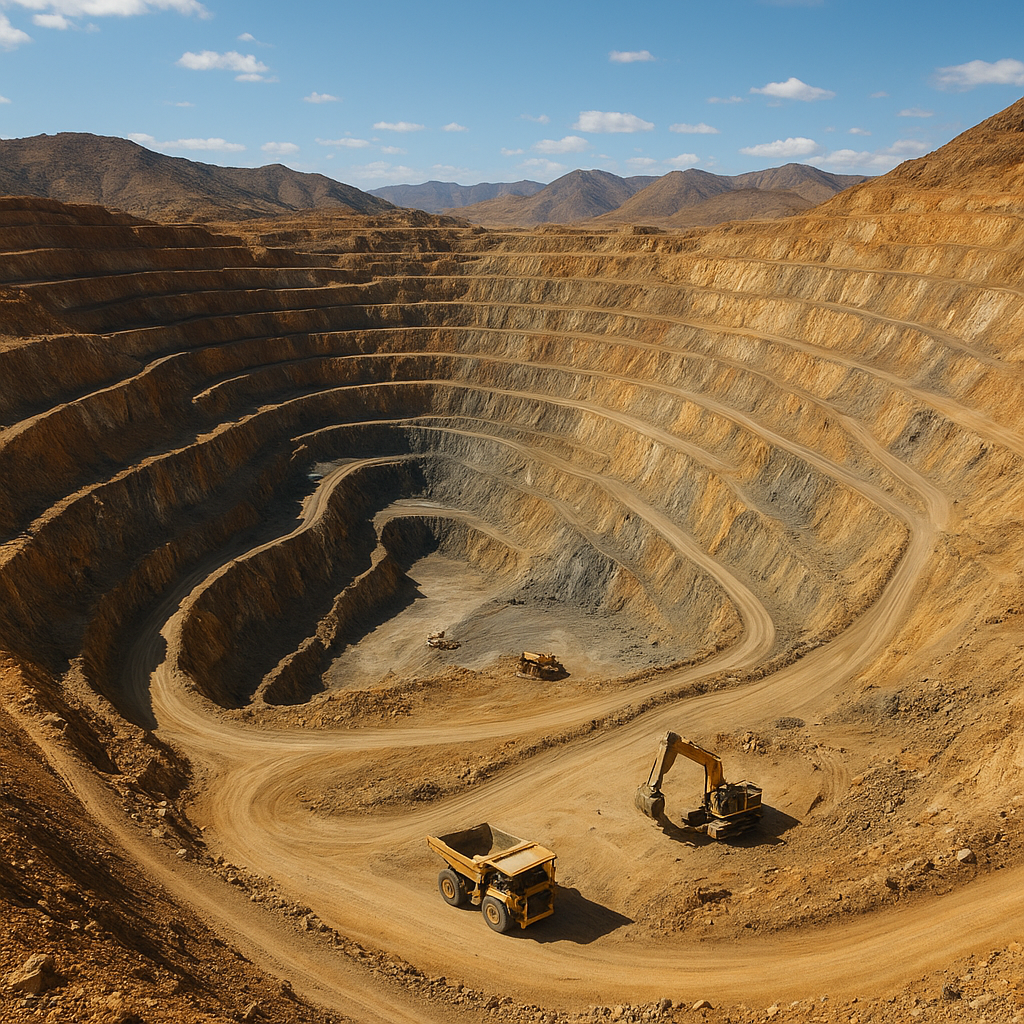
The Goldstrike Mine is one of the most important and storied mineral operations in the United States. Located in northeastern Nevada, it sits within the prolific Carlin Trend, a geologic corridor that has produced a large share of American gold. This article explains where Goldstrike is, what is mined there, how the mine operates, its broader economic importance, and several intriguing features that make Goldstrike noteworthy for geologists, miners, and the public alike.
Location and Geological Setting
Goldstrike is situated in northeastern Nevada, a state long synonymous with mineral production and mining innovation. The deposit lies along the Carlin Trend, a linear zone of highly mineralized rock known for a particular style of gold mineralization called Carlin-type or sediment-hosted disseminated gold. These deposits are characterized by ultra-fine, often invisible particles of gold intimately associated with sulfide minerals and carbonate host rocks. The microscopic nature of the gold requires sophisticated exploration techniques to detect and extract economically.
The regional geology that hosts Goldstrike formed hundreds of millions of years ago. Hydrothermal fluids moved through faults and permeable layers in otherwise carbonate-rich host rocks, depositing disseminated gold and sulfide minerals in broad, tabular zones. The spatial distribution of ore at Goldstrike is complex: it comprises stacked and lateral zones that have been exploited both at the surface and at depth. Key ore zones include named deposits such as the Betze-Post area and a series of associated underground ore bodies that together create a vast and vertically extensive mineral system.
Why the Carlin Trend Matters
- The Carlin Trend is one of the richest gold-producing trends in North America, with numerous large mines and discoveries clustered along its length.
- Carlin-type deposits yield gold that is refractory in many cases, demanding specialized processing; their unique geology spurred advances in mineral processing and exploration technology.
- Goldstrike exemplifies the scale and continuity that make the trend economically attractive: long strike lengths and vertical continuity allow for multi-decade mining plans.
What Is Mined and How Operations Work
As its name implies, the mine primarily produces gold, but mining and processing streams can also recover by-products such as silver and trace amounts of other metals depending on ore composition. Gold at Goldstrike is typically fine-grained and disseminated, which affects both the mining method and the metallurgical approach. Two principal mining styles are used at the complex: open-pit operations to remove near-surface, lower-grade material and underground operations to access higher-grade, deeper zones.
The large open-pit mines expose vast benches of mineralized rock that are drilled, blasted, and hauled to processing facilities. Underground workings extend under the pit and out along deeper ore shoots; these use contemporary mining techniques such as controlled longhole stoping, drift-and-fill methods, and systematic ground support to ensure safety and maximize ore recovery. Coordination between surface and underground activities is essential to optimize the mine plan and extend the life of the operation.
Processing and Metallurgy
Because the gold is finely disseminated, processing involves crushing and milling followed by chemical extraction methods tailored to the ore’s behavior. Large mills and leach circuits treat the ore, often employing carbon-in-leach (CIL) or other cyanide-based extraction systems alongside robust environmental controls for reagent handling and tailings management. Over time, process flowsheets at major mines like Goldstrike have evolved to include improved recoveries, more efficient reagent use, and enhanced management of tailings and water, reflecting both technological advances and regulatory expectations.
Modern operations also integrate digital mine systems—geologic modeling, real-time monitoring, and automated equipment—to improve safety and efficiency. Ventilation systems, paste backfill, and other mine-support technologies are used in the underground workings to control ground conditions and allow safe access to high-grade zones.
Economic Significance
Goldstrike is not only a large mineral deposit; it is a major economic engine for both the regional and national levels. The mine contributes to local employment through direct jobs in mining, processing, maintenance, and administration, and supports a broad network of contractors and suppliers—haulage, equipment maintenance, catering, engineering, and environmental services among them. The multiplier effect of a large mine means that even remote rural communities can experience sustained economic activity related to the project.
At the corporate level, operations like Goldstrike generate revenue and cash flow that underpin exploration budgets, capital investment, and shareholder returns. From a strategic perspective, domestic gold production contributes to a nation’s mineral endowment and, when significant, reduces reliance on imports for a metal that plays financial, industrial, and cultural roles. Gold production from large complexes also contributes to state and local government revenues in the form of taxes, royalties, and fees that fund public services and infrastructure.
- Local jobs and secondary economic activity in nearby towns and service centers.
- Royalties and tax contributions that support public budgets.
- Long-term contracts and investments in infrastructure such as roads, power, and water systems.
- Contributions to the national supply of precious metals and strategic minerals.
Community and Workforce
Large-scale mining requires a skilled workforce including geologists, engineers, technicians, and operators. Investments in training, safety culture, and local hiring often accompany major projects. In many cases, companies operating high-profile assets cultivate partnerships with regional educational institutions and workforce development programs to ensure a pipeline of trained staff and to support community resilience when mines enter different phases of their life cycle.
Environmental Management and Sustainability
Modern mining at sites like Goldstrike occurs under close environmental oversight. Environmental management programs focus on water management, minimizing the footprint of waste storage facilities, progressive reclamation of disturbed areas, and monitoring to detect and mitigate any impacts. The industry has moved toward best practices that emphasize transparency, community consultation, and ongoing monitoring to maintain environmental performance throughout the mine’s life.
Sustainability initiatives at large mines typically include efforts to reduce greenhouse gas emissions through fuel efficiency and electrification where feasible, to optimize water use through recycling and treatment, and to manage tailings and waste rock with modern engineering solutions. These measures respond to regulatory requirements, shareholder expectations, and community concerns, and help ensure the long-term social license for operations.
Interesting Features and Historical Notes
Several aspects of Goldstrike make it particularly interesting to those who follow mining history, geology, and industry evolution:
- Scale and longevity: Goldstrike represents a multi-decade mining complex. The combination of extensive open-pit operations and deep underground workings has allowed for sustained production over many years.
- Microscopic gold: The gold particles are often so fine that they are invisible to the naked eye, embedded within sulfides and carbonate matrices. This challenged early explorers and drove advances in geochemical sampling and metallurgical techniques.
- Named deposits: Areas like the Betze-Post zone are well known in mining literature for their generous size and consistent mineralization, which underpin much of the mine’s value.
- Technological evolution: Over its life, Goldstrike has incorporated new mining technologies, from improved drilling and blasting techniques to digital modeling and fleet optimization, reflecting broader industry trends.
- Economic footprint: As a major gold producer, Goldstrike has provided significant contributions in terms of employment, local procurement, and payments to government entities.
Notable Operational Challenges
Mining at the scale of Goldstrike is technically complex and requires constant adaptation. Challenges include managing groundwater interactions, ensuring ground stability in deep underground areas, and optimizing ore recovery from irregular bodies. Metallurgical variability—where different portions of the deposit react differently to processing—requires a flexible and adaptive approach to plant operation. These challenges spur ongoing research, collaboration with academic institutions, and innovation within the company’s technical teams.
Broader Impacts and Future Outlook
Mines such as Goldstrike play a role in the broader discussion about natural resource development, regional development strategies, and the transition to more sustainable mining practices. As the mine matures, exploration continues both to expand known resource areas and to test deeper targets that might extend the life of the operation. Industry trends—digitalization, electrification of fleets, and stronger community engagement—are likely to influence how Goldstrike and similar complexes operate going forward.
From a strategic perspective, the continued productivity of large domestic mines contributes to supply security for precious metals and supports a skilled industrial workforce. For the local and state economy, operations of this scale mean sustained capital investment, tax revenue, and employment opportunities that can reshape communities over time.
What Makes Goldstrike Representative
- It typifies a modern, multi-decade mining complex combining open-pit and underground methods to access large, continuous mineralized zones.
- It showcases how geology—specifically the Carlin-style mineralization—can yield high-value deposits that demand specialized processing and engineering skills.
- It highlights the interplay between extraction, environmental stewardship, and community relations necessary for contemporary resource projects.
Goldstrike remains a touchstone in the mining world: a place where geology, technology, and economics intersect to produce significant quantities of precious metal. The mine’s story is still unfolding as exploration and operational improvements continue to shape its future role in the region and in the portfolio of the operating company. Its enduring presence in the Carlin Trend attests to the scale and persistence of Nevada’s mineral wealth and to the ongoing importance of responsible resource development.

