Aragonite is a fascinating and widely distributed form of calcium carbonate that plays crucial roles in geology, biology and industry. This article explores its nature, where it forms, how it is used, and several intriguing aspects that link mineralogy to environmental science and human activity. Below you will find detailed information divided into clear sections to guide both general readers and those seeking deeper technical context.
What is Aragonite?
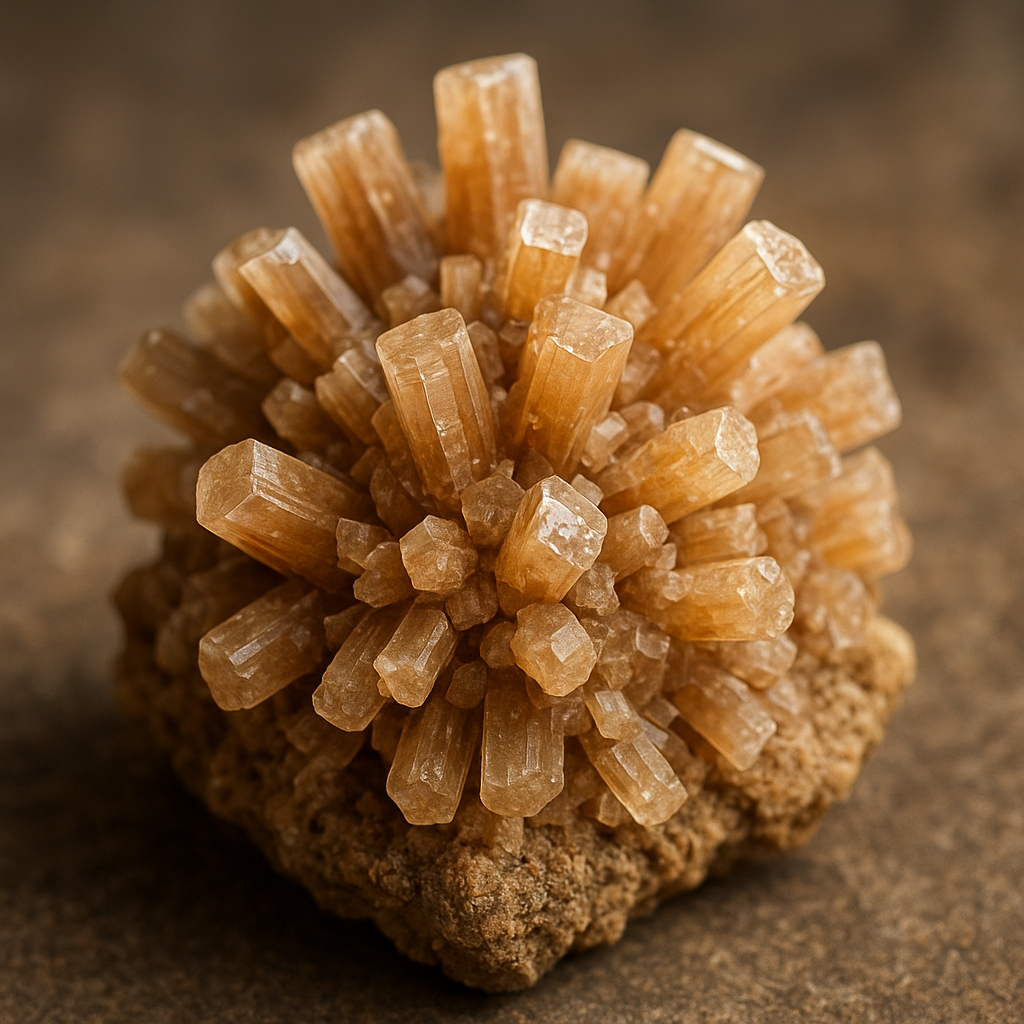
Aragonite is a crystalline polymorph of calcium carbonate (CaCO3) that differs from the more common calcite in crystal structure, density and some physical properties. While both minerals share the same chemical composition, polymorphism arises because atoms can arrange into different lattice geometries under varying conditions of pressure, temperature and chemistry. Aragonite forms an orthorhombic crystal system, typically producing elongated, needle-like or columnar crystals, and often appears in fibrous aggregates or radiating clusters.
Crystal structure and physical properties
The orthorhombic lattice of aragonite results in distinct cleavage patterns and optical behavior. It is usually harder and denser than calcite, with a specific gravity around 2.93 (compared to calcite’s 2.71). Aragonite is typically white or colorless but impurities can create shades of blue, green, yellow, or brown. It is relatively soft (Mohs hardness about 3.5–4) and will effervesce in cold dilute hydrochloric acid, a quick field test for carbonate minerals. Unlike calcite, aragonite exhibits different optical properties under polarized light, making petrographic identification possible.
Where Aragonite Occurs
Aragonite forms in a wide variety of natural environments. Its stability field is influenced by factors such as temperature, pressure and the ions present in solution. Below are the most common settings where aragonite is found:
- Marine environments — Many marine organisms produce aragonite shells and skeletons. Coral skeletons, some mollusk shells (e.g., nacreous pearls), and the tests of certain planktonic organisms are composed of biologically precipitated aragonite.
- Caves and speleothems — Aragonite can form as delicate needle-like speleothems in caves where local conditions (temperature, CO2 concentration, Mg/Ca ratio) favor its precipitation over calcite.
- Hot springs and hydrothermal vents — Rapid cooling and high ion concentrations can precipitate aragonite in and around thermal waters.
- Evaporitic and arid-region sediments — In some shallow evaporitic basins and playas, aragonite can form as authigenic carbonate crusts and nodules.
- Metamorphic contexts — Under certain pressure-temperature paths, calcite can transform into aragonite (and vice versa), especially in high-pressure metamorphic rocks and subduction zones.
Marine settings in detail
In the ocean, aragonite precipitates both biologically and inorganically. Biogenic aragonite is produced by corals, some bivalves, gastropods, and other organisms through controlled biomineralization pathways. The skeletons of scleractinian corals are classic examples of large-scale aragonite structures that build coral reefs over geological timescales. Inorganic aragonite precipitation occurs in supersaturated seawater, often forming cements in sedimentary rocks or sparry overgrowths on grains.
Uses and Applications
Aragonite has a range of practical uses, from industrial raw materials to environmental remediation and gemology. Several properties make it useful: chemical composition, reactivity, porosity in natural deposits, and occurrence as a primary biomineral.
Industrial applications
- Construction and cement — While calcite limestone is more commonly used, aragonitic sediments can be a source of calcium carbonate for cement and lime production. Its reactivity can influence setting times and durability.
- Glass, paint and plastics fillers — Finely ground carbonate minerals, including aragonite where available, serve as inexpensive fillers that modify brightness, opacity and mechanical properties.
- Agricultural lime — Ground carbonate helps correct soil pH and supplies calcium to crops; materials with high aragonite content can be employed similarly.
Environmental and remediation uses
Aragonite is used in some water treatment and remediation contexts because of its ability to buffer pH and sequester dissolved metals. Aragonitic sands and synthetic aragonite substrates are used in aquaria and marine hatcheries to stabilize alkalinity, provide calcium for calcifying organisms, and create realistic reef substrates.
Gemology, collectibles and jewelry
Some aragonite specimens with attractive crystal habits or iridescent nacre (mother-of-pearl) are prized by collectors. Certain forms are fashioned into ornamental items and beads, although aragonite’s relative softness and cleavage make it less suitable for everyday jewelry compared to harder gemstones.
Scientific and paleoclimate research
Skeletal and sedimentary aragonite preserves chemical signatures used by researchers to reconstruct past ocean temperatures, salinity, and carbon cycles. Isotopic compositions (such as oxygen isotopes) and trace-element ratios (like Sr/Ca or Mg/Ca) in aragonitic shells and corals are valuable proxies for paleoclimatology.
Formation Processes and Biomineralization
Understanding how aragonite forms helps explain its distribution and role in natural systems. Two broad pathways are relevant: inorganic precipitation under chemical constraints and biologically mediated mineralization.
Inorganic precipitation
When water becomes supersaturated with respect to carbonate ions and conditions (temperature, pressure, ionic composition) favor the orthorhombic lattice, aragonite precipitates. High-magnesium environments and elevated carbonate ion activity often promote aragonite over calcite. Rapid precipitation, high supersaturation, and kinetic factors also play roles; these can trap impurities and produce acicular textures.
Biomineralization
Many marine organisms exert exquisite biological control over mineral formation. They use organic matrices, proteins and cellular processes to nucleate and orient crystals into functional structures such as shells and skeletons. The resulting biominerals often display hierarchical organization: nano-scale crystals align into microstructures that provide mechanical strength and toughness far exceeding what the mineral alone would afford. This is especially evident in mollusk nacre, where aragonite plates glued by biopolymers create a tough composite.
Mineralogical Identification and Laboratory Techniques
Distinguishing aragonite from calcite and other carbonates requires a combination of field tests and laboratory methods. Simple field checks include acid reaction and crystal habit, but laboratory techniques give definitive results.
- X-ray diffraction (XRD) — Primary method to identify crystal structure and confirm polymorph.
- Scanning electron microscopy (SEM) — Reveals crystal morphology and microstructure, useful in biomineral studies.
- Raman and infrared spectroscopy — Provide molecular-level fingerprints distinguishing aragonite from calcite and vaterite.
- Stable isotope and trace element analysis — Help interpret formation conditions, diagenesis and environmental history.
Environmental Significance and Contemporary Concerns
Aragonite is central to several pressing environmental issues, most notably those linked to the marine carbon cycle, reef health and ocean acidification. Because aragonite is more soluble than calcite, changes in ocean chemistry impact organisms that depend on it.
Ocean acidification and calcifying organisms
Rising atmospheric CO2 lowers seawater pH and reduces carbonate ion concentration, decreasing the saturation state of aragonite. When aragonite saturation drops, organisms find it harder to build and maintain aragonitic skeletons and shells; existing structures may dissolve more readily. Coral reefs, mollusk beds and certain planktonic organisms are particularly vulnerable, which has cascading effects throughout marine ecosystems and on human economies dependent on fisheries and tourism.
Carbon sequestration and sedimentary cycles
Aragonite formation and burial in sediments sequester carbon on geological timescales. Conversely, dissolution releases dissolved inorganic carbon. Understanding the balance of aragonite precipitation and dissolution is important for global carbon models and predicting long-term climate feedbacks.
Interesting Facts and Curiosities
Aragonite’s role in nature and culture offers a wealth of surprising details that connect mineralogy to broader topics:
- Aragonite was named after Molina de Aragón in Spain, where the mineral was first described in the 18th century.
- Many freshwater pearls and marine nacre are primarily aragonitic, and the interplay of organic layers with mineral plates produces the iridescent effect admired in jewelry.
- Cave aragonite forms delicate helictites and frostwork that can look like snow or glass; these fragile formations are vulnerable to human disturbance and microclimate changes.
- In high-pressure metamorphic rocks, aragonite can record the pressure-temperature history of subducted carbonates, providing clues about deep-Earth carbon cycling.
- Synthetic aragonite is being developed for targeted applications such as tailored water-softening media and novel biomaterials that mimic natural composites.
- Some unusual organisms, like certain coralline algae and marine worms, precipitate aragonite with unique morphologies that have inspired bioinspired materials research.
The study of aragonite is multidisciplinary, touching mineralogy, marine biology, environmental science, materials engineering and cultural heritage. From the microscopic architecture of a mollusk shell to vast coral reef edifices, aragonite connects the chemistry of ions in solution to large-scale ecosystems and human industries. Advances in analytical techniques continue to reveal new aspects of aragonite formation and function, ensuring that this mineral will remain a rich subject of research and practical interest for years to come.