
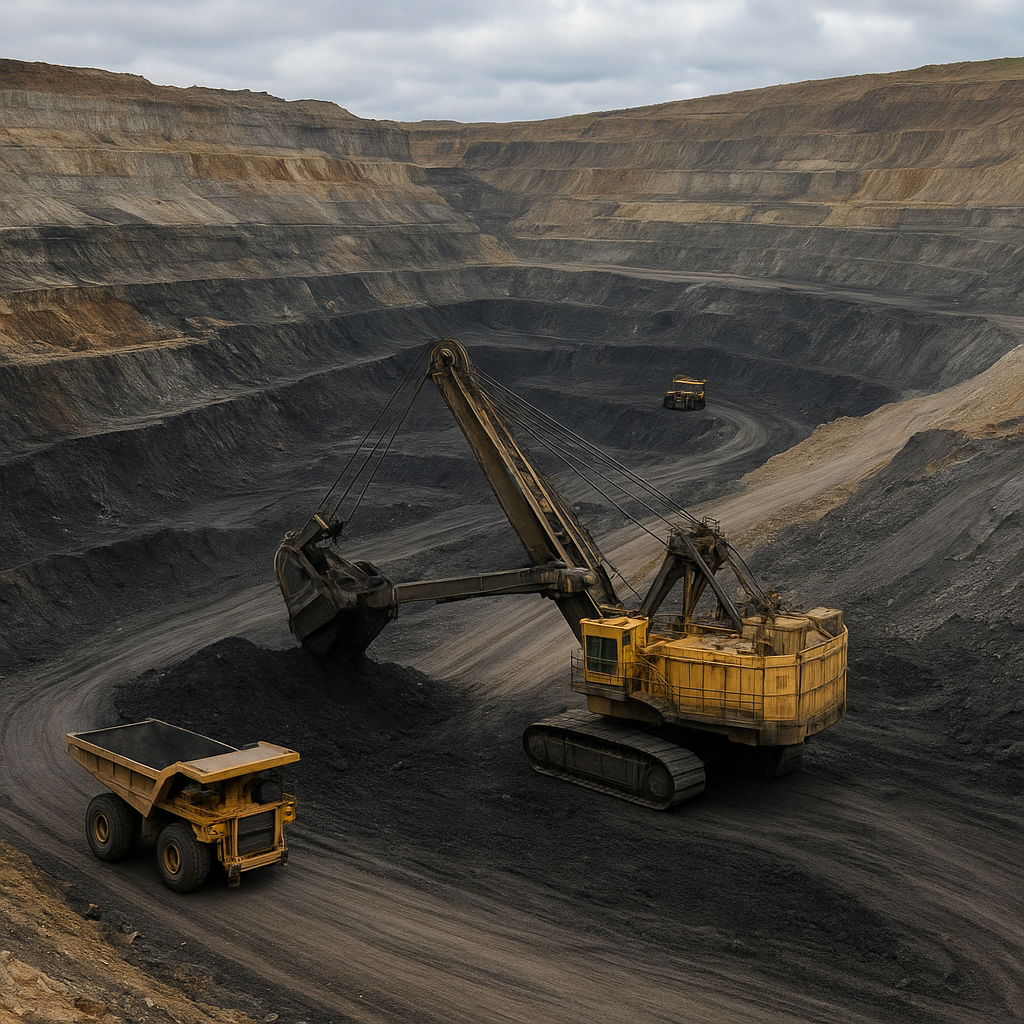
The Black Thunder Mine stands as one of the most significant coal-producing operations in the United States. Located in the vast energy-producing landscape of the American West, it has played a central role in supplying fuel for power generation, shaping local economies, and illustrating the scale and techniques of modern surface mining. This article explores where the mine is located, what kind of resource it produces, its economic importance, and several noteworthy aspects of its operations and surroundings.
Location and Geological Setting
Black Thunder Mine is situated in the heart of the Powder River Basin, in northeastern Wyoming, near the town of Wright and extending across parts of Campbell County and Converse County. The Powder River Basin is a broad sedimentary bowl spanning northeastern Wyoming and southeastern Montana. It is famous for containing some of the largest deposits of relatively low-cost, low-sulfur coal in the United States. The basin’s deposits are primarily from Paleocene-age formations, where thick, laterally extensive coal seams were laid down in ancient floodplain and coastal plain environments.
The coal extracted at Black Thunder is predominantly sub-bituminous, characterized by lower carbon and energy content per ton compared with bituminous coal, but with lower sulfur content. This combination of factors—massive, shallow coal seams with low sulfur—made the Powder River Basin and mines like Black Thunder highly attractive for utility-scale power generation, particularly after sulfur emission concerns and the adoption of emissions regulations.
Mining Methods and Operation Scale
Black Thunder is a large-scale surface (open-pit) coal mine. The typical extraction method for the mine relies on a combination of high-capacity electric shovels, hydraulic excavators, truck fleets, and sometimes bucket-wheel or dragline equipment, depending on the active pit. The relatively shallow depth and the continuity of the coal seams enable very large-scale, high-throughput operations. Strip ratios—meaning the volume of overburden removed per ton of coal—are comparatively low in the Powder River Basin, which helps lower the delivered cost of coal.
Historically, Black Thunder has been among the nation’s top producers. Annual production has varied with market demand, but the mine has produced coal in the tens of millions of short tons per year in many years of operation. Coal from Black Thunder is moved primarily by rail, loaded into unit trains that travel across regional and national rail networks to electrical generating stations in the Midwest, West, and sometimes beyond. The reliance on rail logistics, including large unit trains and extensive coordination with rail carriers, is a defining feature of the mine’s operational profile.
What Is Mined and Where It Goes
The primary product is thermal coal used for electricity generation at steam turbine power plants. Sub-bituminous coal from the Powder River Basin is prized by many utilities for being low-sulfur, which reduces the need for some pollution-control measures to meet sulfur dioxide emissions standards. While lower in energy density than higher-rank coals, PRB coal’s cost advantages and favorable environmental profile in terms of sulfur made it a dominant fuel source for many U.S. power plants for decades.
Black Thunder’s coal supplies a network of coal-fired power plants across the country. Much of the coal travels by rail to plants in the Midwest, Southwest, and West. A portion of Powder River Basin coal also finds its way to export markets through western ports, though the bulk remains for domestic electricity. The mine’s integration into national energy supply chains makes it a key node in the United States’ thermal power generation infrastructure.
Economic Importance
The economic footprint of Black Thunder Mine extends from the local to the national level. Locally, the mine provides direct employment opportunities, supporting miners, equipment operators, maintenance staff, engineers, environmental specialists, and administrative personnel. Indirectly, it supports a broad range of businesses: trucking and rail services, equipment suppliers, hospitality and retail in nearby towns, and professional services. The payroll and procurement generated by the mine contribute substantially to county and state tax bases.
At the regional and national levels, the mine’s output helps ensure a steady supply of affordable fuel for electricity generation, which in turn supports economic activity reliant on stable energy prices. Historically, the availability of Powder River Basin coal—of which Black Thunder is a major component—helped keep wholesale electricity prices in certain regions lower than they otherwise would have been, particularly during times when competing fuels were more expensive. Utilities’ long-term contracts and spot-market purchases of PRB coal shaped investment decisions in generation and grid planning.
Coal royalties and severance taxes paid by mining companies contribute to state revenues. Those funds often support public services such as education, infrastructure, and local government budgets. In rural counties where alternative sources of large-scale revenue are limited, the contribution from large mines can be a meaningful element of public finance.
Technological and Operational Developments
Scale and efficiency are the watchwords at Black Thunder. Modern surface mining at the mine uses heavy-duty fleets optimized for high productivity: large haul trucks capable of carrying hundreds of tons per load, high-capacity electric shovels and hydraulic excavators, dozers, graders, and ancillary equipment. Dispatch and fleet management systems, GPS-guided equipment, and detailed mine planning software help coordinate movements, maintain safety, and increase output while reducing idle time.
Over the years, investments in loading terminals, railcar loading systems, and integration with rail carriers have improved throughput and reduced logistic bottlenecks. These improvements are essential for turning the raw output of the pit into a reliable stream of freight that power plants and other customers can depend upon. Continuous improvements in maintenance practices, parts logistics, and training likewise boost operational reliability at scale.
Environmental Management and Land Reclamation
Surface mining inevitably alters landscapes, and Black Thunder has been part of the broader industry focus on responsible reclamation. Federal and state regulations require mining companies to restore mined land to a stable condition after coal removal. Reclamation plans often include contouring topsoil, managing drainage, and re-establishing native and adapted vegetation. In the Powder River Basin, operators commonly aim to return land to ranching — grazing lands for cattle and wildlife habitat — or to other productive uses consistent with local plans.
Water management is another crucial facet of environmental control at the mine. Operators monitor groundwater and surface water, manage sediment control, and maintain compliance with discharge and water quality permits. Air quality measures, including dust suppression and monitoring, are implemented to reduce particulate emissions associated with blasting, hauling, and coal handling.
Greenhouse gas emissions from coal combustion are a major environmental concern at the national and global levels. While mines like Black Thunder focus on minimizing methane emissions from coal seams and fugitive emissions during handling, the broader debate about coal’s role in a lower-carbon energy future affects market dynamics and long-term planning for coal operations. Some mining operations have explored methane capture projects, surface disturbance minimization, and efficiency improvements to reduce the carbon intensity of their operations.
Community and Workforce
Mines of Black Thunder’s scale influence local communities in many ways. They create direct jobs with wages, benefits, and training opportunities. Mining companies often invest in community programs, sponsor local events, and work with educational institutions to help develop a skilled workforce. Economic activity associated with the mine supports local businesses, from restaurants and hotels to equipment suppliers and professional services.
At the same time, community dynamics can be complex. Mines can introduce booms and busts tied to commodity cycles; workforce demands can strain local housing and public services in peak periods; and land-use tensions can arise between mining, ranching, and conservation interests. Addressing these challenges involves collaboration among mining companies, local governments, residents, and other stakeholders to plan for resilient local economies and comprehensive community benefits.
Interesting Facts and Notable Details
- Scale: Black Thunder is notable for its sheer size. Extracting coal at a scale measured in tens of millions of tons per year places the operation among the largest single coal-producing sites in the United States, illustrating how geology and mining methods combine to create very high-throughput operations.
- Powder River Basin: The basin itself transformed U.S. coal markets in the late 20th century because of the low cost and low-sulfur content of its coal. Black Thunder is an exemplar of that transformation.
- Equipment: The heavy machinery used in operations—massive haul trucks, high-capacity shovels, and powerful processing equipment—often attract public interest because of their scale. Photos and videos of the mine showcase pits and equipment that dwarf typical industrial sites.
- Visible Change: From the air, the mine dramatically alters the prairie landscape. Rehabilitation efforts aim to soften those changes over time, but the scale of disturbed land is a reminder of the industrial intensity required to produce vast quantities of fuel.
- Integration: Black Thunder’s effectiveness depends not only on mining but on transportation logistics—especially unit trains and coordination with major freight rail carriers—which demonstrate the interconnected nature of energy infrastructure.
- Market Influence: As a major producer of PRB coal, Black Thunder has been strategically important during times of market stress or fuel switching. Its production levels and costs have affected regional coal pricing and supply decisions for utilities.
- Workforce Skills: Modern mining at Black Thunder is technically sophisticated, requiring skills in geology, engineering, equipment maintenance, safety, and environmental compliance—far beyond the traditional image of manual labor.
Challenges and the Future
Like many coal operations, Black Thunder faces market and regulatory pressures that influence long-term prospects. Competition from lower-priced natural gas, the growth of renewable electricity sources, and regulatory and investor pressures related to carbon emissions all shape demand for coal. Nevertheless, the mine’s low-cost coal and existing logistics infrastructure have allowed it to remain a significant supplier in periods when coal demand rebounds or remains stable.
The future will likely involve continued emphasis on operational efficiency, environmental stewardship, and community engagement. Advances in mine planning, emissions monitoring, and reclamation techniques will be central to maintaining social and regulatory license to operate. In regions where coal remains part of the energy mix, mines like Black Thunder will continue to play a role, even as broader energy transitions evolve.
Final note on significance
Black Thunder Mine exemplifies the interplay of geology, technology, economics, and community that defines major energy resource projects. Its location in the Powder River Basin, production of low-sulfur sub-bituminous coal, and integration with national transportation networks make it a pivotal part of the American coal landscape. The operational scale, economic contributions, and ongoing environmental responsibilities highlight both the opportunities and the challenges associated with large-scale resource extraction.

