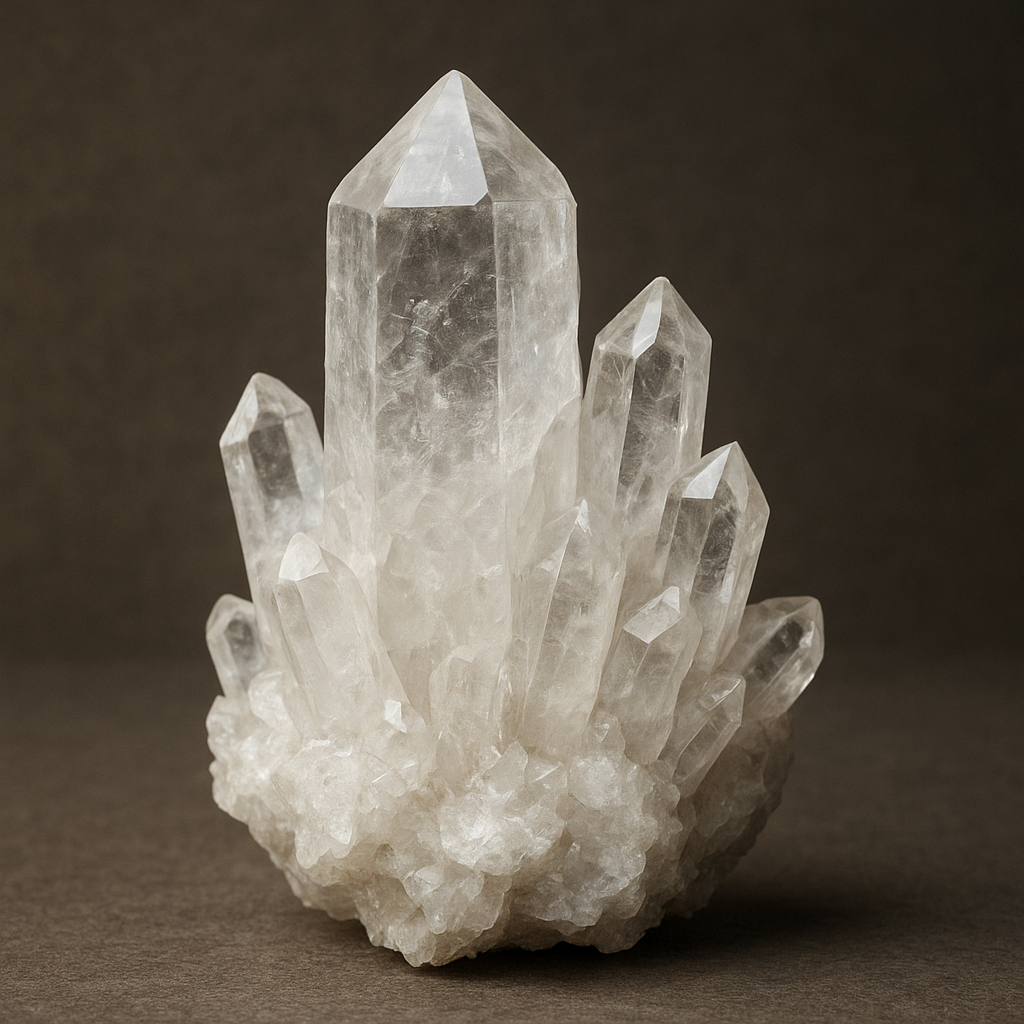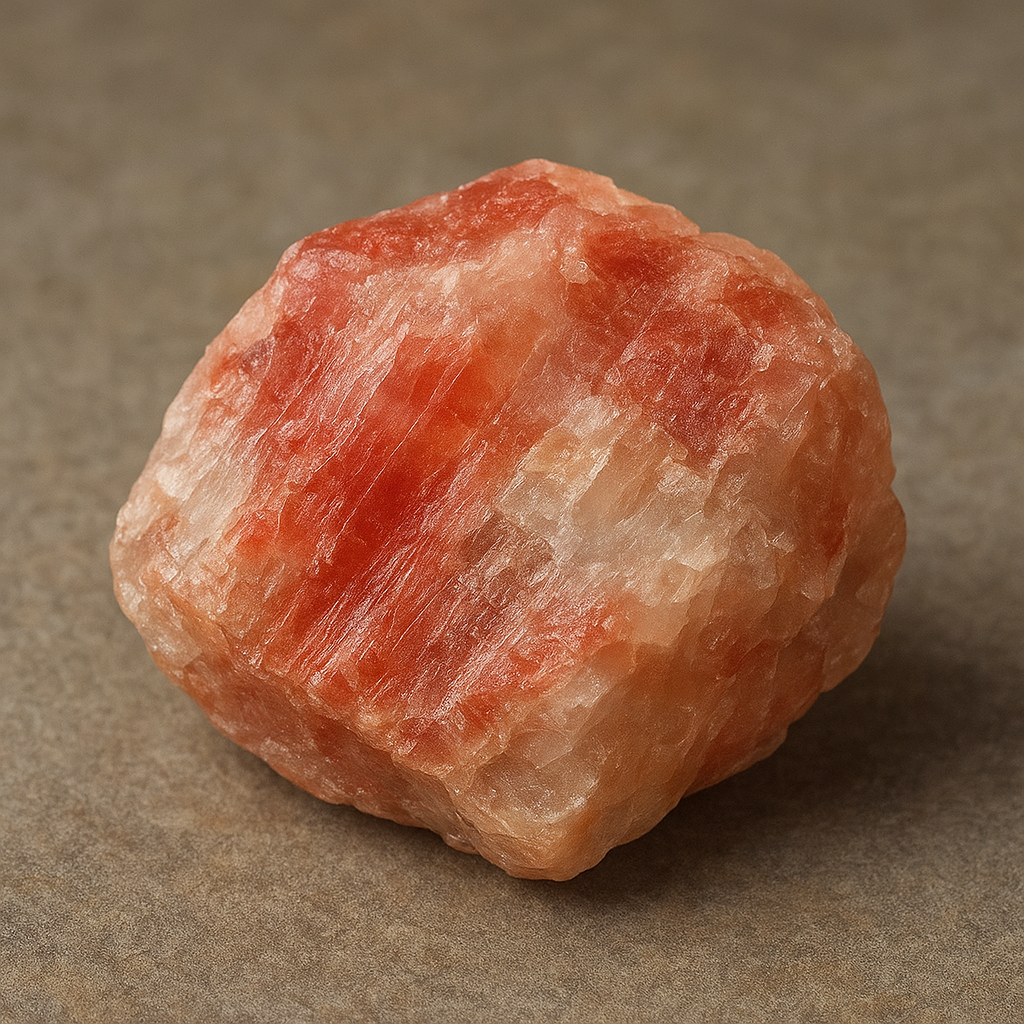
Andesine is a member of the plagioclase feldspar group whose name and geological associations evoke images of volcanic mountain belts and evolving magmas. As an intermediate plagioclase, its chemical and structural characteristics make it central to understanding igneous processes, while its occasional appearance as a faceted or polished stone has triggered both commercial interest and scientific scrutiny. This article explores the mineralogical nature of andesine, where it is commonly found, how it is used, and several intriguing scientific and gemological stories connected with it.
What andesine is: mineralogy and crystal chemistry
At the heart of andesine’s identity is its place in the plagioclase solid-solution series, which ranges from sodium-rich albite to calcium-rich anorthite. Andesine occupies an intermediate position in that series, typically with a calcium content in the range of about An30–50 (An = mole % anorthite component). Its idealized chemical formula can be written as (Na,Ca)(Al,Si)4O8, reflecting the substitution of Na+ and Ca2+ on the same crystallographic sites and the paired Al–Si ordering required to maintain charge balance.
Structurally, andesine crystallizes in the triclinic system and exhibits the classic twinning and polysynthetic lamellae characteristic of plagioclase feldspars. Physical properties that help identify andesine include a Mohs hardness around 6–6.5, characteristic two-directional cleavage, and a specific gravity typically between 2.6 and 2.8. Optically, plagioclase members like andesine are biaxial with relatively low birefringence; thin-section petrography often shows zoning patterns, oscillatory zoning, and multiple twinning laws that are diagnostic under polarized light.
The compositional zoning commonly recorded in andesine crystals documents evolving magmatic conditions during growth. Core-to-rim changes in the An-content reveal variations in temperature, pressure, and melt composition, making andesine an essential recorder of magmatic history. At the microscopic scale, exsolution textures and perthitic intergrowths—where alkali feldspar and plagioclase separate at low temperatures—can occur, adding complexity to its microstructural record.
Where andesine occurs: common settings and notable occurrences
Andesine is most abundant in andesite and other intermediate volcanic and plutonic rocks such as dacite and diorite. Its name itself nods to the Andes mountain chain, where intermediate volcanic rocks are widespread. In addition to volcanic contexts, andesine can be found in metamorphosed equivalents and in hydrothermal veins where feldspar recrystallization has occurred.
- Volcanic and subvolcanic environments: Andesine commonly crystallizes from intermediate magmas; its composition provides clues to the conditions of crystallization and magma evolution.
- Plutonic rocks: In intrusive settings such as diorite bodies, andesine can form larger, well-developed crystals that record slower cooling histories.
- Metamorphic contexts: Recrystallization during low- to medium-grade metamorphism can produce feldspar assemblages that include andesine, often with textural evidence of metamorphic overprinting.
- Hydrothermal and alteration zones: Late-stage hydrothermal fluids can alter feldspars or precipitate new feldspar phases under specific conditions, producing andesine along fractures or in veins.
Notable localities for plagioclase feldspars, including andesine, include volcanic arcs and continental margin settings worldwide. Additionally, in the last two decades andesine attracted attention because of gem-quality red and green specimens reported from mines in China and Tibet. Those finds sparked a global gem market, scientific analyses, and controversy over the treatment and authenticity of some material.
Applications and uses: from industry to gemstones
Although feldspars as a group have broad industrial applications, the direct use of andesine itself is narrower. Industrially, feldspars are important raw materials in the production of glass and ceramics because they act as fluxes, lowering the melting temperature of mixtures and contributing alumina and alkalis to the final product. In these applications, bulk feldspar concentrates—often mixes of different plagioclase and alkali feldspars—are used rather than a single species like andesine. Nevertheless, studying andesine composition helps manufacturers understand raw material variability and quality.
In gemology, gemstone-grade andesine has been faceted and polished to produce attractive red, pink, and green stones. The emergence of red andesine on the market raised strong interest because of its unusual color range within a plagioclase species. This commercial attention, however, was paired with intensive analytical scrutiny, since treating feldspars to modify or emphasize color is technically feasible and economically tempting.
Beyond industry and jewelry, andesine has immense value in the earth sciences. Its composition is a cornerstone for petrology and igneous geochemistry: variations in the An-content are used in thermodynamic models to estimate crystallization temperatures, pressures, and melt compositions. Zoning patterns within andesine crystals serve as time-steps that preserve the history of magma mixing, recharge events, and decompression-driven crystallization. Because plagioclase can record both major-element and trace-element partitioning, methods like electron microprobe analysis and LA-ICP-MS (laser ablation inductively coupled plasma mass spectrometry) provide detailed geochemical fingerprints useful for petrogenetic reconstructions.
Scientific and gemological controversies: treatment and authentication
The recent history of gem-quality andesine includes a well-documented debate over treatment and origin. When vivid red and green stones appeared on the market, gemological laboratories began to receive samples that challenged established expectations for plagioclase color. Subsequent analytical work revealed that some commercial specimens had been artificially altered—through processes such as dyeing and copper ion diffusion—to enhance or induce color. These findings prompted both industry-wide concern and methodological advances in gem testing.
Detecting treated andesine requires multiple analytical approaches. Visible and near-infrared spectroscopy can detect absorption bands associated with specific chromophores (such as Cu2+), while microprobe and LA-ICP-MS analyses reveal anomalous trace-element concentrations or gradients indicative of diffusion. Microscopic examination may show surface residues from dyes or fine cracks filled with coloring agents. Some treated stones have diffusion halos or other textures that betray heat and chemical penetration beyond the surface, while naturally colored material tends to show homogeneous chromophore distributions consistent with crystal chemistry.
Beyond illicit treatment, the provenance of gem-quality andesine has been debated. Distinguishing whether a specimen originated in a Himalayan deposit, a Chinese mine, or elsewhere can be addressed using integrated geochemical, isotopic, and inclusion studies. Inclusions—tiny trapped minerals or melt droplets—often provide the most direct clues to a stone’s geologic origin.
Analytical methods and identification
Scientists and gemologists employ a suite of tools to characterize and identify andesine. Key techniques include:
- X-ray diffraction (XRD) to determine crystallography and phase identity.
- Electron microprobe analysis (EPMA) to measure major-element chemistry and establish An-content.
- LA-ICP-MS for trace elements and isotopic analyses that help determine provenance and detect treatment-related anomalies.
- Raman and FTIR spectroscopy for molecular and lattice vibration signatures that can differ between untreated and treated samples.
- Cathodoluminescence (CL) and optical petrography for revealing growth zoning, exsolution, and alteration textures.
Combining these methods produces the strongest conclusions: for example, EPMA provides the quantitative An number, while LA-ICP-MS might reveal elevated copper concentrations near surfaces indicative of diffusion treatment. CL and petrography expose zoning and growth textures consistent with natural crystallization processes.
Interesting research topics and natural phenomena involving andesine
Several scientific questions make andesine an intriguing subject of ongoing research:
- Zoning and magma dynamics: Detailed mapping of An-content within andesine crystals provides temporal records of magmatic events such as recharge, mixing, and cooling rates.
- Diffusion kinetics: Experiments and natural observations on how elements like Na, Ca, and transition metals diffuse in plagioclase have implications for interpreting thermal histories and treatment processes.
- Exsolution and microstructure: Investigations into how perthitic separations and exsolution lamellae develop as temperature falls illuminate the low-temperature evolution of feldspars.
- Paleoenvironments and weathering: Because plagioclase weathers to clays, studying andesine breakdown in soils informs models of nutrient release and landscape development in volcanic terrains.
- Provenance studies: Trace-element and isotopic fingerprinting of andesine can link detrital grains in sedimentary rocks back to source terranes, aiding reconstructions of erosion and sediment dispersal.
Beyond pure science, the story of andesine in the gem trade is a cautionary tale about the intersection of geology, commerce, and technology. It demonstrates how advanced analytical techniques are necessary to maintain consumer confidence and how geological knowledge can inform ethical practices in mineral extraction and marketing.
Practical considerations for collectors and scientists
For mineral collectors, gem buyers, and researchers, a few practical points are important. First, provenance and documentation are critical when acquiring gem-quality andesine; reputable dealers should provide testing reports from accredited laboratories. Second, scientific sampling and study of andesine crystals should be performed with care to preserve textural and zoning information—small chips or thin sections can yield disproportionate scientific insight compared with bulk specimens.
For industry and environmental considerations, understanding the behavior of plagioclase in weathering is also valuable. In volcanic terrains where andesine-bearing rocks are common, the breakdown of feldspar into clays influences soil fertility, slope stability, and landscape evolution. Moreover, in ceramic and glass manufacturing, knowledge of feldspar chemistry—including the presence of intermediate plagioclase phases—helps optimize processing and product qualities.
Concluding observations
Andesine bridges multiple domains: it is a mineralogical marker of magmatic processes, a component of industrial raw materials, and an occasional gemstone that has generated both excitement and controversy. Whether studied under the microscope, analyzed with mass spectrometers, or admired in a cut stone, andesine reveals stories about Earth processes, human commerce, and the investigative tools science brings to both. Its intermediate chemistry, crystallographic features, and varied occurrences ensure that andesine will remain a subject of active interest for petrologists, gemologists, and collectors alike.