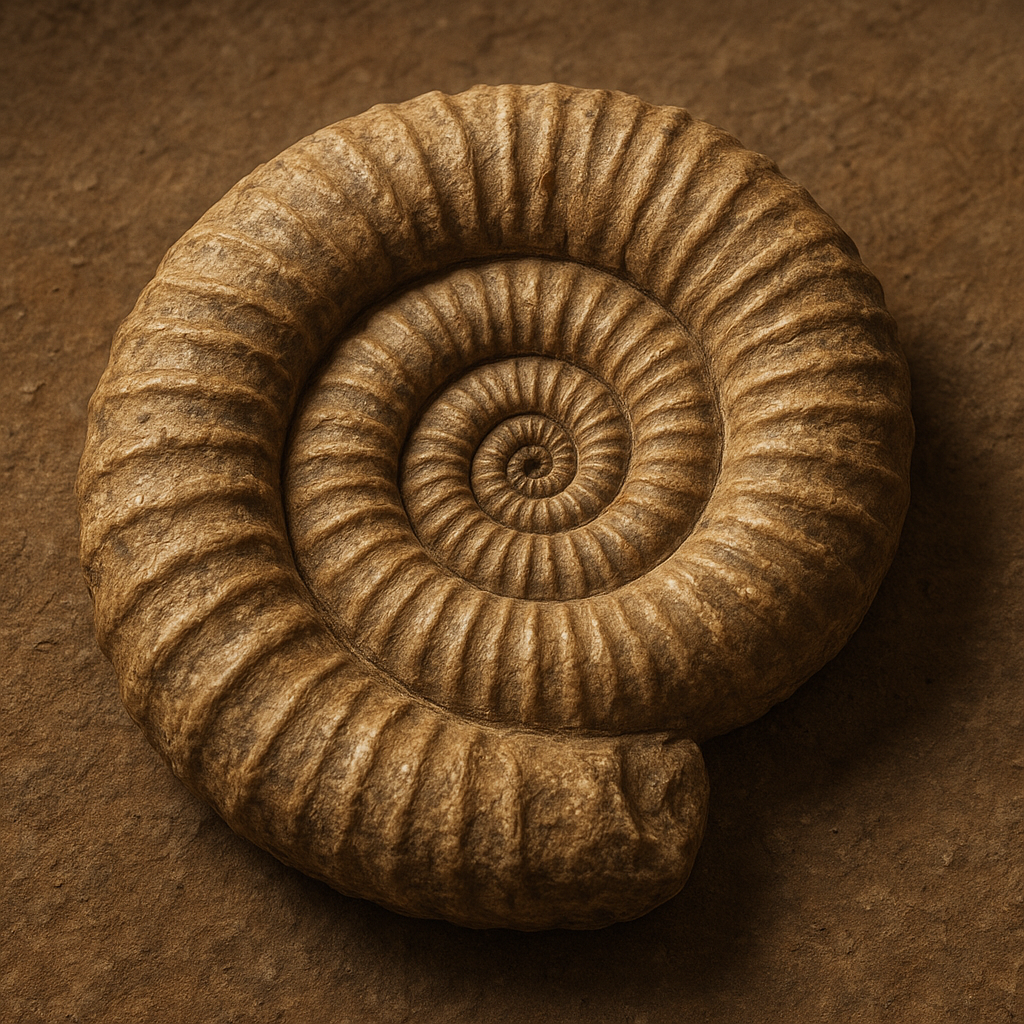
The spiral silhouettes of ancient seas, preserved in stone and admired in museums and jewelry shops alike, tell a story that spans hundreds of millions of years. This article explores the biology, distribution, practical uses, and cultural significance of ammonites — one of the most recognizable and scientifically valuable groups of extinct marine animals. Through paleontological methods, geologists and collectors alike decode Earth’s deep past from these coiled shells, while enthusiasts appreciate their beauty and variety. Below you will find detailed sections on what ammonites were, where they are found, how they are used in science and commerce, and several intriguing aspects of their biology and preservation.
What Ammonites Were: form, biology and evolution
Ammonites were marine cephalopod mollusks related to living squids, octopuses and the modern nautilus. Their most distinctive feature is a coiled external shell, usually planispiral (a flat spiral) but in many groups exhibiting complex shapes. The soft animal inhabited the last and largest chamber of the shell, while earlier chambers were used to regulate buoyancy via gas and fluid management. The shells often show exquisite ornamentation — ribs, spines, and nodes — which varied considerably across Mesozoic families.
Taxonomy and major groups
- Ammonoids are divided into several major orders and families. Some groups, such as the ammonitida, are characterized by very complex suture lines — the junctions between septa and the outer shell — while earlier groups had simpler sutures.
- Many ammonites are described as “heteromorph” when their shells deviate from the regular coil, producing straight, hooked, or otherwise irregular forms that likely reflected different life habits or ecological niches.
- Their evolutionary history spans the Devonian (first appearances of early ammonoid relatives) through the end of the Cretaceous, when ammonites became extinct alongside the non-avian dinosaurs.
Because most ammonite shells were composed of aragonite, a form of calcium carbonate prone to recrystallization, the original shell material can be replaced or altered during fossilization. Nonetheless, many specimens retain stunning three-dimensional details or internal structures such as the septa and suture patterns, which are key to identification and evolutionary studies.
Where ammonites occur: geographic and stratigraphic distribution
Ammonites are found on every continent, from polar regions to tropical latitudes. Their fossils occur in a wide range of sedimentary rocks, from shallow marine limestones to deeper basin shales, reflecting their diverse habitats in ancient seas. The global distribution and rapid evolutionary turnover of many species make ammonites exceptionally useful for correlating rock layers across vast distances.
Typical fossil localities
- Europe: The Jurassic and Cretaceous coastlines of England, France, Germany, and Russia yield rich ammonite assemblages. Classic localities such as the Jurassic cliffs of Lyme Regis in England produced historical finds that helped found modern paleontology.
- North America: Western USA and Canada host extensive Cretaceous and Jurassic ammonite-bearing strata, including the famous Bearpaw Shale and Sundance Formation.
- North Africa and the Middle East: Morocco is a major source of well-preserved and commercially collected ammonites, often recovered from Cretaceous phosphatic deposits.
- Asia and Australasia: India, Japan, and parts of Australia have yielded important local faunas that illuminate regional evolutionary trends.
- Polar regions: Fossils from Antarctica and the Arctic show that ammonites inhabited high-latitude seas during warm intervals of the Mesozoic.
Stratigraphic importance
Because many ammonite species evolved rapidly and had widespread distributions, they are among the most important index fossils used in biostratigraphy. A particular ammonite species or assemblage can often pinpoint the age of sedimentary rocks to a narrow time slice — sometimes within a million years or less in the Mesozoic. This high-resolution dating capability has been instrumental in constructing detailed geologic timescales and correlating sequences between continents.
Applications and uses: science, industry and art
Ammonites serve a variety of roles beyond being objects of aesthetic admiration. Their practicality spans scientific research, petroleum exploration, education, and commercial uses like jewelry and decorative arts.
Scientific and geological applications
- Biostratigraphy: As noted, ammonites are primary tools for dating and correlating Mesozoic marine sediments, critical for oil and gas exploration where determining the relative ages of strata can guide drilling strategies.
- Evolutionary biology: Researchers study ammonite phylogeny, morphological variation, and extinction patterns to understand macroevolutionary trends and responses to environmental change.
- Paleoecology and paleoclimate: Shell morphology, isotopic composition (oxygen and carbon isotopes), and associated fauna provide clues about water temperatures, salinity, and ocean chemistry in ancient ecosystems.
- Taphonomy: The ways ammonites are preserved — whether as internal molds, pyritized shells, or flattened impressions — inform scientists about sedimentation rates, burial conditions, and diagenetic processes.
Educational and display uses
Ammonites are staples in museum exhibits and classroom collections because they are visually striking and illustrate fundamental paleontological concepts. Complete or cross-sectioned shells help demonstrate chambered cephalopod anatomy and buoyancy mechanisms. In many natural history museums, ammonites serve as ambassadors for the Mesozoic marine world.
Commercial and cultural uses
- Jewelry and ornamentation: Polished ammonite slices and fossils mounted in metal are popular. Some are enhanced by stabilization or coating to highlight internal structures.
- Decorative stone: Large, attractively patterned ammonite slabs are used in interior design, often displayed as curios or incorporated into tabletops.
- Collecting: Amateur and professional collectors prize rare or exceptionally preserved specimens, which can command high prices at auctions and specialty markets.
Preservation and fossilization: how ammonites survive through time
Fossilization pathways for ammonites are diverse. Rapid burial in sediment, low oxygen conditions, and mineral-rich waters can favor preservation. Typical modes include molds and casts, pyritization, phosphatization, and opalization. Diagenetic processes may replace original aragonite with calcite or other minerals, preserving external ornamentation but altering microstructure.
Exceptional preservation
Fossil sites known as Konservat-Lagerstätten sometimes yield ammonites with soft-tissue impressions or retained organic details. Such rare specimens provide insights into muscle attachments, body size relative to shell, and possible reproductive structures. In a few cases, ammonites are found with preserved jaw elements (aptychi) or soft-part debris, improving understanding of feeding and lifestyle.
Life habits and ecology: what ammonites ate and how they lived
Reconstructions of ammonite ecology use shell morphology, functional anatomy, and analogies to living cephalopods. Many ammonites were likely active predators or opportunistic scavengers, employing tentacles and a beak-like jaw to capture prey. Others might have been planktonic or occupied nektonic niches, drifting or swimming in different parts of the water column.
Hydrodynamics and shell form
- Planispiral, streamlined shells likely indicate better swimmers capable of more active movement in open water.
- Strongly ornamented shells with heavy ribs or spines might have been adaptations for defense, stabilization, or living in high-energy coastal environments.
- Heteromorphic forms suggest specialized modes of life: some may have been vertical drifters, while others occupied near-bottom habitats.
Stable isotope studies and trace element analyses of shell material can indicate depth preferences and water temperatures. Combined with sedimentary context and associated fauna, these data build robust pictures of ancient marine ecosystems where ammonites were important players.
Ammonites and mass extinctions: their rise and fall
Ammonites underwent multiple diversification and extinction events across the Paleozoic and Mesozoic eras. They experienced significant turnovers at several points, especially during major environmental crises. The end-Cretaceous mass extinction (~66 million years ago) eliminated ammonites globally, a dramatic loss that coincided with the demise of many marine and terrestrial groups.
Causes and patterns
- Causes of declines and extinctions are attributed to rapid environmental changes such as sea-level shifts, volcanic episodes, and bolide impacts that altered ocean chemistry and food webs.
- Selective survival: while ammonites vanished at the end of the Cretaceous, other cephalopods like the lineage leading to modern nautiloids survived, suggesting differences in ecological flexibility or life-history traits.
- Studying ammonite extinction patterns helps scientists test hypotheses about resilience and vulnerability in marine ecosystems under rapid environmental stress.
Cultural significance and curiosities
Ammonites have captivated humans for centuries. In many cultures they were incorporated into folklore and used as amulets. Their coiled form inspired the name — derived from the Egyptian god Ammon, who was often depicted with ram’s horns — and classical writers likened the shells to ram’s horns. Today, ammonites appear in art, jewelry, and as emblematic fossils in popular media.
Modern curiosities
- Polished ammonite sections reveal internal chambers like natural slice art, sometimes showing iridescence when original shell material or mineralization produces ammolucent effects (e.g., ammolite, the gemstone derived from rare iridescent ammonite shells).
- Some cultures traditionally used ammonite fossils for medicinal or ritual purposes, although such practices are historical rather than scientifically supported.
- Fossil poaching and illegal trade: valuable and rare ammonite specimens from sites in Morocco and elsewhere have drawn attention to conservation and legal issues surrounding fossil collection.
Collecting, ethics and conservation
Amateur collecting remains a popular hobby and a source of specimens for science, but it raises ethical considerations. Responsible collecting practices include obtaining proper permissions, recording precise locality data, and balancing private ownership with scientific access.
Guidelines for responsible collectors
- Document exact find spots and stratigraphic levels; such data dramatically increase the scientific value of a specimen.
- Avoid destructive techniques on rare or scientifically important sites; collaborate with local museums or universities when possible.
- Support legal and ethical trade by ensuring provenance and avoiding purchases of specimens that may have been illegally removed from protected areas.
Research frontiers: questions still being answered
Despite centuries of study, many questions about ammonites remain active areas of research. Scientists continue to probe their soft anatomy, reproductive strategies, developmental biology, and detailed responses to environmental change. Advances in imaging, geochemistry, and computational modeling enable new insights into how these animals lived and why they ultimately disappeared.
Emerging approaches
- Micro-CT scanning and synchrotron imaging reveal internal features without destroying specimens, opening windows into juvenile ontogeny and shell architecture.
- Isotopic and trace element mapping at high spatial resolution helps reconstruct seasonal growth patterns and migrations.
- Comparative studies with living cephalopods and experimental hydrodynamics modeling refine interpretations of behavior and life habits.
Ammonites thus occupy a unique place at the intersection of science, beauty, and human curiosity. As index fossils, they are indispensable to geology; as artifacts, they continue to inspire awe. Whether studied by researchers to reconstruct ancient oceans or polished for display, these spiraled relics remain powerful conveyors of Earth’s long and dynamic history.