
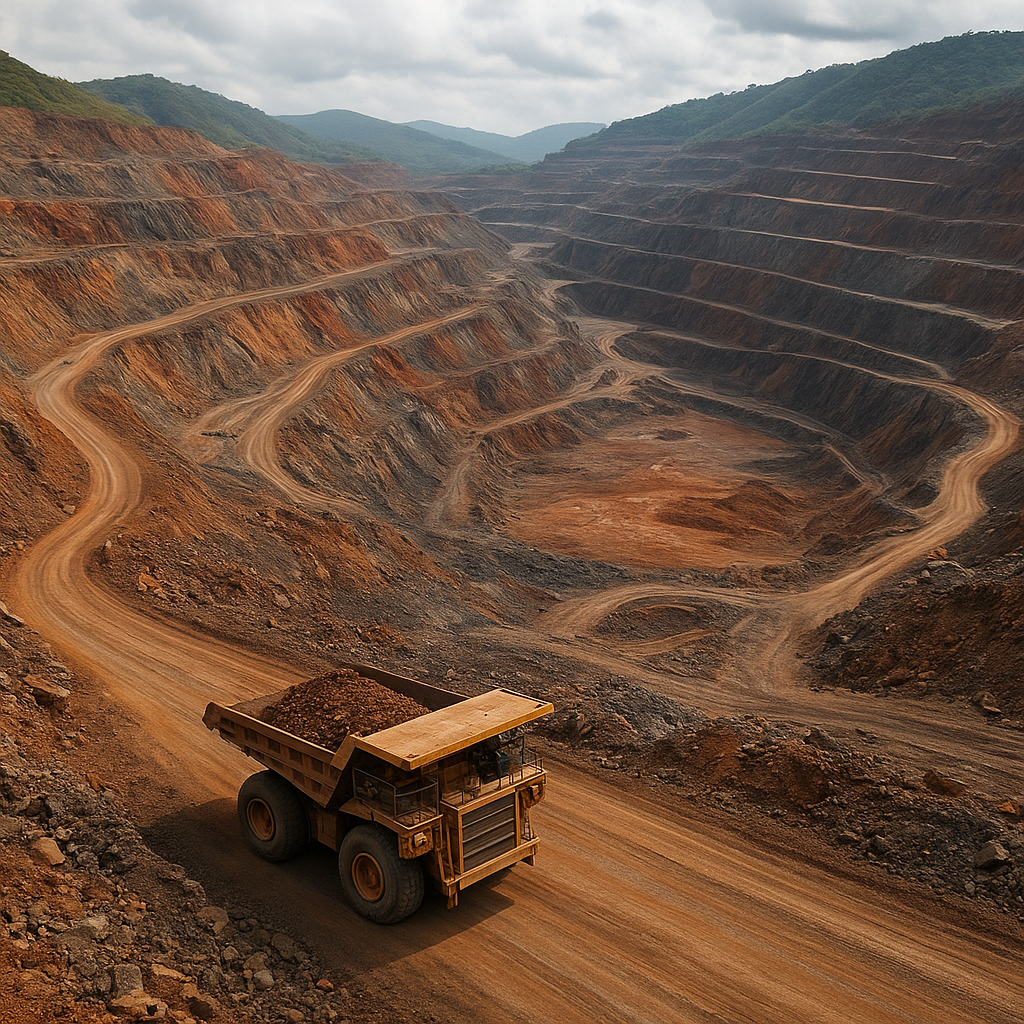
The rise and closure of the mining complex at Kudremukh is one of the most compelling and contested stories in modern Indian industrial and environmental history. Nestled within the forested slopes of the Western Ghats, this operation extracted high-quality iron ore for decades, shaping local economies, transport networks and industry linkages across Karnataka and beyond. At the same time, it exposed tensions between resource use and the protection of globally significant biodiversity. This article examines the mine’s location and geology, its operations and economic role, the controversies that led to its eventual suspension, and the longer-term lessons about reconciling development and conservation.
Location and geological setting
The mining complex sits in the southwestern Indian state of Karnataka, in the high-rainfall ranges of the Western Ghats. These hills form a long, biologically rich spine that runs parallel to India’s western coast. The mine itself was located near the peak and ridgelines of the Kudremukh range within what is a mosaic of reserve forests and protected habitats. The surrounding landscape includes steep slopes, narrow valleys, perennial streams and a dense evergreen to semi-evergreen forest cover that supports a diverse set of flora and fauna.
Geologically, the Kudremukh area is known for its banded iron formation and hard, metamorphosed ore deposits. The iron mineralization here occurs primarily in high-grade hematite and magnetite-rich rocks that are suitable for beneficiating into pellets and concentrate. These deposits were highly prized because of their relative purity and consistency, making them particularly attractive to steel producers and pellet plants that require uniform feed material.
Mining operations and history
The modern mine at Kudremukh grew around a long-standing history of iron ore extraction in the region. Over the decades, operations evolved from small-scale surface workings to a large, mechanized open-pit and underground system that serviced a national-level processing and export chain.
Key operational features included:
- Large-scale extraction zones cut into the hillsides and ridgelines. The methods emphasized excavation and bulk handling to move ore from pit to processing.
- An extensive beneficiation and pelletization supply chain that linked the mine to coastal processing facilities. To move material efficiently over long distances through difficult terrain, operators developed innovative transport solutions, including the use of a slurry pipeline to carry processed ore concentrate toward coastal plants and ports.
- On-site infrastructure such as crushers, concentrators, workshops, power connections and workers’ settlements that underpinned continuous year-round production.
The enterprise was a major employer in the region for several decades. It provided direct jobs in extraction, processing and maintenance, plus indirect employment across logistics, services and allied industries. Institutional stewardship of the mine came under government-influenced entities and public sector instruments at various times, reflecting the strategic nature of iron ore for national industrial policy.
Economic significance
The economic footprint of the mine reached beyond the immediate locale. Iron ore from Kudremukh supplied domestic steel mills and fed export markets, helping to stabilize raw material supply chains. Several aspects underline its economic importance:
- Industrial feedstock: The high-grade ore extracted at the site was a sought-after input for pellet plants and steel producers. Reliable access to such ore lowers beneficiation costs for steelmakers and improves productivity.
- Local development: The operation spurred investments in roads, power and community facilities. These improvements often had spillover effects, enhancing connectivity for remote villages and improving access to markets and services.
- Employment and livelihoods: By providing stable industrial employment, the mine supported household incomes, local markets and secondary businesses, from transport contractors to retail and hospitality in nearby towns.
- Fiscal contributions: Taxes, royalties and company levies contributed to state and local government revenues, enabling further public spending in health, education and infrastructure.
Beyond direct monetary benefits, the mine’s existence shaped regional planning, enabling long-term industrial linkages between the mineral hinterland and coastal processing centers. The project’s logistics systems — roads, pipeline corridors and port connections — became part of a broader industrial network that sustained multiple economic actors.
Environmental impact and controversy
The very features that made the region attractive for mining — steep slopes, high rainfall, perennial streams and rich soils — also made it ecologically sensitive. Over time, concerns about land degradation, habitat loss and hydrological disruption grew louder. The most contentious issues included:
- Deforestation and fragmentation: Large-scale clearing for pits, waste dumps and access roads reduced native forest cover, fragmenting habitats and reducing contiguous areas needed by many species.
- Siltation and water quality: Disturbed soils and mine runoff increased sediment loads in local streams and reservoirs. This affected downstream water bodies used for irrigation, domestic supply and ecological functions.
- Species disturbance: The Western Ghats hosts endemic and threatened species whose ranges overlap with the mining footprint. Noise, air pollution and habitat conversion increased stress on wildlife populations.
- Protected area tensions: As conservation policy broadened, the legal status of land around the mine became a focal point. Expansion and continued operations raised questions about mining within or adjacent to declared reserve forests and wildlife corridors.
These impacts prompted sustained campaigns by local communities, environmental groups and conservation scientists. Public hearings, regulatory reviews and legal petitions examined whether the long-term ecological costs outweighed the economic gains. The debate often framed a larger national dilemma: how to balance the need for raw materials against obligations to preserve critical ecosystems.
Legal intervention, closure and decommissioning
In the face of mounting evidence of environmental harm and competing statutory designations for the landscape, regulatory and judicial institutions intervened. National-level courts and environmental authorities scrutinized the mine’s permits, rehabilitation commitments and compliance with forest laws and wildlife protections.
Ultimately, sustained legal challenges led to a formal order to suspend or close major sections of the operation. The closure process involved complex wind-down tasks:
- Decommissioning heavy machinery and processing plants while ensuring hazardous materials were managed to minimize ongoing pollution risks.
- Implementing land reclamation, such as reshaping waste dumps, stabilizing slopes and initiating reforestation or grassing programs to curb erosion.
- Addressing socio-economic consequences for workers and communities, including job losses, resettlement needs and the transition of local economies away from a mining-centric model.
- Monitoring environmental recovery to evaluate whether restoration measures reduced sedimentation, re-established native vegetation and supported returning wildlife.
The withdrawal of mining activity triggered a complex conversation about responsible legacy management. Decommissioning a major mine in a biodiverse hill range requires long-term monitoring and resources to ensure that ceasefire in extraction does not simply shift environmental burdens elsewhere.
Rehabilitation, restoration and future prospects
Post-mining strategies emphasized ecological restoration and economic diversification. Effective rehabilitation combines engineering, ecological and social interventions:
- Engineering controls such as terracing, drainage reformation and slope stabilization reduce the risk of landslides and sediment pulses in rain-fed catchments.
- Ecological approaches aim to reintroduce native plant communities, using local seed stock and progressive planting strategies that match soil and microclimatic conditions on regraded land.
- Community-based programs that engage former mine workers and residents as stewards of restoration improve outcomes, because local knowledge and sustained participation enhance survival rates of planted species and maintenance of erosion-control measures.
Economically, authorities and civil society have explored alternative livelihoods: eco-tourism, sustainable agriculture in buffer zones, and small-scale enterprises based on non-timber forest products. The region’s scenic landscapes, trekking routes and biological heritage represent assets for low-impact tourism if developed carefully with community benefit-sharing and strict visitor management.
From a policy perspective, Kudremukh’s story influenced mining and environmental law nationally. It reinforced the need for rigorous environmental impact assessments, meaningful public consultations, stricter safeguards for mining in ecologically sensitive zones and clearer rules on compensatory afforestation, financial assurances for rehabilitation and long-term monitoring obligations.
Interesting and lesser-known aspects
Beyond the headline conflict between mining and conservation, the Kudremukh operation featured several intriguing elements that illustrate the complexity of extractive industry projects in fragile landscapes:
- Technological adaptation: The use of a slurry pipeline and other transport innovations showcased how operators sought to reduce overland truck traffic through steep terrain. Such systems have trade-offs: they lower fuel-based emissions and road wear but concentrate environmental risk in pipeline corridors that must be carefully managed.
- Community networks: Workers and families formed dense social networks around the mine, with company schools, healthcare facilities and cultural institutions. The withdrawal of mining services therefore had ripple effects on human well-being that went far beyond income loss.
- Scientific attention: Because the Western Ghats are a global biodiversity hotspot, the site attracted research on species distribution, ecological resilience and restoration science. Some of the post-mining restoration efforts became field laboratories for testing reforestation techniques in high-rainfall, steep-terrain contexts.
- Local culture and identity: The mountain itself has cultural resonances in local folklore and pilgrimage routes. Balancing heritage protection with industrial activity added another layer of social complexity to decision-making.
- Policy precedent: The legal and regulatory actions at Kudremukh set precedents used in subsequent decisions about mining in sensitive zones elsewhere in India, influencing how environmental clearances and forest permits are evaluated.
Legacy questions and lessons
Kudremukh’s legacy is not simply a tale of economic gain or environmental loss; it is a case study in competing values, institutional response and adaptive management. Several lessons emerge:
- Early and transparent environmental assessment matters. Where sensitive ecosystems are involved, conservative decision-making and precautionary approaches reduce long-term costs.
- Planning for the full project lifecycle — including robust financial guarantees for closure and rehabilitation — protects communities and ecosystems when operations end.
- Inclusive stakeholder engagement that meaningfully involves local people, scientists and civil society improves legitimacy and often yields more durable social and ecological outcomes.
- Economic transitions require forward-looking policies to help regions move from mono-industrial dependence to diversified, sustainable livelihoods.
The complex trajectory of the mine at Kudremukh — from prized resource to contested site to a focus of restoration efforts — encapsulates broader dilemmas in resource-rich regions across the world. The balance between extracting minerals critical for modern infrastructure and preserving the ecological services and biodiversity of places like the Western Ghats remains a pressing and unresolved challenge. Observers and policymakers alike continue to watch how reclamation, legal reform and community-led initiatives replay the region’s future in the decades ahead, reminding us that the story of an iron mine is also a story about landscape, people and choices.

