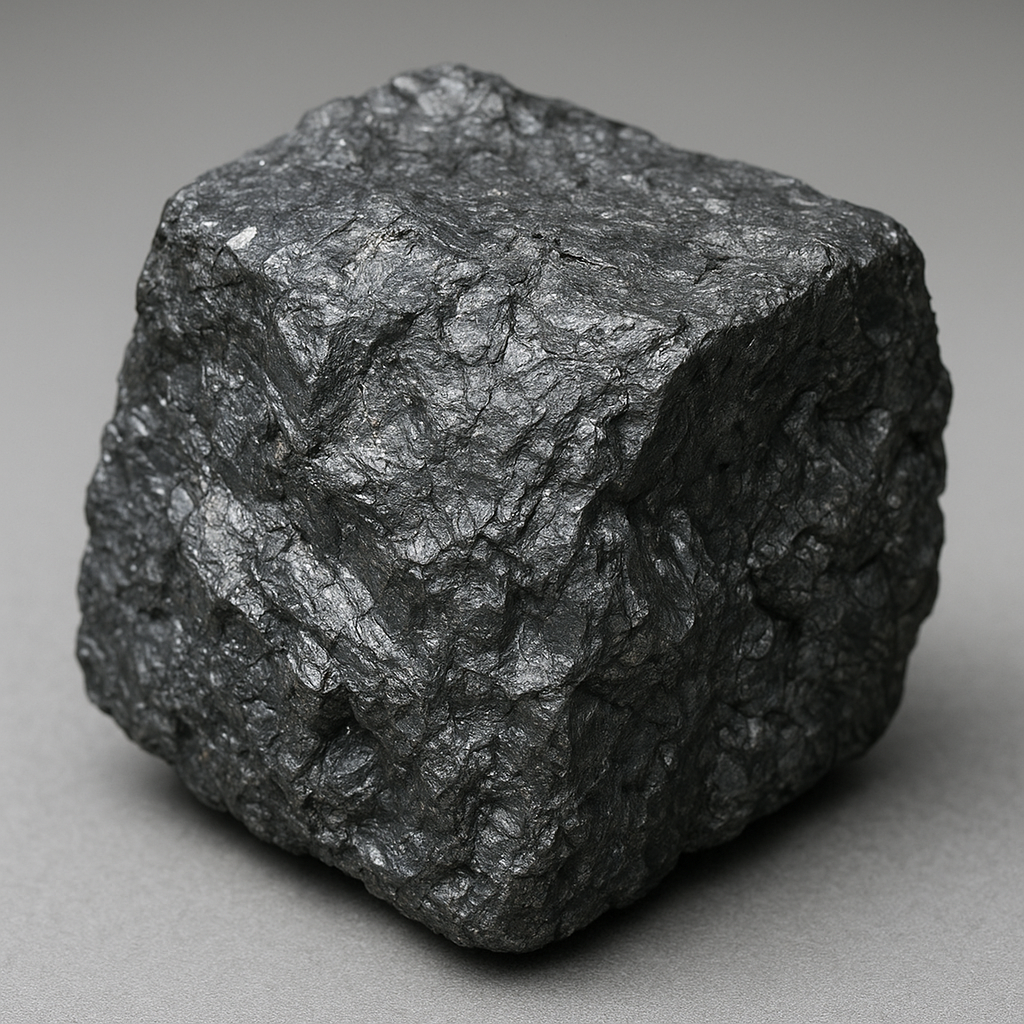
Graphite is a fascinating and versatile mineral that has shaped technologies from the simple household pencil to advanced energy storage systems. With a unique combination of physical and chemical properties, it occupies an essential position in modern industry, research and everyday life. This article explores where graphite occurs in nature, how it is processed and used, and highlights some intriguing facts and emerging trends related to this remarkable form of carbon.
Occurrence and Geology
Graphite is a natural form of carbon and occurs in a variety of geological settings. It typically forms where carbon-rich materials have been subjected to elevated temperatures and pressures, allowing the individual carbon atoms to reorganize into planar, hexagonal sheets. These sheets stack weakly on one another, producing the soft, slippery feel characteristic of the mineral.
Major geological environments
- Metamorphic rocks: The most widespread natural graphite deposits are associated with metamorphosed organic-rich sediments. During regional metamorphism, carbonaceous material (such as ancient plant remains or marine organic matter) can be transformed into crystalline graphite.
- Vein or lump deposits: Also known as crystalline graphite, these are formed by hydrothermal processes where carbon-bearing fluids precipitate graphite in fractures or cavities, often producing coarsely crystalline masses.
- Pegmatites and igneous rocks: In some cases graphite is found in pegmatitic or contact-metamorphosed zones around intrusions, where localized high temperatures catalyze the conversion of carbonaceous matter.
- Amorphous deposits: Lower grade or finely dispersed graphite occurs in sedimentary or low-grade metamorphic rocks and is often referred to as amorphous graphite or earthy graphite.
Global distribution
Significant graphite resources are distributed globally. Historically important producers include China, India, Brazil, Canada and Sri Lanka. China dominates current production and processing capacity, but high-quality flake and vein graphite is also mined in Canada, Brazil and Madagascar. Norway and Sri Lanka are known for producing crystalline vein graphite of exceptional purity. The precise geology and deposit types can vary widely, affecting the size, morphology and grade of graphite recovered.
Physical and Chemical Properties
Graphite’s properties stem from its atomic structure. Carbon atoms form strong covalent bonds in two-dimensional hexagonal lattices; these layers are bonded to each other by weaker van der Waals forces. The result is a material that combines remarkable in-plane strength with out-of-plane weakness, producing distinctive mechanical and electronic behaviors.
- Structure: Layered sheets of sp2-bonded carbon giving anisotropic properties.
- Electrical conductivity: Excellent electrical conductivity along the planes makes graphite useful in electrodes and conductive composites.
- Thermal conductivity: High thermal conductivity in-plane enables efficient heat dissipation in applications such as heat spreaders and thermal management.
- Lubricity: The easy shear between layers results in low friction, making graphite an effective dry lubricant and additive to greases.
- Chemical stability: Graphite is chemically inert to many reagents and can withstand high temperatures, contributing to its role in refractory applications.
- Density and melting behavior: Graphite has a relatively low density for a mineral of its strength class and sublimates (turns directly to gas) at extremely high temperatures in the absence of oxygen.
The material can be divided into types based on morphology and crystallinity: flake graphite (platy crystals, used widely in industry), vein (or lump) graphite (coarse, high-purity crystals), and amorphous graphite (fine-grained, lower grade). Synthetic forms produced by heat-treating carbonaceous precursors can reach very high purity and tailored properties.
Mining, Processing and Purification
Extracting and preparing graphite for industrial use involves several steps that differ according to deposit type and desired product. Open-pit and underground mining methods are both used depending on the deposit depth and geometry. After extraction the ore must be processed to concentrate the graphite and remove gangue minerals.
Beneficiation techniques
- Crushing and grinding to liberate graphite flakes from the host rock.
- Flotation is commonly used to concentrate flake graphite by exploiting differences in surface chemistry between graphite and gangue minerals.
- Gravity separation and screening for coarse fractions and to remove heavy impurities.
- Chemical purification is often required for battery-grade and electronic applications; processes may include acid leaching, thermal purification and advanced refining to reach purities above 99.9% carbon.
Synthetic graphite production begins with carbonaceous precursors such as petroleum coke or needle coke, which are graphitized at very high temperatures (up to 3,000°C) in electric furnaces. This process produces highly crystalline, pure graphite used where natural graphite would not meet performance or purity requirements.
Industrial Uses and Applications
Graphite’s combination of conductivity, thermal stability and lubricity makes it indispensable across multiple industrial sectors. Below are the major applications with some details on how graphite contributes to each.
Metallurgy and refractories
- Refractory linings: Graphite is used in linings for high-temperature furnaces and crucibles because of its high thermal stability and resistance to thermal shock.
- Foundry facings: Powdered graphite or graphite coatings are applied to molds to improve surface finish and prevent sticking of metal castings.
- Steelmaking: Graphite electrodes are critical components in electric arc furnaces for melting steel, where electrodes must conduct high currents and withstand intense heat.
Energy storage and batteries
Natural and synthetic graphite are central to electrochemistry. The anode material in most commercial lithium-ion batteries is graphite, where lithium ions intercalate between graphene layers during charging. High-purity, well-structured graphite provides the combination of capacity, cycle life and rate capability needed for portable electronics and electric vehicles. Research into modifications, coatings and new synthetic graphites aims to further improve performance and fast-charging characteristics.
Lubricants, composites and friction materials
- Dry lubricants: Graphite powder reduces friction and wear in high-temperature or vacuum environments where oil-based lubricants fail.
- Brake linings and clutch materials: As an additive, graphite imparts thermal stability and controlled frictional properties.
- Polymer composites: Conductive fillers of graphite enhance mechanical strength and electrical conductivity in plastics and elastomers.
Electronics and thermal management
Graphite is used in heat spreaders, thermal interface materials and conductive pastes. Emerging two-dimensional derivatives, notably graphene, are under intense investigation for next-generation electronics, sensors and composite reinforcements. While graphene is distinct from bulk graphite, it is often produced by exfoliating graphite, linking the two materials technologically.
Other applications
- Pencils and art materials: The traditional use where different grades of lead are achieved by varying graphite purity and binder content.
- Nuclear industry: Graphite has been used as a neutron moderator in certain types of reactors because it slows neutrons without capturing them excessively. Reactor-grade carbon must be very pure and meet stringent structural requirements.
- Chemical industry: Graphite’s chemical resistance and electrical properties make it suitable for electrodes in electrochemical cells, corrosion-resistant components, and high-temperature seals.
Environmental, Economic and Social Aspects
Graphite mining and processing have environmental and social implications that require careful management. Like most industrial minerals, the footprint of extraction, the use of water and chemicals in beneficiation, and post-mining land rehabilitation are important considerations.
Environmental considerations
- Water use and contamination: Flotation and chemical purification can consume significant water and may require treatment to prevent environmental contamination.
- Dust and particulate emissions during mining and crushing must be controlled to protect local air quality and worker health.
- Energy intensity: Synthetic graphite production and high-temperature purification steps are energy-intensive, often relying on electricity from the grid; decarbonizing these processes is a target for reducing lifecycle emissions.
Economic and strategic importance
Graphite is considered a critical mineral in many countries because of its essential role in batteries and green technologies. Supply chain concentration in a few producing countries can create strategic vulnerabilities for industries dependent on high-purity graphite. This has prompted investment in domestic mining, recycling initiatives and R&D for synthetic alternatives.
Social impacts
Responsible mining practices include fair labor standards, community engagement and benefit-sharing. In some regions, artisanal mining provides local livelihoods, but it may also raise concerns about safety, environmental management and child labor. Improving governance and traceability throughout the supply chain is an ongoing priority.
Processing Challenges and Quality Control
Producing graphite suitable for high-technology applications involves stringent quality control. Battery-grade graphite often requires particle size distributions, coating properties and impurity levels that must be tightly controlled. Trace metal impurities like iron, nickel, or copper can severely degrade battery performance and must be removed or minimized.
- Particle engineering: Flake size, surface area and morphology influence how graphite interacts with electrolytes and affects electrode fabrication.
- Coating and surface treatments: Modifying the surface of graphite particles improves first-cycle efficiency and rate capability in batteries.
- Analytical methods: Advanced characterization (X-ray diffraction, electron microscopy, ICP-MS for trace metals) is employed to ensure products meet specifications.
Interesting Facts and Historical Notes
Graphite has a rich history and some surprising connections:
- The discovery of large graphite deposits in Borrowdale, England in the 16th century gave rise to the early pencil industry; pure graphite from that source could be sawn into sticks and wrapped for use in drawing and writing.
- Graphite has been used for centuries as a lubricant, long before the molecular explanation of its layered structure was known.
- Many of the modern advances in high-temperature engineering and metallurgy owe a debt to graphite’s refractory and conductive properties.
- Space missions and meteorites have provided evidence that carbon in various forms is widespread; research into extraterrestrial carbon includes investigations of graphite-like materials in meteorites, linking geological carbon cycles on Earth to broader cosmic processes.
Research Directions and Future Trends
Research on graphite spans materials science, environmental engineering and industrial processing. Some prominent directions include:
- Battery improvements: Developing natural and synthetic graphite with optimized morphology, higher first-cycle coulombic efficiency, and improved fast-charging performance.
- Graphene and 2D materials: Scalable production of graphene derivatives and incorporation into composites for electronics, sensors and structural materials.
- Low-carbon processing: Electrification of furnaces, renewable energy integration and more efficient purification routes to lower lifecycle emissions.
- Recycling: Increasing the recovery and reuse of graphite from spent batteries and industrial waste to reduce reliance on primary mining.
- Substitute materials: Research into silicon-based and other novel anodes for batteries may alter demand for graphite, but realistic timelines suggest graphite will remain important for many applications for decades.
Practical Considerations for Users
For engineers, consumers and hobbyists considering graphite, a few practical points are worth noting:
- Select the right type: Flake and synthetic graphite often suit conductivity and battery needs, while amorphous graphite may work for lubricants and simple industrial uses.
- Handling: Graphite dust can be messy and should be managed to prevent inhalation or contamination of sensitive equipment.
- Storage: Keep high-purity graphite dry and free of metallic contamination to preserve performance in electronic applications.
- Compatibility: When used in electrodes or high-temperature components, graphite’s interactions with other materials must be considered, including potential oxidation at high temperatures in the presence of oxygen.
Concluding Thoughts
Graphite is more than a pencil core: it is a multifaceted mineral with crucial roles across traditional industries and emerging technologies. From its geological origins to the high-precision requirements of modern battery systems, graphite exemplifies how a simple element, arranged in a particular structure, can yield a wealth of useful properties. As demand grows for energy storage and advanced materials, graphite will continue to be a focus of mining, refinement, sustainability efforts and scientific discovery.