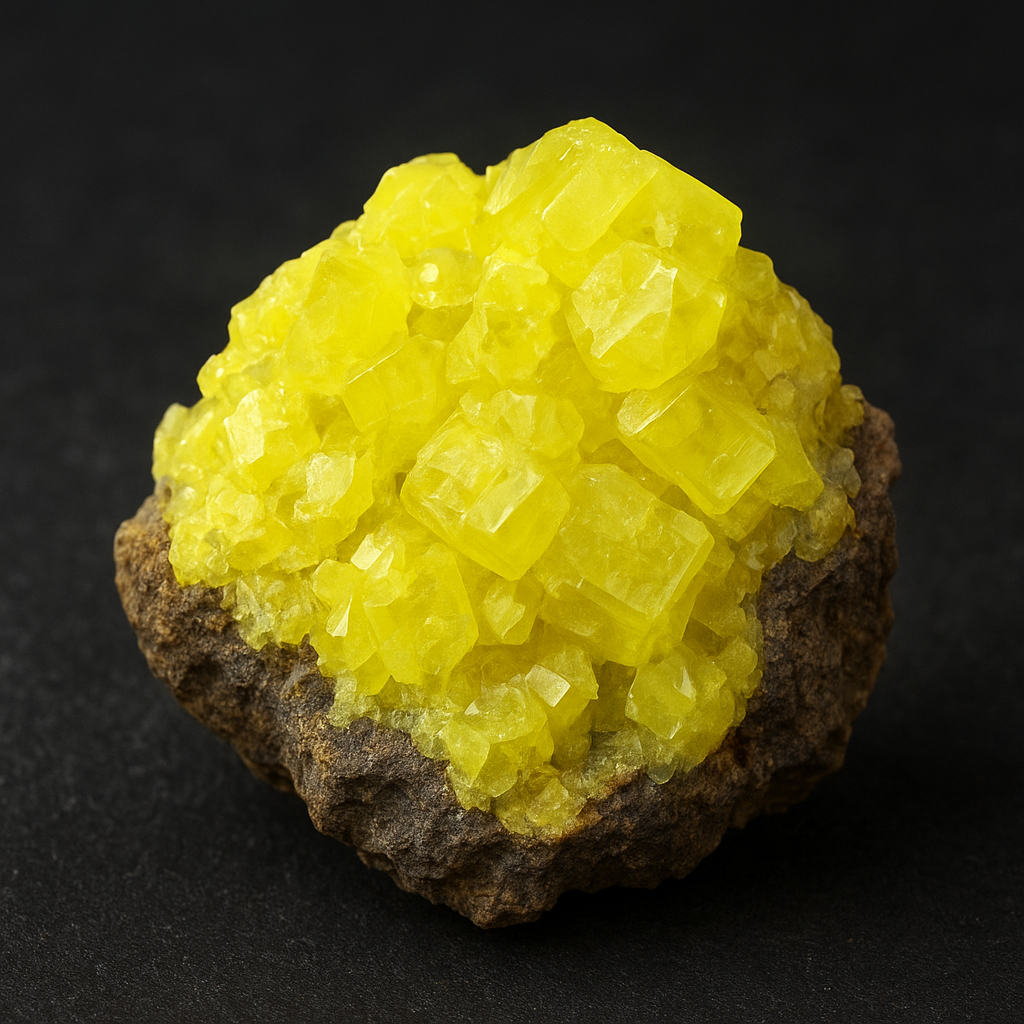
Sulfur is a fascinating and ancient mineral with a bright history and modern relevance. Beyond its familiar yellow crystals, sulfur plays a central role in ecosystems, industry and culture. This article explores where sulfur is found, how it is formed and extracted, and the many uses and implications of this versatile sulfur in natural and technological contexts. Along the way you will find geological, chemical and historical details as well as practical notes about safety and environmental impact.
Natural occurrence and geological settings
Sulfur occurs in a variety of geological environments, ranging from near-surface deposits to deep-seated mineralizations. Native sulfur typically forms as a product of volcanic and hydrothermal activity. Deposits can be found around fumaroles, hot springs and solfataras where gaseous sulfur compounds condense and crystallize. In such settings, molten or gaseous sulfur cools to form bright yellow masses that often smell faintly of hydrogen sulfide.
Other common host settings for sulfur include evaporite beds and sedimentary sequences rich in organic matter. In sedimentary basins, microbial reduction of sulfate can lead to the precipitation of sulfide minerals and secondary native sulfur. Sulfur is also associated with hydrocarbon reservoirs where sulfate-reducing bacteria and geochemical reactions produce elemental sulfur as a by-product.
Important global occurrences have historically included large near-surface sulfur beds in Sicily and parts of the United States such as Louisiana and Texas. Some deposits are exhalative or formed by diagenetic processes in marine sediments. Modern exploration frequently targets subsurface sulfur associated with salt domes, evaporites and petroleum-related systems.
Formation processes and mineral associations
Understanding how sulfur forms helps explain where it accumulates and how it behaves in the environment. Major formation processes include:
- Volcanic condensation: gases like sulfur dioxide (SO2) and hydrogen sulfide (H2S) emitted from vents can oxidize and deposit elemental sulfur.
- Hydrothermal precipitation: high-temperature fluids transport sulfur-bearing species that precipitate when conditions change.
- Biological activity: sulfate-reducing microbes convert sulfate to sulfide; under certain conditions sulfide can be oxidized to elemental sulfur by other microbes or abiotic processes.
- Evaporitic and diagenetic reactions: in evaporite sequences, chemical changes during burial and fluid flow concentrate sulfur in discrete horizons.
Common mineral companions include sulfide minerals such as pyrite (FeS2) and marcasite, as well as sulfates like gypsum (CaSO4·2H2O) and barite (BaSO4). Where sulfur occurs with hydrocarbons, it may be present as native sulfur or as organosulfur compounds within petroleum.
Physical and chemical properties
Sulfur is a nonmetallic element with a characteristic pale yellow color and a brittle, crystalline form at room temperature. The pure element typically crystallizes in orthorhombic or monoclinic forms, and it has a relatively low melting point (~115 °C), which makes it unique among many minerals. Sulfur is also notable for its allotropes—different structural forms with varying properties.
Chemically, sulfur is reactive and forms a wide variety of compounds. It commonly exists in oxidation states from -2 (sulfide) to +6 (sulfate). Those two end-members give rise to two large families of compounds: sulfide minerals and sulfate salts. The rich chemistry of sulfur underlies both its environmental roles and its industrial uses.
Mining and extraction methods
Historically, sulfur was extracted from near-surface deposits by open-pit mining. One notable historical method was the Frasch process, invented in the late 19th century, which involved injecting superheated water into underground sulfur deposits to melt the sulfur and pumping it to the surface. The Frasch process made sulfur mining economically feasible in many regions, though it has become less common with the development of other sources.
Today, much of the world’s sulfur is produced as a by-product of oil and natural gas processing, as well as metallurgical operations (such as smelting). When sulfur-containing hydrocarbons or sulfide ores are processed, the sulfur is removed to prevent emissions of sulfur dioxide into the atmosphere. The recovered material is often in the form of elemental sulfur or sulfur compounds that can be refined into commercial products.
Major uses and industrial applications
Sulfur’s industrial importance stems primarily from its central role in producing one of the world’s most widely used chemicals: sulfuric acid. Sulfuric acid is the backbone of many chemical industries and is used to manufacture fertilizers, refine metals, process petroleum and synthesize a multitude of chemical products. Approximately two-thirds of produced sulfur is ultimately channeled into fertilizer production, most commonly as phosphate fertilizers that require sulfuric acid in their manufacture.
Fertilizers and agriculture
The agricultural use of sulfur is vital: plants require sulfur as an essential nutrient for amino acids and proteins. Elemental sulfur and various sulfate fertilizers provide bioavailable sulfur to soils. The link between sulfur and plant health makes sulfur a key component in crop management and soil amendment strategies. Sulfur deficiency can reduce yields and affect crop quality.
Pulp and paper, and chemical manufacturing
Sulfur-based chemicals are integral to the pulp and paper industry, where sulfur compounds are used in kraft pulping and bleaching processes. Many synthetic materials, dyes, detergents and explosives also rely on sulfur chemistry.
Rubber, vulcanization and materials
The discovery that sulfur can cross-link natural rubber polymer chains led to the development of vulcanization, a process that transformed natural rubber into a more durable family of materials. Vulcanized rubber underlies tires, seals and countless rubber goods, making sulfur indirectly essential to modern transport and industry.
Pharmaceuticals and fine chemicals
Sulfur appears widely in medicinal chemistry and in active pharmaceutical ingredients. Thiol, thioether and sulfone functional groups are found in drug molecules and bioactive compounds. The presence of sulfur atoms can dramatically affect molecular properties such as lipophilicity and reactivity, influencing the biological activity of many medicines. For this reason, the pharmaceutical industry frequently works with sulfur-containing intermediates and reagents. Elemental pharmaceuticals chemistry would be incomplete without sulfur’s versatility.
Environmental roles and the sulfur cycle
Sulfur cycles between the atmosphere, hydrosphere, lithosphere and biosphere in a complex set of pathways. Volcanic emissions release sulfur gases that can form aerosols and influence climate by scattering sunlight and promoting cloud formation. In the atmosphere, sulfur dioxide oxidizes to form sulfate aerosols that affect air quality and acid deposition.
In aquatic and soil environments, microbial communities mediate many sulfur transformations. Sulfate-reducing bacteria convert sulfate to hydrogen sulfide in anoxic conditions; other microbes oxidize sulfide back to sulfate or elemental sulfur. These microbial processes are essential for nutrient cycling, mineral formation and the degradation of organic matter in sediments.
Human activities, particularly the combustion of sulfur-containing fossil fuels, historically increased atmospheric sulfur emissions, leading to acid rain and associated ecological damage. Stricter emissions controls and flue-gas desulfurization have reduced this impact in many regions, but sulfur emissions remain an environmental concern in areas with heavy industrial activity.
Health, safety and handling
Crystalline sulfur itself is relatively inert and of low toxicity, but some sulfur compounds are hazardous. Hydrogen sulfide (H2S) is an extremely toxic gas that can arise from sulfide mineral reactions or decomposition of organic matter; it is dangerous even at low concentrations. Sulfur dioxide (SO2) is an irritant that affects the respiratory system and can form acid aerosols.
Mining and industrial processing of sulfur require careful management to prevent releases of noxious gases and to control dust. Elemental sulfur dust can pose a fire or explosion hazard under certain conditions, and sulfur storage often necessitates ventilation and temperature control to prevent spontaneous heating or ignition of fine material.
Sulfur compounds of particular interest
- Sulfide minerals: These include pyrite, chalcopyrite and galena, which are important ore minerals for iron, copper and lead respectively.
- Sulfate salts: Gypsum and epsomite are widespread sulfate minerals with agricultural and industrial uses.
- Sulfur dioxide and hydrogen sulfide: Key atmospheric and odor-causing gases with environmental and health effects.
- Organosulfur compounds: Thiols, sulfides and sulfoxides play roles in biological systems and industrial chemistry.
Interesting historical and cultural aspects
Sulfur has a long human history. Its biblical name brimstone—reflected in classic literature—evokes the burning and stench associated with volcanic eruptions and early uses in medicinal and ritual contexts. Sulfur was a component of ancient fumigation techniques, and medieval alchemists prized it as one of the classical principles in their theories of matter.
In the 19th and early 20th centuries, sulfur mining shaped local economies in places like Sicily and the southern United States. The environmental and social footprint of those operations is still evident in some regions, with abandoned workings, tailings and cultural memories tied to sulfur extraction.
Modern trends and economic importance
While traditional mining remains important in some locales, the global sulfur supply today is dominated by by-product recovery from refining processes. The refining of sour natural gas and petroleum yields large quantities of sulfur that are converted into marketable elemental sulfur. This shift in supply dynamics has influenced the geography of sulfur production and trade.
Sulfur demand tracks closely with agriculture (fertilizer manufacturing) and chemical production. Innovations in sustainable fertilizer formulations, sulfur-coated products and precision agriculture are shaping how sulfur is used to support crop yields with reduced environmental impact.
Novel research and future directions
Contemporary research touches on many exciting areas: microbial sulfur metabolisms that can be harnessed for bioremediation, catalytic processes to convert sulfur compounds into valuable chemicals, and materials science investigations into sulfur-containing polymers and batteries. For example, lithium-sulfur batteries are promising candidates for high-energy storage systems, leveraging sulfur’s high theoretical capacity when incorporated into electrochemical cells.
Advances in isotope geochemistry also provide refined tools to trace sulfur sources and reactions in the environment, improving our understanding of past climates, ore-forming processes and anthropogenic impacts.
Practical notes for collectors and hobbyists
Specimens of native sulfur are prized by mineral collectors for their striking yellow color and sometimes well-formed crystals. Because sulfur can be brittle and relatively soft, careful handling is necessary to avoid damage. Storage in cool, dry conditions helps preserve specimens; exposure to bright light and heat should be minimized to prevent alteration or sublimation in extreme cases.
- When acquiring specimens, be aware of odors indicating associated sulfide minerals that may oxidize over time.
- Avoid heating unknown sulfur-bearing samples in confined spaces because of the risk of releasing toxic gases.
Unexpected connections and curiosities
Sulfur’s distinctive smell has made it a shorthand in literature and folklore for danger or the supernatural. Chemically, elemental sulfur undergoes fascinating reactions such as catenation (formation of chains and rings of sulfur atoms) and polymerization under stress or heat. The molecule S8, a ring of eight sulfur atoms, is the most common form in nature and is responsible for many of sulfur’s characteristic properties.
Another curiosity is sulfur’s role in the coloration of biological pigments and in the taste and smell of foods: many of the aromas in garlic and onions arise from organosulfur compounds. The complex flavor chemistry of these foods relies heavily on sulfur atoms that create characteristic pungent and savory notes.
Finally, sulfur continues to appear in emerging technologies and environmental strategies, from novel catalysts to sulfur-assisted carbon capture processes. Its combination of chemical versatility and widespread availability ensures sulfur will remain a mineral of interest across disciplines.