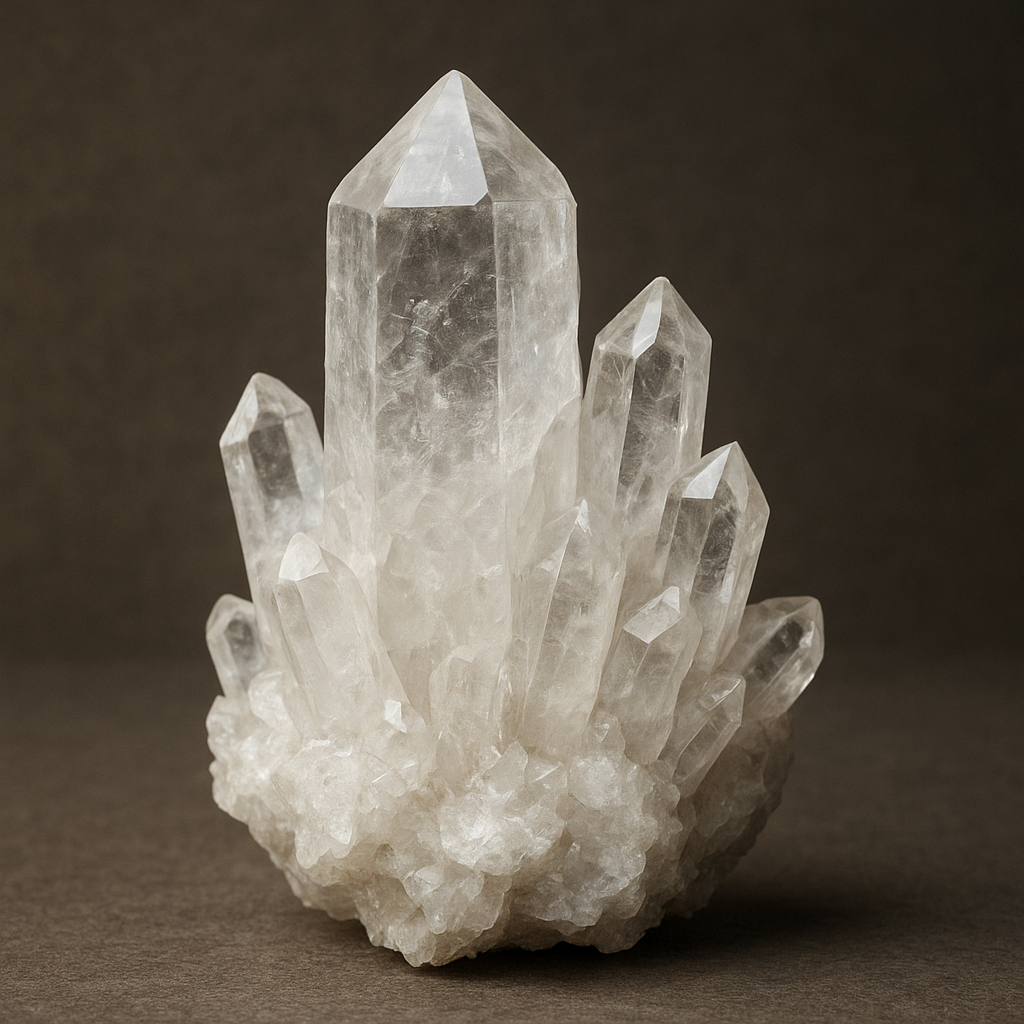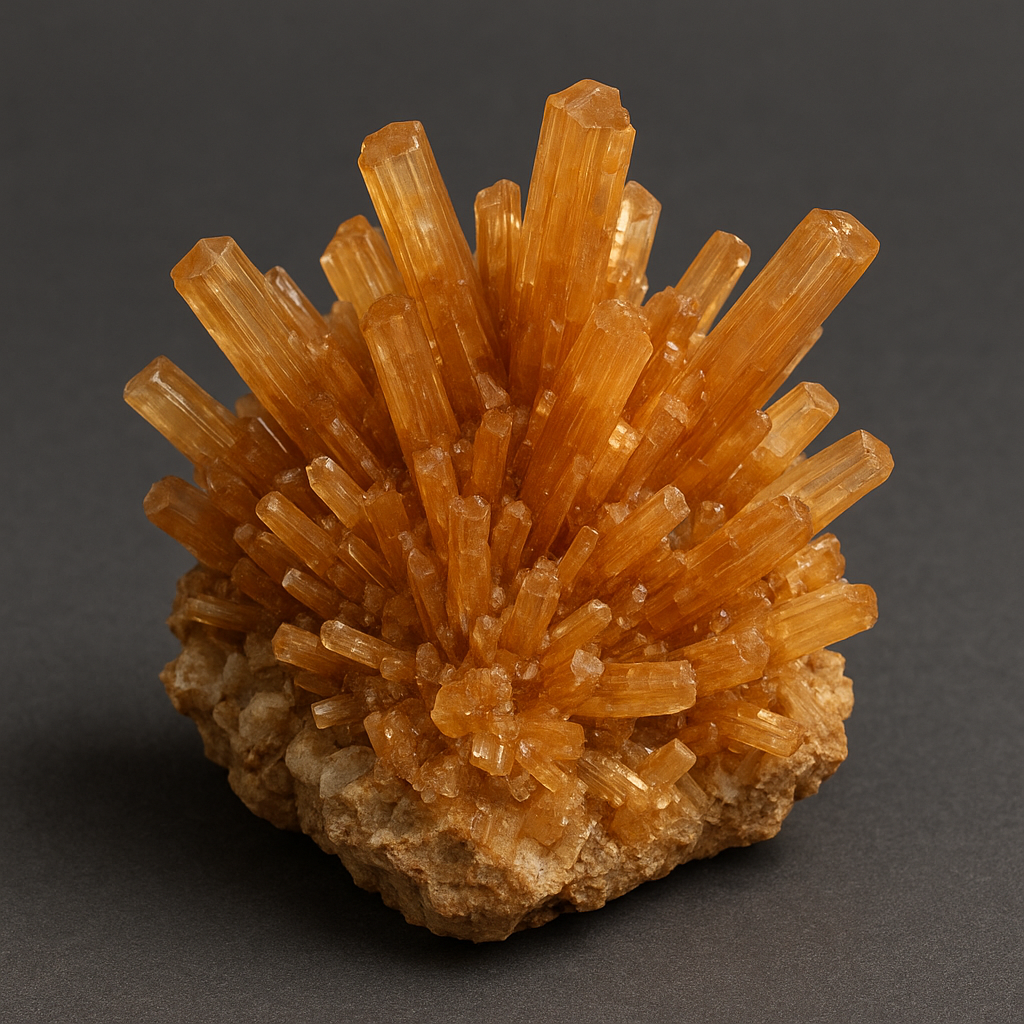
Aragonite is a fascinating and widely distributed mineral form of calcium carbonate that plays major roles in geology, biology and human industry. Although less stable at Earth’s surface than its polymorph calcite, aragonite forms elegant acicular crystals and needle-like aggregates, builds the shells and skeletons of many marine organisms, and appears in caves, hydrothermal systems and sediments. This article explores aragonite’s crystal chemistry, its natural occurrences, its practical applications, and some intriguing scientific questions connected to its behavior and past abundance in the geological record.
Crystal structure, physical properties and stability
Aragonite is a polymorph of CaCO3 with an orthorhombic crystal system. At the atomic scale, carbonate groups and calcium cations pack differently than they do in calcite, producing a denser and more complex lattice. This structural difference gives aragonite its characteristic acicular (needle-like) and fibrous crystal habits, as well as its common twinning and pseudo-hexagonal aggregates.
- Chemical formula: CaCO3
- Crystal system: orthorhombic
- Hardness: ~3.5–4 (Mohs)
- Specific gravity: ~2.9–3.0
- Cleavage: distinct in one direction, brittle fractures
- Reaction with acid: effervesces with dilute HCl (like other carbonates)
One of aragonite’s defining characteristics is its thermodynamic metastability at ambient conditions. Over geological time and with exposure to diagenetic fluids, aragonite commonly recrystallizes to calcite, which is the more stable polymorph of CaCO3 under surface conditions. The tendency to alter influences how well aragonite is preserved in sediments and fossils, and it makes intact aragonitic shells valuable for certain geochemical studies where original mineralogy matters.
Natural occurrences and formation environments
Aragonite is produced both by non-biological (inorganic) precipitation and by living organisms (biomineralization). Its occurrence spans a wide range of environments:
Marine environments and sediments
Many mollusks, corals and other invertebrates secrete aragonite to build shells and skeletons. Coral skeletons are typically aragonitic, and molluscan nacre (mother-of-pearl) is an ordered microstructure of aragonite tablets bound by organic layers. In warm, shallow seawater that is supersaturated with respect to CaCO3 and that has a relatively high magnesium content, inorganic aragonite may precipitate directly as ooids, cements or sand-sized grains. The composition of seawater—specifically the Mg/Ca ratio—has swung over geological time between “aragonite seas” and “calcite seas,” favoring one polymorph over the other during different intervals of Earth’s history.
Caves and speleothems
Aragonite is a frequent component of cave deposits where its needles and branching clusters form delicate stalactites, frostwork, helictites and crusts. In caves, changes in water chemistry, CO2 degassing rates and the presence of impurities can favor aragonite precipitation over calcite. Because some cave aragonite can be relatively young and less subject to recrystallization, it is often used in speleothem studies of past climate and hydrology.
Hydrothermal and low-temperature veins
Aragonite can precipitate from hydrothermal fluids and in veins where temperature, pressure and ion concentrations favor its formation. It also appears in contact metamorphic zones and volcanic fumarolic condensates under particular conditions. In some hot-spring deposits and geothermal environments, radial aragonite clusters form rapidly from supersaturated fluids.
Soils, freshwater environments and anthropogenic settings
Freshwater aragonite can form in alkaline lakes and springs. Terrestrial soils and evaporation pans may host aragonite nodules, particularly where Mg or organic components stabilize its structure. Human-made environments—such as marine aquaria and industrial wastewater neutralization systems—may encourage aragonite deposition under the right chemical regimes.
Biological significance: shells, corals and pearls
Aragonite is central to many biomineral structures. The process of biomineralization—how organisms control mineral growth—has produced highly optimized architectures built from aragonite that deliver strength, toughness and optical effects beyond what inorganic crystals alone would provide.
- Nacre (mother-of-pearl): Composed of microscopic aragonite platelets arranged in a brick-and-mortar structure bonded by organic polymers. Nacre combines hardness with remarkable toughness and shimmering iridescence.
- Pearls: Form when mollusks secrete layers of aragonite and organic material around an irritant. The microstructure and thickness of aragonite layers give pearls their luster, color and value.
- Coral skeletons: Made primarily of aragonite; coral health and growth rates are influenced by seawater chemistry, temperature and acidity.
Because many marine organisms use aragonite, shifts in seawater chemistry—especially ocean acidification driven by rising CO2—can affect calcification rates and the stability of aragonitic structures. Aragonite’s higher solubility relative to calcite makes aragonite-forming organisms particularly vulnerable to decreasing carbonate saturation states.
Industrial, environmental and technological applications
Although calcite and processed limestone dominate many industrial uses of CaCO3, aragonite and aragonitic materials have several specific uses:
Aquaculture and aquarium substrates
Aragonitic sand and crushed aragonite are widely used in marine aquaria and reef tanks to help buffer pH and maintain hardness (carbonate alkalinity). These substrates mimic natural aragonitic sediments found in tropical shallow seas and supply calcium for invertebrates and corals.
Biomaterials and medical uses
Synthetic aragonite and aragonitic bioceramics are investigated as bone graft substitutes and resorbable implants. Because aragonite dissolves more readily than calcite under physiological conditions, it can be useful where gradual resorption and replacement by bone tissue are desirable. Research explores aragonite’s porosity, surface chemistry and compatibility for drug delivery and tissue engineering.
Environmental remediation and CO2 management
Calcium carbonate precipitation, including aragonite, is relevant for carbon capture techniques that involve mineral carbonation and for remediation strategies that remove heavy metals or neutralize acidic waters. Some engineered processes aim to favor aragonite formation for specific textural or surface area advantages.
Gemstones and collections
Although relatively soft and fragile compared with traditional gemstones, attractive aragonite specimens—such as spherulitic “florid” aragonite, iridescent nacre, or colorful cave aragonite—are prized by collectors. In jewelry, aragonitic pearls and polished nacre pieces are valued for their optical properties rather than hardness.
Aragonite and the geological record: aragonite seas and paleoclimate
The abundance of aragonite versus calcite precipitated in the oceans has shifted repeatedly through Earth history. These shifts correlate with the seawater Mg/Ca ratio, itself controlled by tectonics, seafloor spreading, and the relative rates of carbonate and silicate mineral weathering. During “aragonite sea” intervals, inorganic precipitates and many marine organisms favored aragonite and high-magnesium calcite; during “calcite sea” times, low Mg/Ca favored low-magnesium calcite precipitation.
Because aragonite is more susceptible to diagenetic alteration than calcite, its presence in ancient sediments can be a sensitive indicator of original depositional chemistry or exceptional preservation conditions. When aragonitic mineralogy and original microstructure are preserved, they provide valuable proxies—via stable isotopes and trace elements—for reconstructing past seawater temperatures, salinities and geochemical cycles. However, diagenetic conversion to calcite complicates such reconstructions and requires careful petrographic and geochemical screening.
Analytical methods and identification
Identifying aragonite requires a combination of visual, optical and instrumental techniques because it can appear similar to calcite to the naked eye.
- Optical microscopy: Under polarized light, aragonite shows characteristic twinning and crystal habits. Thin-section petrography can reveal aragonitic microstructures in fossils and cements.
- X-ray diffraction (XRD): Provides definitive identification by distinguishing the orthorhombic aragonite pattern from trigonal calcite.
- Raman and infrared spectroscopy: Useful for rapid mineral identification, and advantageous for studying delicate samples like speleothems without destroying them.
- Scanning electron microscopy (SEM): Reveals crystal habits, nacre platelets and biomineral textures at high resolution.
- Stable isotope and trace element analyses: Employed in paleoclimate and environmental studies where aragonite retains original geochemical signals.
Conservation, collecting and handling
Aragonite’s relative instability and moderate hardness mean collectors and researchers must take care when handling samples. Exposure to humid, acidic or warm conditions can accelerate recrystallization to calcite. Cave aragonite and delicate specimens should be conserved in stable, low-humidity environments and documented carefully.
- Store delicate aragonite away from direct sunlight and fluctuating temperatures.
- Avoid prolonged contact with acids (including weak acids), household cleaners, or ozone-generating devices.
- For museum or laboratory specimens, maintain stable relative humidity and use inert mounting materials to prevent chemical interactions.
Interesting research questions and frontier topics
Aragonite remains a rich subject for research across several disciplines. Some current and emerging topics include:
- Ocean acidification impacts: Understanding how declining carbonate saturation states will affect aragonite-forming organisms, reef health and carbonate sediment production.
- Biomineralization pathways: Deciphering how organisms control polymorph selection, crystal morphology and organic-mineral interfaces at the molecular level—insights that can inspire biomimetic materials.
- Preservation of aragonite in the rock record: Developing geochemical screening methods to distinguish primary aragonite from diagenetic overprints for reliable paleoclimate reconstructions.
- Engineered aragonite: Synthesizing aragonitic materials with tailored porosity and chemistry for medical implants, filters and CO2 mineralization technologies.
- Seawater chemistry through time: Refining models of the Mg/Ca ratio’s evolution and its controls on carbonate mineralogy and the evolution of marine calcifiers.
Notable localities and historical notes
The name aragonite derives from the Aragon region of Spain, where early descriptions were made. Classic localities for beautiful aragonite specimens and significant natural occurrences include cave systems in various countries (where fine aragonitic speleothems occur), tropical carbonate platforms (Bahamas and Caribbean) where aragonitic sands accumulate, and hydrothermal veins or spring deposits worldwide. Certain mines and quarries also yield attractive crystallized aragonite specimens prized by collectors and museums.
Beyond geology, aragonite’s role in cultural artifacts—particularly in jewelry made from nacre and in historic uses of shells and mother-of-pearl—connects the mineral to human history. Pearls, one of the most celebrated aragonitic products, have long held economic, symbolic and artistic importance.
Practical notes for enthusiasts and professionals
For hobbyists, aquarists and field geologists interested in working with or recognizing aragonite:
- Look for acicular, fibrous or radiating crystal habits and needle-like aggregates.
- Remember that many shells and corals are aragonitic—when collecting bio-derived specimens, check local regulations and ethical guidelines.
- In aquaria, aragonite substrate can help stabilize carbonate chemistry but monitor pH and nutrient levels to protect sensitive organisms.
- When analyzing samples, choose non-destructive preliminary methods (handlens, polarized light) before moving to XRD or SEM for confirmation.
Aragonite’s combination of delicate beauty, importance to marine life, sensitivity to environmental change, and technological potential makes it a mineral of enduring scientific and practical interest. Whether encountered as a shimmering nacreous shell, a fragile cave frostwork, or a sedimentary aragonite sand, this polymorph of CaCO3 offers insight into processes ranging from microscopic biomineral control to global shifts in ocean chemistry.