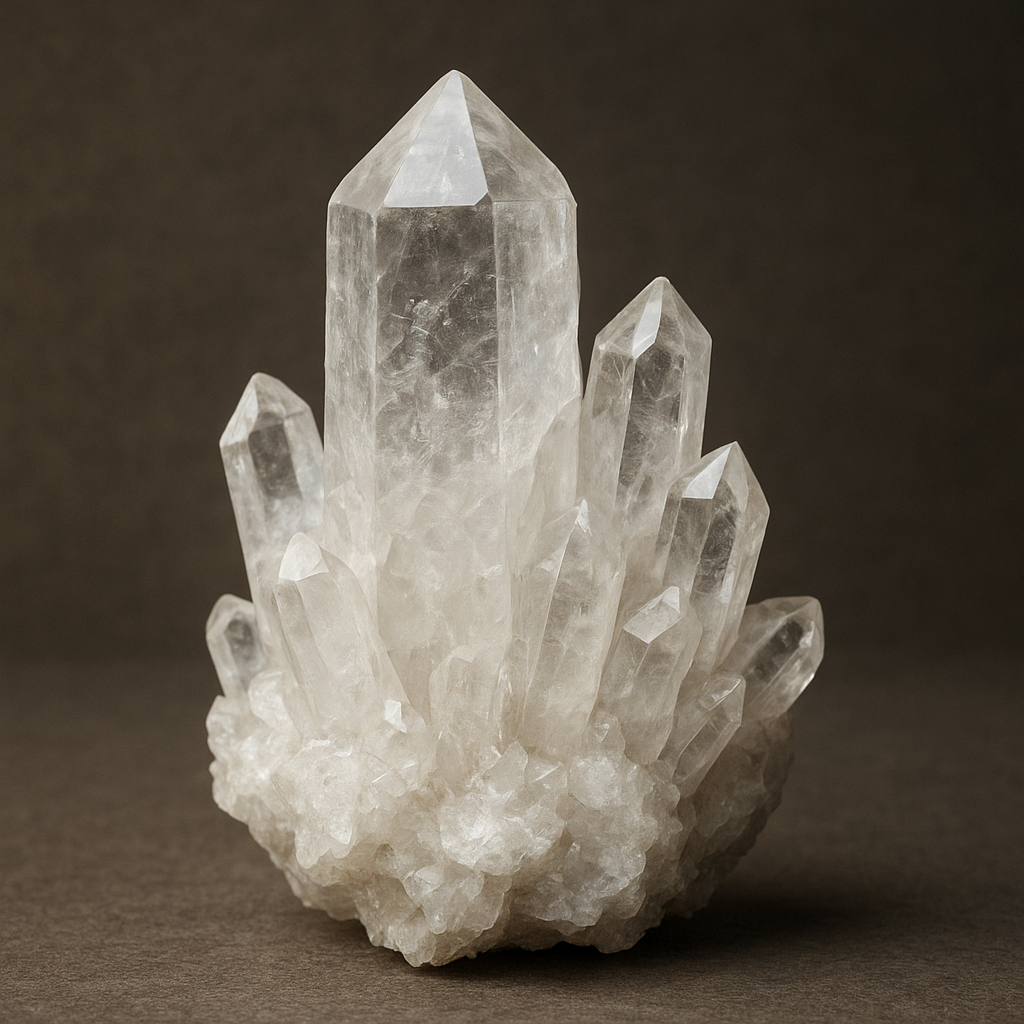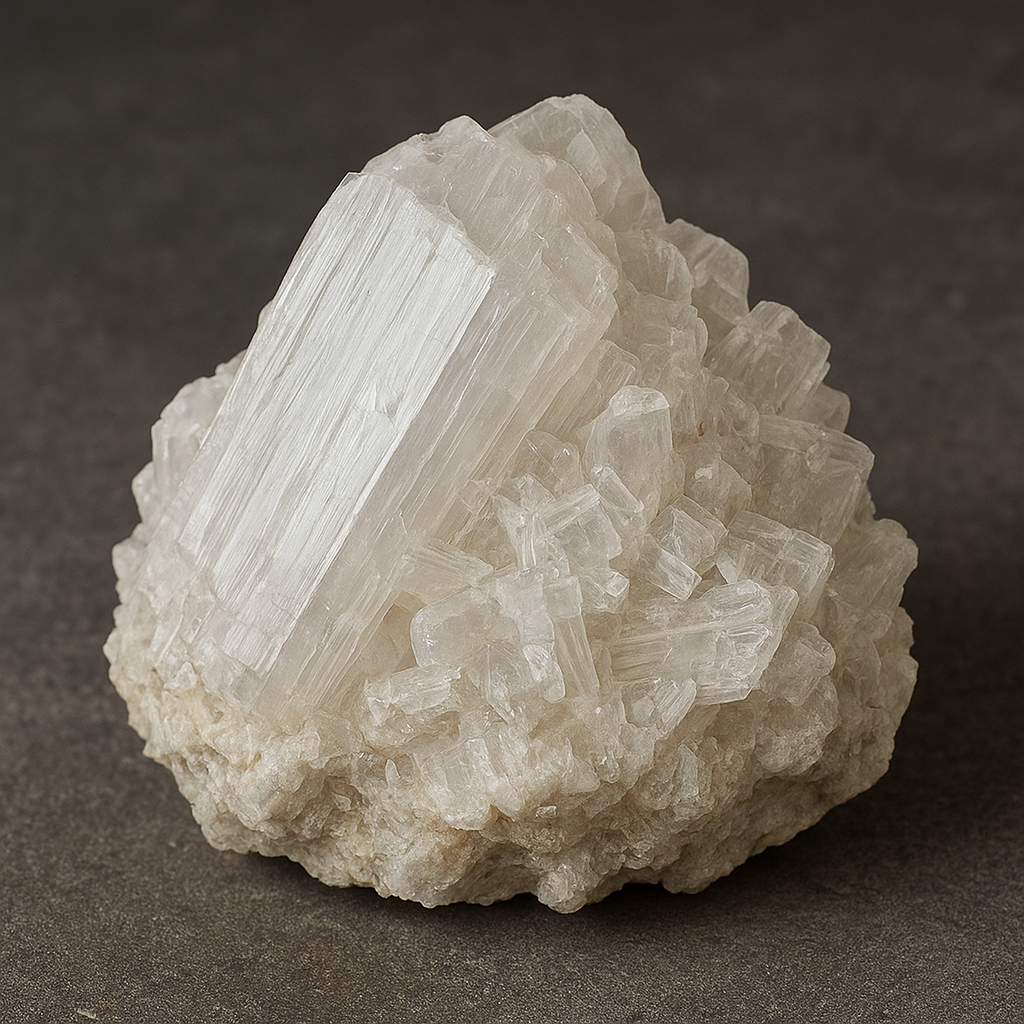
Gypsum is a versatile and widely distributed mineral whose presence shapes landscapes, building practices, and industrial processes around the world. Known both for its delicate, glassy crystals and its practical uses in construction and agriculture, gypsum bridges geology and everyday life. This article explores where gypsum forms and occurs, how it is extracted and processed, its many applications, and some intriguing scientific and cultural facets associated with this mineral.
What gypsum is: composition and physical properties
At its simplest, gypsum is a hydrated sulfate mineral composed of calcium sulfate dihydrate. Chemically expressed as CaSO4·2H2O, it belongs to the class of evaporite minerals that commonly form by the evaporation of water in closed basins. Physically, gypsum ranges from soft and fibrous to dense and crystalline. Some important varieties include transparent, lamellar crystals known as selenite, fine-grained, compact material sold as alabaster, and granular, massive deposits used for industrial purposes.
Gypsum has a Mohs hardness of about 2, which means it can be scratched with a fingernail. It exhibits perfect cleavage in one direction and typically forms tabular or elongated crystals. Because of its water content, heating gypsum drives off the water molecules to produce hemihydrate, widely known as plaster (plaster of Paris), and further heating produces anhydrous calcium sulfate, or anhydrite, depending on conditions.
Where gypsum occurs: geological settings and notable deposits
Gypsum mainly forms in sedimentary environments where saline waters evaporate. Typical settings include shallow coastal lagoons, inland saline lakes, and restricted basins. It can also form as a secondary mineral in hydrothermal veins and as an alteration product in sulfide ore deposits. In many places, layers of gypsum are interbedded with salt and other evaporites, creating extensive mineral sequences.
Major global occurrences
- Europe: Large deposits across the United Kingdom, Spain, and France; notable English deposits were historically significant for plaster and plasterboard production.
- North America: Extensive formations in the United States (e.g., New York, Michigan, and Texas) and large beds in Mexico.
- Asia: Substantial reserves in China, India, and Iran, supporting vast industrial needs.
- Africa and Australia: Commercial deposits used locally and for export.
Karst-like landscapes can develop in gypsum terrains because the mineral is fairly soluble in water. Caves, sinkholes, and subsidence features are common where thick gypsum beds occur near the surface. Famous gypsum caves, with delicate crystal formations, attract both scientists and tourists.
Formation processes and mineral associations
Gypsum forms primarily through evaporitic precipitation: as water with dissolved calcium and sulfate evaporates, supersaturation triggers CaSO4·2H2O crystals to grow. This process can be rapid in arid climates or take place in restricted marine basins over long periods. Biochemical activity and microbial mediation can also influence gypsum precipitation; microbes may promote local conditions that favor sulfate reduction and mineral deposition.
Associated minerals commonly include halite (rock salt), anhydrite, dolomite, calcite, and various sulfides. Transitions between gypsum and anhydrite occur depending on temperature and pressure; anhydrite forms under drier or deeper burial conditions and can revert to gypsum when hydrated.
Mining, extraction, and processing
Gypsum is extracted by open-pit and underground mining. Open-pit techniques predominate where deposits are shallow and extensive. Mining operations use drilling, blasting, and mechanical excavation, followed by crushing and screening to prepare material for processing. Careful management is needed to minimize water infiltration and collapse risks in gypsum terrains.
From mineral to product
- Beneficiation and grinding: Raw gypsum is crushed and ground to the required particle size. Impurities such as shale or organic matter are removed.
- Calcination: Controlled heating partially dehydrates gypsum to form calcium sulfate hemihydrate (plaster). Parameters such as temperature and exposure time determine whether the product is alpha or beta hemihydrate, which differ in crystal shape and mechanical properties.
- Formulation: For drywall (gypsum board), ground plaster is mixed with additives and sandwiched between paper liners, then pressed and dried. For cement or soil amendments, gypsum is powdered and packaged.
Gypsum recycling is increasingly important in sustainable building practices. Reclaimed gypsum board can be processed and reused in agricultural or industrial applications after removing paper backing and contaminants.
Construction and building materials
The construction industry is the largest consumer of processed gypsum. The most familiar product is gypsum board, commonly called drywall or plasterboard, used to create interior walls and ceilings. Gypsum boards provide fire resistance, good acoustic properties, and ease of installation. Other construction uses include plaster coatings, architectural moldings, and decorative elements made from plaster or cast alabaster components.
Gypsum contributes to the manufacturing of certain types of cement and serves as a set regulator in Portland cement, moderating hydration reactions to control setting time. Specialty gypsum-based finishing compounds offer smooth, workable coatings, and gypsum is also used in the production of prefabricated elements and moldmaking.
Agricultural and environmental applications
Agricultural use is an important and sometimes underappreciated market for gypsum. As a soil amendment, gypsum supplies calcium and sulfur—both essential plant nutrients—without altering soil pH significantly. It improves structural properties of sodic soils by replacing exchangeable sodium with calcium, enhancing water infiltration and reducing erosion.
Gypsum is also used for environmental remediation. It aids in treating wastewater and flue-gas desulfurization by-product stabilization and can immobilize certain heavy metals in contaminated soils. In water treatment, gypsum helps by contributing sulfate and calcium ions that precipitate undesirable ions under controlled conditions.
Art, sculpture, and cultural uses
For centuries, artists and sculptors have valued fine-grained gypsum varieties such as alabaster for carving. Its softness and translucent quality allow delicate work and a warm finish prized in figurative sculpture and architectural ornamentation. Historic civilizations used gypsum plaster for murals and decorative reliefs; modern artists continue to employ gypsum for casts, molds, and restoration work.
Traditional crafts in regions with abundant gypsum often incorporate the mineral into local architecture, decorative plasterwork, and ceremonial objects. The ease of reworking gypsum sculpture makes it a favored medium for restoration specialists and conservationists.
Interesting natural phenomena and curiosities
Some gypsum occurrences produce spectacular natural wonders. Selenite crystals in certain caves can reach meter-scale dimensions and present remarkable clarity. White Sands National Park in New Mexico is carpeted with gypsum sand—an unusual desert landscape formed by the weathering and erosion of gypsum-bearing deposits whose grains are bright, soft, and highly reflective.
Gypsum’s ability to form delicate gypsum flowers and needlelike gypsum fibers leads to unique cave decorations and speleothems. These formations grow in environments with high humidity, and their fragility makes them vulnerable to human disturbance, which is why many gypsum caves restrict visitor access to protect these formations.
Health, safety, and environmental concerns
Gypsum itself is relatively non-toxic; however, dust from mining and processing can cause respiratory irritation if inhaled in large quantities over time, so adequate dust control and personal protective equipment are standard in industry. Hydrated gypsum is not flammable, and gypsum boards contribute to fire resistance in buildings because of the water contained within their structure.
Environmental impacts of gypsum mining include landscape alteration, habitat disruption, and potential subsidence where soluble gypsum beds are removed or exposed to water flow. Proper reclamation plans and water management measures mitigate many of these effects. In some cases, gypsum by-products from flue-gas desulfurization or phosphogypsum from fertilizer production pose disposal and regulatory challenges due to associated contaminants; responsible management and beneficial reuse are ongoing priorities.
Advanced and emerging applications
Research increasingly explores gypsum’s role in novel materials and technologies. Examples include gypsum-based composites reinforced with polymers or fibers to create lightweight, recyclable construction panels with improved strength and thermal performance. Nanostructured gypsum and chemically modified hemihydrates are being studied to optimize setting times and mechanical properties for rapid construction applications.
In the field of cultural heritage, gypsum consolidants and compatible mortars are critical for the conservation of mural paintings and historic plasterwork. Gypsum’s compatibility with original materials makes it a preferred restorative medium in many contexts.
Handling, storage, and standards
Manufacturers and users follow industry standards to ensure consistent performance of gypsum products. Proper storage protects gypsum materials from excessive moisture, which can cause premature hydration and loss of workability. When using gypsum for casting or mixing, controlling water-to-powder ratios and ambient temperature affects setting time and final strength.
- Store powdered gypsum in dry, ventilated areas away from direct moisture.
- Wear masks and eye protection during handling to avoid inhalation and irritation.
- Follow local regulations for disposal or recycling of gypsum waste, as many jurisdictions encourage diversion from landfill.
Notable research topics and unanswered questions
Scientists continue to investigate the biological interactions associated with gypsum precipitation, such as microbial mediation in modern and ancient evaporite systems. Studies of gypsum deposits provide clues to past climates and the evolution of saline environments. On planetary science fronts, the discovery of sulfate minerals on Mars has generated interest in gypsum as an indicator of past aqueous activity and habitability potential.
Material scientists are exploring ways to enhance gypsum’s durability and water resistance for exterior applications while retaining its advantageous thermal and fire-resistant properties for interiors. The balance between improving mechanical performance and maintaining recyclability and low embodied energy is a key challenge.
Practical tips and everyday uses
Homeowners and hobbyists often encounter gypsum in do-it-yourself projects. Common practical notes include:
- Gypsum-based plasters set relatively quickly; plan work in stages and mix only the amount that can be applied within the working time.
- Use gypsum board for interior partitions where moisture exposure is limited; moisture-resistant formulations exist for bathrooms and kitchens but are not suitable for direct outdoor exposure without protection.
- Gypsum can be used in gardens to improve compacted soils and reduce surface crusting, but application rates should be based on soil testing and crop needs—coordination with local agricultural extensions is recommended.
Conclusion
From dramatic crystal caves to the drywall in modern buildings, gypsum has a quiet yet pervasive impact on natural landscapes and human technology. Its chemistry—simple yet versatile—enables a wide range of applications in construction, agriculture, art, and environmental remediation. Understanding how gypsum forms, how it is responsibly extracted and processed, and how it can be reused opens prospects for sustainable use and continued innovation. As researchers and industries refine methods for better performance and lower environmental footprint, gypsum will likely remain an important mineral resource with both ancient roots and contemporary relevance.