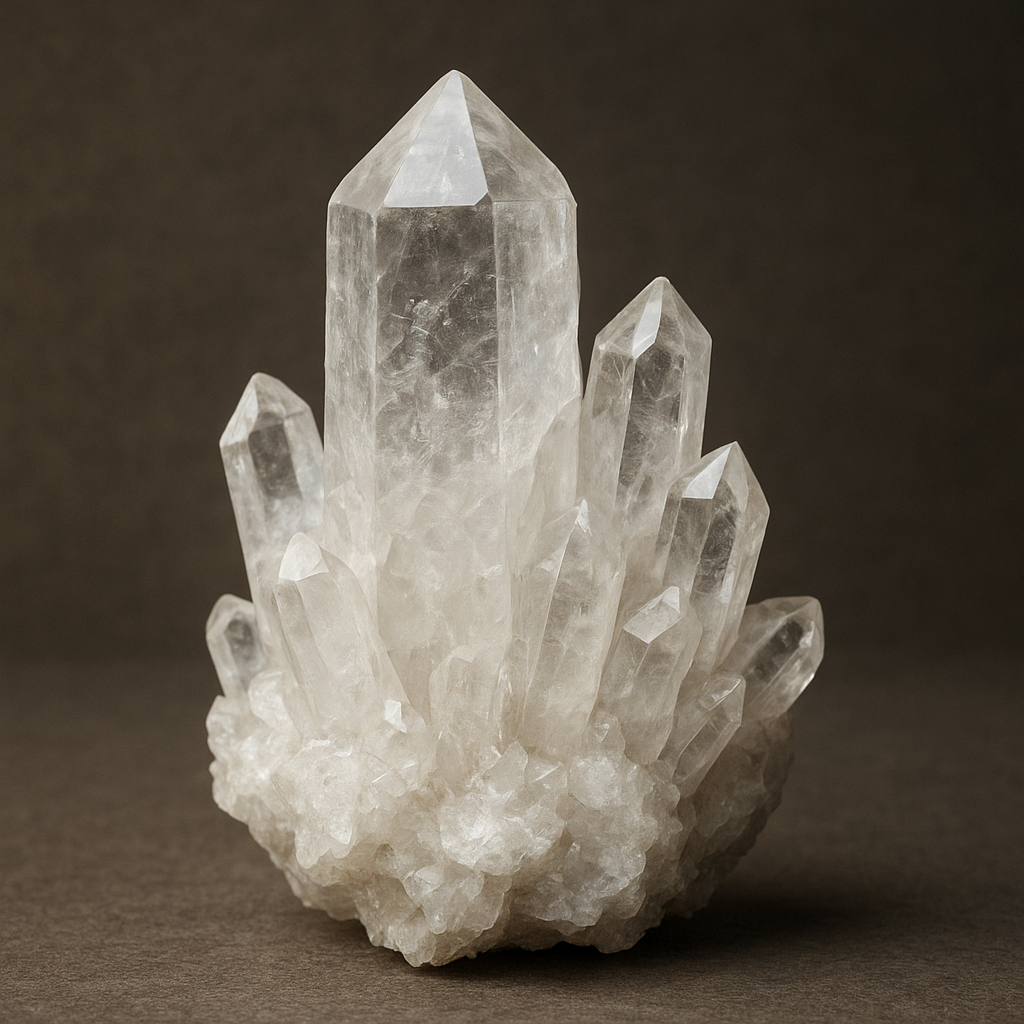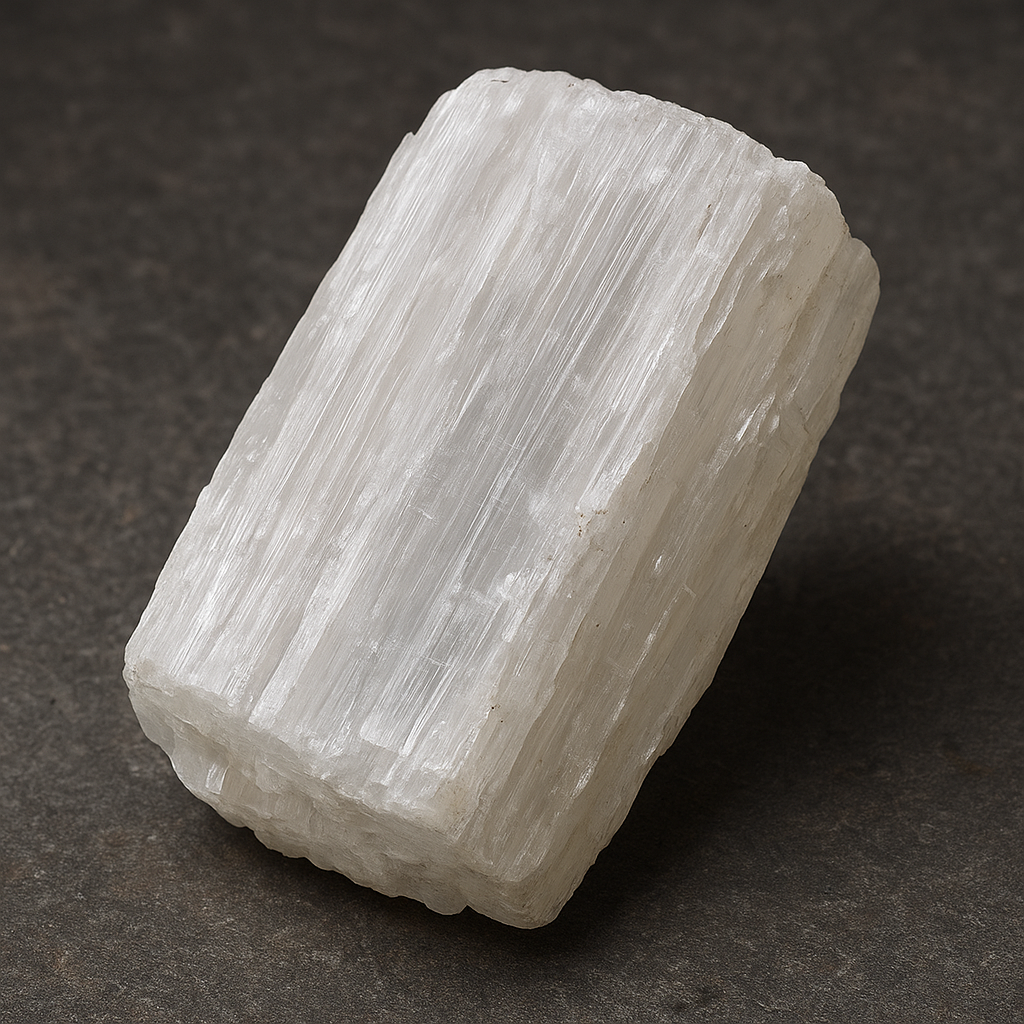
Selenite is a remarkable and often misunderstood variety of the common mineral gypsum. Recognizable for its glassy, often transparent crystals and its delicate, silky luster, selenite captures attention both in scientific contexts and among collectors, artists, and those interested in metaphysical properties. This article explores its mineralogical characteristics, natural occurrences, practical applications, cultural significance, and some surprising facts that make selenite more than just a pretty crystal. Throughout the text you will find descriptions of formation processes and global localities, guidance on handling and caring for specimens, and clarification of common confusions—especially the important difference between the mineral selenite and chemical selenite ions related to the element selenium.
Mineralogical characteristics and varieties
Selenite belongs to the mineral group known collectively as gypsum, which has the chemical formula CaSO4·2H2O (calcium sulfate dihydrate). Gypsum appears in several varieties, and selenite is specifically the transparent to translucent crystalline form. Other forms of gypsum include satin spar (fibrous), alabaster (massive and fine-grained), and the sculptural „desert rose” (rosette-like aggregates containing sand).
Chemistry and crystal structure
Selenite’s crystal system is monoclinic, and it frequently forms tabular or prismatic crystals with perfect cleavage in one direction. This perfect cleavage is one of the reasons selenite can be split into thin, transparent sheets. The presence of water molecules in its structure (the „dihydrate” part of CaSO4·2H2O) makes gypsum noticeably different from its dehydrated relative anhydrite.
Physical and optical properties
- Color: Typically colorless to white, but may have brown, yellow, or reddish tones due to impurities.
- Transparency: Ranges from transparent to translucent; large crystals can be nearly clear.
- Luster: Vitreous to silky, often producing a soft sheen that inspired the name selenite (from Greek selēnitēs, „moon-like”).
- Hardness: Low on the Mohs hardness scale, about 2, which means it can be scratched by a fingernail.
- Specific gravity: Approximately 2.3.
- Cleavage: Perfect in one direction, producing thin sheets; this cleavage also makes it easy to split and carve.
- Birefringence: Displays double refraction in some transparent pieces, which can be demonstrated with polarized light.
Because of its softness and perfect cleavage, selenite can be worked easily with simple tools, which historically made it useful for early glass-like windows and for carving into decorative objects.
Occurrence and formation processes
Selenite forms in sedimentary evaporite deposits where large bodies of water evaporate and concentrate dissolved sulfate and calcium. These settings are often arid or semi-arid basins, coastal lagoons, and playa lakes where periodic influx and evaporation cycles create thick gypsum beds. Beyond classical evaporites, selenite crystals can also grow in caves and hydrothermal cavities where the right combination of sulfate-rich fluids, humidity, and stable temperatures exists.
Classic environments
- Evaporitic basins: Large layered deposits of gypsum in sedimentary sequences reflect episodes of marine or lacustrine evaporation. Such beds may be mined for industrial gypsum (plaster, cement, and drywall).
- Desert and beach sands: Gypsum can form rosette-like aggregates known as desert roses when crystallization traps sand grains, resulting in visually striking specimens.
- Caves and hydrothermal cavities: Under the right chemical and thermal conditions, exceptionally large and pure crystals may develop slowly over thousands to hundreds of thousands of years.
Notable localities
Some of the world’s most famous selenite localities illustrate the mineral’s ability to produce both enormous and delicate specimens:
- Naica, Mexico — The Naica Mine is home to the celebrated Giant Crystal Cave (Cueva de los Cristales), where some of the largest known selenite crystals were discovered. Individual crystals have reached over 12 meters in length and weigh tens of tonnes. These crystals formed in a hydrothermal environment saturated with calcium sulfate at elevated temperatures and exceptional stability.
- Spain — Various mines in the Murcia and Almería regions have long produced clear selenite specimens and desert roses.
- United States — Deserts and evaporitic basins in Utah, Oklahoma, New Mexico, and Arizona produce gypsum in multiple habits, including selenite crystals and roses.
- Africa — Algeria, Tunisia, and Morocco yield attractive selenite and desert rose specimens in arid settings.
- Australia — Evaporite basins and mines supply gypsum and selenite of commercial quality.
- Other notable occurrences include parts of England, Poland, and Russia, often associated with historical gypsum mining.
Local geological conditions—such as temperature, fluid chemistry, and availability of space—strongly influence whether gypsum forms as fine-grained alabaster, fibrous satin spar, or large tabular selenite crystals.
Uses and applications
Because selenite is a form of gypsum, many of its applications overlap with those of gypsum proper. However, the transparent and aesthetic qualities of selenite give it additional niche uses.
Industrial and construction uses
- Plaster and plasterboard: Gypsum is the principal raw material for plaster, plasterboard (drywall), and plaster of Paris. In these applications the mineral is calcined (heated) to remove water, producing hemihydrate gypsum that rehydrates upon mixing with water to form a hard set material.
- Cement and soil conditioning: Gypsum is used as an additive in clinker production in cement manufacturing and as a soil amendment to improve structure and nutrient availability.
- Industrial fillers: Finely ground gypsum serves as a filler and retarder in paints, adhesives, and some agricultural products.
Decorative, artistic, and lapidary uses
Selenite’s transparency and cleavage make it popular for decorative objects, small carvings, lamp bases (backlit selenite can glow beautifully), and museum specimens. Because of its softness (Mohs hardness ~2), selenite is carved rather than faceted and must be handled with care to avoid scratches and water damage.
Historical and niche uses
Historically, thin sheets of gypsum (often called lapis specularis) were used as translucent window panes in Roman and medieval times before widespread glass manufacture. The mineral’s ability to be split into very thin plates made it an accessible material for letting diffuse light into structures while providing some shelter from the elements.
Metaphysical and cultural applications
Beyond practical uses, selenite has gained popularity in metaphysical and spiritual communities. It is commonly promoted as a stone for energy cleansing, meditation, and creating calming spaces. Many people use selenite wands to „clear” other crystals or place leaves, jewelry, or small items on selenite slabs to energetically cleanse them. While these practices are culturally meaningful to many individuals, they are not supported by scientific evidence related to physical energy or measurable fields.
Collecting, care, and conservation
Selenite is prized by mineral collectors because of its varied habits and sometimes exceptional clarity. However, collectors must be mindful of its fragility and sensitivity to environmental conditions.
Handling and storage
- Avoid scratching: Because selenite registers about 2 on the Mohs hardness scale, it can be easily scratched by metal, harder minerals, and even sand. Store specimens separately and wrap them in soft paper or cloth.
- Keep dry: Selenite dissolves slowly in water because gypsum is moderately soluble. Prolonged exposure to humidity or direct contact with water can dull surfaces, round edges, and damage thin sheets. Do not soak selenite; clean it gently with a dry or barely damp cloth and dry it immediately.
- Temperature sensitivity: Avoid placing selenite in environments with large temperature swings; while not especially temperature-sensitive, thermal stress combined with existing cleavage can cause splitting.
- Display considerations: Indirect lighting highlights selenite’s internal structure and luster best. If using artificial backlighting (for lamps), ensure bulbs do not become too hot.
Conservation and restoration
For museum-quality specimens or valuable carvings, conservation professionals use specialized techniques to stabilize fragile pieces. Consolidants and reversible adhesives may be applied, but such treatment requires expertise to avoid altering the specimen’s appearance or chemical properties.
Health, safety, and common confusions
A common source of confusion is the word „selenite” itself. In chemistry, selenite also refers to the selenium oxyanion SeO3^2− (or salts such as sodium selenite), which is a completely different substance from the mineral selenite (gypsum). Sodium selenite and other selenium compounds have specific biological roles and toxicities; they are not related to the gypsum mineral except in name. To avoid misunderstanding, always consider context when the term „selenite” appears—mineralogical vs chemical.
Toxicity and environmental concerns
The mineral selenite (calcium sulfate dihydrate) is not known for posing chemical toxicity risks to humans under normal handling. The greater concerns involve mechanical injury from sharp edges, dust inhalation during cutting or grinding, and environmental dissolution. When cutting or polishing selenite, use dust control and respiratory protection because fine mineral dusts can irritate the lungs. Industrial gypsum production and quarrying have environmental footprints—habitat disruption, dust, and landscape alteration—that are managed through regulation and best practices in modern operations.
Interesting facts, etymology, and cultural notes
The name selenite derives from the Greek selēnitēs lithos, meaning „stone of the moon,” a reference to the soft sheen some crystals present under reflected light. This moonlike appearance also contributes to its poetic appeal in art and jewelry, despite its impractical softness for certain wearables.
- Giant crystals: The Naica crystals of Mexico are among the most spectacular natural selenite formations, giving scientists insight into crystal growth under unique hydrothermal conditions. The growth of such enormous crystals requires a remarkably steady environment, with consistent temperatures and mineral-rich fluids over long timescales.
- Desert roses: These curiosities form when gypsum crystallizes in a sandy environment. The blades of crystals trap grains of sand, producing rosette-like shapes that are prized by collectors and decorative designers.
- Window history: Slabs of clear selenite were used as early window panes, known historically as lapis specularis, particularly where glass was rare or expensive.
- Misleading names: People sometimes mistake selenite for crystalline quartz or other clear minerals, but its extreme softness and perfect cleavage are diagnostic differences.
Scientific importance and research directions
Selenite and gypsum more broadly play important roles in geology and environmental science. Thick gypsum layers in the geologic record indicate past episodes of aridity and evaporation; interpreting these layers helps reconstruct paleoenvironments and climate conditions. Additionally, understanding fluid composition and temperature in gypsum-forming settings sheds light on diagenetic processes—the chemical, physical, and biological changes that affect sediments after deposition.
Researchers also study selenite growth mechanisms to understand crystal habits, nucleation rates, and the influence of impurities. The remarkable Naica crystals continue to motivate investigations into biomineral analogues, extremophile life (microbes adapted to gypsum-associated environments), and the physics of crystal transparency and perfection at large scales.
Practical tips for enthusiasts and hobbyists
- When shopping for selenite, look for specimens labeled by habit (e.g., „crystal”, „desert rose”, „satin spar”) to know what to expect.
- Ask sellers about care recommendations—some sellers include stands or cups for display that prevent tipping and minimize contact with abrasive surfaces.
- Avoid using water to „clean” delicate selenite; if absolutely necessary, a barely damp cloth followed by instant drying is safest.
- If you intend to light a selenite lamp, verify that the interior has been sealed or that the bulb is low-heat LED to prevent thermal stress and dehydration over long periods.
Closing observations
Selenite occupies a unique place at the intersection of geology, art, history, and popular spirituality. Its physical properties—a soft mineral that can nonetheless form vast, awe-inspiring crystals—underscore the diversity of processes that shape the mineral world. Whether valued for its industrial role as a source of gypsum, admired on a collector’s shelf, or used in decorative and symbolic contexts, selenite invites curiosity. Distinguishing the mineral from chemically distinct terms that share its name is important, as is practicing appropriate care to preserve its luminous qualities for decades to come.