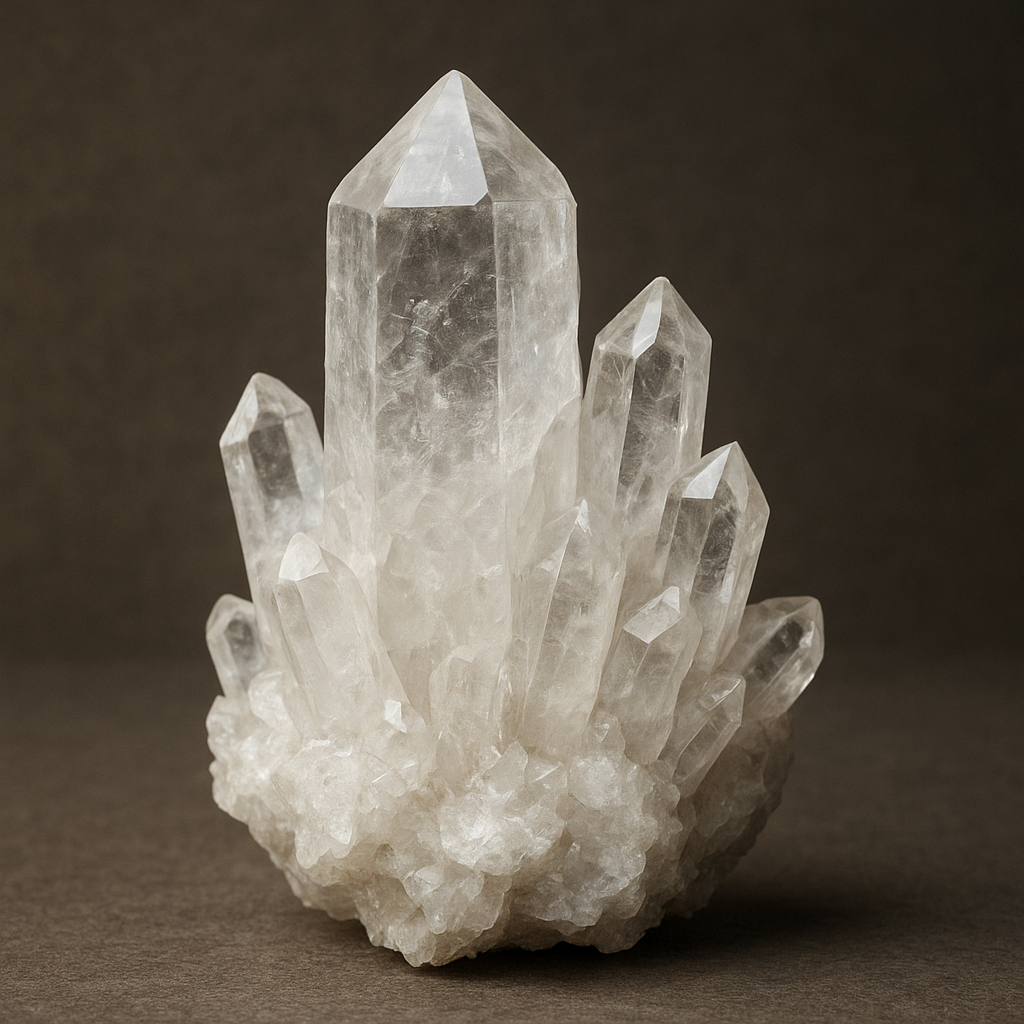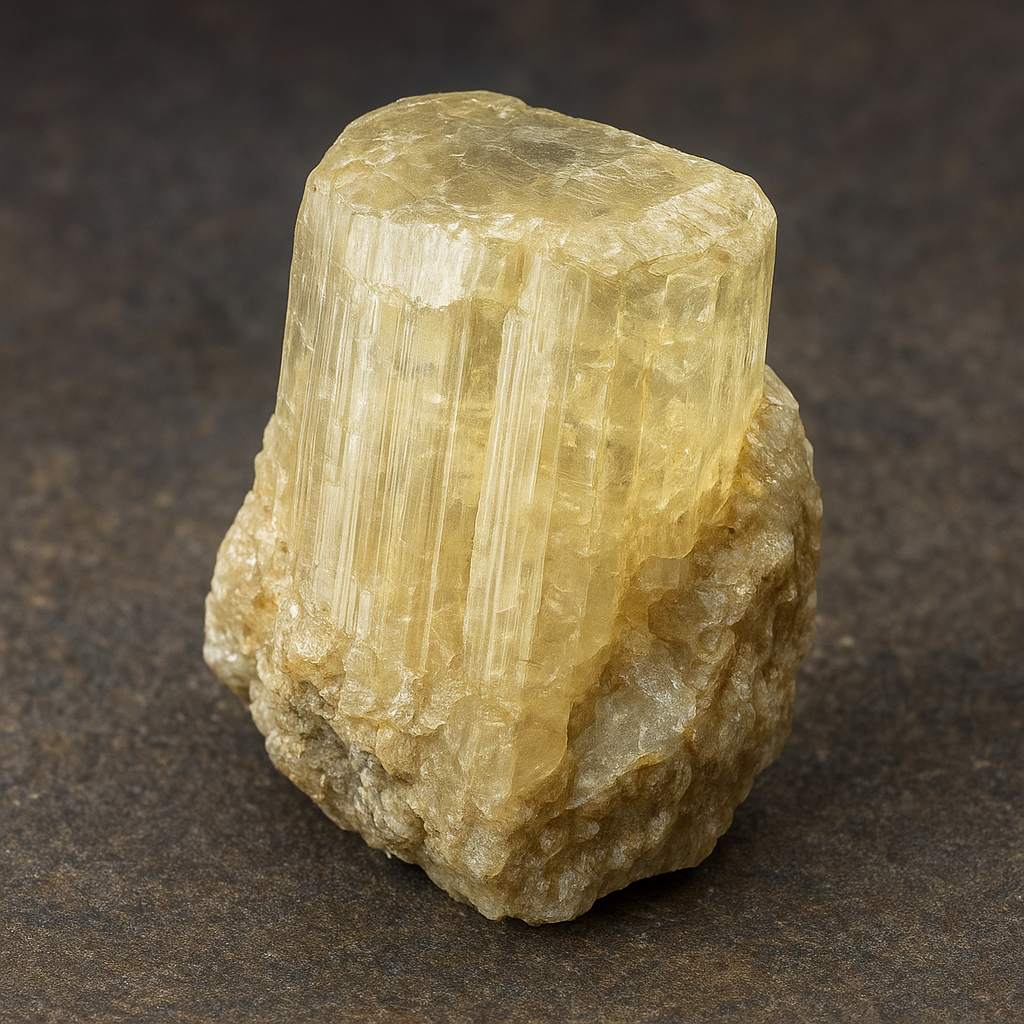
Scapolite is a fascinating group of silicate minerals that occupies a unique place in both petrology and gemology. Often occurring as well-formed prismatic crystals or as granular aggregates in metamorphosed carbonate rocks, scapolite records important information about the fluids and conditions that altered its host rocks. This article explores where scapolite forms, its distinguishing physical and chemical characteristics, practical applications in science and commerce, and several intriguing facets of its natural history and value.
Geology and Occurrence
Scapolite commonly appears as a product of metasomatic and metamorphic processes. It forms most frequently in impure limestones and marbles that have undergone contact or regional metamorphism, where the interaction between silicate components and volatile-rich fluids leads to replacement of original minerals, particularly plagioclase and calcic phases. Because scapolite is sensitive to the composition of fluids, its presence often signals significant exchange of chlorine, carbonate and other volatiles between rock and fluid.
Typical geological settings
- Contact metamorphic aureoles around intrusive bodies, where heat and fluid release drive mineralogical changes in carbonate country rocks.
- Skarn deposits formed at the interface between igneous intrusions and carbonate host rocks; scapolite is a common component of many skarn assemblages associated with garnet, pyroxene, and wollastonite.
- Regional metamorphism of impure sedimentary sequences, especially in high-grade marbles and calc-silicate rocks, where prograde metamorphism and metasomatism produce scapolite-bearing assemblages.
- Pegmatitic and hydrothermal environments where metasomatic fluids alter plagioclase-rich rocks.
- Rarely, in evaporite-related settings or as a secondary phase in weathered igneous rocks that experienced infiltration by halogen-bearing fluids.
Mineral associations
Scapolite is typically associated with a suite of calc-silicate minerals and metamorphic index minerals. Typical companions include garnet, diopside (clinopyroxene), wollastonite, calcite, epidote, and various feldspars. In skarns and skarn-related ores, scapolite can be found alongside sulfide minerals such as sphalerite, galena, and chalcopyrite, as well as magnetite and other iron oxides.
Where scapolite is found
Scapolite has a broad geographic distribution. Notable occurrences include parts of Europe (Norway, Italy, Russia), North America (Canada, the northeastern United States), and many classic gem and mineral localities in Asia and Africa. Gem-quality and notable specimens come from countries such as Madagascar, Tanzania, Myanmar, and Sri Lanka. Because scapolite formation depends on the availability of chlorine and carbonate-bearing fluids during metamorphism, occurrences tend to cluster where suitable carbonate protoliths and fluid sources are both present.
Composition, Structure and Physical Properties
Scapolite is not a single mineral but a solid-solution series between two end-members commonly recognized in the group. The approximate end-member formulas are based on sodium-rich and calcium-rich compositions, and the group often incorporates variable amounts of chlorine, carbonate and sulfate in its structural channels. The ability of scapolite to incorporate different anions makes it an exceptional recorder of fluid chemistry.
Chemistry and solid solution
- The scapolite group forms a solid-solution series between a sodium-dominant member and a calcium-dominant member. These compositional variations are reflected in color, density and optical properties.
- Commonly present anions include chloride (Cl−) and carbonate (CO3 2−), and minor sulfate; the relative abundance of these anions in the crystal structure tells a story about the fluids from which the mineral crystallized.
- Composition changes (for example, shifts from Cl-rich to CO3-rich) can produce concentric or patchy zoning within single crystals, which petrologists analyse to reconstruct fluid evolution.
Crystal system and habit
Scapolite crystals belong to the tetragonal crystal system and frequently occur as elongated prismatic crystals with striated faces. Typical habits range from well-developed elongated prisms to granular or massive aggregates in marbles. Because of its crystal habit, scapolite often shows a distinct and attractive appearance in hand specimens.
Physical properties relevant to identification
- Hardness: Moderate, typically in the range that makes it workable for lapidary use but less durable than harder gem minerals.
- Cleavage and fracture: Scapolite commonly shows distinct cleavage that can influence how it is cut or handled.
- Density: Variable, depending on composition (Na-rich vs Ca-rich varieties have slightly different specific gravities).
- Optical behavior: Many scapolite crystals are transparent to translucent and exhibit pleochroism or color changes depending on composition and impurities.
These properties influence both scientific sampling strategies and potential commercial uses. For example, limited hardness and cleavage planes mean scapolite gems require careful cutting and protective settings in jewelry.
Gemological Varieties and Uses
While scapolite is primarily known and studied as a petrogenetic indicator, several varieties attract interest in the gem trade. Gem-quality material can be transparent and display appealing colors from pale yellow through deep violet and blue. Among collectors and gemologists, a few special varieties are particularly prized for their rarity and visual effects.
Notable gem varieties
- Color-change scapolite: Some scapolites exhibit a striking color change under different lighting—typically appearing yellow to orange in incandescent light and bluish or violet in daylight. This optical phenomenon is rare in the scapolite group and makes color-change specimens sought after by collectors.
- Pale to medium yellow and golden scapolite: Often attractive and easier to source, these stones are used in pendants and beads.
- Purple and violet scapolite: Less common and sometimes intensively colored; these stones can be cut as faceted gems.
Practical considerations for jewelry
Because scapolite has moderate hardness and distinct cleavage, its use in jewelry usually focuses on items that are less exposed to wear, such as pendants, earrings, and brooches. Protective settings and careful cutting orientations are recommended to minimize cleavage-related breakage. Heat treatment and irradiation have been used experimentally to enhance color in some specimens, but the stability of such treatments varies by composition.
Market and value
The gem market values scapolite varieties largely on color, clarity and rarity. While not as famous or durable as ruby, sapphire, or spinel, well-colored and transparent scapolite gems—especially color-change examples—can command respectable prices among collectors. Their relative obscurity compared to mainstream gems sometimes makes them attractive to enthusiasts seeking unusual stones with interesting geological stories.
Scientific and Economic Importance
Beyond aesthetic appeal, scapolite is a powerful tool for geoscientists. Because its composition reflects the chemistry of the fluids present during formation, scapolite crystals can be analysed to infer the composition, temperature, and evolution of metamorphic and hydrothermal fluids. This makes scapolite invaluable in reconstructing the history of metamorphic terrains and in exploration geology.
Fluid indicators and petrogenetic clues
- Chloride vs carbonate content: The relative abundance of halogen (Cl) and carbonate within scapolite provides direct evidence of the nature of the metasomatizing fluids—whether they were saline, CO2-rich or mixed.
- Isotopic studies: Oxygen and carbon isotopes from scapolite-hosted carbonate or fluid inclusions can help constrain the source and temperature of metamorphic fluids.
- Zoning patterns: Growth zoning within scapolite crystals often preserves a chronological record of changing fluid conditions during crystal growth and can reveal pulses of metasomatic activity.
Exploration and ore genesis
In mineral exploration, scapolite can act as a pathfinder mineral for skarn-style mineralization and related ore deposits. Its presence in skarns often accompanies economically significant concentrations of copper, iron, zinc and lead. Understanding the distribution and chemistry of scapolite in a skarn can therefore inform models of ore deposition and guide exploration strategies.
Experimental and theoretical studies
Laboratory experiments and thermodynamic modelling of the scapolite system have deepened knowledge of solid-solution behavior, stability limits and the role of volatiles during metamorphism. Such research has practical implications for interpreting metamorphic P–T–X conditions (pressure-temperature-composition) and for predicting the behavior of volatile elements during crustal processes.
Textural Features and Microstructures
One of the most interesting aspects of scapolite is the variety of internal textures and microstructures that develop as a consequence of growth, exsolution and alteration. These features are not only beautiful under the microscope, but they also encode the history of physical and chemical changes experienced by the mineral.
Zoning and exsolution
Scapolite commonly displays concentric or patchy zoning that reflects changing fluid chemistry during growth. In some cases, exsolution textures develop when high-temperature, homogeneous scapolite unmixes into distinct Na-rich and Ca-rich domains on cooling. Such textures are studied with optical microscopy, scanning electron microscopy and microprobe analyses to decipher growth histories.
Fluid inclusions trapped within scapolite crystals provide direct samples of the fluids that coexisted with crystal growth. These tiny pockets can be heated and analysed to determine composition, salinity and homogenization temperatures, offering a powerful means of reconstructing metamorphic fluid histories. Because scapolite often incorporates fluid-derived anions, it can preserve evidence of volatile fluxes across metamorphic terranes.
Practical Advice for Collectors and Care of Specimens
Collecting scapolite can be rewarding for both mineral enthusiasts and gem collectors, but some care is necessary to preserve the best qualities of specimens and cut stones. Because scapolite can cleave and has moderate hardness, storage and handling practices should minimize risks.
Collection tips
- Specimen protection: Store scapolite crystals separately from harder, abrasive minerals to avoid scratches. Wrap delicate prismatic crystals in soft tissue for transport.
- Labeling: Record locality and geological context; such information greatly increases scientific and collector value.
- Display: Avoid prolonged exposure to strong sunlight if the specimen shows sensitive color attributes, and consider using a soft mount to protect cleavage directions.
Care for gemstones
- Cleaning: Use mild soap and warm water; avoid harsh ultrasonic cleaners and steamers that can exploit cleavage and cause damage.
- Settings: Choose protective settings that minimize exposure to knocks and abrasion—bezel or halo settings provide extra protection.
- Avoid chemicals: Scapolite can interact with acids and aggressive chemicals, so remove jewelry during household chores and chemical exposure.
Interesting Facts and Lesser-known Aspects
Many aspects of scapolite make it particularly interesting beyond purely scientific or commercial dimensions. Here are a few highlights.
- Scapolite as a recorder of volatile flux: Because it hosts both chloride and carbonate, scapolite directly records the interplay between saline and CO2-rich fluids during metamorphism—information critical to understanding crustal fluid systems.
- Color-change examples: Rare scapolites exhibit dramatic color-change effects similar to alexandrite, making them prized collectibles and illustrating the subtleties of light–composition interactions in minerals.
- Variable gem stability: The relative softness and cleavage of scapolite make it a gem that requires more care than typical precious stones, but this fragility also gives it an approachable price point for collectors curious about unusual gems.
- Research tool: In detailed petrographic studies, scapolite zoning and inclusion chemistry act as high-resolution archives of metamorphic events, sometimes allowing reconstruction of episodes of fluid infiltration separated by millions of years.
References and Further Reading
For readers interested in deeper study, scientific journals in metamorphic petrology and mineralogy provide numerous case studies of scapolite in skarns, marbles and metamorphic terrains. Gemological publications discuss cutting techniques and the market for gem-quality scapolite, while textbooks on mineralogy cover the scapolite group within broader frameworks of silicate chemistry and solid-solution behavior. Visiting mineral collections and museum exhibits with labeled specimens can also give valuable hands-on appreciation of scapolite’s crystal forms and colors.
Selected topics you might explore next include compositional mapping of scapolite using electron microprobe techniques, experimental constraints on scapolite stability under varying fluid chemistries, and photographic collections of color-change scapolite worldwide.