Red Jasper is a striking, earthy stone that has been admired by cultures around the world for its rich color, tactile solidity, and multifaceted uses. As a member of the microcrystalline quartz family, it offers both aesthetic appeal for jewelers and lapidaries and a tapestry of cultural meanings that span millennia. This article explores where Red Jasper is found, how it is used in contemporary and historical contexts, its physical and metaphysical properties, and some intriguing facts and practices connected to this resilient stone.
Geology, Composition and Where It Occurs
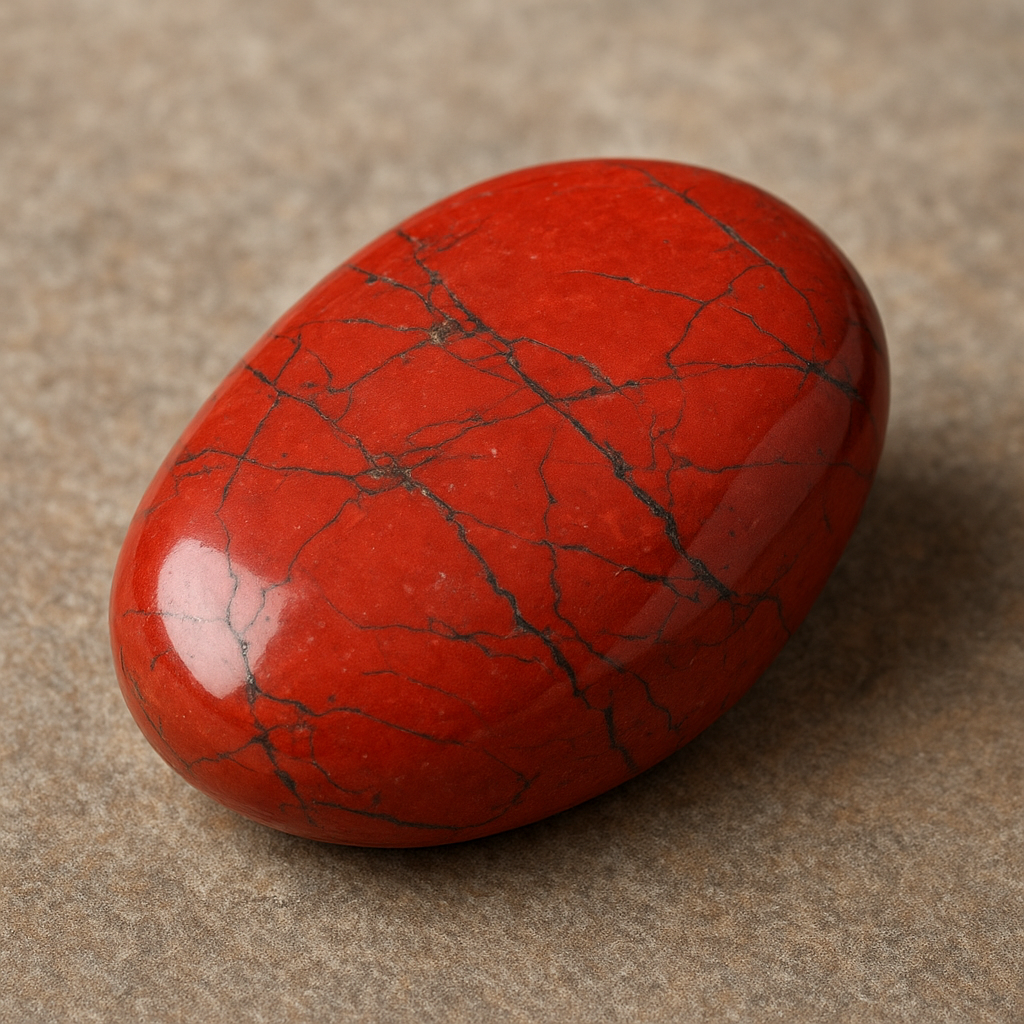
Red Jasper is primarily a variety of chalcedony, a form of microcrystalline quartz, colored by iron inclusions that give it the familiar deep red to brick-red hues. Its color results from iron oxide (often microscopic grains of hematite) dispersed throughout the silica matrix. It is typically opaque with a smooth, waxy luster when polished.
Formation and Geological Settings
Jasper forms in sedimentary and hydrothermal environments where silica-rich fluids percolate through rock cracks and cavities. Over time, these silica deposits consolidate into microcrystalline quartz, trapping mineral impurities that create the color and patterns characteristic of different jasper varieties. Red Jasper is often associated with volcanic activity, hydrothermal veins, and the consolidation of silica in sedimentary beds.
Major Localities
- India — India is one of the most important sources of Red Jasper, with large deposits used both locally and exported for the lapidary trade.
- Brazil — Known for supplying gem-quality jasper and many other quartz varieties.
- Madagascar — Supplies colorful, high-quality jasper specimens to international markets.
- United States — Notable occurrences in states such as Arizona, California, and Oregon; various jasper types are found across the western U.S.
- Russia and parts of Africa — Additional sources with regional varieties and patterns.
- Australia — While better known for mookaite and other jaspers, Australian localities contribute to the global jasper supply.
Smaller, notable occurrences appear worldwide, and local names sometimes reflect unique regional patterns. Because jasper is hard and durable, it often survives weathering and is recovered both from primary veins and secondary deposits such as river gravel.
Physical Characteristics and Lapidary Use
Red Jasper typically ranks around 6.5 to 7 on the Mohs hardness scale, making it suitable for a wide range of lapidary applications. It takes a high polish, which enhances its deep color and can reveal subtle banding, spotting, or brecciation in some samples. Its density and relative toughness make it a favored material for carving and shaping.
Common Forms and Varieties
- Massive Red Jasper — solid, uniform color, frequently used for cabochons and beads.
- Brecciated Red Jasper — features angular fragments and veins that create dramatic patterns.
- Orbicular and picture jaspers — while not strictly pure red jasper, these related forms show scenic patterns and are prized by collectors.
- Mookaite (Australia) — sometimes includes red tones and is often grouped with jasper varieties for commercial purposes.
Lapidary and Jewelry Uses
Because of its durability and polishability, Red Jasper is commonly cut into cabochons, beads, inlays, and ornamental carvings. It is a favorite for artisan jewelers, collectors, and craft markets. Larger, high-quality pieces are carved into figurines, cameos, or decorative objects. Its affordability compared to many gemstones makes it popular for everyday jewelry and statement pieces alike.
Historical and Cultural Significance
Ancient peoples prized Red Jasper for its color and perceived powers. Its use spans continents and epochs, from Neolithic tools and amulets to elaborate settings in ancient courts. The stone’s earthy red color often associated it with blood, life, and vitality, leading to symbolic meanings that varied between cultures.
Ancient Civilizations
- Egypt — Red Jasper was used for amulets, scarabs, and funerary objects. It was associated with vitality and protection in the afterlife.
- Mesopotamia and the Near East — Jasper beads and seals appear in archaeological contexts, demonstrating its role in trade and ornamentation.
- Greece and Rome — Jasper was carved into intaglios, signet rings, and talismans. Writers of the period sometimes ascribed protective properties to the stone.
- Indigenous Cultures — Many Native American groups used red stones in ceremonial contexts; jasper was esteemed for its grounding and protective symbolism.
Symbolism and Folklore
Across cultures, Red Jasper has symbolized protection, vitality, and endurance. It was often carried or worn as a protective amulet against physical danger and negative influences. In some herbal and healing traditions, it was associated with blood circulation and life force. Folklore sometimes attributes to jasper the power to calm spirits or to help in visionary practices.
Metaphysical Properties and Contemporary Spiritual Uses
In modern metaphysical and crystal healing communities, Red Jasper is widely recommended for its grounding, stabilizing influence. It is commonly associated with the root chakra, which connects to foundation, security, and physical vitality. Practitioners use Red Jasper in meditative and ritual contexts to enhance stamina, focus, and courage.
Common Metaphysical Uses
- Grounding and Centering — used during meditation to anchor scattered energy.
- Stamina and Endurance — employed by those seeking increased persistence or support during challenging tasks.
- Protection — carried as a talisman to deflect negative energies and promote a sense of safety.
- Emotional Balance — used to soothe irritability and promote patience and determination.
Many crystal workers incorporate Red Jasper into grids, amulet pieces, and healing layouts. It is also popular in massage tools, worry stones, and palm stones because of its comforting weight and warmth. While such uses are popular, it is important to note that these practices are complementary and not a substitute for professional medical advice.
Care, Identification and Market Value
Proper care of Red Jasper is straightforward. Its hardness makes it resistant to scratches from ordinary wear, but like all stones it can chip if dropped or struck. Cleaning with warm soapy water and a soft brush is effective for removing dirt and oils; ultrasonic cleaners are usually safe, but prolonged exposure to acids or strong chemicals should be avoided.
How to Identify Genuine Red Jasper
- Color and Texture — natural Red Jasper typically has a deep, earthy red and an opaque, fine-grained texture.
- Weight and Feel — it should feel relatively heavy and cool to the touch due to its density.
- Polish and Luster — a good polish results in a waxy to vitreous sheen.
- Look for Inclusions — small flecks or streaks of hematite or darker veins are common and authentic.
- Beware of Dyeing — some lower-grade jaspers are dyed to enhance color; test by rubbing with acetone on an inconspicuous spot.
Value Factors
Price depends largely on color saturation, uniformity, pattern attractiveness, size, quality of polish, and provenance. Unique patterns or high-quality pieces suitable for carving can command higher prices. Overall, Red Jasper is typically affordable, making it widely accessible to hobbyists and designers.
Practical Applications Beyond Jewelry
Red Jasper’s physical properties make it suitable for several practical uses beyond jewelry and decorative objects. Historically and today, it finds roles in toolmaking, ornamental construction, and craftwork.
Ornamental and Architectural Uses
- Inlay work — used as accent stones in furniture, boxes, and mosaics.
- Sculpture and Carvings — medium-sized to large blocks are carved into statuettes and decorative panels.
- Collectibles — polished slices and specimens for mineral collections.
Craft and Industry
Artisans value Red Jasper for cabochons, beads, and intaglios. In some regions, locally abundant jasper has been used historically as building stone and as durable elements in walkways and ornamentation. While not a typical industrial mineral, its toughness and availability make it useful for small-scale utilitarian objects.
Ethical Sourcing, Sustainability and Collecting
As demand for gemstones and ornamental stones grows, attention to provenance and responsible mining becomes more important. Many Red Jasper deposits are mined on a small scale, sometimes by artisanal miners who depend on the resource for livelihoods. Buyers increasingly ask for transparency regarding origin, mining conditions, and trade practices.
- Look for sellers who disclose origin and show respect for local communities.
- Consider purchasing from reputable lapidary and mineral dealers who follow ethical standards.
- Support fair-trade and small-business initiatives where possible to ensure sustainable practices.
Care Tips and Practical Handling
Cleaning: Use warm water, mild soap, and a soft brush. Avoid harsh chemicals and prolonged exposure to strong acids.
Storage: Keep pieces separated to avoid scratches; wrap in soft cloth for larger polished items.
Maintenance: Re-polishing by a lapidary can restore high-luster finishes on older or worn pieces.
Varieties, Confusions, and Comparisons
Jasper encompasses many varieties named for pattern, locality, or color. Red Jasper can be confused with or compared to other red stones such as carnelian, red agate, and certain types of jasper-like rocks. The key distinction is that jasper is typically opaque, whereas carnelian and agate can be translucent.
- Carnelian — more translucent, often used for engraved signet rings; color ranges from orange to red-brown.
- Bloodstone — a dark green jasper with red spots, historically associated with blood and healing folklore.
- Picture Jasper — valued for scenic patterns rather than solid red color.
Collectors often prize rare patterns, such as brecciated or orbicular varieties, which display unusual textures and visual depth.
Interesting Facts and Lesser-Known Uses
Red Jasper has found surprising roles in art, medicine, and symbolism:
- In ancient times, powdered jasper occasionally appeared in pigments and as a filler in decorative inlays.
- Some medieval lapidaries attributed miraculous properties to jasper, believing it could staunch bleeding or protect against poisons.
- In modern craft markets, Red Jasper is popular for making worry stones, cabochons for wire-wrapped jewelry, and durable game tokens.
- Its use as a grounding stone makes it a common addition to meditation gardens, altars, and personal talismans.
Beyond the obvious aesthetic appeal, Red Jasper’s cultural resonance and practical versatility continue to inspire artisans, collectors, and spiritual practitioners. Whether valued as a durable carving medium, a piece of meaningful jewelry, or an object of ritual, Red Jasper maintains a steady presence in human material culture.
Resources for Further Exploration
Those wishing to learn more about Red Jasper can explore mineralogical texts, lapidary tutorials, and museum collections that highlight jasper artifacts from different cultures. Visiting reputable gemstone dealers and mineral shows provides hands-on experience with a range of specimens and helps develop an eye for quality.
For anyone interested in collecting or using Red Jasper, consider studying basic gem identification, ethical sourcing practices, and lapidary techniques to deepen appreciation and ensure responsible enjoyment of this enduring and beautiful stone.