
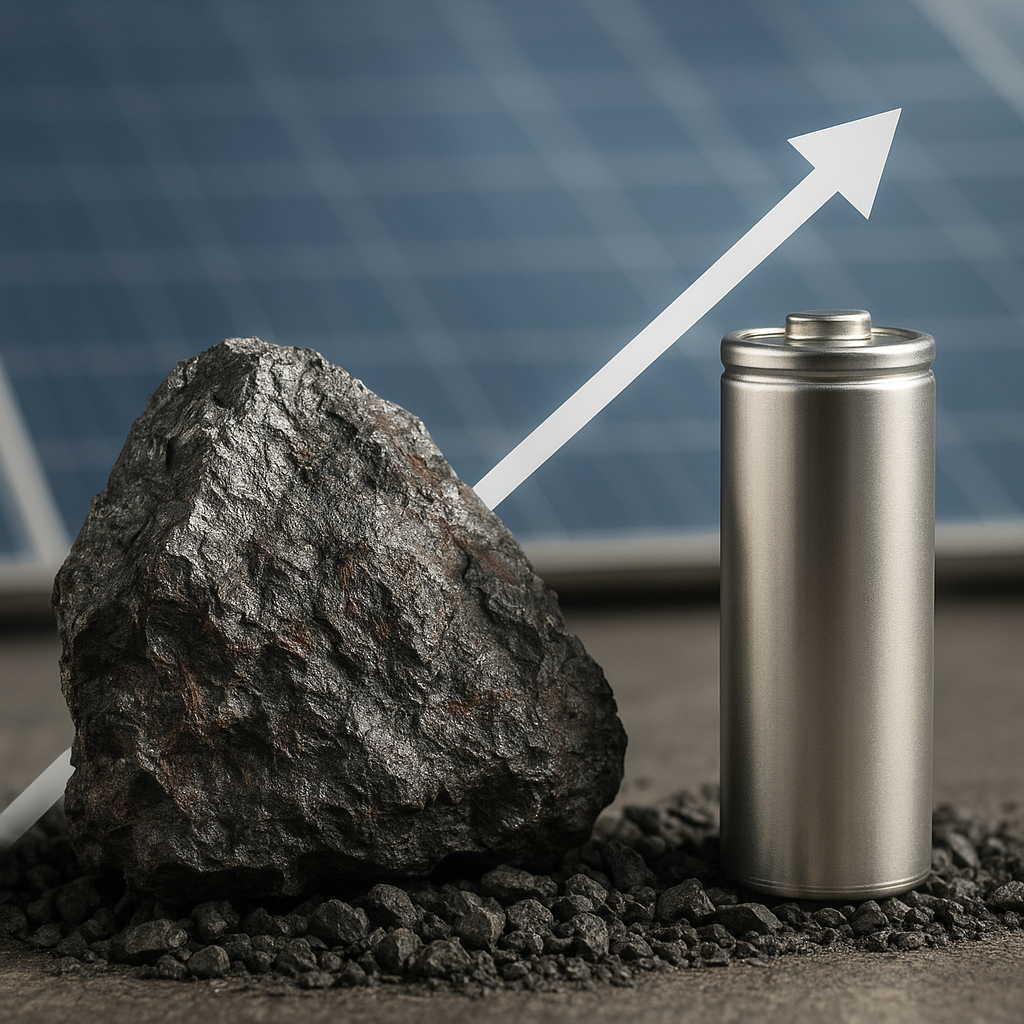
The accelerating shift to electrified transport and large-scale energy storage is reshaping demand for battery materials. Among them, manganese is emerging from the shadow of better-known elements like lithium, nickel and cobalt. As battery chemistries evolve and manufacturers seek more cost-effective, safe and reliable options, high-purity, battery-grade manganese is becoming strategically important. This article explores the technical, industrial and environmental dimensions of the rise of manganese tailored for batteries, examining how its role may expand, what it takes to produce true battery-quality material, and what challenges and opportunities await supply chains and policymakers.
Why manganese matters for modern batteries
Manganese has a long history in electrochemistry, from primary alkaline cells to lithium-ion cathodes. Its appeal for contemporary batteries rests on several complementary properties. First, manganese contributes to thermal stability and safety when included in layered oxide cathodes or spinel structures. Second, it is comparatively abundant and widely distributed globally, potentially alleviating some concentration risks associated with nickel and cobalt. Third, manganese-based chemistries can be lower cost and less toxic, improving the overall environmental profile of battery systems.
Key chemistries that use manganese
- Layered oxide cathodes such as NMC (nickel-manganese-cobalt) — manganese serves to stabilize the structure and improve cycle life.
- Spinel materials like LiMn2O4 (LMO) and high-voltage LiNi0.5Mn1.5O4 (LNMO) — valued for high-rate capability and thermal resilience.
- Emerging composite cathodes and mixed chemistries where manganese replaces part of cobalt or nickel to cut cost and reduce supply risk.
As automakers and battery makers pursue higher energy density, some roadmaps move toward very nickel-rich NMC formulations, which temporarily reduce manganese share per cell. However, parallel innovation in manganese-rich and manganese-containing low-cobalt chemistries, combined with the push for safer, fast-charging and lower-cost batteries, keeps manganese near the center of strategic material planning. The balance between performance, cost and sustainability will determine whether battery-grade manganese scales as envisioned.
From ore to battery: producing battery-grade manganese
Not all manganese is equal. Manganese ores and concentrates must undergo conversion and purification to become suitable for electrode manufacturing. For battery applications, the most common intermediate is high-purity manganese sulfate monohydrate (MnSO4·H2O), which serves as a precursor in the synthesis of cathode active materials. Achieving battery-grade specifications demands stringent control of impurities — trace metals such as iron, copper, lead, and zinc can catastrophically affect electrochemical performance and lifetime.
Primary production routes
- Pyrometallurgical processing — smelting and refining of manganese ore to produce manganese metal or ferroalloys, often followed by acid leaching to generate soluble manganese salts.
- Hydrometallurgical processing — direct leaching of ores or processing of low-grade feed using acids (sulfuric or hydrochloric), with subsequent purification via solvent extraction, ion exchange, precipitation and crystallization to yield purified manganese sulfate.
- Electrolytic routes — electro-winning and electrowinning produce high-purity manganese metal or salts under controlled electrochemical conditions.
Core purification steps include selective precipitation, activated carbon adsorption, membrane filtration and multi-stage crystallization. Each stage must be optimized to minimize loss of yield while achieving impurity levels measured in parts per million or even parts per billion for certain deleterious elements. This level of quality control raises production complexity and cost compared to manganese destined for steelmaking or fertilizers.
Key quality parameters for battery use
- Low concentrations of Fe, Cu, Ni, Zn, Pb and other transition elements.
- Controlled moisture and particle-size distribution for solid salts.
- Consistent stoichiometry and phase purity for oxide precursors.
- Traceability and documentation to meet manufacturer and regulatory requirements.
Meeting these standards often requires specialized hydrometallurgical plants located close to ore sources or near recycling hubs. Investments in analytics and quality systems are as important as the core chemical processing steps.
Supply chain dynamics and geopolitics
Manganese resources are geographically widespread, with major ore producers including South Africa, Gabon, Australia and Brazil. However, the current processing capacity to produce battery-grade manganese sulfate and other high-purity intermediates is heavily concentrated in certain regions, particularly in China, which currently hosts large-scale refining and chemical manufacturing facilities. This concentration creates familiar geopolitical and supply-chain risk patterns for downstream battery makers and OEMs.
Strategic implications
- Vertical integration: Battery manufacturers and automakers may seek long-term offtakes, joint ventures or direct investments into mines and refineries to secure supply and quality control.
- Regional diversification: Development of processing hubs in Africa, Europe, North America and Australia is likely as governments and industry push for localized value chains with lower carbon intensity.
- Standards and certification: Clear industry specifications for battery-grade manganese and third-party certification regimes can reduce risk and encourage new entrants.
Supply security is not only about volumes. It is also about consistent quality, traceability and adherence to environmental and social governance (ESG) norms. Mines and refineries that can demonstrate low emissions, ethical labor practices and closed-loop water management will be increasingly preferred by OEMs under procurement and reporting obligations.
Environmental aspects and recycling
Scaling up manganese for batteries raises environmental questions, but also offers opportunities. Compared with cobalt and nickel, manganese mining and refining can have a lower per-unit environmental footprint when managed well, because manganese deposits are more common and less geopolitically concentrated. Nevertheless, hydrometallurgical processing uses acids, reagents and water, and can generate waste streams that must be responsibly managed.
Recycling as a strategic lever
End-of-life batteries contain significant amounts of manganese, and developing efficient recycling pathways is crucial to both supply resilience and sustainability. Hydrometallurgical recycling processes are well suited to recover manganese in high purity from spent cathodes and black mass. Direct recycling approaches aim to regenerate cathode active material with minimal element separation, potentially preserving the embedded energy and reducing the need for virgin precursors.
- Hydrometallurgical recovery: Leaching, purification and precipitation to yield manganese salts comparable to primary battery-grade products.
- Direct cathode rejuvenation: Restoring cathode materials using controlled relithiation and phase correction, which can retain manganese within the active structure.
- Integration with circular supply chains: Collection, sorting and local recycling hubs reduce transportation emissions and shorten supply chains.
Successful recycling reduces dependence on primary mining, limits environmental impact, and can smooth price volatility. However, recycling infrastructure must scale quickly and align with material flows from diverse chemistries to be meaningful.
Economics, innovation and market outlook
Costs for battery-grade manganese currently depend on ore prices, processing complexity and the scale of purification plants. As demand from electric vehicles and grid storage rises, economies of scale will reduce per-unit costs for high-purity manganese products. Technological innovation in purification, lower-cost electrowinning, and process intensification will further compress costs and improve environmental performance.
Investment areas and industrial strategy
- Upstream: development of mines with responsible mining practices and long-term resource security.
- Midstream: construction of hydrometallurgical refineries designed specifically to meet battery-grade specifications.
- Downstream: partnerships with cathode manufacturers to qualify manganese inputs and integrate recycling loops.
Governments can accelerate the transition by supporting pilot plants, funding R&D in impurity control and recycling, and implementing procurement policies that favor low-carbon, traceable materials. For investors, battery-grade manganese represents an opportunity at the intersection of legacy commodity markets and fast-growing clean-energy supply chains.
Technical challenges and research priorities
Key technical barriers to broader adoption include reliable impurity removal at scale, cost-effective conversion routes from ore or recycled feedstock, and compatibility with evolving cathode synthesis methods. Research priorities that would unlock growth include:
- Advanced separation technologies that selectively remove detrimental trace elements without excessive reagent use.
- Process intensification to lower energy and water consumption in crystallization and drying steps.
- Materials science to design cathode formulations that maximize manganese benefits while tolerating residual impurities.
- Life-cycle analysis and digital traceability systems to certify low-carbon, ethically sourced manganese.
Addressing these priorities requires collaboration among academia, industry and policymakers, supported by targeted funding and testbeds for pilot-scale validation.
Outlook: balancing demand, quality and sustainability
The rise of battery-grade manganese is not merely a matter of scaling raw manganese output; it is about building a specialized value chain that delivers ultra-clean, consistent, and well-documented material to battery manufacturers. If industry and governments align incentives — investing in purification technologies, recycling infrastructure and transparent sourcing — manganese can play a major role in making batteries cheaper, safer and more sustainable. The transition will require capital, innovation and rigorous standards, but the potential payoff is significant: a more resilient supply chain, lower carbon footprint for battery production and a wider palette of cathode chemistries for future energy systems. Companies and policymakers that act early to secure battery-grade manganese capacity may gain a competitive advantage in a market increasingly defined by both performance and provenance.
