
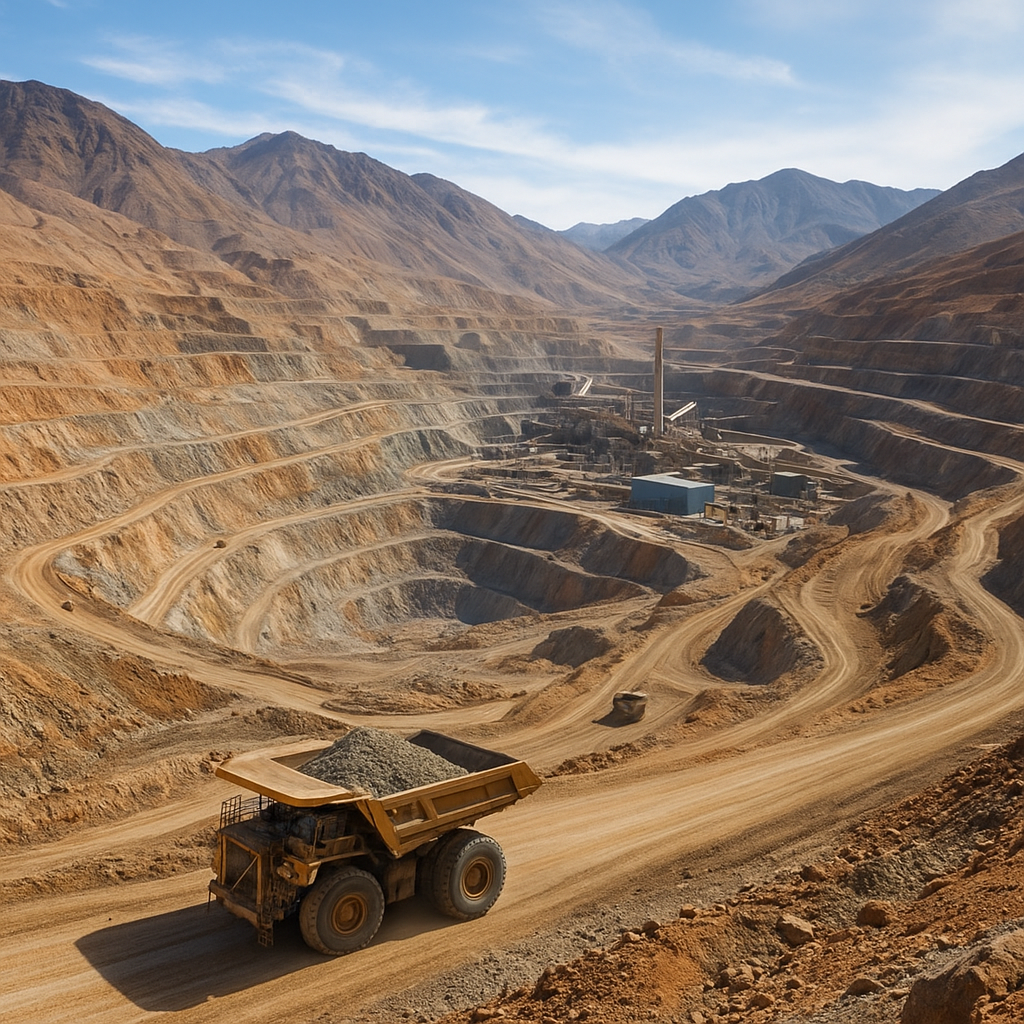
The following article explores the significance, operations and intriguing aspects of Los Pelambres, one of the major copper producers located in Chile. It describes where the mine is situated, what minerals are extracted, how it affects the local and national economy, and highlights technical, environmental and social points of interest that make this mine notable in the global mining landscape.
Location and Geological Setting
Los Pelambres sits in the coastal mountain range of central Chile, within the Choapa Province of the Coquimbo Region. The mine is positioned in a semi-arid corridor of the country where the Pacific coastal influence and the rising Andes create a distinct mining-friendly geology. The area is accessible from regional towns such as Salamanca and is within a few hours’ drive of coastal ports used for concentrate shipping.
The deposit is a classic example of a porphyry copper system. Porphyry deposits are large, disseminated mineral systems formed by hydrothermal fluids associated with magmatic intrusions. In the case of Los Pelambres, copper mineralization is associated with extensive alteration zones and a host of sulfide minerals. The typical mineral suite includes chalcopyrite (the primary copper-bearing mineral), molybdenite, and subordinate amounts of native gold and other sulfides. This mineral assemblage supports production of both copper and molybdenum concentrates.
Geologically, the deposit is notable for its size and the relative homogeneity of the ore body, which has allowed continuous large-scale open-pit mining. The setting within Chile’s long-lived Andean magmatic arc explains why the country hosts some of the world’s richest porphyry copper deposits.
What Is Extracted and How It Is Processed
The primary product of Los Pelambres is copper. A significant portion of output is shipped as a copper concentrate after on-site mineral processing. The mine also produces a molybdenum byproduct, recovered as a separate concentrate, and smaller amounts of gold and silver that appear as byproducts in concentrates.
Mining Method
- Open-pit mining: Large benches, heavy-duty fleets of haul trucks and shovels, and a continuous sequence of drilling, blasting, loading and hauling are typical.
- Large-scale operations: The physical footprint is substantial, reflecting the low-grade but very large tonnage nature of porphyry deposits.
Processing Flow
- Comminution: Crushed and ground to liberate sulfide minerals.
- Flotation: Copper and molybdenum sulfides are separated using froth flotation to produce concentrates.
- Concentrate handling: Concentrates are dewatered and prepared for transport to ports and smelters; they are sold to smelters and refineries around the world.
Because concentrates contain both copper and molybdenum, careful metallurgical control and plant optimization are required to maximise recovery and ensure marketable concentrate grades. Over the life of the mine, changes in ore characteristics have required adjustments to processing circuits and reagent regimes.
Economic Importance and Regional Impact
Los Pelambres is one of the significant contributors to Chile’s copper sector, a cornerstone of the national economy. Chile is the world’s top copper producer, and large operations like Los Pelambres play a major role in maintaining that position.
- Exports and Revenue: Copper concentrates from Los Pelambres are a vital source of foreign exchange. Revenues from mining exports support public finances and the balance of trade.
- Employment: The mine provides direct employment to thousands of workers and indirectly supports a wider network of contractors, service companies and suppliers in fields such as transport, equipment maintenance and hospitality.
- Local Development: Investment in regional infrastructure — including roads, power connections and water management projects — has both allowed the mine to operate efficiently and supported local communities.
- Taxes and Royalties: Fiscal contributions in the form of taxes, royalties and social programs add to public coffers that fund health, education and public works.
On a broader scale, operations like Los Pelambres also attract capital investment, technology transfer and specialist skills into Chile. The presence of such mines fosters a national ecosystem of mining engineering, geology, metallurgy and environmental science expertise.
Infrastructure, Water Management and Environmental Practices
Large open-pit mines require substantial infrastructure. Los Pelambres has extensive processing facilities, haul roads, power supply arrangements and concentrate transport systems. One of the most critical and often-discussed aspects of mining in this region is water — both its scarcity and the ways the industry adapts.
Water Strategy
- Water scarcity in the Coquimbo Region has pushed mines to adopt integrated water management strategies, including recycling of process water, efficiency improvements and, in many cases, the use of alternative water sources.
- Desalination has become a strategic option for coastal mines to reduce pressure on inland freshwater resources. Los Pelambres and other major operations have pursued seawater intake and desalination solutions, although the specifics of each project can vary in scale and timing.
- Tailings management and reduction of freshwater consumption are key environmental priorities. Many modern projects employ thickened or filtered tailings systems, tailings piping to deep-sea or engineered storage facilities, or dry-stacking technology to minimise environmental risk.
Environmental Stewardship
Like most contemporary mines in Chile, Los Pelambres operates under strict environmental regulations. Environmental impact assessments, monitoring programs for air and water quality, and rehabilitation plans for disturbed land are part of the operational envelope. Companies also report on greenhouse gas emissions and seek energy efficiency gains as part of corporate sustainability agendas.
Community Relations and Social Investment
Maintaining social license to operate is critical. The mine engages with nearby communities through development projects — from education and healthcare initiatives to local business development and infrastructure. Disputes over water access, land use and environmental impact are not uncommon, and the company has historically engaged in negotiations, community agreements and mitigation efforts to address concerns.
Technological and Operational Innovations
To maintain competitiveness, mines like Los Pelambres invest in technology and process improvements. Automation of truck fleets, advanced process control in concentrators, and improved geometallurgical modelling are among the innovations that increase productivity and lower costs.
- Automation and digitalisation: Remote-monitoring, fleet management systems and data analytics improve safety and efficiency.
- Metallurgical optimisation: Continuous improvement of flotation circuits and reagents enhances recoveries and concentrate quality.
- Energy management: Mines seek to optimise power consumption and integrate renewable energy where practical to limit carbon footprints.
Geometallurgy — linking rock characteristics with metallurgical response — has been a valuable tool for Los Pelambres in planning pit sequencing and processing strategies to maintain steady plant feed and predictable recoveries over time.
Interesting Facts and Notable Challenges
There are several features of Los Pelambres that make it particularly interesting to students of mining, economics and environmental management.
- Scale and longevity: Porphyry deposits like Los Pelambres are typically low-grade but exceptionally large, which enables long mine lives as long as economic and technical factors remain favorable.
- Byproduct economics: The recovery of molybdenum and precious metals as byproducts improves project economics and provides additional market flexibility.
- Water innovations: The use of seawater, desalination and high levels of water recycling reflect how mining adapts to operating in arid regions.
- Logistics: Being relatively close to the coast simplifies concentrate shipping compared to high-Andean operations that need long haulages to ports.
- Market sensitivity: Large copper mines are highly sensitive to global commodity cycles; profitability and expansion decisions are closely tied to copper prices and demand trends, particularly from sectors such as electrification and renewable energy where copper is crucial.
Operationally, the mine has faced familiar industry challenges: maintaining stable water supplies, securing community consent for expansions, ensuring tailings safety, and responding to fluctuations in metal prices. The company’s responses to these challenges are illustrative of modern mining management practice.
Future Prospects and Strategic Importance
Looking forward, Los Pelambres remains strategically important for Chile’s mining portfolio. Copper demand is expected to rise over the coming decades driven by electrification, electric vehicles, and renewable energy infrastructure — all sectors that use substantial amounts of copper. As a result, large, well-run operations in stable jurisdictions are likely to remain central to supply chains.
Potential developments for a mine like Los Pelambres might include process plant upgrades to boost recovery, incremental expansions of the pit where geotechnical conditions permit, further investments in water and energy solutions (including desalination and renewable power integration), and continued focus on community partnerships. Any expansion plans must align with environmental approvals and social agreements, which increasingly shape the pace and scale of mining projects.
Key strategic considerations
- Maintaining high standards of environmental compliance and tailings management.
- Continued optimisation of processing to improve grade and recovery.
- Enhancing local value creation through supplier development and local hiring.
- Adapting to global market conditions by hedging and flexible sales strategies.
In sum, Los Pelambres exemplifies the challenges and opportunities of large-scale copper mining in Chile: it is a technically complex, economically significant asset operating in a sensitive environmental and social context, and it will continue to play a role in supplying copper and related metals to a world undergoing rapid energy and transport transformations.

