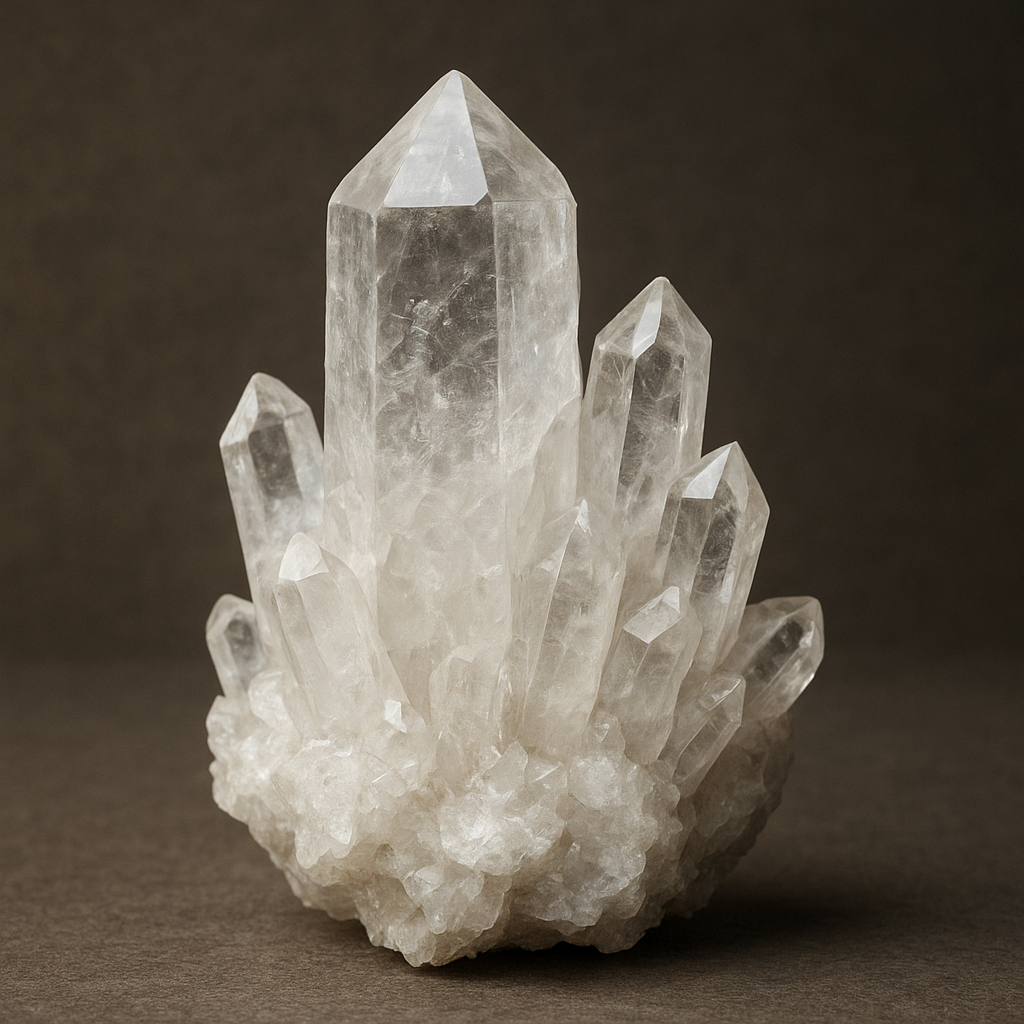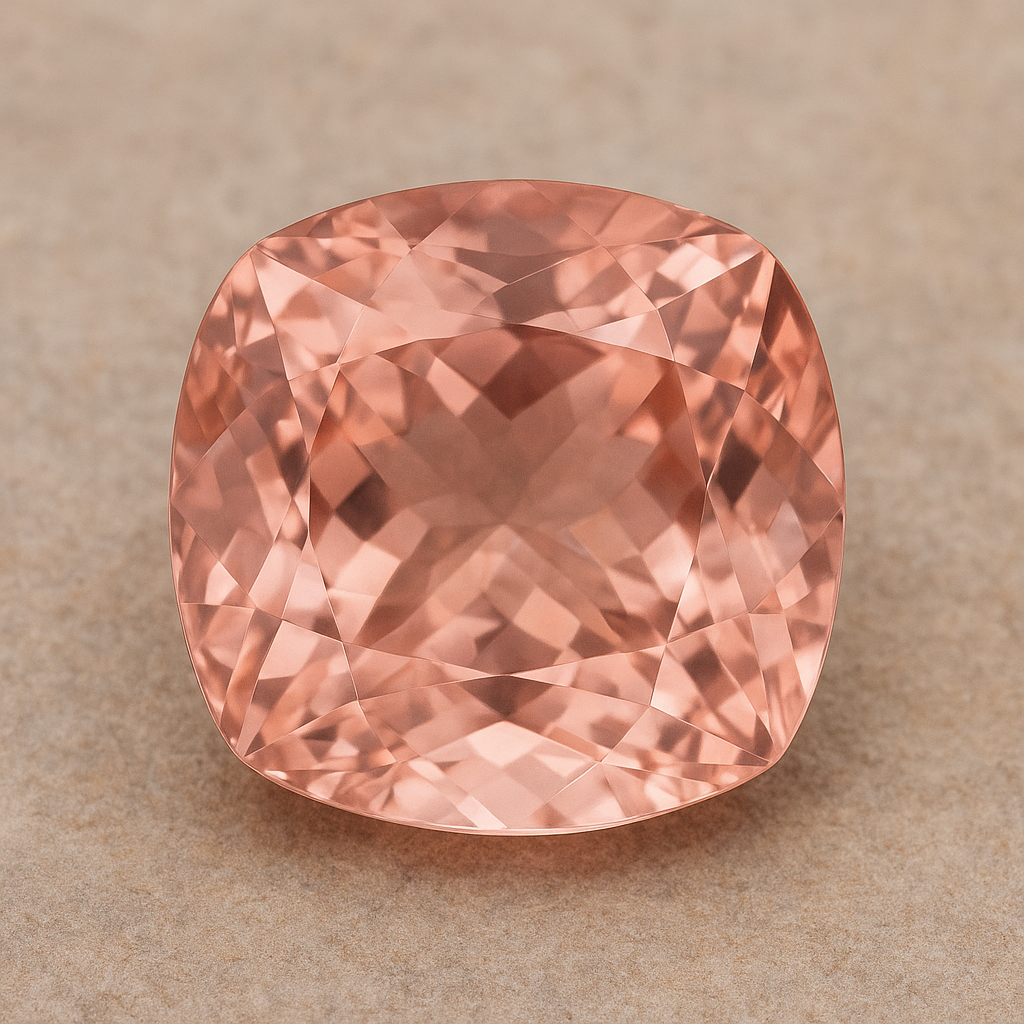
Morganite Pink is a captivating member of the beryl family prized for its delicate blush tones and gentle sparkle. This article explores its geological origins, physical and chemical characteristics, a variety of colors and treatments, applications in contemporary and antique jewelry, and the broader cultural and commercial context surrounding this appealing gemstone. Throughout the text you will find practical information for collectors, gemologists, and anyone curious about why this stone has gained increasing attention among designers and consumers worldwide.
Origins and geological occurrence
The story of Morganite begins deep within the Earth’s crust, where rare combinations of elements produce the mineral family known as beryl. Beryl forms in pegmatites — coarse-grained igneous rocks — and in some metamorphic environments. Morganite’s signature pink hues arise primarily from trace amounts of manganese substituting into the beryl crystal lattice during formation.
Typical geological settings
- Pegmatites: Most gem-quality morganite crystals are recovered from granitic pegmatites. These pockets allow large, well-formed crystals to grow slowly, incorporating trace elements like manganese and occasionally cesium or lithium that influence color and clarity.
- Hydrothermal veins: In a few localities, hydrothermal processes contribute to beryl formation; fluids rich in silica and volatile components can precipitate crystals in cavities and fractures.
- Metamorphic zones: Less commonly, beryl may occur in schists and gneisses where high-grade metamorphism and fluid activity have concentrated beryllium and trace elements.
Principal localities
Significant sources of pleasing pink beryl include countries such as Madagascar, Brazil, and Afghanistan. Each locality contributes stones with subtly different characteristics:
- Madagascar often yields larger crystals with pastel pink or peach shades and good clarity, making them desirable for sizable statement pieces.
- Brazil supplies a wide range of beryl varieties, including morganite with excellent transparency and attractive cut potential.
- Afghanistan can produce deeply hued specimens; these are sometimes more saturated toward salmon or orange-pink tones.
- Other sources include the United States (notably California), Mozambique, Namibia, and parts of Russia, though production volumes vary widely.
Physical and chemical properties
Morganite shares the same basic chemical formula as other beryls: Be3Al2Si6O18. Small substitutions within its crystal lattice, particularly manganese, are responsible for its characteristic pink to peach coloration. Key attributes that define and influence its value include color, clarity, cut potential, size, and durability.
Hardness and durability
On the Mohs scale, morganite typically ranks around hardness 7.5 to 8, similar to emerald and aquamarine. This makes it sufficiently durable for everyday wear when set and cared for properly, though it is less hard than sapphire or diamond. Its cleavage is imperfect, meaning care is still necessary to avoid sharp impacts or harsh knocks that could chip or fracture the stone.
Optical characteristics
Morganite is typically singly refractive with a refractive index that ranges roughly from 1.57 to 1.60, depending on composition. It often displays excellent brilliance and a vitreous luster when well cut. Pleochroism — the display of different colors when viewed from different directions — can be present but is generally weak compared to some other gemstones.
Clarity and inclusions
Many morganite gems are eye-clean, meaning they lack inclusions visible to the naked eye. When present, inclusions may include tiny two-phase fluids, mineral crystals, or growth zoning. High-clarity stones that combine strong color and large size command premium prices. The term clarity is critical for valuation, particularly in faceted stones intended for high-end jewelry.
Color variations and treatments
Color is arguably the most important factor in morganite’s desirability. Ranging from soft pastel pinks to deep peach and salmon tones, color is influenced by trace elements and, in some cases, by the stone’s crystal orientation.
Natural color vs. enhancements
- Natural colors: Stones with uniform pink or peach hues and good saturation are highly sought after. Subtle and delicate tones often appeal to buyers seeking a refined, romantic aesthetic.
- Heat treatment: Many morganites on the market are heat-treated to reduce brown or yellow tones and intensify pink shades. Heat treatment is widely accepted within the industry because it is stable and permanent; it is standard practice to disclose such treatment during sale.
- Irradiation and other treatments: Less common methods exist, but irradiation is not typically used intentionally on morganite compared with other gems. Buyers should seek certified disclosures about treatments from reputable sellers.
Color terminology and marketing
Retailers and designers may use romantic descriptors for marketing — blush, rose, salmon, peach, candy pink — but these are subjective. Professional grading emphasizes hue, tone, and saturation. In auction or high-end contexts, a stone with vivid, even color without secondary hues will command a higher price.
Uses in jewelry and design
Morganite’s gentle colors and relative affordability compared to classic pink gems like spinel or sapphire have made it increasingly popular in modern and vintage-inspired designs. Its versatility allows it to be set in a wide range of metals and styles.
Popular settings and styles
- Engagement rings: Many couples choose morganite as a non-traditional engagement stone. Its softness in color pairs beautifully with rose gold, which amplifies warm tones and provides a romantic aesthetic.
- Halo and accent settings: Morganite is often mounted with diamond halos or accented by small melee diamonds to boost brilliance and contrast. White metals like platinum or white gold accentuate lighter, purer pinks.
- Pendants and earrings: Larger morganites with good clarity are ideal for pendants and drop earrings where their size and color can be showcased without the wear demands of rings.
Design considerations
Designers should consider the stone’s clarity and hardness when selectingsetting styles. Prong settings protect the stone while maximizing light exposure. Bezel settings offer additional protection for active wearers. Matching morganites for color consistency in pair pieces (e.g., earrings) requires careful selection since natural variations can be noticeable in adjacent stones.
Cultural, metaphysical and historical associations
Although morganite does not have the long catalog of folklore associated with older gemstones like garnet or sapphire, it has rapidly acquired its own symbolic associations in contemporary culture. It was named after financier and gem patron J. P. Morgan, reflecting its historical linkage to collectors and museums.
Modern symbolism
- Love and compassion: The soft pink hues are commonly linked with love, empathy, and emotional healing, making morganite a popular choice for romantic gifts and bridal jewelry.
- Calm and optimism: Many writers and retailers highlight the stone’s association with calmness and emotional balance, useful attributes in wellness and lifestyle narratives.
- Collecting and connoisseurship: Because morganite is a pleasing, yet relatively affordable, collectible gem, it appeals to both novice collectors and seasoned gem enthusiasts seeking variety within the beryl family.
Care, valuation, and market considerations
Practical care and an understanding of market dynamics help owners maintain both the aesthetic and monetary value of their morganite pieces.
Care and maintenance
- Cleaning: Warm, soapy water and a soft brush are generally safe for regular cleaning. Ultrasonic cleaners are usually safe for untreated stones but should be used cautiously, especially if the stone has fractures or has undergone certain treatments.
- Avoid harsh chemicals: Exposure to household chemicals and acids can damage the stone or alter its appearance over time.
- Storage: Store morganite pieces separately to prevent abrasion from harder gems. Soft cloth pouches or individual compartments in a jewelry box are recommended.
Valuation factors
Prices for morganite are influenced by several criteria:
- Color: The most decisive attribute; stones with vivid pinks and minimal secondary hues are most valuable.
- Clarity and cut: Well-cut stones that optimize brilliance and show minimal inclusions command higher premiums.
- Size: Large, eye-clean specimens with attractive color are relatively rare and thus more valuable per carat.
- Origin and certification: Stones accompanied by reliable gemological certification (e.g., from respected labs) and clear origin documentation often achieve better prices.
Market trends
Over the past two decades, demand for morganite has grown steadily, especially in North America, Europe, and parts of Asia. Its rise is linked to trends favoring unique, pastel-toned gemstones and the popularity of mixed-metal and vintage-inspired settings. While not as expensive as high-end sapphires or natural pink diamonds, the increasing interest in bespoke jewelry has buoyed morganite’s market stature.
Notable localities and famous specimens
Certain mines and discoveries have shaped the perception and availability of morganite. Notable localities often produce stones with signature traits that influence their desirability.
Madagascar
Madagascar is especially noted for producing large, attractive morganites with a clean, pastel quality. These stones are favored for statement pieces where clarity and size matter.
Brazil
Brazil supplies a broad assortment of gem beryls, including morganite, that range from delicate to more saturated tones. Well-proportioned Brazilian stones have historically fed both the cut-stone market and artisanal jewelers.
Afghanistan and East Africa
In Afghanistan and parts of East Africa, morganite specimens can show richer, more salmon-inflected colors. Their unique tones are prized by collectors seeking diversity within the beryl family.
Collector pieces and museum holdings
Large, museum-quality morganites sometimes appear in exhibitions and private collections. These specimens often highlight crystal form as well as faceted beauty, illustrating the gem’s dual appeal to both mineralogists and jewelry designers.
Practical buying tips
When considering a morganite purchase, whether for investment, personal wear, or gift-giving, informed choices improve satisfaction and long-term value.
- Ask for certification: A reputable gemological report confirms identity and documents treatments.
- Evaluate color in person: Photographs can misrepresent hue and saturation; examine stones under natural light to assess true color.
- Consider mounting: Think about lifestyle and wear—select a setting that protects the stone while showcasing its color.
- Negotiate on size and cut: Sometimes a slightly smaller but well-cut stone will produce more visual impact than a larger, poorly cut one.
Why morganite continues to attract attention
Morganite’s appeal stems from a combination of aesthetic qualities and practical advantages. Its romantic palette aligns with contemporary design trends favoring softer palettes and personalized bridal options. At the same time, its availability and competitive price relative to rare pink diamonds or high-grade sapphires make it accessible to a wider audience. The stone sits comfortably between fashion and fine jewelry realms, capable of elegant simplicity or ornate, high-carat statement pieces.
Whether you are a collector intrigued by the beryl family, a jeweler searching for a versatile and attractive material, or a consumer drawn to the gentle charm of a blush-colored gem, morganite offers a compelling mix of beauty and value. Its varied origins, range of hues, and increasing presence in designer collections ensure it will remain a subject of interest among gem enthusiasts and the wider public for years to come.