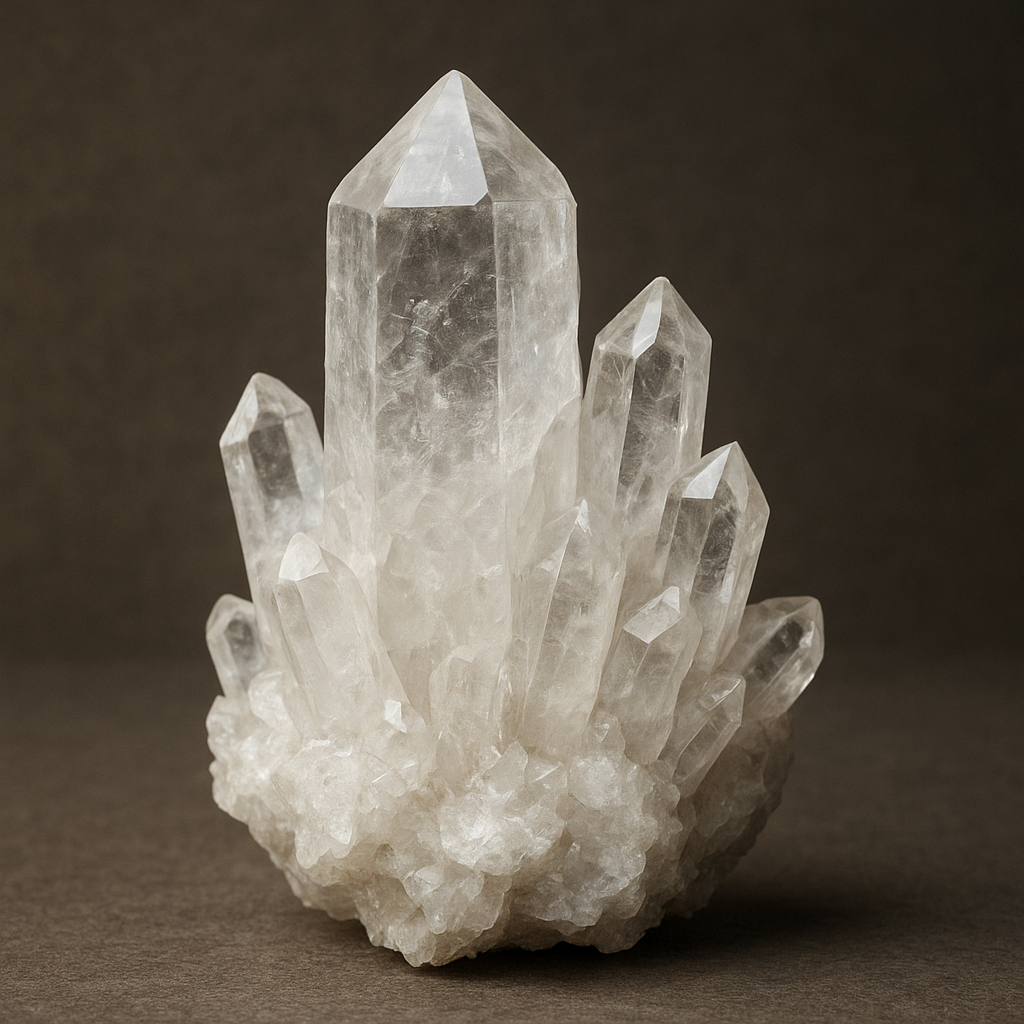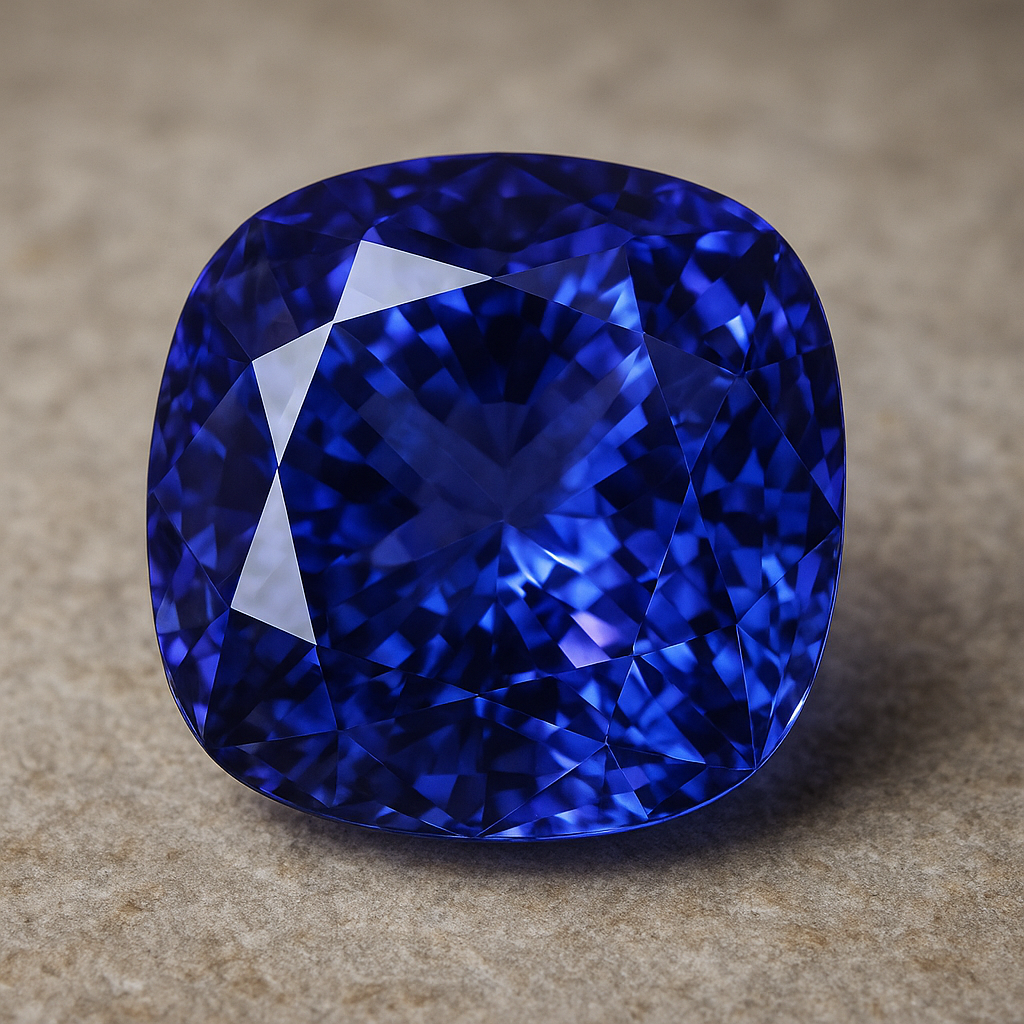
The deep, shifting blues and violets of Tanzanite have captured the imagination of gem collectors and jewelry lovers since the late 1960s. Found in a single, relatively small zone near the town of Merelani and the base of Mount Kilimanjaro, this gem’s rarity and striking appearance make it one of the most fascinating modern discoveries in the world of precious stones. This article explores where it is found, how it forms, the science behind its colors, its uses in jewelry and culture, and other compelling facets that surround this extraordinary mineral.
Where Tanzanite Occurs: The Unique Locality
Tanzanite is essentially confined to one place on Earth: the Merelani Hills of northern Tanzania, located near the city of Arusha and the foothills of Mount Kilimanjaro. Discovered in 1967, the deposits lie within a narrow band of metamorphic rock and have made the stone geologically and commercially notable because of that extreme geographic concentration.
The mineral occurs in thin veins and pockets within a metamorphosed intrusive complex. Typical host rocks include schists and gneisses that were altered by regional metamorphism and hydrothermal fluids. The gem is often found in association with other metamorphic or contact-metasedimentary minerals such as garnet, mica, calcite, and pyroxenes. Prospecting and mining focus on several small but productive pits and underground galleries around Merelani.
Mining here takes place at multiple scales, from larger, mechanized operations to small artisanal efforts. The geology of the deposit produces irregular pockets of gem-quality material, meaning miners frequently extract an assortment of qualities ranging from pale, near-colorless zoisite to richly saturated blues and purples. Because all commercial-grade tanzanite comes from a single region, the stone’s market is vulnerable to changes in local mining conditions, regulation, and geology.
Geology and Formation: How Tanzanite Came to Be
Tanzanite is a variety of the mineral zoisite, a calcium aluminium silicate. Its characteristic violet-blue coloration is largely due to trace amounts of vanadium and possibly other transition elements incorporated into its crystal lattice during formation. The host rocks were subjected to substantial heat and pressure during tectonic events, which mobilized fluids and facilitated the growth of zoisite crystals with these chromophore elements.
Several geological factors contributed to the creation of gem-quality tanzanite:
- Metamorphism: Regional metamorphic conditions allowed the formation and recrystallization of zoisite within altered host rocks.
- Hydrothermal activity: Mineral-rich fluids provided the chemical ingredients and dynamic setting needed to produce gem material.
- Localized pockets: Concentrations of the right chemistry and space enabled well-formed crystals to grow in discrete pockets, making recovery of sizable facetable stones possible.
Because the deposit is so localized, the supply of gem-grade material is finite. Geologists and the trade often discuss the long-term availability of high-quality tanzanite; estimates about longevity vary because they depend on extraction rates, discovery of new pockets, and changes in mining technologies.
Optical and Physical Properties
Tanzanite’s visual appeal is rooted in a combination of optical and physical characteristics that gemologists study closely. Its most famous attribute is strong pleochroism — a pronounced ability to show different colors when viewed from different crystallographic directions. In practice, a single crystal can display shades that range from deep blue to violet to burgundy, depending on the orientation.
Key properties include:
- Chemical identity: a variety of zoisite (calcium aluminium silicate).
- Color range: violet-blue, blue, purple, and sometimes brownish or greenish tones in rare examples.
- Hardness: approximately 6.5–7 on the Mohs scale, meaning the gem is durable for many jewelry applications but softer than corundum (sapphire and ruby) and hence requires some care.
- Refractive index and birefringence: moderate refractivity and noticeable birefringence, which influence brilliance and cutting decisions.
- Cleavage: zoisite can exhibit cleavage that requires cutters to be mindful to avoid splitting during fashioning.
Most stones in the market undergo low-temperature heat treatment to transform or enhance color. Natural rough often has brownish or greenish tints; heating removes such hues and brings out the vivid blue-violet shades that collectors prize. This treatment is widely accepted and normally disclosed by reputable dealers.
Cutting, Grading and Valuation
Because tanzanite is pleochroic, the orientation during cutting is crucial. A careful cutter will align the face-up view to show the most desirable color while minimizing less attractive directional hues. Faceting styles range from classic rounds and ovals to more elaborate shapes that emphasize color and brilliance.
Grades and value are determined by the familiar four Cs (color, clarity, cut, carat), with color being the dominant determinant of price. Deep, saturated violet-blue stones without brown or gray modifiers command the highest prices. Clarity is also important; while eye-clean stones are common, significant inclusions affect transparency and durability. Larger sizes are rarer: stones over 10 carats of top color are especially valuable and sought after by collectors.
Other factors that affect value:
- Origin: All tanzanite is from Tanzania, but provenance paperwork and ethical sourcing practices can influence buyer confidence.
- Treatment disclosure: Fully disclosed heat treatment is standard; undisclosed or exotic treatments can undermine value and trust.
- Cut quality: Skillful cutting that maximizes color and minimizes pleochroic drawbacks enhances value.
Uses and Applications
Primarily, tanzanite is a jewelry gem. Its dramatic colors lend themselves to elegant rings, pendants, earrings, and brooches. Designers favor it for statement pieces as well as accent stones that pair well with diamonds and precious metals. Because of its relative softness compared to sapphire or diamond, tanzanite is most often set in jewelry that avoids heavy daily wear when possible — for example, pendants and earrings are less exposed to knocks than rings.
Beyond conventional jewelry, tanzanite appears in collectors’ cabinets, museum displays, and occasionally in bespoke high-jewelry creations. The stone also has a presence in metaphysical and holistic communities, where it is attributed with calming, spiritual, or transformative properties — though such beliefs are cultural and not scientifically supported.
Notably, the American Gem Trade Association added tanzanite to the modern list of recognized birthstones for December in 2002, raising its profile among consumer markets; it is now often promoted as an alternative December birthstone alongside turquoise and zircon. The designation heightened retail interest and mainstream awareness.
Market, Mining Ethics and Economic Impact
Tanzanite contributes significantly to the Tanzanian gemstone economy, providing employment and export revenue. However, the concentration of supply in a single region presents unique social, economic, and ethical challenges. Mining communities in Merelani have historically included a mix of corporate operations and artisanal miners; this mix raises questions about labor conditions, environmental impacts, and equitable distribution of benefits.
Key ethical and sustainability issues include:
- Worker safety and fair wages in artisanal and small-scale mining operations.
- Environmental impacts such as land disturbance, water usage, and waste management.
- Regulatory frameworks: government oversight, licensing systems, and export controls influence how resources are developed and how revenues are allocated.
- Community development: initiatives that direct a portion of mining revenue to infrastructure, education, and healthcare can mitigate some social impacts.
Industry groups, NGOs, and the Tanzanian government have engaged in dialogue and programs aimed at improving traceability, transparency, and benefits for local communities. Consumers are increasingly paying attention to these factors and often seek assurances that gems are sourced responsibly. Ethical certification and traceability systems are gradually evolving, though the unique circumstances of tanzanite’s locality make universal solutions complex.
Imitations, Treatments and Authentication
Because of its desirability, tanzanite faces imitation and substitution in the market. Common simulants include glass, synthetic spinel, and other blue-violet materials that mimic its color but not its optical properties. Genuine tanzanite is usually identified by a combination of its refractive index, pleochroic behavior, inclusions, and responses under spectrometers.
Heat treatment is the primary enhancement encountered: nearly all commercial tanzanite has been heated to achieve attractive blue-violet hues. This is an established, stable treatment and is acceptable in the trade when disclosed. Other treatments are less common and should prompt caution or verification when presented without transparent disclosure.
Care and Handling
Given a hardness of roughly 6.5–7 and the presence of cleavage planes in zoisite, tanzanite requires thoughtful care to avoid chipping, scratches, or fracture. Recommendations for owners include:
- Avoiding exposure to hard knocks or sharp impacts, especially for rings worn daily.
- Cleaning with mild soap and warm water, using a soft brush; avoid ultrasonic cleaners if the stone has surface-reaching fractures or fracture-filling treatments.
- Protecting the gem from prolonged exposure to high heat or rapid temperature changes, which could damage the stone or alter treatments.
- Storing separately in cushioned compartments to prevent abrasion from harder gems like diamond or corundum.
Historical and Cultural Notes
The gem rose to prominence after its discovery in the late 1960s, when prominent jewelers and dealers introduced it to international markets. One notable chapter in its commercial history involved a major jeweler that popularized the name Tiffany & Co. and helped shape the gem’s appeal in luxury markets; the marketing efforts emphasized the stone’s exotic origin and singular locality. Since then, tanzanite has held a romantic narrative as a relatively modern discovery, linked strongly to its geographic context.
Its position as a modern gem with a single-source origin contributes to fascination and speculative interest from collectors. Auction houses sometimes present top-quality, large tanzanites as rare collector’s items; certain museum pieces and private collections include striking examples that demonstrate the gem’s range and depth.
Interesting Scientific and Collector Facts
Collectors and gemologists often cite several particularly intriguing aspects of tanzanite:
- Single-source rarity: the entire commercial supply comes from one small region, a fact that makes the stone geopolitically and geologically interesting.
- Pleochroic beauty: few gems show such dramatic color shifts, and well-cut stones can display a single harmonious hue despite strong trichroism in the rough.
- Treated majority: the widespread and predictable response to heat means that what consumers typically buy is an enhanced but stable product, accepted by the industry with disclosure.
- Cultural resonance: the gem’s connection to Tanzania and Kilimanjaro fuels narratives about place, origin, and the romance of discovery.
- Market volatility and scarcity concerns: collectors watch production reports and mining developments closely, as changes can significantly influence prices for high-quality material.
Whether admired on a finger, studied under a gemological microscope, or discussed in terms of mining policy and community development, tanzanite stands out as a gem that bridges science, aesthetics, and social concerns. Its story continues to unfold as the global market, geological exploration, and ethical frameworks evolve around this singular mineral treasure.