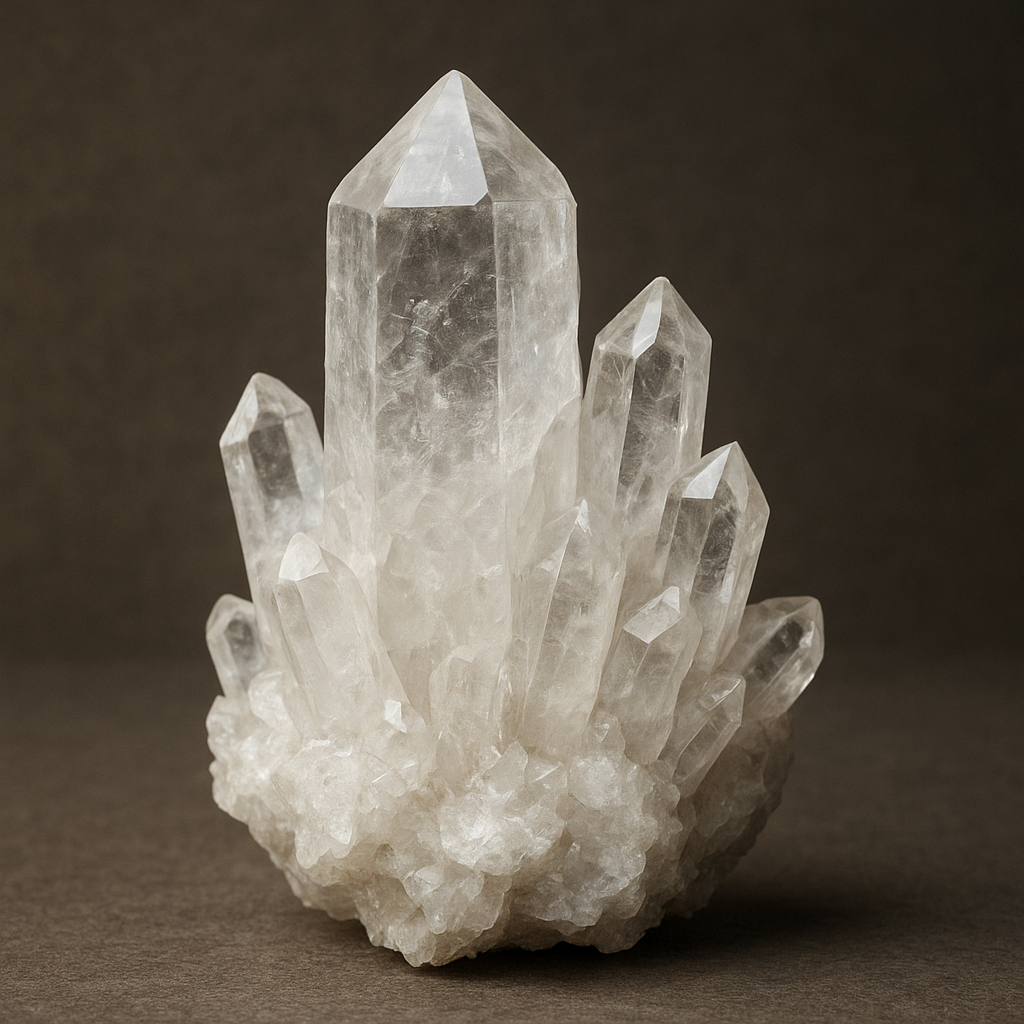
The name Spinel Ruby evokes both history and confusion: a vivid red gemstone that for centuries was mistaken for true ruby, admired by monarchs and jewelers alike. Although today gemologists separate the two by chemistry and crystal structure, spinel continues to fascinate collectors, designers, and scientists. This article explores where spinel ruby occurs, how it forms, its uses across jewelry and industry, and some surprising facts that make it one of the most intriguing members of the gemstone world.
Geology and Global Occurrence
Spinel is a mineral of the magnesium aluminum oxide group with the ideal chemical formula MgAl2O4. The striking red variants—commonly called “spinels” or historically “spinels ruby”—obtain their color primarily from traces of chromium. Spinel crystals form in a range of geological environments, and their distribution is eclectic: some of the most famous specimens have come from marble-hosted deposits, while others are found in alluvial gravels.
Primary geological settings
- Marble-hosted deposits: Many classic red spinels are mined from metamorphosed carbonate rocks, where impure limestone or dolomite has been subjected to high temperatures and pressures, concentrating aluminum and magnesium.
- Metasedimentary and skarn environments: Spinel can form in contact metamorphic zones and skarn systems where unusual local chemistry allows spinel to crystallize.
- Placer deposits: Because spinel is dense and durable, it survives transport and becomes concentrated in river gravels and alluvial deposits, making artisanal and commercial mining possible far from the original source rock.
Notable localities
- Myanmar (Burma) – Historically one of the most renowned sources. Some celebrated “rubies” in European crowns are actually Burmese spinels.
- Madagascar – In recent decades Madagascar has produced significant quantities of high-quality red and pink spinel, elevating its position in the market.
- Sri Lanka – Long an important gem source, producing a range of spinel colors alongside sapphires and other gems.
- Tanzania, Vietnam, and Tajikistan – Notable producers of gem-quality red and pink spinels.
- Afghanistan, Pakistan, and Cambodia – Smaller but historically and commercially significant occurrences.
Each locality yields spinels with slightly different color tones and typical inclusion patterns, which gemologists use to help determine origin. For example, some Burmese spinels show particular zoning and crystal habits that differ from those from Madagascar or Vietnam.
Physical and Optical Characteristics
To distinguish spinel from ruby (which is a variety of corundum), gemologists rely on a set of physical and optical tests. Spinel crystallizes in the isometric or cubic system, typically forming octahedral crystals, whereas ruby is trigonal and forms hexagonal prisms. This difference produces distinct habits and cleavage behavior.
- Hardness: Spinel typically rates about 8 on the Mohs scale, making it durable and suitable for daily-wear jewelry, though not as hard as corundum (ruby and sapphire), which is 9.
- Density: Specific gravity generally ranges near 3.58–3.61 for magnesium-dominant spinels, but can rise to about 4.1 in iron- and zinc-bearing varieties.
- Optical properties: Spinel is isotropic (no double refraction), with a refractive index usually between approximately 1.712 and 1.718. This lack of birefringence helps separate it from corundum, which shows notable double refraction when properly viewed.
- Color causes: Chromium is the principal coloring agent for red and pink spinels; iron, cobalt, and manganese can create blues, violets, and other hues.
- Inclusions: Spinel often shows characteristic octahedral growth patterns, mineral inclusions, and in some cases “fingerprint” liquid inclusions. These patterns differ from rutile silk or needle-like inclusions typically found in corundum.
Under ultraviolet light some spinels fluoresce, often strong red when chromium is present—another diagnostic tool that gemologists use alongside spectroscopy and refractive index measurement.
Historical Significance and Notable Gems
Throughout history many famous “rubies” were actually spinels, treasured by royalty and collectors. Because early European lapidaries and jewelers lacked the tools to chemically test stones, spinel’s deep red color and durability allowed it to masquerade as ruby for centuries.
- The Black Prince’s Ruby in the British Imperial State Crown is an octagonal red spinel set in royal regalia for over 500 years.
- The Timur Ruby, another historic “ruby,” is likewise a sizable spinel with documented provenance across royal treasuries.
- Other museum specimens and crown jewels across Asia and Europe include famous spinels that have shaped both gemological history and political symbolism.
These stones contributed to early misunderstandings about mineral classification, and their study helped spur the development of modern gemology in the 18th and 19th centuries.
Uses in Jewelry and Design
Spinel’s intense colors and relatively high hardness make it a favorite among jewelers. Over the last few decades, red and pink spinels have enjoyed rising popularity as a fashionable, ethical, and often more affordable alternative to ruby.
- Center stones for rings, pendants, and earrings: well-cut spinels exhibit lively brilliance and saturation, often chosen for engagement rings by buyers seeking a distinctive look.
- Accent gems and matched sets: transparent spinels can be matched for color and size, used in multi-stone designs.
- Historical restorations: museums and conservators use spinel replicas to replace missing gemstones in crowns and other artifacts while preserving originals.
Valuation follows typical gem rules—color, clarity, cut, and carat weight matter—but color saturation and origin (e.g., fine Burmese or Madagascan material) can dramatically affect price. Deep, vivid red spinels—sometimes described as “pigeon’s blood” in reference to ruby—command premium prices, especially when clean and sizable.
Industrial and Technological Applications
Beyond jewelry, spinel compositions have important industrial and technological uses. The crystalline form of magnesium aluminate is valued for its combination of mechanical strength, thermal stability, and optical transparency when produced as a polycrystalline ceramic.
- Transparent spinel ceramics: Engineered MgAl2O4 spinel can be manufactured as clear, tough windows for high-speed projectiles, sensor housings, and infrared-transparent domes. These materials offer an alternative to sapphire for certain demanding optical and ballistic applications.
- Refractory and structural ceramics: Spinel-based materials resist high temperatures and chemical attack, making them useful in kiln furniture, crucibles, and as components in high-temperature reaction vessels.
- Electronic materials: Some spinel-type oxides exhibit useful magnetic and electrical properties; substituted spinel structures appear in specialized catalysts, battery materials, and magnetic devices.
These technical applications illustrate how a mineral admired for its color can also be engineered for performance in defense, aerospace, and industrial chemistry.
Synthetic Spinel and Treatments
Manufactured spinel has a long history. Early synthetic methods produced spinel for both gem and industrial uses. Today synthetic spinel is used for inexpensive gem substitutes, decorative pieces, and as high-quality optics.
- Methods: Synthetic spinel can be produced via flux growth, hydrothermal methods, and flame-fusion techniques. Each method yields material with different quality and characteristic inclusions.
- Treatments: Unlike corundum, which is commonly heat-treated to improve color and clarity, gem spinel is less frequently treated. Surface diffusion or dyeing is not widely practiced or accepted for fine spinel; the market typically values untreated natural color.
- Synthetic vs. natural identification: Advanced gemological labs use spectroscopy, inclusion analysis, and growth pattern study to distinguish lab-grown spinel from natural counterparts.
For consumers, synthetic spinel offers a cost-effective way to enjoy vivid colors in jewelry, but provenance and disclosure are critical—ethical and legal standards require revealing whether a stone is natural or lab-grown.
Market Considerations, Ethics, and Sourcing
The spinel market has matured. As awareness grows—helped by social media, auction houses, and gem fairs—demand for fine red and pink spinel has increased. Two important themes shape contemporary trade:
- Transparency and traceability: Buyers increasingly want documented origins and assurances about ethical mining practices. Some spinel mining in remote areas falls under artisanal conditions; responsible sourcing initiatives aim to reduce environmental and social harms.
- Value drivers: Color saturation, absence of inclusions, and size are central to value. Stones from historically desirable localities such as certain Burmese pockets can attract premiums, although excellent material from Madagascar or Tanzania can also achieve high prices.
Collectors and designers often prefer untreated, natural spinels of known origin. Certification from reputable gem labs can assure buyers about authenticity and help support ethical sourcing practices in producing regions.
Care, Cutting, and Lapidary Notes
Spinel is a forgiving gem for lapidaries and wearers alike. Its high symmetry (isometric crystals) makes cutting straightforward, and the gem frequently displays excellent brilliance when faceted. Because it is isotropic, spinel does not require orientation to optimize pleochroism as corundum does.
- Cutting styles: Brilliant cuts, mixed cuts, and cabochons are all common. Cabochon spinels highlight color and internal phenomena; faceted stones emphasize brilliance.
- Care instructions: Clean with warm soapy water and a soft brush, or ultrasonic cleaners if no worrying inclusions are present. Avoid harsh chemicals and extreme thermal shocks.
- Setting advice: Because spinel is durable, it suits rings, bracelets, pendants, and everyday pieces. Protective settings can further safeguard larger or more valuable stones.
Interesting Facts and Cultural Notes
Spinel’s story is woven into culture, science, and art. A few highlights:
- Historic confusion: The long-standing misidentification of spinel as ruby influenced crown-making, diplomacy, and the perceived value of many royal jewels.
- Famous names: Several historic spinels carry royal provenance and have been part of famous collections for centuries.
- Color variety: Although the red spinels grab headlines, the species spans a vivid spectrum—blue, purple, orange, and even black—showing the mineral’s broad aesthetic appeal.
- Modern revival: As connoisseurs seek alternatives to traditional sapphires and rubies, spinel has experienced a renaissance among designers and collectors appreciating its purity of color and relative rarity of fine-sized stones.
Whether admired for historical lore, modern jewelry applications, or high-performance ceramic uses, spinel offers a rich intersection of beauty, science, and utility. Its red varieties—often called spinel ruby in trade contexts—continue to capture imaginations while contributing to technological advances through engineered spinel materials used in demanding environments.