
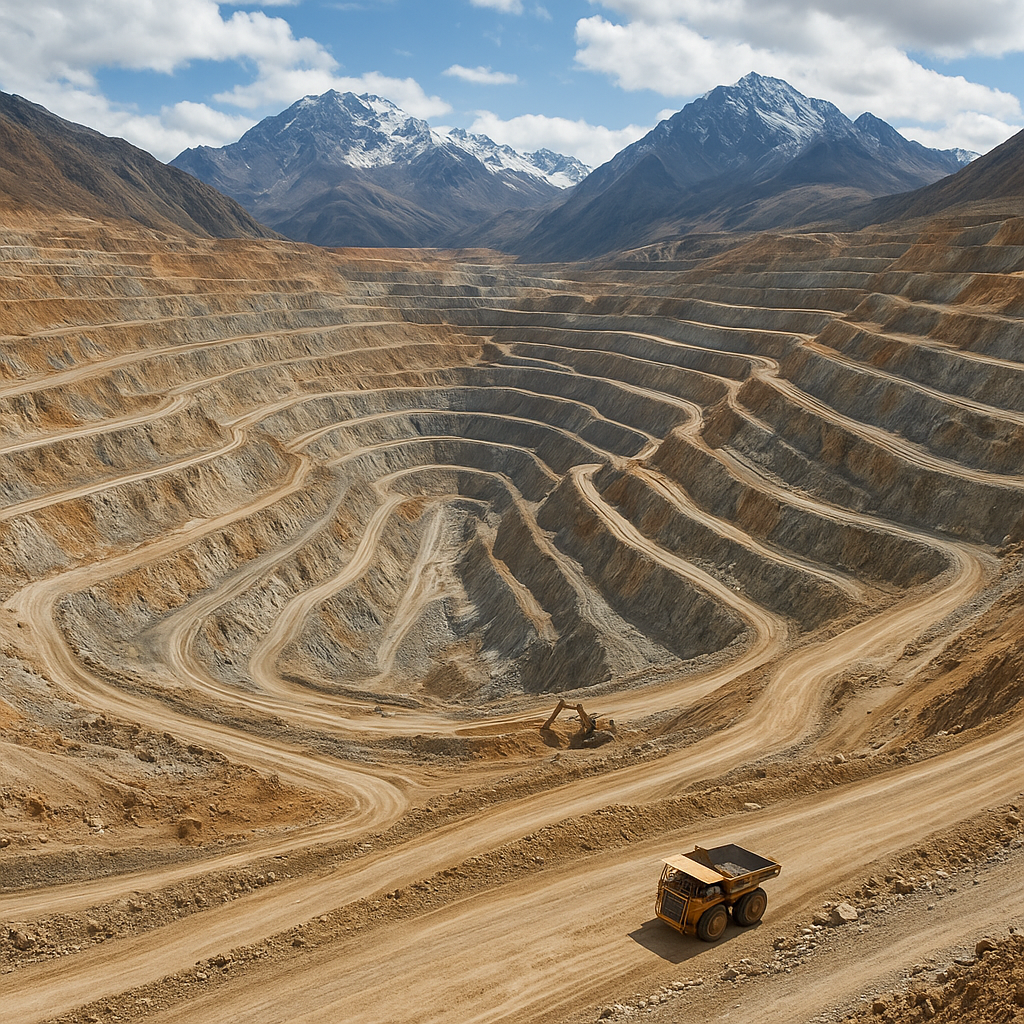
The Antamina mine stands among the most important mining operations in Peru and the world. Situated high in the Andes, it extracts large quantities of copper and zinc from a massive polymetallic deposit and has reshaped the economic landscape of the surrounding region. This article examines where Antamina is located, what is produced and how, its economic footprint, and a variety of technical, social and environmental aspects that make the project notable.
Location and geological setting
Antamina is located in the central highlands of Peru, within the Ancash region of the high Andes. The mine sits at elevations exceeding 4,000 meters above sea level in a remote alpine environment characterized by steep valleys, glaciers, and high plateaus. Its remote position has required the development of significant infrastructure to move ore and supplies from the mountain site to processing facilities and export ports on the Pacific coast.
Deposit type and geology
The Antamina deposit is a large polymetallic, hydrothermal system classically described as a porphyry-skarn complex. It contains significant mineralization of copper and zinc, with by-products including molybdenum, silver and traces of lead. The orebody formed through long-lived magmatic and hydrothermal activity that altered surrounding carbonate rocks, creating high-grade lenses and broad zones of disseminated sulphide minerals. This geological complexity contributes both to the mine’s high productivity and to ongoing exploration and metallurgical challenges.
Mining method, processing and logistics
Antamina is developed as a large-scale open-pit mine. The operation uses conventional drilling and blasting followed by large-capacity truck-and-shovel fleets to move ore to on-site crushing and concentrator facilities. Processing at Antamina focuses on producing copper and zinc concentrates through flotation circuits designed to separate different sulphide mineral fractions.
Processing and concentrates
- Primary crushing and milling reduce ore to a suitable size for flotation.
- Flotation produces separate copper and zinc concentrates; molybdenum and silver are recovered as by-products, improving overall project economics.
- Concentrates are dewatered and transported by road to the coast for export to smelters and refineries worldwide.
Because of the mine’s altitude and climatic conditions, systems for dust control, fugitive emissions management, and cold-weather equipment operation are integral. Water management and tailings handling are also major engineering components given the region’s hydrology and community concerns over water resources.
Economic importance and social impact
Antamina has an outsized role in Peru’s mining sector and national economy. As one of the country’s largest exporters of both copper and zinc, the mine generates substantial export earnings, royalties and taxes that flow to the central government and local authorities. The project has supported employment for thousands of direct workers and many more in contracting, transportation and support services.
Regional development and benefits
- Infrastructure: The mine has driven investment in roads, power lines and communications that benefit remote communities.
- Local procurement: Contracts with local suppliers for goods and services have stimulated small- and medium-sized enterprises in the Ancash region.
- Social programs: Health, education, and agricultural initiatives have been implemented in the zones of influence as part of the company’s community relations and corporate social responsibility programs.
At the national level, Antamina’s production helps diversify Peru’s export base beyond traditional commodities and contributes to foreign exchange reserves. The mine’s fiscal contributions—through corporate taxes, royalties and special mining duties—have made it a strategic asset for public finance.
Environmental management and challenges
Operating a massive open-pit mine in a fragile Andean ecosystem brings significant environmental responsibilities. Key issues around Antamina include water use and quality, tailings storage, biodiversity impacts, and the effects of climate change—particularly glacier retreat in the high Andes.
Water and glacial sensitivity
Water scarcity and competition between mining, agriculture and community needs make water management a high priority. The company has had to design systems to minimize freshwater withdrawal, recycle process water, and monitor surface and groundwater quality. With glaciers in the region retreating, stakeholders are particularly sensitive to any activity that could alter hydrology or reduce downstream water availability.
Tailings and waste rock
Tailings storage and waste rock management are engineered to high standards to mitigate acid rock drainage and metal leaching. The location’s seismicity and steep terrain require robust design and continuous monitoring of containment facilities. Community and regulator scrutiny is intense, driving investments in safer storage methods and transparency.
Air quality and biodiversity
Dust suppression and emissions control are essential given the proximity of highland communities and agricultural lands. Rehabilitation and progressive restoration of disturbed areas, along with biodiversity offsets and conservation programs, are part of the mine’s environmental mitigation strategy.
Social dynamics, conflict and governance
The presence of a large mining operation in a sparse Andean landscape has produced both opportunities and tensions. While many benefit from jobs and development projects, disputes have arisen over revenue sharing, environmental concerns, and local participation in decision-making. Periodic protests and roadblocks are not uncommon in Peru’s mining regions, and Antamina has experienced community actions that required negotiation and adaptive engagement strategies.
Community engagement
- Dialogue mechanisms: Formal agreements and consultation processes are used to discuss project changes and community priorities.
- Benefit-sharing: Programs aimed at infrastructure, education, health and economic development are designed to distribute benefits more widely within the local population.
- Capacity building: Training and support for local enterprises help increase local procurement and foster sustainable livelihoods beyond mining.
Strong governance, transparent reporting and collaborative planning are essential for long-term social license to operate. International financial institutions and export buyers increasingly demand high standards of environmental and social governance, driving improvements across the operation.
Technical innovations and operational excellence
Antamina’s scale and complexity have pushed advancements in mining and processing. The project uses digital monitoring systems, fleet management and continuous optimization to increase productivity and reduce costs. Innovations in comminution efficiency, concentrate recovery and tailings management have been implemented to boost metal recovery while lowering environmental footprint.
Safety and workforce development
At high altitude and in a demanding environment, worker safety is a major concern. Antamina has invested in safety systems, medical facilities and training programs to reduce occupational hazards. Workforce development programs aim to upskill local workers, enabling longer-term employment opportunities even as the operation evolves.
Economic resilience and market role
On the global commodities stage, Antamina contributes meaningful volumes of copper and zinc—metals fundamental to modern economies. Copper is critical for electrical infrastructure, renewable energy and electric vehicles, while zinc is essential for corrosion protection and industrial alloys. Production fluctuations at a mine of Antamina’s size can influence regional supply dynamics and pricing, particularly for refined concentrates and smelter feed.
Life of mine and future prospects
Exploration and resource definition continue in the district surrounding Antamina, with the aim of extending the mine’s lifespan through discovery of satellite deposits and incremental improvements to processing efficiency. Market demand for base metals, driven by global electrification and infrastructure investment, supports long-term relevance. At the same time, evolving environmental standards and community expectations require ongoing adaptation.
Notable facts and aspects worth knowing
- Scale: Antamina ranks among the world’s larger copper-zinc operations by annual production and processed ore tonnage.
- Altitude: Operating above 4,000 meters presents health, logistics and engineering challenges uncommon in lower-elevation mines.
- Polymetallic nature: The deposit provides multiple revenue streams—copper and zinc as primary products, with molybdenum and silver as valuable by-products.
- Consortium ownership: Historically developed and operated by a consortium of major mining companies, enabling risk sharing and access to technical expertise.
- Community programs: Extensive social investment projects have targeted infrastructure, education and local enterprise development.
- Environmental scrutiny: Water management and tailings safety are closely monitored by regulators and civil society, reflecting the mine’s environmental footprint and regional sensitivity.
- Export orientation: Concentrates produced at Antamina are exported to international smelters, integrating the mine into global metal supply chains.
Conclusion
Antamina is a defining asset in Peru’s mining landscape: technically ambitious, economically significant and socially complex. Its production of copper and zinc positions it as a key supplier for industries worldwide, while operating in the high Andes forces continual innovation in environmental management, logistics and community relations. Understanding Antamina requires attention to geology, engineering, governance and the human dimensions that shape the mine’s present and future.

