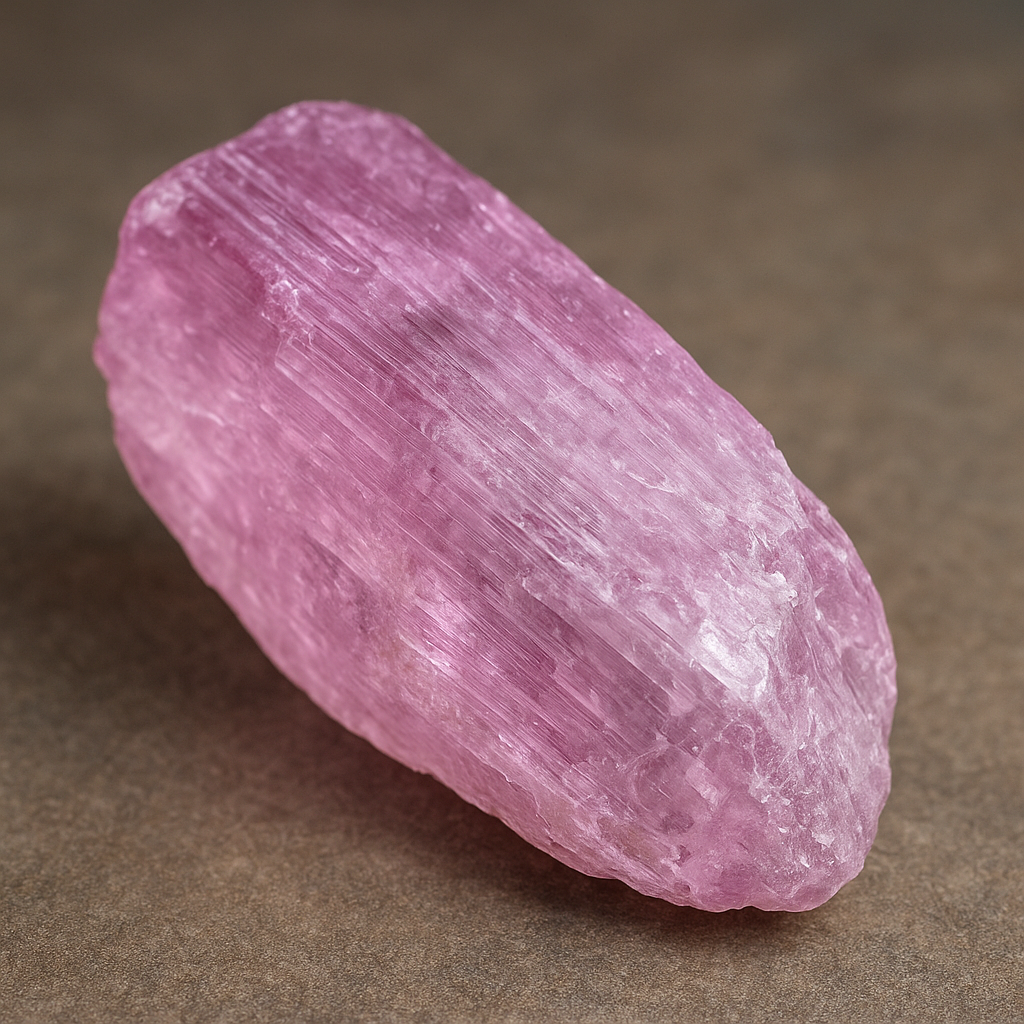
Kunzite is a visually striking pink to lilac variety of the mineral spodumene that has captured the attention of gem collectors, jewelers and metaphysical enthusiasts for more than a century. Its delicate hues, impressive crystal habits and occasional ability to yield very large, clean stones make it unique among gem materials. While prized mostly as a **gemstone**, kunzite also sits at an intersection of geology, mineral economics and cultural symbolism. The following sections explore where kunzite forms, its distinguishing physical properties, how it is used and cared for, and a range of intriguing facts that make this mineral worth studying and collecting.
Geology and Global Occurrence
Kunzite is the pink to violet gem-quality form of the mineral spodumene, a lithium aluminium inosilicate whose chemical formula is LiAlSi2O6. Gem-quality kunzite owes its color primarily to traces of manganese (Mn2+) substituting into the crystal lattice. Like other spodumenes, it crystallizes in the monoclinic system and is most commonly encountered in coarse-grained, lithium-rich granitic pegmatites. These pegmatites form during the late stages of magmatic differentiation and often host a suite of lithium-bearing minerals such as lepidolite and petalite, as well as other gem minerals like beryl and tourmaline.
Main localities
- Afghanistan — The Nuristan and Badakhshan regions have produced deeply colored kunzite crystals; many finer examples for the jewelry trade have their provenance here.
- Madagascar — Several deposits yield high-quality kunzite, often with attractive pastel tones and large crystal sizes.
- Brazil — Minas Gerais and surrounding districts have long been important for a variety of pegmatitic gems, including kunzite.
- United States — Historic finds in California (notably the Pala and San Diego County districts) and in some other pegmatitic regions supplied early museum and commercial specimens.
- Pakistan and Myanmar — Smaller but notable localities that occasionally produce marketable kunzite.
- Sri Lanka — Occasionally reported occurrences alongside other gem minerals.
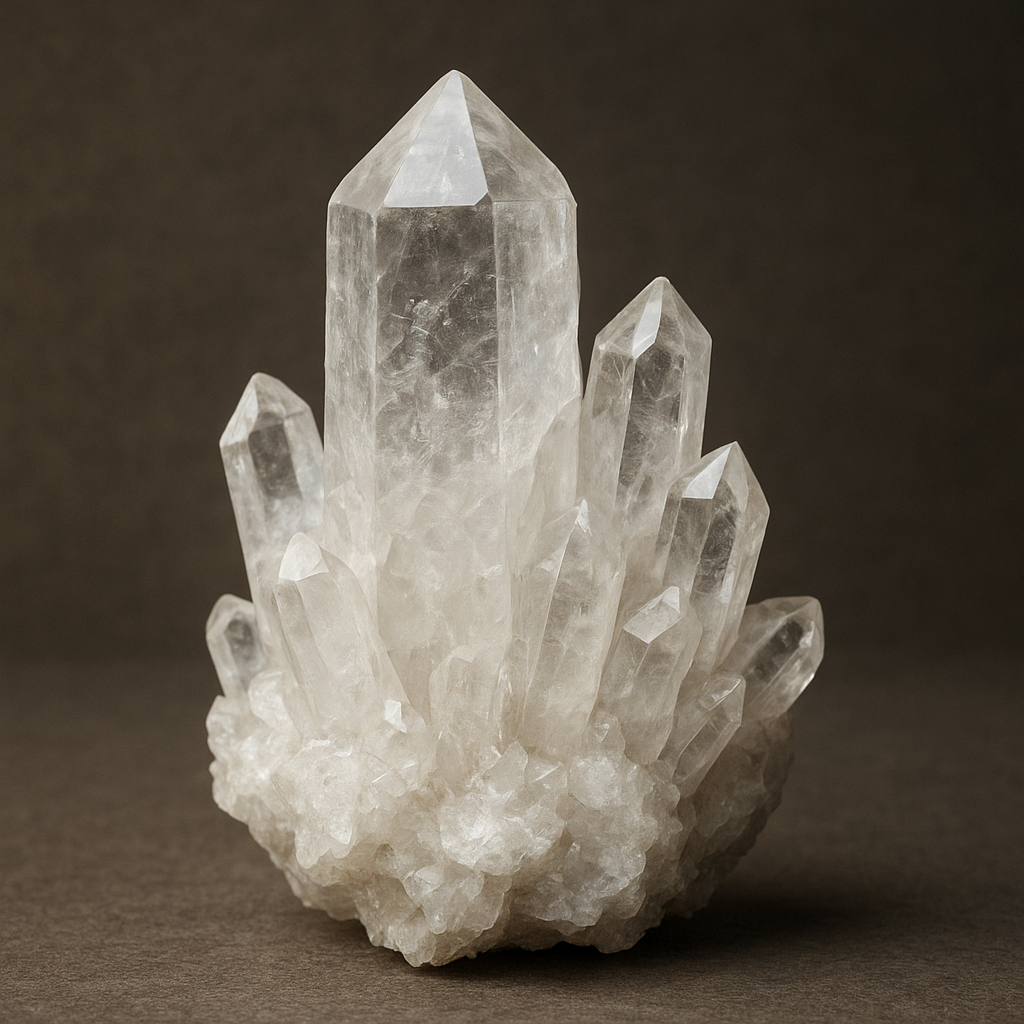
Large, gem-quality crystals that are transparent and relatively inclusion-free are uncommon; when they occur they often command premium prices. Most kunzite forms in association with coarse pegmatitic minerals and may sit alongside dramatic, well-formed crystals of quartz, beryl and other collector minerals.
Physical and Optical Properties
Kunzite shares many basic attributes with spodumene but has a few diagnostic features that matter for identification and cutting. It typically ranks about 6.5 to 7 on the Mohs hardness scale, which places it above many common jewelry minerals yet below harder gems such as sapphire and diamond. The mineral has perfect cleavage in two directions, which makes it vulnerable to breakage if struck or improperly set in jewelry. This cleavage is a critical consideration for both lapidaries and consumers.
Optical characteristics
- Pleochroism — Kunzite often exhibits strong pleochroism, showing different colors when viewed along different crystallographic axes; a stone might show deeper violet along one direction and paler pink along another. This optical feature influences how cutters orient rough to maximize the most desirable color.
- Transparency and clarity — Many gem-quality kunzites are eye-clean and can be found in very large sizes, enabling spectacular faceted stones and dramatic museum specimens.
- Color stability — The pink to violet color is due to manganese and is sensitive to prolonged exposure to intense light and heat, which can cause fading over time. For this reason, exposure to strong sunlight for long periods is discouraged.
Other measurable parameters include a moderate refractive index and weak to moderate birefringence. These properties, combined with characteristic crystal habit and cleavage, help gemologists distinguish kunzite from related materials.
Cutting, Jewelry Use and Aesthetics
Because kunzite can form exceptionally large, transparent crystals, it lends itself to bold jewelry designs and museum-quality faceted stones. However, several practical considerations govern its use in jewelry.
Cutting strategies
- Orientation to pleochroism — Cutter will orient the pavilion and crown to bring out the most pleasing color and minimize pale windows. Often the face-up color differs from the darkest pleochroic direction, so skillful cutting is crucial.
- Mitigating cleavage risks — Cuts and settings are chosen to protect the stone’s cleavage directions; bezel settings and protective prongs are commonly recommended.
- Large faceted stones — Because of the availability of large, clean crystals, kunzite can be cut into sizeable gems for statement pieces, often exceeding tens or even hundreds of carats in museum pieces.
In jewelry, kunzite’s pastel tones pair well with both silver and various gold hues. Its relative softness and cleavage mean it is best suited to earrings, pendants and brooches rather than rings intended for everyday wear. When set, pieces should avoid direct exposure to very hot environments or strong sunlight to preserve color. Despite these limitations, the serene charm of kunzite’s pink-violet shades has made it a favorite for romantic and feminine designs.
Industrial and Economic Context
Although gem-quality kunzite is valued for adornment, its parent mineral spodumene has broader industrial importance because it is a major source of lithium. Lithium extracted from spodumene-bearing pegmatites feeds applications in batteries, ceramics and glass, and other technologies. It is important to note that gem-quality kunzite is distinct from the bulk spodumene mined for lithium; gem material is a tiny fraction of overall spodumene production and is handled by the gem trade rather than the industrial supply chain.
The increasing global demand for lithium has led to growing attention on pegmatite mining, which raises environmental and social considerations. Small-scale gem mining and large-scale industrial extraction can have very different footprints, but both benefit from transparent and ethical sourcing practices. Consumers and jewelers who care about sustainability may ask for provenance information or certifications that document responsible mining procedures.
Treatments, Care and Longevity
Kunzite is sometimes subjected to treatments to enhance color or stability, and it requires special care compared to harder gemstones.
- Treatments — Some kunzite has been irradiated to alter or intensify color. Heat treatments can also affect color, although they are less common than in some other gem species. Disclosures by sellers are expected in the trade; buyers should request information about any treatments before purchasing.
- Light sensitivity — Exposure to intense sunlight or prolonged ultraviolet radiation can cause fading. Store kunzite jewelry away from direct sun and avoid leaving it in windowsills or on dashboards.
- Cleaning — Gentle cleaning with mild soap and water and a soft brush is recommended. Avoid ultrasonic cleaners and steam cleaning because the stone’s cleavage and any treatments could be negatively affected.
- Handling — Because of perfect cleavage, avoid dropping or striking kunzite. Protective settings and cautious day-to-day wear extend the life of kunzite jewelry.
Cultural, Metaphysical and Historical Notes
Named in honor of George F. Kunz, the prominent American gemologist and gem merchant who advanced gemology in the late 19th and early 20th centuries, kunzite has an appealing backstory. The name recognizes both his contributions to the field and the growing commercial interest in new gem materials at the time.
In cultural and metaphysical circles, kunzite is often associated with emotional healing, love and compassion. Practitioners claim it calms stress, opens the heart, and encourages emotional openness. Scientific validation for these claims is lacking; nonetheless, the gemstone’s calming pastel shades and gentle brilliance have made it a popular stone in spiritual jewelry and crystal-therapy communities.
Interesting Facts and Collecting Tips
- Notable sizes — Some museum and private collections include kunzite crystals and faceted gems weighing tens to hundreds of carats; such specimens showcase the potential scale of gem-quality spodumene.
- Collectors’ preferences — Transparent stones with saturated color and minimal inclusions are most desirable. The way a stone is cut to address pleochroism can significantly influence value.
- Color range — While primarily known for pink and violet shades, spodumene also occurs as the yellow-green variety known as Hiddenite; kunzite and hiddenite represent different color expressions of the same mineral family.
- Scientific interest — Researchers study the color mechanisms in kunzite, including how radiation-induced color centers and manganese impurities produce and alter hues; these studies tie into broader mineralogical and solid-state physics questions.
- Sourcing advice — For buyers, provenance from established localities and transparent treatment disclosures are valuable. Jewelry designed with protective settings and occasional removal for activities will preserve the stone’s appearance longer.
Where Kunzite Fits in the Gem World
In the hierarchy of gemstones, kunzite occupies a charming niche: it is less hard and more delicate than ruby or sapphire, but it compensates with its size potential, rarity of large clean material and romantic color. As consumer taste evolves, kunzite appeals to those who value unique pastel tones and statement pieces that emphasize crystal size and clarity. Collectors prize museum-quality crystals, while designers and wearers enjoy its soft, feminine palette when used thoughtfully and with care.
Further Reading and Exploration
Anyone interested in kunzite may look into mineralogical texts about pegmatite formation, gemological resources that describe pleochroism and cutting strategies, and trade reports on the broader spodumene-lithium supply chain. Visiting mineral shows, gem museums, and reputable dealers is a practical way to see varied examples of kunzite and to compare colors, cuts and sizes in person.