
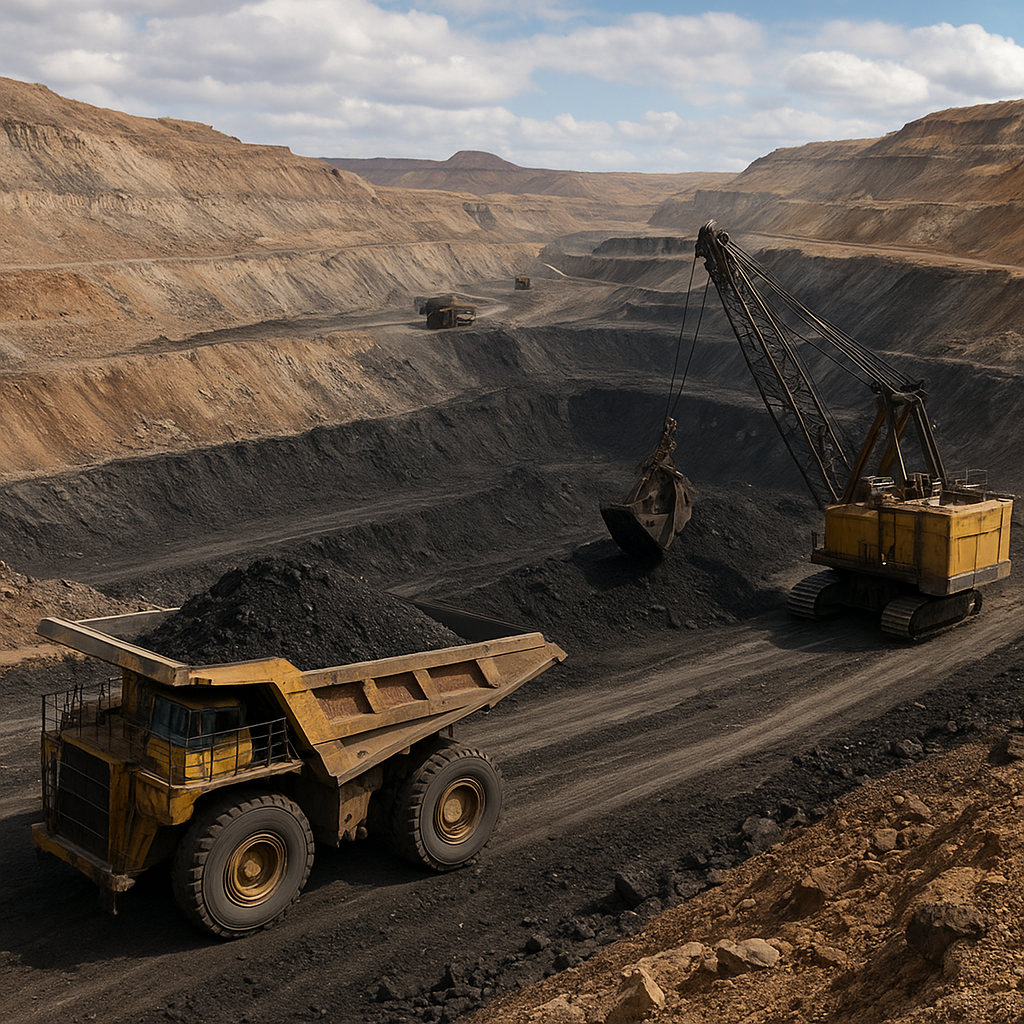
The Navajo coal mine sits at the intersection of geology, energy policy and tribal sovereignty in the American Southwest. Located within the broader San Juan Basin region, it has been a focal point for the extraction of coal used primarily for power generation, a source of local employment and revenue, and a site of contentious environmental and cultural debates. This article explores where the mine is, what kind of coal it produces, its economic role for surrounding communities and the Navajo Nation, and several interesting facets that illustrate why the site is more than a simple industrial operation.
Location and geological setting
The mine lies in the northwestern portion of New Mexico, within or adjacent to lands associated with the larger Navajo Nation and the Four Corners area where New Mexico, Arizona, Utah and Colorado meet. Geologically, the region is part of the San Juan Basin, a sedimentary basin celebrated for its extensive fossil fuel resources including coal, natural gas and coalbed methane. The coal beds exploited in this area formed in the late Cretaceous and Paleogene, with organic-rich layers preserved in fluvial and swampy depositional environments.
Surface mining methods have been typical in the basin because many productive seams—while not exceptionally thick—outcrop at or near the surface across broad expanses. This makes open-pit and strip-mining technologies economically feasible. The accessibility of these seams shapes transportation logistics and the overall footprint of operations: large disturbed areas, haul roads and waste rock dumps are visible features in satellite imagery and on the ground.
Coal type and extraction methods
The coal mined in this part of the country is predominantly subbituminous coal, a lower-rank coal characterized by moderate energy content, relatively low sulfur content compared with some eastern U.S. coals, and high moisture. These properties have historically made San Juan Basin coal attractive to regional power plants because its lower sulfur helps utilities meet emissions regulations with less expensive pollution control equipment.
Extraction has typically relied on surface mining techniques. Heavy equipment—shovels, loaders, haul trucks and sometimes large draglines—are used to remove overburden, access the coal seam, and transport run-of-mine coal to processing or stockpile areas. Coal may be crushed and sized on site, then moved by conveyor or truck to railheads or directly to nearby power plants. The mine’s operational cycle includes phases of active extraction, stockpiling, and eventual reclamation of mined lands.
Economic significance for the region
The mine’s economic footprint extends well beyond the pit. It has played several roles:
- Fuel supply for regional electricity generation: The coal produced has historically supplied nearby coal-fired power plants, helping to keep baseload generation in the regional grid.
- Employment: Mining operations provide a range of jobs, from heavy equipment operators and mechanics to geologists, safety personnel and administrative staff. For many local families, mine employment has been a primary source of steady wages and benefits, contributing to the regional labor market.
- Revenue and royalties: Companies operating the mine pay royalties, lease payments and taxes that can feed local government coffers and tribal budgets. These revenues can support public services, infrastructure and community programs.
- Support industries: Haulage, equipment supply, maintenance services and professional services such as environmental consultants all derive business from active mining operations, creating a multiplier effect in the local economy.
Ownership and management of the mine have reflected the broader trend toward greater tribal involvement in resource development. Entities linked to the Navajo Nation have pursued opportunities to participate in or acquire mining assets to capture more of the economic benefits from natural resources within or near tribal lands. While precise ownership details have shifted over time, the trend illustrates a desire to translate natural resource wealth into community-level gains and long-term capacity building.
Social and cultural dimensions
Coal mining on or near Navajo lands intersects with cultural values, subsistence livelihoods and traditional land use. For many Navajo people, the land carries spiritual significance, and changes to the landscape from large-scale extraction can raise deep concerns about impacts to sacred sites, livestock grazing areas and traditional practices. At the same time, mining-related jobs and revenues have been important to many families and communities that face limited economic alternatives in remote rural areas.
Discussions about the mine are therefore not purely technical or economic; they are also ethical and political. Local leaders, tribal authorities and community members have debated trade-offs between short-term economic benefits and longer-term cultural and environmental stewardship. The mine’s existence has prompted dialogues about sovereignty, the right to self-determination in resource management, and strategies for balancing development with the preservation of cultural landscapes.
Environmental impacts and regulatory context
Coal mining brings a set of environmental consequences that are carefully regulated but nonetheless significant in practice. Some of the most consequential issues include:
- Water use and contamination: Mining and associated operations can affect groundwater and surface water through dewatering, runoff from waste rock and potential leaching of dissolved elements. In arid regions of the Southwest, any alteration of water availability has outsized local importance.
- Dust and air quality: Blasting, hauling and coal handling generate dust that can affect nearby communities. Fugitive dust and combustion of coal also contribute to regional air quality concerns.
- Greenhouse gas emissions: Although emissions are primarily associated with the combustion of the coal at power plants, mining-related activities add to the lifecycle greenhouse gas footprint. The role of coal in climate change has driven policy and market changes that influence the viability of coal operations.
- Land disturbance and habitat loss: Surface mining changes topography, removes soil and vegetation, and creates long-term landscape changes that require reclamation to restore ecological function.
Regulatory oversight involves federal, state and tribal agencies. Permitting processes address water protection, air emissions, reclamation bonding and cultural resource protection. Reclamation obligations require operators to put back topsoil, regrade slopes and reestablish vegetation, although full ecological recovery can take decades. The tension between reclamation goals and practical outcomes is a recurring theme in post-mining land management.
Health and community concerns
Communities near the mine have raised concerns about respiratory health, dust exposure and other potential impacts from mining and coal transport. Epidemiological studies in mining regions frequently assess correlations between air quality, particulate matter and health outcomes, including asthma and cardiovascular effects. Public health responses often call for monitoring programs, community engagement and remediation where needed.
Beyond physical health, psychological and social well-being is affected by economic uncertainty when mines scale back operations or when regulatory decisions change the local economic landscape. Worker retraining, diversification of local economies and investment in alternative energy and infrastructure are commonly discussed policy responses.
Interesting and lesser-known aspects
Several facets of the mine and its context are particularly notable and illuminate broader trends in energy and indigenous governance:
- Navajo Nation engagement: The active role of tribal enterprises in mining reflects a broader pattern in which indigenous governments seek to own and manage resource projects. This can shift the distribution of economic benefits and create opportunities for tribal-led planning and investment.
- Technology and mitigation: Modern mining employs increasingly sophisticated monitoring and mitigation tools—such as dust suppression systems, water treatment facilities and progressive reclamation—to reduce environmental footprints. These technical efforts are often critical components of permitting and community acceptance.
- Transition pressures: Market competition from natural gas, increasing regulatory costs and the falling price of renewables have squeezed the economics of coal. These pressures accelerate conversations about workforce transition, renewable energy development on tribal lands and sustainable economic diversification.
- Cultural reconnection projects: In parallel with reclamation, some communities pursue projects that reintroduce native plant species, create cultural waystations and restore grazing lands—efforts that seek to blend ecological restoration with cultural priorities.
- Educational and training initiatives: Revenues derived from mining have sometimes funded scholarships, vocational training and infrastructure projects intended to build long-term capacity in local communities, demonstrating how extractive industries can be leveraged for broader social investments when governance is aligned with community goals.
Economic transitions and future outlook
The future of coal mining in the region is influenced by multiple intersecting forces: energy markets, environmental policy, tribal priorities and technological change. Several scenarios exist:
- Continued operation with modernization: Under this scenario, the mine modernizes practices, retains a reduced but stable market supplying regional generators, and focuses on improved environmental performance and reclamation funding.
- Managed phase-out with reclamation and economic transition: A planned retirement of coal operations could be paired with investments in job retraining, renewable energy projects, and reclamation that prioritizes community and ecological goals.
- Tribal-led redevelopment: Tribal authorities and enterprises might repurpose mine lands for economic activities that align with long-term sovereignty objectives—solar arrays, ecological restoration projects, or mixed-use economic zones that create new revenue streams.
These outcomes are shaped by policy choices at federal and state levels, market forces such as the price of natural gas and renewables, and the strategic decisions of Navajo and regional leaders about balancing economic development with cultural and environmental protections.
Working with complexity: policy, community and industry
What makes the Navajo mine especially interesting is how it crystallizes broader national and local debates. It raises questions about how to manage natural resources in ways that are economically viable, environmentally responsible and respectful of indigenous sovereignty. Successful approaches typically combine technical mitigation, transparent governance, community engagement and long-term planning. Long-term success depends on:
- Clear and inclusive decision-making processes that respect tribal governance and community voices.
- Investment in workforce development and economic diversification to reduce dependence on a single industry.
- Robust environmental monitoring and enforceable reclamation bonds to ensure that post-mining landscapes are restored responsibly.
- Strategic use of mining revenues to fund education, healthcare and infrastructure that support intergenerational benefits.
Conclusion
The Navajo coal mine is more than an industrial site: it is a locus where geology, energy needs, community aspirations and cultural values converge. It supplies fuel that has powered homes and industries, provides livelihoods, and at the same time compels hard conversations about environmental stewardship and long-term sustainability. The choices made now—by tribal leaders, policymakers and industry—will shape the economic and cultural landscape of the region for decades to come, determining whether the legacy of coal becomes a bridge to a diversified future or a chapter that closes with careful reclamation and renewal.

