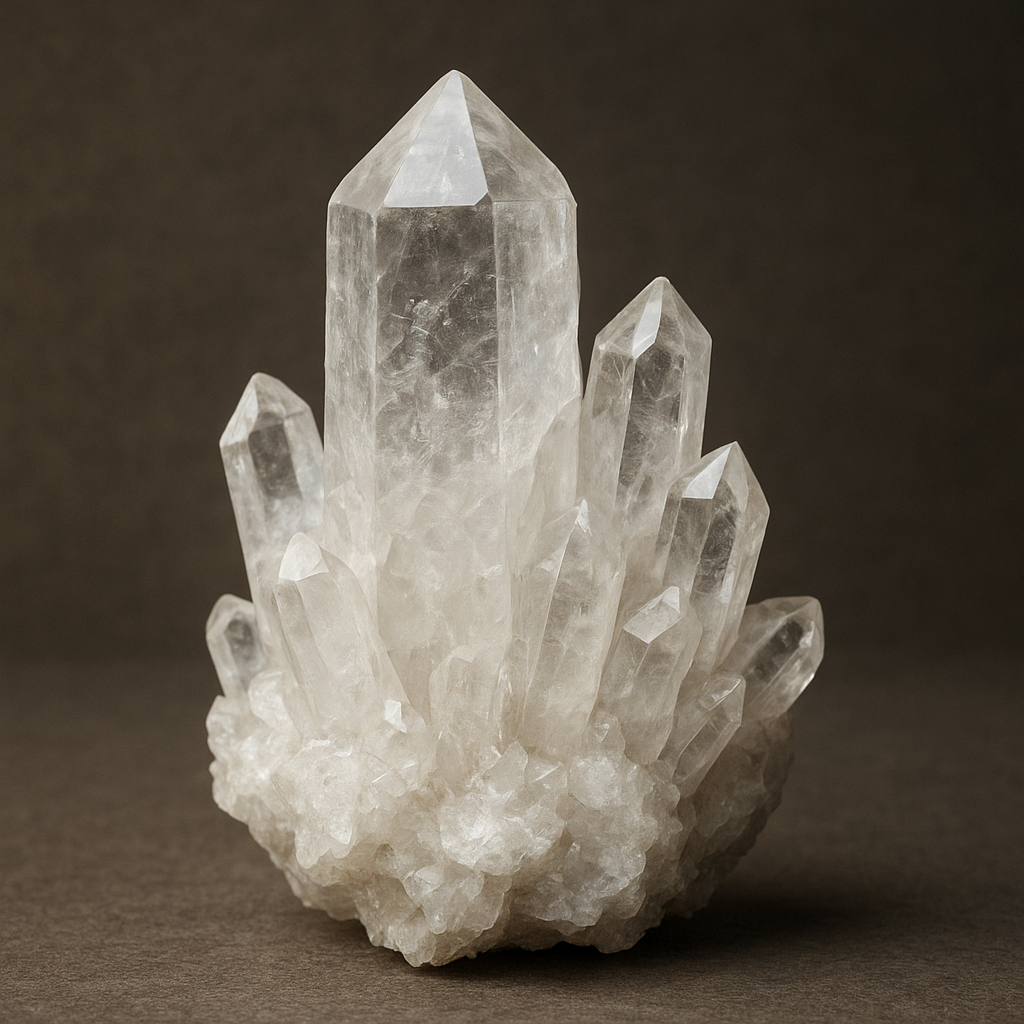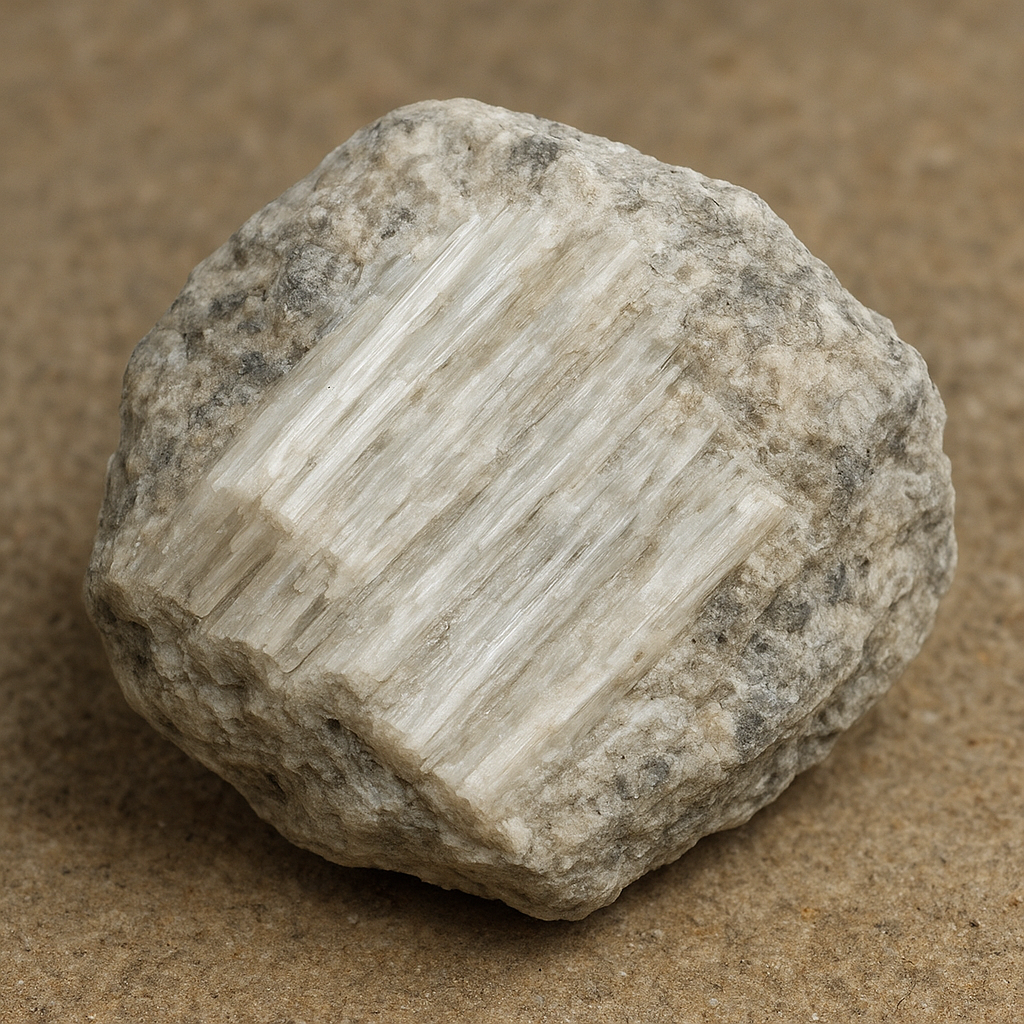
Fibrolite is the historic name given to the fibrous variety of the mineral sillimanite, a high‑temperature aluminium silicate with the chemical formula Al2SiO5. Recognized by its slender, often silky fibers, fibrolite has captured attention both for what it reveals about the metamorphic history of rocks and for its occasional industrial uses. This article examines where fibrolite is found, how it forms, its physical and chemical characteristics, historical and modern applications, and the practical and environmental considerations connected with fibrous mineral habits.
What fibrolite is: mineralogy and structure
Sillimanite is one of three polymorphs of the composition Al2SiO5 (the others being kyanite and andalusite). The three minerals share the same chemical formula but differ in crystal structure and form under different pressure-temperature conditions. The term fibrolite traditionally denotes the acicular or fibrous habit of sillimanite crystals rather than a distinct chemical species. These needles or fibers can appear in radiating aggregates or as compact mats within a host rock.
Crystallographically sillimanite is orthorhombic and typically forms long slender prismatic crystals. The fibrous habit results from repeated elongation of crystal growth along one axis, giving the mineral its characteristic texture and sometimes a silky sheen on fracture surfaces. Individual fibers are often too fine to see clearly without magnification, but masses present a distinctive look that experienced collectors and geologists can recognize in hand specimen.
Geological occurrence and formation environments
Fibrolite occurs in metamorphic rocks that experienced relatively high temperatures. Its presence indicates specific metamorphism conditions and can be used as a geothermometer in regional metamorphic studies. Typical settings include:
- Contact metamorphism (hornfels and skarns) where country rocks rich in aluminum — such as shales or clay-rich sediments — are heated by intruding magmas.
- High‑temperature regional metamorphism, especially in the granulite and upper amphibolite facies where sillimanite becomes the stable Al2SiO5 polymorph.
- In some retrograde metamorphic settings or tectonic mélange zones where fine fibrous crystals crystallize during late-stage recrystallization.
Common rock hosts include sillimanite-bearing schists, gneisses and hornfels. Fibrolite can appear in the contact aureoles of granitic intrusions and within aluminous layers in metamorphic sequences. Because the three Al2SiO5 polymorphs are pressure-temperature dependent, finding fibrolite (sillimanite) instead of kyanite or andalusite often implies relatively higher temperatures during metamorphism.
Notable localities
- Parts of Europe and the Alps, where crystalline schists and contact metamorphic zones yield fibrous sillimanite.
- India and Sri Lanka, known for abundant sillimanite-bearing metamorphic rocks used industrially for refractory raw materials.
- North America, including regions of New Hampshire and the northeastern United States, where sillimanite appears in high‑grade metamorphic terranes.
- Brazil and parts of Africa, where sillimanite-bearing rocks are associated with high-temperature metamorphism.
Localities vary in how frequently fibrous habit occurs; many commercial occurrences feature massive or granular sillimanite rather than acicular fibrolite.
Physical and optical properties
Fibrolite shares the basic properties of sillimanite but displays distinct textural features. Key diagnostic properties include:
- Color: Usually white, silvery, gray, or pale brown; fibers frequently show a silky luster.
- Habit: Acicular to fibrous; radiating aggregates and felted masses are common.
- Hardness: Approximately 6.5–7 on the Mohs scale, making it relatively hard and resistant to abrasion.
- Density: Specific gravity around 3.20–3.25, depending on impurities and microstructure.
- Cleavage and fracture: Poor cleavage; brittle with a splintery fracture when fibers break.
- Optical properties: Under polarized light, sillimanite shows characteristic refractive indices and birefringence patterns used in thin-section identification; fibers can produce a distinctive, silky reflectance.
Laboratory methods such as X-ray diffraction (XRD), Raman spectroscopy and electron microprobe analysis are typically used to confirm identity, especially when distinguishing fibrous sillimanite from other acicular or asbestiform minerals.
Fibrolite versus asbestiform minerals: health and safety
The fibrous habit of fibrolite raises important questions about health risks. Not all fibrous minerals are classified as regulatory asbestos, but inhalable fibers can pose respiratory hazards. There are several relevant points:
- Asbestiform describes a specific, highly flexible, and separable fiber habit that readily produces respirable fibers. Some minerals in the amphibole or serpentine groups are regulated as asbestos when they occur as asbestiform varieties.
- Sillimanite is not typically listed among regulated asbestos minerals, and most sillimanite occurrences are non‑asbestiform. Nevertheless, fibrous sillimanite can be brittle and produce dust if mechanically disturbed.
- Inhalation of mineral fibers of many kinds can cause lung irritation or longer-term disease, depending on fiber dimensions, durability in the lung, and exposure level. Therefore, good industrial hygiene — dust control, ventilation, and personal protective equipment — is recommended when handling fibrous mineral specimens or processing sillimanite materials.
Because the legal and health classification of fibrous minerals varies by jurisdiction and with the exact habit and fiber chemistry, laboratories and workers should treat any fibrous mineral dust conservatively and consult local regulations and occupational health guidance.
Uses and industrial applications
Sillimanite in its various forms has been used industrially for decades, largely due to its high alumina content and high-temperature stability. Even when non‑fibrous, the mineral serves valuable functions:
- Refractory materials: Sillimanite is a raw material for refractories, kiln linings and high-temperature bricks because it resists thermal shock and retains strength at elevated temperatures.
- Ceramics and porcelain: As a source of alumina and silica, sillimanite is used in certain ceramic bodies to improve thermal and mechanical properties.
- Abrasives and foundry sands: Some sillimanite-bearing sands are suitable for foundry applications where heat resistance and dimensional stability are needed.
- Historically, materials with fibrous minerals were used for insulation before the health risks of asbestos were widely recognized. Modern practice tends to avoid use of fibrous raw minerals unless they are shown to be safe and non‑respirable.
When fibrolite (fibrous sillimanite) is encountered in raw material sources, industries generally prefer granular or massive sillimanite for processing. The fibrous habit can complicate milling and handling because of fiber separation and dust generation.
Identification and analytical approaches
Separating fibrolite from look‑alike fibrous minerals requires a combination of field observation and laboratory techniques:
- Macroscopic clues: The silky sheen, white to gray color, and association with high‑grade metamorphic rocks suggest sillimanite.
- Microscopic petrography: Thin‑section analysis under polarized light reveals characteristic optical properties of sillimanite as well as textural relationships with host minerals.
- X-ray diffraction (XRD) and Raman spectroscopy: These techniques confirm the crystal structure and provide definitive identification between sillimanite, kyanite, and andalusite or fibrous amphiboles.
- Chemical analysis: Electron microprobe or X-ray fluorescence (XRF) can verify the aluminium‑silicate composition and identify contaminant elements that might alter properties.
For occupational safety, particle size analysis and fiber-counting by electron microscopy are used to quantify airborne fibers and assess inhalation risk.
Interesting geological and historical notes
- Polymorph relationships: The trio of Al2SiO5 minerals — andalusite, kyanite and sillimanite — are a textbook example of pressure‑temperature control of mineral stability. Fibrolite indicates higher-temperature conditions in metamorphic P‑T paths.
- Indicator mineral: Finding fibrolite in a metamorphic rock can help geologists interpret metamorphic grade and thermal history, such as proximity to a heat source like an intrusive body.
- Collecting: Well-formed fibrous aggregates with silky luster are prized by mineral collectors. Because fibers can be fragile, specimens must be packaged carefully to avoid fiber loss and dust.
- Terminology evolution: The name fibrolite is less common in modern academic literature; mineralogists prefer to use the name sillimanite with descriptive comments about habit. Old labels and regional descriptions may still use fibrolite, so recognizing the synonymy is useful when consulting historical sources.
Practical considerations for collectors and professionals
Collectors and professionals working with fibrous minerals should follow basic safety and handling guidelines:
- Avoid crushing or grinding fibrolite specimens; do not generate dust. Use wet cutting methods and local exhaust ventilation if mechanical alteration is necessary.
- Wear appropriate respiratory protection when there is any chance of airborne fibers; consult occupational guidelines for recommended respirators.
- Label and store fibrous specimens separately, ideally sealed, to prevent accidental dissemination of fibers.
- When in doubt about the nature of a fibrous sample, seek analytical identification to determine whether a regulatory asbestos mineral or a benign fibrous phase is present.
Conclusion
Fibrolite, as the fibrous expression of sillimanite, is a mineral that bridges practical industry, field geology and mineral collecting. Its fibrous habit records thermal histories of metamorphic terranes and sometimes complicates industrial processing because of fiber behavior. Although not typically considered a regulated asbestos, the fibrous nature of the mineral calls for sensible precautions during handling and processing. Its presence in a rock sample is a small but meaningful clue to the geological forces that shaped that rock, and in the right context, fibrolite remains a subject of interest for petrologists, collectors and engineers alike.