
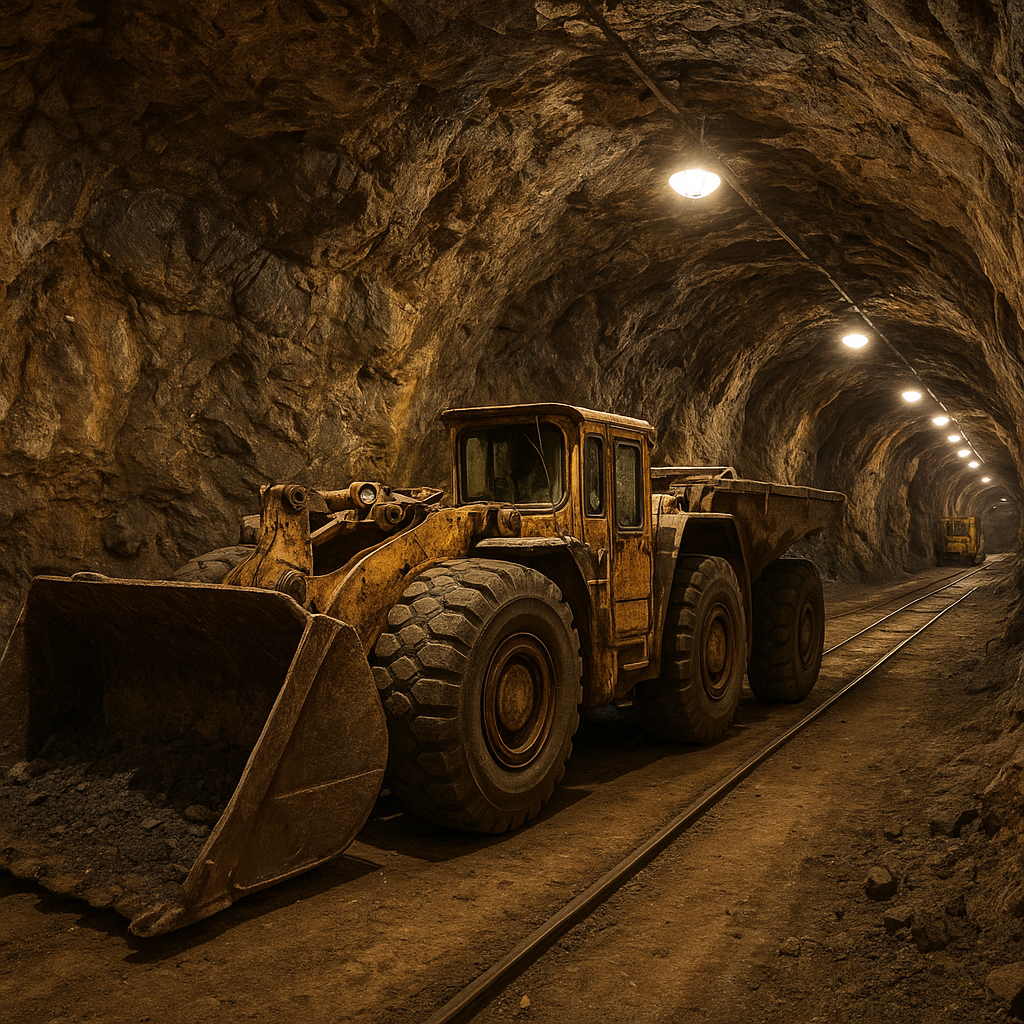
The Homestake Mine in the United States is one of the most storied and significant mining sites in North American history. Located in the Black Hills of South Dakota, it became synonymous with the industrial pursuit of gold, pioneering deep-shaft mining technologies and shaping the economic and cultural landscape of the region for over a century. This article explores the mine’s location and geology, the history and methods of extraction, its economic importance, and a selection of particularly interesting facts that underline why Homestake remains a subject of fascination for historians, scientists and the public alike.
Location and Geological Setting
The Homestake Mine sits near the town of Lead, in the heart of the Black Hills of western South Dakota. The Black Hills are a geologically complex and scenic uplift surrounded by the Great Plains. The area’s mineral wealth, particularly gold, was first brought to broad attention during the mid-19th century, following prospecting and early small-scale placer operations.
Geologically, Homestake exploited a series of steeply dipping veins hosted in metamorphic and intrusive rocks. The primary ore body at Homestake was a stratiform replacement deposit, often described as a fissure- or vein-type occurrence with gold intimately associated with iron sulfide minerals such as pyrite. Mineralization is part of a broader metamorphic and hydrothermal system that affected Proterozoic rocks in the region.
Regional Geology and Ore Controls
- The Homestake formation is related to a thick sequence of Precambrian sediments and metavolcanic rocks, with ore deposition influenced by faulting, folding and hydrothermal fluid flow.
- Gold is found not as free native metal only but largely refractory within sulfide matrices, making processing more complex than simple placer recovery.
- Ore shoots trended along specific structural corridors; these corridors controlled permeability and provided channels for gold-rich fluids.
Because the ore is often fine-grained and locked within sulfide minerals, ore processing at Homestake required increasingly sophisticated mineral processing techniques over time, motivating advances in milling, flotation, and cyanidation.
History of Mining at Homestake
The Homestake Mine’s operational history spans from the late 19th century into the late 20th century, with production commencing in earnest after the discovery of high-grade gold veins. The mine’s evolution mirrors technological and economic trends that shaped the global mining industry.
Early Discovery and Development
Initial discoveries in the Black Hills were part of a wider rush of prospectors in the 1870s. The Homestake vein system was staked and developed, and the Homestake Mining Company was founded. Early operations focused on exploiting near-surface high-grade ore. As those reserves were depleted, miners extended tunnels and shafts deeper to follow the ore shoots. Over time the mine became one of the deepest and most productive in the Western Hemisphere.
Technological Advances and Deep Mining
Homestake became a proving ground for deep-shaft mining techniques. Shafts descended more than 8,000 feet (over 2,400 meters) below the surface, requiring robust hoisting systems, ventilation and ground-support schemes. The mine’s scale and depth necessitated innovations in:
- Deep hoisting and shaft-sinking technologies
- Ventilation systems to manage heat and groundwater
- Underground pumping and dewatering methods
- Ore handling, rail and tram systems within hoisting levels
These advancements not only enabled Homestake to access deeply seated gold but also influenced best practices across the industry.
Production, Processing and Economic Significance
Throughout its operational life, Homestake produced millions of ounces of gold, contributing significantly to both regional and national economies. The mine’s peak production periods coincided with high gold prices and periods of intense industrial activity in the United States.
Scale of Production
- Homestake produced a cumulative total of several million ounces of gold from the late 19th through the 20th century.
- Production fluctuated with ore grade, technological capacity and gold market prices, but the mine remained a major operation for decades.
The mine’s output generated employment for thousands of miners and supported secondary industries—equipment suppliers, transportation, and local service sectors. The town of Lead, and surrounding communities, developed infrastructure that relied heavily on mining revenues.
Processing Methods
Because Homestake ores often contained gold locked in sulfide minerals, the company adopted and refined advanced processing methods:
- Crushing and grinding to liberate mineral grains.
- Flotation circuits to concentrate sulfide minerals.
- Cyanidation and leaching techniques to extract gold from concentrates and low-grade material.
- Smelting and refining to produce bullion meeting market standards.
Continual improvements in metallurgical practice allowed Homestake to economically process material that earlier would have been considered waste, extending the life of the mine and maximizing recovery.
Economic Impact on the Region
The mine functioned as an economic engine for the Black Hills. Impacts included:
- Direct employment in mining, milling and administrative roles.
- Indirect jobs in transport, retail, education and public services.
- Infrastructure investments: roads, power, and healthcare facilities that served the broader community.
- Revenue for local government through taxes, which funded public works and amenities.
Beyond local benefits, Homestake’s output had national significance during periods when domestic gold production contributed to currency backing, confidence in monetary systems, and material supply chains used by industrial and financial markets.
Environmental and Social Considerations
Like many long-lived mines, Homestake left a complex environmental and social legacy. Mining created jobs and wealth but also produced waste rock, tailings and groundwater challenges that required remediation and long-term stewardship.
Environmental Issues and Remediation
Key environmental issues associated with Homestake included:
- Mine tailings and tailings impoundments containing sulfides that could generate acid rock drainage if not managed properly.
- Contaminant mobilization into local groundwater systems, particularly where historic practices predated modern environmental regulations.
- Physical hazards from abandoned workings and infrastructure.
Over the decades following closure, efforts were undertaken to stabilize tailings, control water quality, and rehabilitate disturbed land. These remediation initiatives often combined federal, state and private resources, reflecting a broad recognition of the need to manage post-mining landscapes responsibly.
Social Legacy
The social fabric of Lead and surrounding communities was shaped by the mine’s presence. Generational ties to mining made the mine a source of identity, tradition and local pride. However, mine closures and reductions in employment prompted economic transitions, necessitating diversification toward tourism, scientific research and other industries.
Transformation: From Mine to Research Facility
One of the most remarkable chapters in Homestake’s story is its conversion from a commercial mine to a subterranean research facility. Following the cessation of large-scale mining, the deep, dry, shielded underground spaces offered unique conditions ideal for experiments in physics and other sciences.
Sanford Underground Research Facility
In the 21st century, the site was repurposed as part of the Sanford Underground Research Facility (SURF). The deep underground environment provides exceptional shielding from cosmic rays, enabling highly sensitive experiments in particle physics, including searches for dark matter, neutrino studies, and experiments requiring ultra-low background radiation levels.
- Depth: The mine’s great depth supplies over a mile of rock overburden, crucial for low-background physics.
- Infrastructure: Existing shafts, hoists and underground chambers were refurbished and adapted for research needs.
- Interdisciplinary use: In addition to physics, the underground spaces support geology, biology, and engineering research into subsurface systems.
This reinvention demonstrates how former industrial sites can be adapted for scientific, educational and economic renewal, providing long-term value beyond extractive phases.
Interesting Facts and Cultural Significance
Homestake’s long history has produced numerous interesting anecdotes and facts that give color to its technical and economic significance.
- Longevity: Homestake operated for well over a century, a testament to the size of its ore reserves and the adaptability of mining technologies.
- It was once the largest and deepest gold mine in North America, drawing engineering expertise from across the world.
- The town of Lead developed unique mining culture—schools, social clubs and traditions tied closely to the mine.
- Famous scientific experiments now hosted underground carry the Homestake name into scientific literature, merging mining heritage with cutting-edge research.
- The mine’s transition to SURF attracted national investment and brought researchers, students and visitors into a region long associated primarily with extraction.
Beyond these points, Homestake has served as a narrative touchstone in discussions about how resource extraction interacts with social and environmental stewardship, and how communities can reinvent themselves after industrial decline.
Tourism, Education and Community Memory
After closure, the site and surrounding areas have cultivated tourism, leveraging the mine’s history alongside the natural beauty of the Black Hills. Museums, interpretive centers and guided tours have helped preserve the memory of Homestake’s mining era, while educational programs highlight both the technical achievements and environmental lessons learned.
- Local museums preserve artifacts, photographs and oral histories from miners and families who lived in Lead.
- Field trips and partnerships with universities capitalize on Homestake’s unique geology and infrastructure for experiential learning.
- Events and commemorations keep mining heritage alive, balancing pride in industrial accomplishment with reflection on the broader costs of extraction.
These activities help sustain local economies in a post-mining era and provide context for younger generations about the region’s historical trajectory.
Conclusion
The Homestake Mine’s story is multifaceted: a tale of discovery and extraction, of engineering innovation and economic reliance, of environmental challenge and scientific rebirth. Its transformation into a world-class underground research facility is a striking example of adaptive reuse that preserves the site’s legacy while generating new forms of value. From the veins of gold deep in the Black Hills to the quiet laboratories shielded by rock, Homestake remains an emblematic site where geology, industry and human ambition intersect.

