
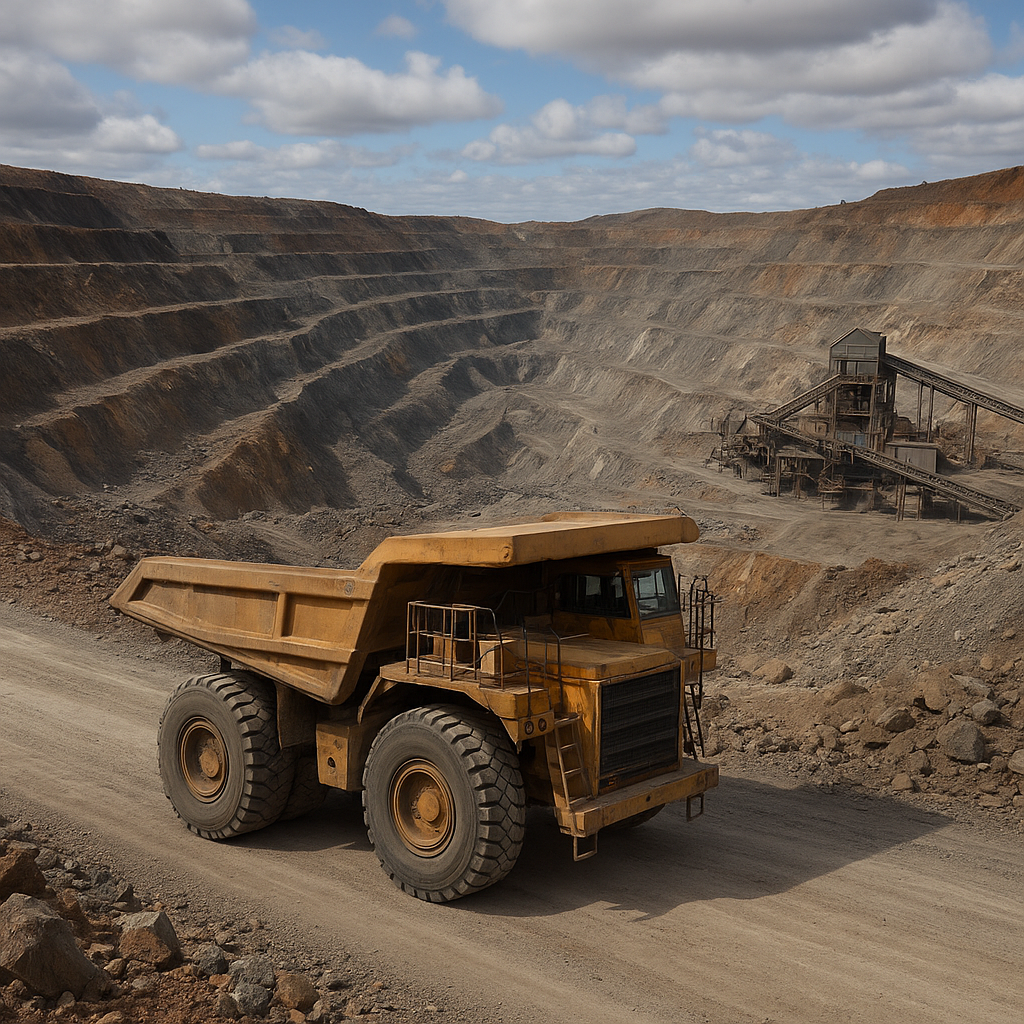
The Red Dog Mine stands as a striking example of modern mineral extraction in a remote, environmentally sensitive region. Located in the far northwest of the United States, this operation has for decades produced large quantities of **zinc** and associated metals while shaping local economies, infrastructure and debates about resource development in the North. This article examines where the mine is, what is produced there, its economic significance, the logistics of operating in a high-latitude environment, and several features that many readers find particularly interesting.
Location and geological setting
The mine is located in northwest **Alaska**, in the DeLong Mountains of the western Brooks Range, on lands owned by the **NANA** Regional Corporation. It lies well north of the **Arctic** Circle and is one of the most northerly large-scale metal mines in the world. The mineralization at Red Dog is primarily part of a cluster of volcanogenic massive sulfide (VMS) and sedimentary exhalative deposits that formed hundreds of millions of years ago. These geological processes concentrated **zinc**, lead, and silver into economically viable ore bodies.
The mine sits on private regional corporation land rather than federal or state-owned property, which is an important legal and social distinction in Alaska. That ownership arrangement has influenced how benefits are shared with local communities and how development decisions are made. The surrounding environment is characterized by tundra, permafrost, steep seasonal variations of sunlight, and a fragile network of waterways that drain to coastal areas of the Chukchi Sea. Those natural features shape both the technical design of the operation and regulatory oversight.
What is produced and how
Red Dog is primarily a producer of **zinc** in the form of concentrate, with significant by-products of **lead** and **silver** depending on ore composition and processing. The ore is mined using conventional **open-pit** methods, then crushed and milled on site to create concentrates that are sufficiently enriched to be shipped to smelters around the world. The concentrates are not refined into metal at Red Dog; instead they are exported to smelters that perform the final metallurgical processing.
Processing at Red Dog involves comminution (crushing and grinding), flotation to separate sulfide minerals, and dewatering to produce a stable concentrate for shipment. Tailings and process water are managed according to stringent plans that account for the subarctic climate and permafrost. Continuous monitoring and treatment systems are in place to reduce the risk of uncontrolled releases of heavy metals into the surrounding environment.
Logistics and infrastructure in a remote Arctic setting
One of the most remarkable aspects of Red Dog is its logistics chain. The mine is remote: there are no roads connecting it to the Alaskan highway system, so supplies and personnel reach the site primarily by air and by sealift during the short ice-free season. A dedicated haul road connects the mine site to a port on the coast; that road and the port are engineered for heavy industrial use across tundra and seasonally frozen ground.
- The mine maintains a year-round camp for employees, with accommodations, medical facilities and other services typical of remote-site operations.
- During the summer months a seasonal **port** operation enables bulk shipments of concentrate. Shipping windows are limited by sea ice and weather, creating a concentrated period of marine operations.
- Bulk material is transported from the mill to the port along the haul road in sealed containers or bulk carriers to minimize dust and potential losses to the environment.
Operating in permafrost and dealing with extreme temperature swings has required specialized engineering: foundations, pipelines, roads and stockpiles must all account for ground instability, frost heave and thawing. The mine’s planners have long invested in specialized designs and adaptive procedures to keep facilities safe and functional year-round.
Economic significance: local, regional and global impacts
Red Dog is one of the world’s largest sources of **zinc** concentrate, and as such it plays a major role in global zinc supply chains. Its output contributes materially to U.S. zinc availability and is significant on the international market, where zinc is essential for galvanizing steel, corrosion protection, alloying and many other industrial uses.
At the local and regional levels the mine has been transformative. The operation provides employment opportunities — both direct jobs at the mine and indirect jobs through contractors and service providers. The partnership model between the operator and **NANA** ensures that regional corporations and local communities receive royalty payments, land rental income and a range of socioeconomic benefits that include investments in infrastructure, education, and community services.
Revenues from mineral royalties, taxes, and wages have allowed the Northwest Arctic Borough and associated Native corporations to finance local priorities and diversify their economies. For many communities in the region, Red Dog is a primary source of cash flow that underpins municipal services and supports local purchasing power, while also generating significant state and federal tax receipts.
Environmental management and stewardship
Mines in Arctic and subarctic settings carry specific environmental challenges. At Red Dog these include preventing acid rock drainage, minimizing metal-laden dust, managing tailings safely under freeze-thaw cycles, and protecting fresh water and coastal habitats. Over the years, the operation has implemented multi-layered environmental programs to monitor and mitigate impacts.
- Water treatment plants treat runoff and process water to meet regulatory limits before discharge.
- Dust control measures — from paved/maintained haul roads to enclosed conveyor systems and sealed concentrate containers — reduce particulate dispersion across tundra and into waterways.
- Long-term monitoring programs involve local communities, regulators, and independent scientists to track trends in water quality, fish and wildlife populations, and permafrost stability.
Nevertheless, environmental oversight and public scrutiny remain ongoing. The interconnection of climate change and permafrost thaw raises additional long-term questions about infrastructure resilience, reclamation timing and effectiveness, and adaptive management strategies. Maintaining community trust requires transparency, frequent engagement, and responsiveness when monitoring detects changes.
Social and cultural dimensions
Because Red Dog sits on land owned by the **NANA** Regional Corporation, the project has had to navigate the intersection of industrial development and Indigenous land rights. Agreements with local corporations and communities address employment preferences, cultural protections, educational initiatives, scholarships, and economic development programs. For many people in the region the mine is both an economic lifeline and a source of cultural negotiation.
Workforce arrangements balance local hiring with fly-in workers who bring specialized technical skills. The mine’s community programs often emphasize training and capacity building so that more residents can fill skilled positions over time. Cultural sensitivity is a component of company-community relations, including efforts to protect subsistence resources and to consult on activities that affect hunting, fishing, and gathering areas.
Regulatory framework and governance
Operation of a large mine in Alaska requires compliance with a complex web of environmental, safety and land-use regulations at state and federal levels, alongside agreements with Native corporations. Permits cover water quality, air emissions, waste disposal, mine reclamation and more. Ongoing reporting, inspections and public consultation are part of keeping the operation authorized to run.
Coordination among operators, regional corporations, state agencies, federal regulators and community stakeholders is essential. Governance frameworks have evolved over decades to improve the transparency of monitoring data and to provide mechanisms for dispute resolution and adaptive management when unexpected conditions arise.
Interesting and lesser-known aspects of Red Dog
- Extreme latitude operations: The mine’s location north of the Arctic Circle means it experiences long summer daylight and long winter darkness, which affects work schedules, logistics and the daily lives of employees.
- Seasonal shipping choreography: The narrow window for marine transport turns the summer months into a high-activity logistics period, with carefully planned shipments of **concentrate** and inbound supplies to sustain the mine all year.
- Unique ownership model: The combination of a major mining operator partnering with the regional Native corporation offers a model of how resource development can be structured to distribute benefits to Indigenous landowners.
- Engineering for permafrost: Foundations, roads and storage facilities must accommodate permafrost and thaw cycles, prompting innovative design approaches and unusually robust maintenance programs.
- Year-round remote camp life: The permanent camp at the mine is a small, functioning settlement with medical, recreational and food services, representing a mini-society in the arctic interior.
Future prospects and challenges
The future of Red Dog will be shaped by a mix of geology, economics, technology and climate. Geologically, the mine’s remaining reserves and the economics of extracting lower-grade ore will determine the mine life. Economically, global zinc prices and demand patterns for metals used in infrastructure, energy systems and corrosion protection will influence investment decisions.
Technological advances in ore processing, automation and remote monitoring may reduce costs and environmental footprints, while improved reclamation techniques could shorten post-closure timelines. At the same time, climatic changes complicate long-term planning — thawing permafrost and changing precipitation patterns require continual reassessment of infrastructure resilience and environmental risk.
Maintaining robust community relationships and adapting governance frameworks to changing conditions remain essential. For residents and stakeholders in northwest **Alaska**, Red Dog will likely continue to be a central economic actor; how its legacy is managed will depend as much on social and political choices as on the underlying geology.
Takeaway observations
Red Dog Mine exemplifies the complexities of modern mineral extraction in one of the planet’s most challenging environments. It is a major source of **zinc**, a cornerstone of local and regional economies, and a focal point for discussions about environmental protection, Indigenous participation in resource development, and Arctic engineering. The combination of remote logistics, specialized infrastructure, and partnership with the **NANA** Regional Corporation gives the operation characteristics that are both technically fascinating and socially consequential.

