
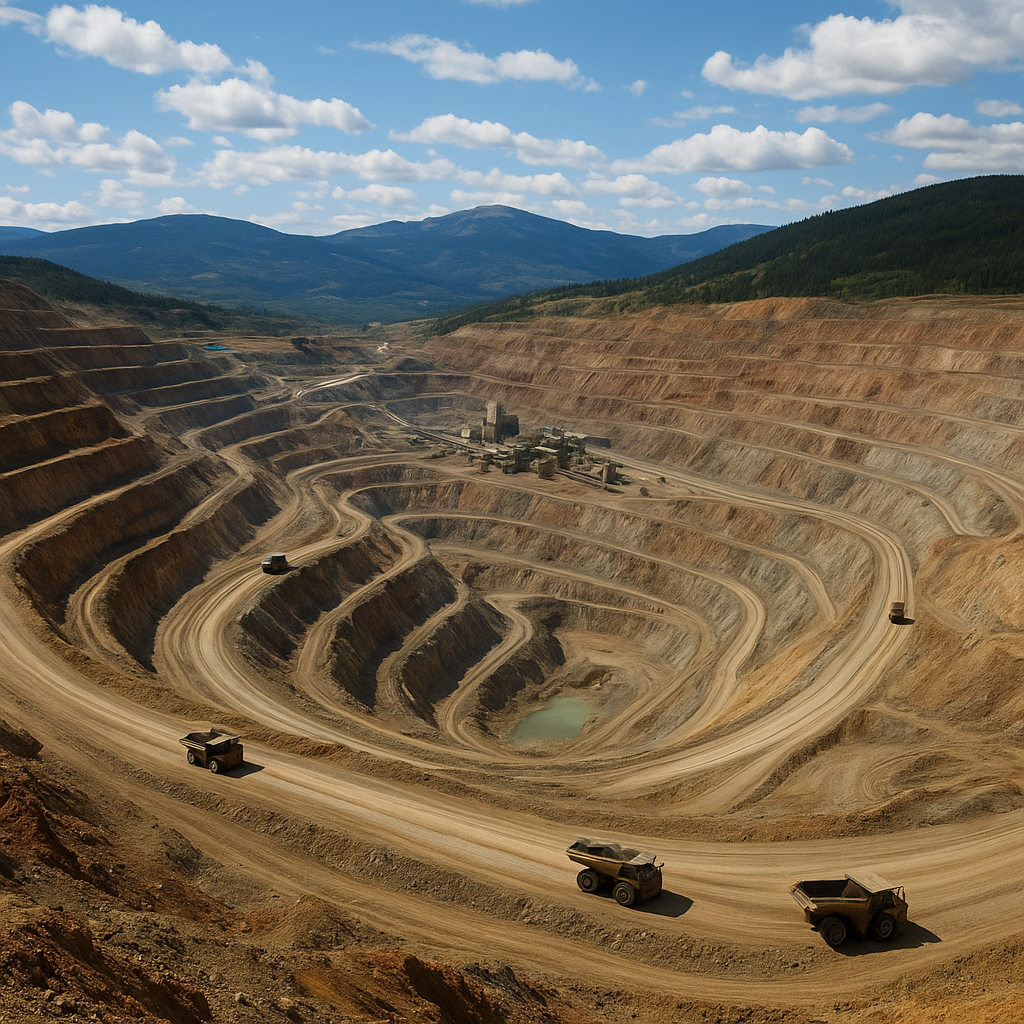
The Highland Valley Copper complex is one of Canada’s largest and longest-running metal mining operations. Situated in south-central British Columbia, the site has been a cornerstone of regional industry for decades, producing significant quantities of copper and other valuable by-products. This article explores where the mine is located, what minerals are extracted, its economic importance, operational features, environmental practices, community relations, and several compelling facts that highlight its role in the modern mining landscape.
Location, Setting and Geological Context
The Highland Valley Copper complex is located near the town of Logan Lake, roughly midway between the cities of Kamloops and Merritt in the province of British Columbia, Canada. The operation sits in a mountainous interior region characterized by rugged terrain and a climate that ranges from cold winters to warm summers. The mine’s positioning within the Thompson-Nicola Regional District gives it strategic access to transportation corridors, hydroelectric power, and a labor pool concentrated in the southern Interior.
Geological Framework
The deposit mined at Highland Valley is a classic example of a cluster of porphyry copper deposits, formed by magmatic-hydrothermal processes millions of years ago. These porphyry systems typically host disseminated sulphide minerals in large volumes but at relatively low grades—making them ideal for large-scale open-pit extraction. The ore bodies at Highland Valley are associated with intrusive igneous rocks and host significant amounts of chalcopyrite, chalcocite and related copper sulphides, as well as a measurable component of molybdenum in some zones.
Structural and mineralogical features include extensive fracturing and veining that allowed metal-bearing fluids to permeate the host rocks. The size and continuity of the mineralized zones are what make this site economically viable: the deposit’s scale compensates for its modest grades, enabling decades of production through large-scale pit mining and processing.
Mining Operations and Processing
Highland Valley Copper operates as a complex of neighboring pits and concentrator facilities rather than a single pit. The mining method is overwhelmingly open-pit, employing large shovels, haul trucks, and support equipment to excavate and transport ore to the processing plants. Over the years, the layout of pits and the sequencing of extraction have evolved based on resource delineation, economics, and reclamation planning.
Ore Handling and Concentration
Once ore is mined, it is crushed and ground to liberate the copper-bearing minerals. The Highland Valley concentrators use flotation to separate sulphide minerals from the waste rock, producing a copper-rich concentrate. The flotation processes typically include conditioning with reagents, rougher and cleaner stages, and tailings handling. The concentrates produced are then filtered and trucked or railed to smelters and refineries, sometimes in domestic markets but also to international smelting facilities, depending on market conditions and contractual arrangements.
Because porphyry deposits often contain more than one economic metal, the operation recovers by-products such as molybdenum concentrate and, at times, smaller quantities of precious metals like gold and silver that are associated with the sulphide minerals. Recovering these by-products can materially improve project economics.
Infrastructure and Logistics
The mine benefits from substantial infrastructure: concentrator plants, processing facilities, tailings management areas, maintenance shops, and worker accommodations. Proximity to power transmission lines helps maintain steady energy supply for grinding mills and flotation circuits, which are among the most energy-intensive parts of the operation. Logistics include transportation links for concentrate shipments and incoming supplies such as grinding media, reagents, and fuel.
Production, Products and Market Role
Highland Valley Copper has been a major source of copper in Canada and globally. Over its operational life, the complex has produced hundreds of thousands of tonnes of copper in concentrate and substantial quantities of other metals. The facility’s consistent output contributes to both domestic supply chains and international metal markets.
Primary and Secondary Products
- Copper concentrates: The main product, shipped to smelters for refining into cathode copper and further to downstream manufacturers.
- Molybdenum concentrates: A valuable by-product used primarily in steelmaking to improve strength and corrosion resistance.
- Minor amounts of gold and silver recovered in the concentrate.
The concentrator’s product quality is a key determinant of the economic value of shipments. Good metallurgical recovery rates and stable concentrate grades allow the operation to maintain profitable north-south trade and contractual relationships with smelters, many of which require predictable concentrate characteristics.
Role in Supply Chains and Commodity Markets
Copper is a critical industrial metal—essential in electrical wiring, electronics, renewable energy systems, electric vehicles, and infrastructure. As a significant producer, Highland Valley contributes to the availability of this strategic metal, helping stabilize regional supply. Its production cycles and operational decisions can influence local employment and regional economic activity, and on larger scales, they feed into global copper balance assessments used by traders, smelters, manufacturers, and policymakers.
Economic Importance and Regional Impact
The economic footprint of Highland Valley Copper extends beyond the direct value of metals produced. The operation supports a wide array of secondary businesses and services—contracting firms, transport companies, equipment suppliers, and local retail and hospitality sectors that serve workers and their families.
Employment and Local Economy
Direct employment at the mine includes miners, metallurgists, engineers, environmental specialists, and administrative staff. Indirect employment comprises contractors, suppliers, and service providers. The mine has long been a major employer in the Thompson-Nicola region and provides well-paying jobs that support municipalities and rural communities through wages, taxes, and community investments.
Employment stability is often tied to commodity prices, operational efficiency, and the mine’s remaining life. During expansions or active development of new pits and infrastructure, a surge in hiring and contracting occurs. Conversely, downturns in copper prices or operational disruptions can lead to reduced staffing or deferred investments. Nonetheless, the long-life nature of the deposit has provided multigenerational employment opportunities.
Government Revenues and Local Benefits
Taxes, royalties, and permit fees paid by the mining complex provide significant revenues to provincial and municipal governments. These funds support public services, infrastructure development, and sometimes targeted community programs. Highland Valley Copper has in many periods invested in local infrastructure, sponsoring educational programs, health initiatives, and community partnerships.
Environmental Management and Sustainability Practices
Modern mining operations are under increasing scrutiny to reduce environmental impacts and demonstrate robust reclamation planning. Highland Valley Copper has implemented numerous strategies aimed at minimizing footprint and managing waste responsibly.
Tailings and Water Management
One of the central environmental challenges in large-scale porphyry mining is managing tailings—the fine-grained waste produced after mineral separation. Highland Valley employs engineered tailings storage facilities with water management systems designed to reduce risks associated with seepage, erosion, or extreme weather events. Advances in tailings technology, stronger monitoring regimes, and regulatory oversight are all part of the site’s environmental controls.
Tailings management also includes progressive reclamation measures, where portions of the tailings areas are re-contoured, capped, and revegetated as mining activities move to new pits. Water usage is optimized through recycling within the concentrator circuits to minimize freshwater withdrawal and maintain operational continuity.
Energy Use, Emissions and Mitigation
Energy consumption is a major operational cost and environmental consideration. Highland Valley has pursued energy efficiency projects—upgrades to grinding mills, variable-speed drives, optimized process flows—and has evaluated opportunities to source cleaner electricity. Reducing greenhouse gas emissions is increasingly central to long-term strategy, especially as copper demand rises alongside global decarbonization efforts.
Reclamation and Biodiversity
Reclamation planning is integrated into mine life management. This includes progressive rehabilitation of mined-out pits and disturbed land, soil replacement, and revegetation using native plant species. Biodiversity monitoring programs aim to restore habitat connectivity and support wildlife in post-mining landscapes. The goal is to leave a stable and self-sustaining landform that can be repurposed for community or ecological uses.
Community Relations and Indigenous Partnerships
Mining projects in Canada operate within a social context that requires engagement with local communities and Indigenous Nations. Highland Valley Copper has engaged with nearby First Nations and local stakeholders to address concerns and develop mutually beneficial partnerships.
Consultation and Agreements
Consultation processes include employment and training agreements, business opportunities for local contractors, and agreements on environmental monitoring and cultural heritage protection. Collaborative arrangements seek to ensure that Indigenous communities benefit from employment, contracting, and capacity-building opportunities, and that their traditional use areas and sacred sites are respected in operational planning.
Social Investment and Capacity Building
Social investment from the mine and its operators often includes scholarships, training programs, community health projects, and contributions to local infrastructure. Capacity building—training local workers, supporting small business development, and fostering local supply chains—helps communities gain long-term economic resilience beyond the life of the mine.
Technological Innovation and Operational Challenges
To remain competitive and responsible, Highland Valley Copper integrates modern technology in mining, processing and environmental management. Automation, data analytics, and equipment modernization have all played roles in improving productivity and safety.
Automation and Digitalization
The use of autonomous haulage systems, remotely operated equipment, and advanced scheduling software increases operational efficiency and reduces safety risks associated with heavy equipment operation. Data analytics help optimize grinding circuits, flotation performance, and maintenance planning, ultimately improving recovery and lowering costs.
Operational Challenges
Large open-pit operations face challenges such as handling large volumes of waste rock, maintaining slope stability in pit walls, and mitigating dust and noise impacts. Seasonal weather variations can affect road access and construction activities. Market volatility in copper prices affects capital allocation decisions and can alter the pace of expansions or cutbacks.
Interesting Facts and Notable Highlights
- Highland Valley Copper is one of the largest open-pit copper mining regions in North America, notable for its longevity and cumulative production.
- The operation has historically produced enough copper to be a meaningful contributor to Canada’s metal exports.
- Its long operating history showcases the economic model of porphyry copper deposits—large volume, low-grade ore mined efficiently at scale.
- Through evolving technology and process improvements, the site has maintained competitiveness and adapted to changing environmental standards.
- Highland Valley has been a site for piloting energy efficiency projects and research into sustainable tailings management techniques, reflecting broader industry trends.
Beyond its economic outputs, the mine serves as a case study in balancing large-scale industrial activity with environmental stewardship and community engagement. The operation’s future will be shaped by copper demand driven by electrification and renewable energy, evolving environmental regulation, and successful partnerships with local communities and Indigenous groups. Highland Valley Copper remains a significant chapter in Canada’s mining story—an industrial landscape shaped by geology, commerce, and the ongoing effort to responsibly manage natural resources.

