
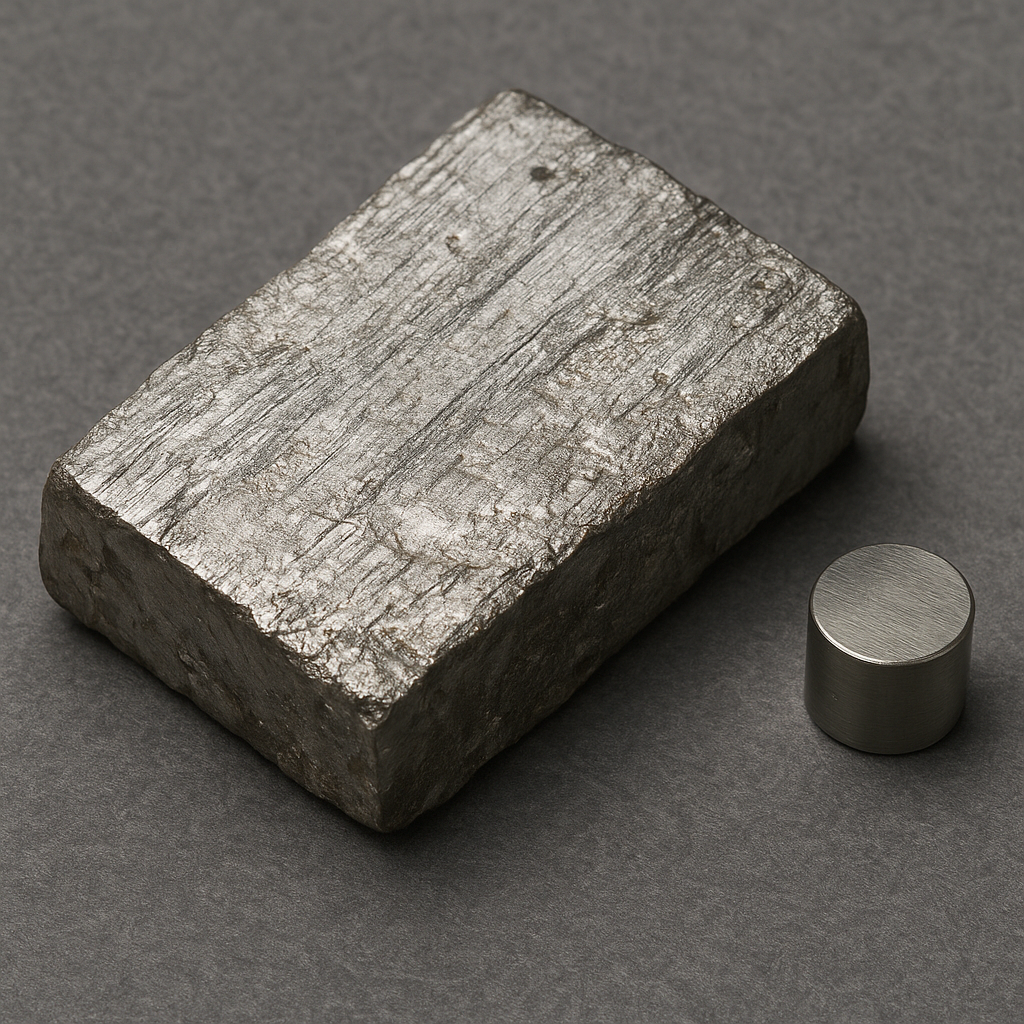
Lutetium occupies a small but intriguing corner of the periodic table. Often overshadowed by its lanthanide neighbors, this element has quietly become indispensable in several cutting-edge technologies. The following sections explore its basic properties, where it occurs in nature, how it is produced and refined, its applications in medicine and industry, and several fascinating aspects of ongoing research. Throughout the article, key concepts are highlighted to draw attention to central ideas.
Physical and Chemical Properties
Lutetium is the element with atomic number 71. It is the last member of the lanthanide series and is sometimes considered the heaviest of the rare-earth metals. Metallic Lutetium is silvery-white, fairly dense, and shows the characteristic behavior of early lanthanides in forming +3 oxidation states. It has a relatively high melting point among the lanthanides and displays chemical inertness in many environments.
Chemically, lutetium behaves as a typical lanthanide, preferring a +3 oxidation state and forming compounds such as oxides (Lu2O3), halides (LuCl3), and organometallic complexes. Because the 4f orbitals are deeply buried, lanthanide chemistry is dominated by ionic radii and coordination preferences more than by valence-electron chemistry common to transition metals. Lutetium’s ionic radius is the smallest among the lanthanides, a consequence of the lanthanide contraction, which influences its coordination chemistry and bond strengths.
Some defining physical properties:
- Atomic number: 71
- Symbol: Lu
- Common oxidation state: +3
- Density: relatively high for a lanthanide
- Melting point: higher than many lanthanides
Natural Occurrence and Extraction
Lutetium is not found in nature as a free element; instead, it occurs in trace amounts within minerals that host other rare-earth elements. Prominent mineral sources include monazite, xenotime, and gadolinite. These minerals contain a mixture of lanthanides, and because lutetium is one of the least abundant lanthanides, it is present at low concentrations—typically a few parts per million in crustal rocks.
The process of extracting lutetium is complex and typically begins with mining rare-earth-bearing ores. After the ore is milled and separated to concentrate rare earths, a series of chemical separations—often solvent extraction and ion-exchange chromatography—are used to separate lanthanides from one another. The separation is challenging because the chemical properties of adjacent lanthanides are very similar. Lutetium’s small ionic radius, however, makes it slightly easier to isolate in the final stages of separation.
Because of the multistep refinement process and the low abundance of lutetium in ores, purified lutetium metal and high-purity lutetium compounds are relatively costly. Recycling of lutetium-containing materials is limited but increasingly discussed as demand grows for specific high-value applications.
Medical Applications and Radiotherapy
One of the most notable modern uses of lutetium is in nuclear medicine, particularly using the radioisotope Lu-177. Lutetium-177 is a beta-emitting isotope that has desirable properties for targeted radionuclide therapy: it emits medium-energy beta particles suitable for destroying microscopic cancer lesions and also emits low-energy gamma photons that allow imaging and dosimetry. This combination supports both treatment and monitoring in the same agent.
Peptide receptor radionuclide therapy (PRRT) has become a prominent field where Lu-177-labeled peptides are used to target neuroendocrine tumors expressing somatostatin receptors. The radiolabeled compound binds to the tumor cells, and the emitted beta particles deposit cytotoxic energy locally, minimizing damage to surrounding healthy tissue. Results from clinical trials show meaningful responses and improved quality of life in many patients with inoperable or metastatic disease.
Beyond PRRT, Lutetium isotopes are also explored for other targeted radiotherapies using monoclonal antibodies and small molecules conjugated to chelators that securely hold the radionuclide. The design of chelators that form very stable complexes with lutetium is essential to avoid free radioisotope release in the body, which could cause off-target radiation and toxicity.
Isotopes and Nuclear Science
Lutetium has several isotopes, some stable and some radioactive. Natural lutetium consists predominantly of Lu-175 (stable) with a small fraction of Lu-176, which is mildly radioactive and has an extremely long half-life. The produced medical isotope Lu-177 is typically generated in nuclear reactors by neutron irradiation of lutetium targets or via indirect routes involving ytterbium targets followed by nuclear decay chains.
In radioisotope production, purity and specific activity are key parameters. Reactor-produced Lu-177 can come in different specific activities depending on production route. High-specific-activity Lu-177 is often preferred for therapeutic radiopharmaceuticals because it enables attaching more radioactivity per carrier molecule, improving target dose while limiting mass dose that might compete for target binding sites.
Isotopes of lutetium are also of interest in fundamental nuclear science. Lu-176’s long half-life has been used in geochronology and isotopic studies, and the element’s nuclear properties contribute to studies of nuclear structure, neutron capture cross-sections, and isotope separation technologies.
Industrial, Scientific and Technological Uses
Outside medicine, lutetium has niche but important industrial and scientific applications. Its compounds and alloys are used in specialized contexts where stability, density, or particular electronic properties are required.
- Catalysis: Lutetium salts and organometallic complexes are employed as catalysts in organic synthesis. Their Lewis acidity and coordination behavior make them effective catalysts for polymerization reactions, hydrosilylation, and certain selective transformations. Research into catalysis using lutetium aims to leverage the element’s unique balance of ionic character and coordination geometry to promote selective bond activation.
- Optics and Scintillators: Lutetium-based scintillator crystals, such as lutetium oxyorthosilicate (LSO), are used in positron emission tomography (PET) detectors because they have suitable density, stopping power, and scintillation properties. High-performance PET detectors often use lutetium-containing crystals to improve time resolution and sensitivity.
- Alloys and Materials: Small amounts of lutetium can be added to alloys to modify mechanical or thermal properties. Though not common in bulk metallurgy due to cost, specialized applications in aerospace or high-performance alloys can employ lutetium dopants.
- Research Materials: In materials science, lutetium serves as a reference lanthanide for studying lanthanide contraction effects, coordination chemistry, and electronic structure due to its position at the end of the series.
Separation Techniques and Chemical Challenges
Separating lutetium from other rare-earth elements is one of the principal challenges faced by chemists and metallurgists. Because neighboring lanthanides have near-identical physicochemical behavior, separation relies on small differences in ionic radii and subtle variations in complexation strength.
Common techniques include:
- Solvent extraction: using organic solvents and tailored extractants that preferentially bind specific lanthanide ions. Careful pH control and multiple extraction stages improve purity.
- Ion-exchange chromatography: strong in polishing stages to achieve high-purity lutetium; resins and elution protocols are optimized for fine separation.
- Precipitation and fractional crystallization: historically used but less efficient for modern high-purity requirements.
These processes often demand significant chemical handling infrastructure and generate secondary wastes requiring management. The need for secure, reproducible separations is amplified for medical-grade isotope production, where radionuclidic and chemical purity standards are stringent.
Safety, Toxicology and Environmental Considerations
Elemental and chemical forms of lutetium are of low to moderate chemical toxicity. Like other rare earths, solid lutetium compounds are not highly mobile in the environment, but dust or fine particulates can pose inhalation risks. Radiological hazards apply primarily to radioactive isotopes such as Lu-177 and to any scenario where radionuclide contamination could occur.
Medical use of lutetium isotopes is carefully regulated with protocols to limit occupational and patient exposure, manage waste, and ensure appropriate shielding and handling. Environmental considerations include the lifecycle impacts of rare-earth mining and refining, which can generate tailings and chemical residues. Responsible sourcing, waste minimization, and improved recycling strategies are growing priorities as demand for rare-earth elements increases.
Economic and Supply Issues
Because lutetium is among the rarer lanthanides and its extraction requires complex separations, market supply is limited and prices are higher than those of more abundant rare-earth elements. The global supply chain for rare earths is concentrated in particular geographic regions where economically recoverable ores are mined and processed. This concentration raises strategic concerns about supply security and motivates investment in alternative sourcing, diversification, and recycling.
The economics of lutetium also depend on demand drivers. Growth in nuclear medicine and advanced imaging technologies has increased demand for high-purity lutetium compounds and for Lu-177. If broader applications emerge—such as new catalysis platforms or wider use of lutetium-based scintillators—demand could rise further, prompting expanded production or new recovery strategies from existing rare-earth processing streams.
Interesting Facts and Ongoing Research
Several aspects of lutetium are particularly notable or undergoing active research:
- Position in the periodic table: As the last lanthanide, lutetium provides a useful endpoint for studying trends across the series, especially the effects of the lanthanide contraction on size, coordination, and bonding.
- Medical innovation: Ongoing work to develop novel chelators, antibody-drug conjugates carrying Lu-177, and improved delivery methods is expanding therapeutic options. Combination therapies pairing radionuclide treatment with immunotherapy or targeted drugs are under clinical evaluation.
- Advanced detectors: Research continues into improving the performance of lutetium-based scintillators for PET and other photon-detection technologies, emphasizing faster response times and better energy resolution.
- Isotope production technologies: Alternative production routes for Lu-177, including accelerator-based approaches, are being investigated to improve availability and specific activity while reducing reliance on reactor capacity.
- Fundamental chemistry: Chemists study lutetium complexes to probe unusual coordination geometries and reactivities that can lead to new catalytic transformations.
Practical Considerations for Laboratories and Clinicians
For institutions working with lutetium and its isotopes, several practical points are important:
- Regulatory compliance: Handling radioactive lutetium requires licenses, radiation safety programs, and trained personnel.
- Chemical handling: High-purity chemical forms need contamination control and clean processing areas, especially for pharmaceutical-grade compounds.
- Waste management: Both chemical and radiological wastes demand strict management to meet environmental and safety standards.
- Supply planning: Secure procurement contracts and contingency planning help mitigate risks associated with limited supply and variable production lead times.
Future Prospects and Emerging Uses
Lutetium’s role is likely to grow in several niches. Continued success of Lu-177 radiopharmaceuticals could establish new standards of care in oncology, increasing clinical demand and stimulating investment in isotope production capacity. Advances in materials science may reveal additional uses for lutetium-containing compounds in photonics, detectors, or quantum materials where unique electronic or structural features are advantageous.
Moreover, as green technology and circular economy principles spread, methods to recover lutetium from waste streams—such as spent catalysts, medical equipment, or electronic components—will gain traction. These recovery efforts could reduce supply pressure, lower lifecycle environmental impacts, and provide secondary sources of the element for industrial and medical use.
Additional Notes and Cultural-Historical Tidbits
The discovery and naming history of lutetium reflect the 19th-century efforts to disentangle complex mixtures of rare-earth minerals. The element’s name derives from Lutetia, the ancient Roman name for Paris, honoring the city where some of the early work took place. Because lutetium was recognized and isolated after many other lanthanides, its chemistry helped complete the understanding of the rare-earth series and the patterns that govern it.
In scientific practice, lutetium is often overlooked by the public but highly valued in specialized fields. Its rise in practical importance—especially in medicine and imaging—illustrates how even scarce elements can have outsized impacts when their properties match specific, high-value needs.