Jet, a deep black organic gemstone prized for its warm polish and dramatic appearance, has moved through human history as both a decorative material and a talisman. Emerging from ancient forests transformed over millions of years, this stone has been carved, worn and imbued with meaning in cultures across the world. The following exploration covers its geological origins, historical and cultural significance, techniques of working with the material, contemporary applications, and the ways collectors and craftspeople preserve its legacy.
Geology and Formation: From Wood to Stone
The material commonly called jet is not a mineral in the strict sense but a compact form of fossilized wood, usually associated with lignite or bituminous coal seams. Over geological time, pieces of driftwood or tree trunks were buried in sediment, subjected to pressure, and chemically altered in an oxygen-poor environment. This process reduced volatile compounds and increased carbon concentration, producing a dense, uniform black material that can take a fine polish.
Where jet is found
- Whitby, England: Perhaps the most famous source, with a long tradition of working and trading black stone. The name Whitby jet has become synonymous with high-quality material.
- Spain: Particularly in Asturias and Galicia, where coastal deposits yield workable pieces.
- United States: Atlantic coastal areas and some Appalachian coal-bearing regions produce jet-like material often called bog oak or fossilized wood.
- Russia, New Zealand, and other locales: Smaller deposits give rise to locally used material with similar properties.
In many places, jet occurs where ancient forest material was buried in marine or lacustrine sediments and later exposed by coastal erosion or mining. Shoreline exposures and cliff falls can reveal fresh pieces suitable for collection, which is why some coastal towns have long histories connected to the trade.
Physical properties
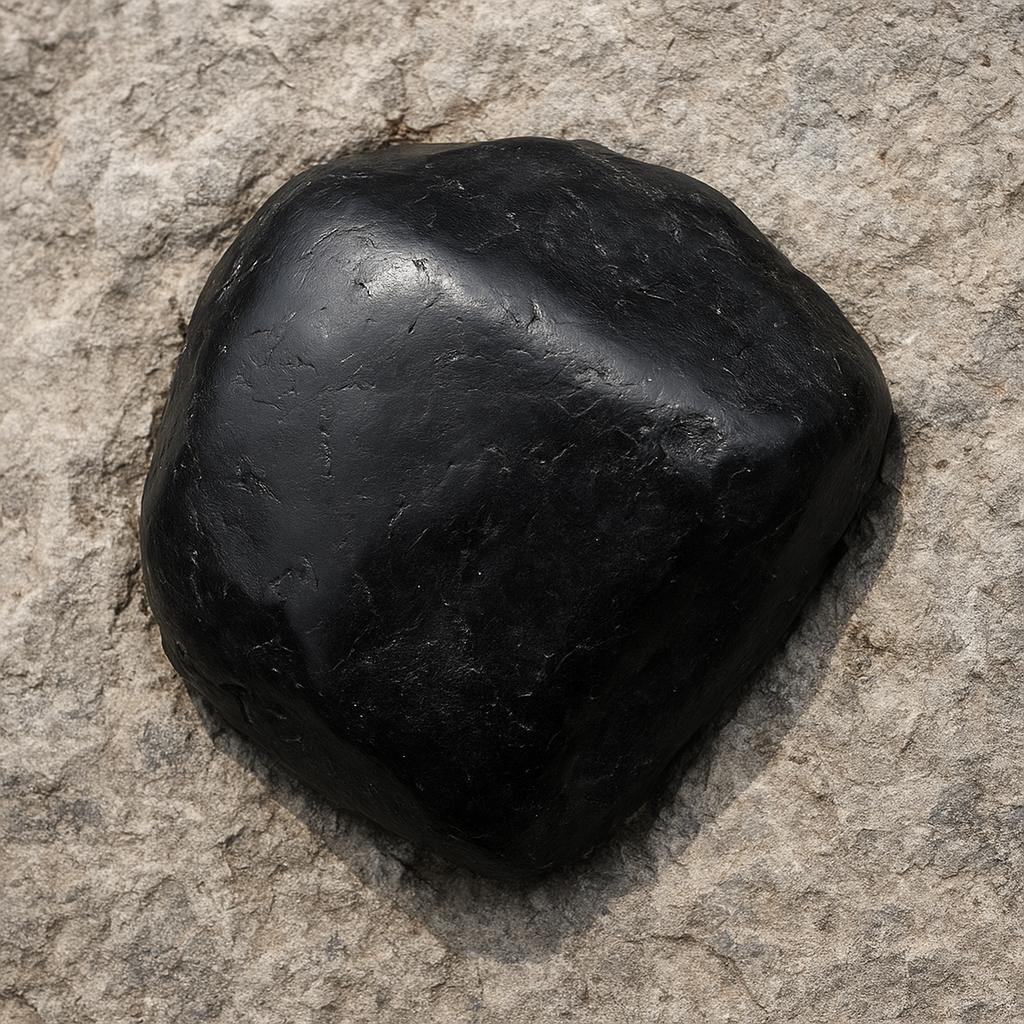
Jet is relatively light compared with many gemstones and is soft enough to be carved with hand tools, yet hard enough to hold a high polish. It is typically uniform black, sometimes with faint brownish streaks, and acquires a warm, almost oily sheen when rubbed or polished. Unlike minerals, jet will burn or emit a resinous smell if heated or set alight—one diagnostic feature distinguishing it from true stones.
Another important characteristic is that jet does not display the crystalline structure of minerals; its character is compact and fibrous when examined closely, often showing remnants of wood grain or tree ring structures under magnification. This link to plant origin explains why some fossil inclusions and growth patterns are still observable.
History and Cultural Significance
Across many eras, jet has served roles from practical ornament to symbolic object. Its deep black color and ability to be finely carved made it an obvious choice for mourning pieces and amulets.
Prehistoric and ancient use
Jet objects have been recovered from prehistoric sites, including beads and pendants. In antiquity, cultures used jet for personal adornment and ritual purposes. The material’s durability and polishability lent it to small carved items, such as figurines and beads, which might have been valued both for aesthetics and for perceived protective qualities.
Victorian mourning and the rise of fashion
The 19th century saw a dramatic surge in the popularity of jet, especially during the Victorian era. Following the death of Prince Consort Albert in 1861 and Queen Victoria’s prolonged mourning, jet became the material of choice for mourning jewelry. The requirement for somber dress created a demand for tasteful, black-adorned accessories—lockets, brooches, bracelets and hairpieces made from Whitby jet proliferated. Craftspeople developed intricate carving techniques to produce floral motifs, silhouettes and mourning scenes, and a whole industry arose around supplying these items.
Beyond mourning, jet jewelry also became part of everyday fashion among those who appreciated its dramatic contrast with pale skin or lighter fabrics. Antique pieces from this period remain highly collectible and are an important part of jewelry history.
Folklore, superstition and amuletic uses
Across cultures, jet was believed to ward off evil and protect the wearer. People used jet amulets to protect infants, sailors and travelers, relying on the idea that the deep black stone could absorb or deflect negative energies. In some folk traditions, small carved talismans were placed in homes or sewn into clothing for continual protection.
These beliefs are part practical—jewelry and amulets serve to signal identity and status—and part symbolic, as black materials often signify seriousness, depth and a connection to the unseen. The long history of such uses contributes to the ongoing interest of collectors and cultural historians.
Working with Jet: Techniques and Challenges
Carvers and jewelers prize jet because it is relatively easy to shape yet retains fine detail. However, there are specific practices that modern makers and restorers follow to ensure the best results.
Cutting, carving and polishing
- Initial shaping: Rough pieces are cut with saws and shaped using rasps or rotary tools. Because jet is soft, care must be taken to avoid tearing the surface or creating micro-fractures.
- Fine carving: Small chisels, gravers and abrasives are used to render delicate motifs. The material allows for intricate work appreciated in Victorian and contemporary designs.
- Polishing: Abrasives followed by finer compounds and gentle buffing produce the jewelry-worthy sheen. A final cloth rub often yields the characteristic warm luster.
Conservators emphasize low-speed tools and steady hands; overheating can damage the structure or create hairline fractures. Because jet is organic, it is also vulnerable to chemicals and must be kept away from solvents that could leach natural oils or alter surface finish.
Faking and imitations
Because of its desirability, jet has long been imitated. Materials used as substitutes include black glass (Mauritius glass), early plastics such as vulcanite and later plastics like ebonite, and other black stones. Collectors and dealers use tests—such as the heat test (a small heated needle emits a resinous smell from real jet) or inspection of grain and cold-to-the-touch feel—to distinguish authentic material from imitations.
Modern analytical techniques, like infrared spectroscopy, can also reliably identify jet by detecting organic signatures that differ from synthetic polymers or mineral stones.
Contemporary Uses and Conservation
While jet may no longer be the ubiquitous material of Victorian mourning, it has found a place in contemporary craft, design and the vintage market. Artisans and designers often draw on historical forms while adapting them to new aesthetics.
Modern jewelry and design
Contemporary jewelers create rings, pendants and statement pieces that use jet for contrast, texture and its tactile warmth. Some designers combine jet with metals like silver and gold to emphasize the interplay of light and dark. Others set jet alongside colored gemstones for dramatic effect. The material’s relative softness allows for bespoke carving, enabling personalized motifs, initials and portrait miniatures.
Collecting and the market
Antique jet items, especially those from well-known workshops or unique Victorian brooches and lockets, command interest among collectors. Rarity, provenance and condition are the main drivers of value. Small-scale contemporary carved pieces also enjoy a niche market among buyers who appreciate natural materials and artisan craftsmanship.
Conservation concerns
Because jet is organic, it is vulnerable to environmental factors. Conservators recommend:
- Keep jet away from strong light and heat to prevent drying and cracking.
- Avoid exposure to oils, perfumes and solvents that can alter surface finish or color.
- Store in stable humidity conditions and use padded boxes to prevent abrasion.
- When cleaning, use a soft cloth and mild soapy water; never use ultrasonic cleaners or harsh chemicals.
Proper care can preserve both newly made and antique jet pieces for generations, maintaining both aesthetic qualities and historical value.
Scientific and Cultural Research: Why Jet Matters
Jet offers researchers a small but significant window into past environments and human behavior. Its origin from ancient wood means that, in some cases, it can preserve microscopic structures and even chemical signatures useful to paleobotany and geochemistry. Meanwhile, the cultural artifacts made from jet inform historians about trade networks, fashion, and social practices.
Paleobotanical insights
Because jet preserves wood structure, scientists can sometimes identify the botanical affinities of the original wood, shedding light on ancient forest composition. Isotopic studies may reveal conditions under which the wood was buried and transformed, contributing to reconstructions of paleoenvironments.
Cultural and archaeological importance
Jet objects recovered from archaeological sites indicate patterns of trade, technological skill and symbolic practice. For example, distribution of Whitby jet in archaeological contexts can show the extent of trade during certain historical periods. The stylistic features of carved items provide temporal markers and insights into fashion and ritual.
Metaphysical and modern interest
In contemporary spiritual and metaphysical communities, jet is sometimes used for grounding and protective rituals. Its links to mourning and protection continue to influence how people use the material today. Whether worn as a talisman or appreciated for its tactile beauty, jet maintains a presence in the lives of those who feel drawn to organic, dark-hued materials.
Practical Tips for Buyers and Enthusiasts
Whether you are a collector, a jewelry maker, or simply curious about this black gemstone, a thoughtful approach helps ensure satisfaction:
- Ask for provenance when buying antique jet; reputable dealers will provide context about age and origin.
- Request a simple authenticity test or certificate for high-value purchases to distinguish real jet from substitutes.
- Learn basic care: avoid chemicals, store carefully, and handle with clean hands to preserve the surface.
- Consider commissioning custom work if you want contemporary designs that honor traditional techniques like hand carving.
Jet stands at the intersection of geology, history and craft—an organic stone that tells stories about ancient landscapes and the societies that prized its somber beauty. Whether admired as an antique mourning brooch, a hand-carved pendant or an object of scientific interest, jet remains a material of enduring fascination and practical appeal.