
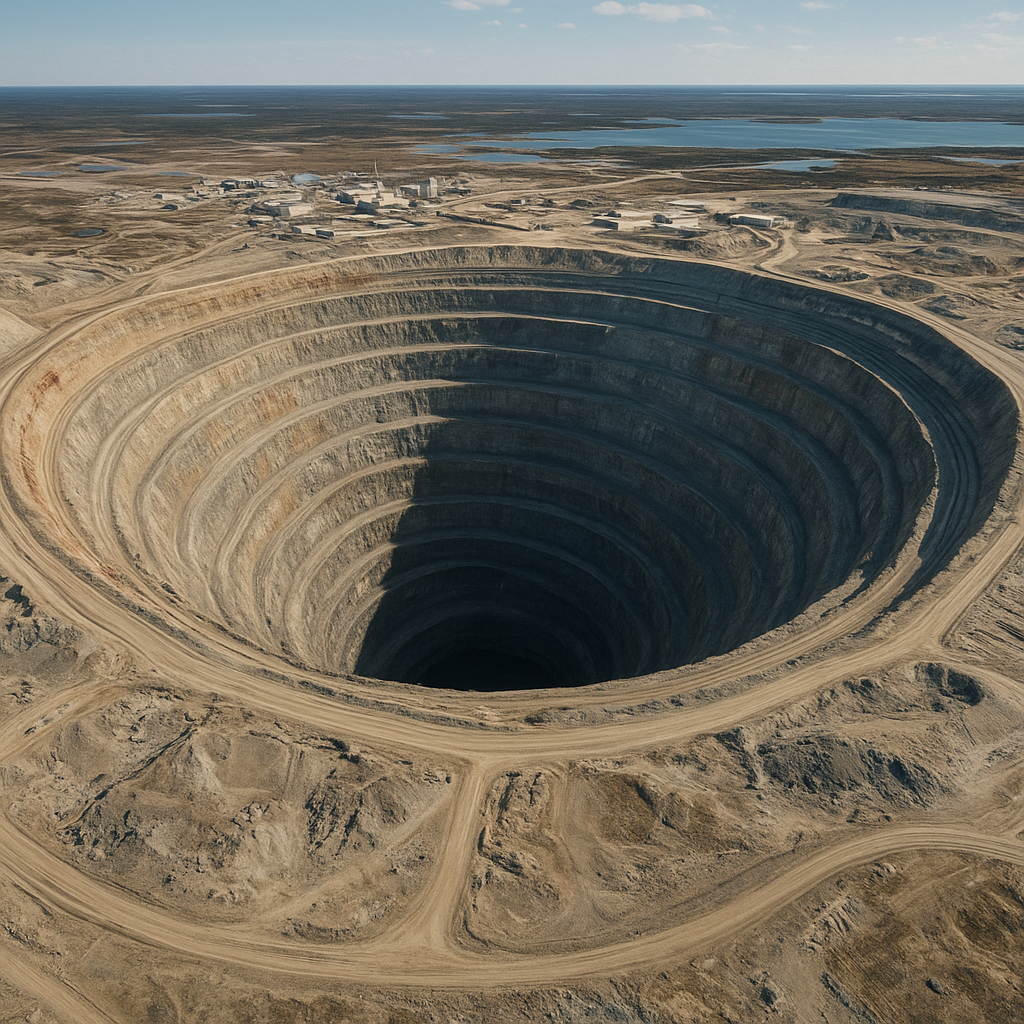
The Ekati Diamond Mine stands as a landmark in the story of modern Canadian resource development. Located in a remote, fragile landscape of the Northwest Territories, Ekati transformed a region previously known for its ancient rocks into a global source of precious gems. This article examines where Ekati is, what it produces, how it operates, its broader economic impact, and several compelling facts that underscore why Ekati remains a subject of interest for geologists, local communities, and the international diamond market.
Location and Geological Setting
Ekati is positioned approximately 310 kilometres northeast of Yellowknife in the Northwest Territories of Canada, near the shores of the shallow lakes that punctuate the tundra around the area known as Lac de Gras. The mine lies within the ancient Slave Craton, a stable and deeply eroded section of continental crust that hosts many of the world’s diamond-bearing rocks. The geological formation most responsible for the diamonds recovered at Ekati is kimberlite, a type of volcanic rock that originates deep in the mantle and is capable of carrying diamonds to the surface during rapid explosive eruptions.
The remote northern setting defines many aspects of the operation. Winters are long and harsh, with thick ice forming on lakes and rivers that, paradoxically, become critical infrastructure in the form of seasonal winter roads. These winter roads allow transport of heavy equipment and fuel that would otherwise be impractical or prohibitively expensive by air. Summers are short and present their own challenges, including the need for careful water and erosion control to protect the tundra and aquatic ecosystems.
History and Development
Ekati’s discovery in the early 1990s marked a turning point for the Canadian mineral industry. Prospectors found kimberlite indicator minerals that suggested the presence of diamond-bearing pipes. The discovery was later developed by a major mining corporation, and in 1998 Ekati became the first operational diamond mine in Canada. That milestone helped establish the territory as one of the world’s premier diamond provinces and triggered a wave of exploration and subsequent mine developments in the same region.
Over the years, the mine’s ownership and operational structure evolved. Initially developed by a large multinational mining company, Ekati later passed through different corporate hands, with significant roles played by firms focused specifically on diamond assets. Throughout these transitions, Ekati continued to produce diamonds and remained a vital employer and economic engine in the north.
Mining Methods and Production
Ekati exploits diamond-bearing kimberlite pipes using a combination of surface (open pit) and underground mining methods. The choice between open pit and underground excavation depends on the depth and geometry of each kimberlite pipe as well as economic considerations such as diamond grade and size distribution. Ore is transported to an on-site processing plant where crushing, dense media separation, and other techniques concentrate diamond-bearing material. Final sorting and recoveries occur in secured facilities to ensure chain-of-custody and product integrity.
The mine produces a range of gem- and industrial-grade diamonds, with a proportion of stones suitable for high-value jewelry markets. While average carat values vary over time depending on the distribution of stone sizes and qualities recovered, Ekati has historically contributed millions of carats to the global supply. The nature of kimberlite deposits means that production profiles can fluctuate: some pipes yield many smaller stones while others produce fewer but much larger and more valuable gems.
Typical Mine Infrastructure and Logistics
- Permanent processing plant and secure sorting facilities
- Workers’ camps with accommodation, food services and medical facilities for fly-in/fly-out crews
- Seasonal winter roads for heavy bulk transport
- Airstrip and logistics hub for year-round access by plane
- Water management systems including tailings containment and treatment facilities
Economic Importance
Ekati’s arrival transformed the economic landscape of the Northwest Territories. As the first diamond mine in the country, it ushered in a new industry that diversified an economy previously dominated by government services, forestry, and small-scale mineral operations. The mine created direct employment opportunities in mining, engineering, and camp services, and stimulated secondary employment in logistics, aviation, and local supply chains.
Beyond jobs, Ekati contributes to public revenues through taxes, royalties, and lease payments. These funds support territorial and federal programs that benefit a much wider population than those directly involved in mining. The mine has also driven investment in northern infrastructure—communications, air transport, and seasonal roads—that has spillover benefits for other industries and communities.
A key element of Ekati’s economic role is the framework of agreements with local Indigenous communities. These agreements typically include commitments to employment, training, business opportunities for local firms, and enduring benefit-sharing arrangements. Such provisions help ensure that the economic benefits of resource development are not solely externalized but instead reach northern residents and support local capacity building.
Environmental Management and Community Relations
Operating in a sensitive northern ecosystem brings responsibilities. Ekati has been subject to robust environmental regulation and extensive monitoring programs aimed at protecting water quality, fish populations, migratory wildlife such as caribou, and permafrost integrity. Environmental management includes:
- Comprehensive water treatment and management systems to control effluent
- Detailed wildlife monitoring programs, including studies on caribou movements and breeding
- Progressive reclamation plans that set out how disturbed land will be restored once mining ceases
- Continuous air and noise monitoring to minimize impacts on traditional land uses
Community relations are an integral component of operation. Companies operating at Ekati have established long-term dialogues with local Indigenous governments and organizations, negotiated Impact Benefit Agreements, and invested in community-led initiatives. These partnerships address employment and training, cultural protection, and land-use considerations, reflecting a recognition that sustainable development in the north requires meaningful collaboration.
Significance to the Global Diamond Industry
Ekati’s contribution to the global diamond supply cannot be overstated. Its emergence in the late 20th century helped shift perceptions of where economically viable diamond deposits could be found and proved that high-quality diamond production was possible in extreme northern environments. The mine enhanced market diversity and played a role in stabilizing supply by adding reliable production from a politically stable jurisdiction.
Marketwise, diamonds from Ekati have found their way into international supply chains, polished and set into jewelry that reaches consumers around the world. The provenance and responsible sourcing aspects associated with northern Canadian diamonds—often highlighted as ethically preferable alternatives to diamonds of uncertain origin—have become a marketing strength for stones that trace their origins to Ekati and nearby operations.
Interesting Facts and Noteworthy Aspects
Several features of Ekati make it particularly interesting beyond its economic output:
- First mover: Ekati was the first operational diamond mine in Canada, paving the way for a domestic industry.
- Remote operations: The mine’s reliance on winter roads and fly-in/fly-out logistics creates a distinctive operational rhythm dictated by seasonal access.
- Scientific value: The kimberlites of the Slave Craton have been the focus of much geological research, improving understanding of deep Earth processes.
- Community partnerships: Long-term agreements with local and Indigenous stakeholders illustrate evolving best practices for northern resource development.
- Unique workforce culture: Life at the camp fosters a tight-knit community of specialists who live and work in a challenging environment, often resulting in strong professional camaraderie and specialized northern expertise.
Technical Challenges and Innovations
Mines like Ekati operate at the intersection of engineering ambition and environmental caution. The extreme climate requires equipment and processes adapted to cold conditions, and permafrost management is a technical priority to prevent subsidence and infrastructure damage. Innovations developed for Ekati and similar projects include:
- Cold-weather materials and construction practices
- Advanced water treatment technologies tailored to northern hydrology
- Remote monitoring systems that reduce the need for human presence in sensitive areas
- Safety protocols for wildlife encounters and severe weather events
These technical solutions contribute to safer, more efficient operations and are often exported as best-practice lessons to other remote mining operations around the world.
Future Outlook
The lifespan of a mine like Ekati depends on the remaining resource base, economic conditions, and social licence to operate. Exploration in the surrounding region continues, as geologists evaluate new kimberlite targets and assess the viability of deeper or lower-grade portions of existing pipes. Technological advances in processing and underground mining can also alter the economic calculus, making previously uneconomic zones viable.
In the longer term, the emphasis on environmental stewardship and community partnership is likely to shape how Ekati and its successors operate. Responsible closure and reclamation planning will be crucial components of future activity, ensuring that the economic advantages of diamond recovery do not come at an unacceptable environmental or social cost.
How Ekati Changed a Region
Ekati’s discovery and operation created ripple effects far beyond the mine site. It shifted the economic centre of gravity for the North Slave region, stimulated the growth of specialized technical expertise in northern mining, and reinforced the Northwest Territories’ role in the global diamond supply chain. The mine also helped foster stronger regulatory frameworks for environmental protection and Indigenous consultation in resource development, setting precedents that continue to influence projects across the Canadian north.
Through geology, engineering, and human endeavour, Ekati remains emblematic of how a single deposit can reshape industry, community, and scientific understanding. Its story is one of remote landscapes transformed by the search for minerals that have long fascinated humanity—diamonds—and of the ongoing balance between harnessing natural wealth and stewarding the environment and societies that make such operations possible.

