
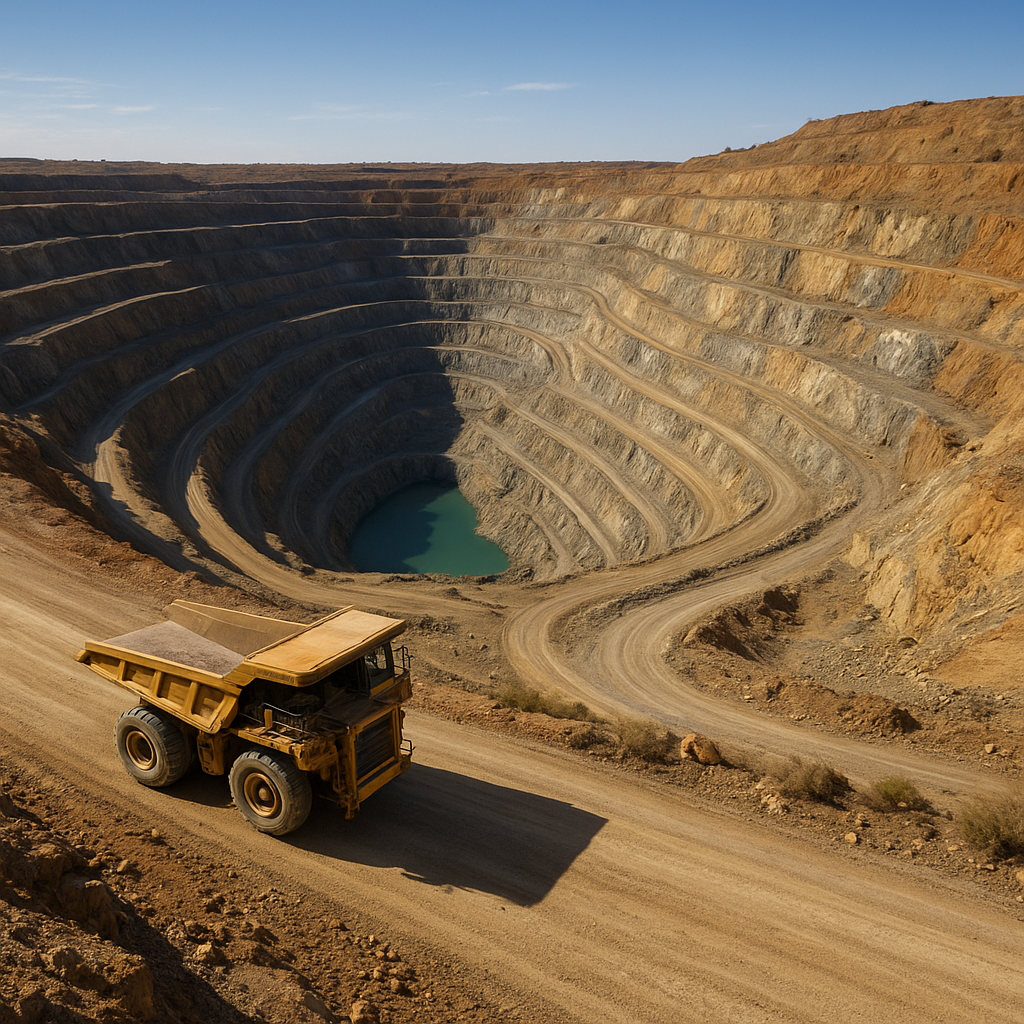
The Driefontein Mine, one of the most notable names in the history of South African mining, stands as a symbol of the country’s long-standing relationship with deep-level gold extraction. Located in the western part of the Witwatersrand Basin, this operation has played a pivotal role in transforming subterranean riches into tangible economic wealth and social change. The following sections explore where Driefontein is sited, what is mined there, its economic importance, the technical and human challenges of deep mining, and several lesser-known but compelling aspects of its story.
Location and geological setting
Driefontein Mine lies to the west of Johannesburg, in the Gauteng province of South Africa, within the greater West Wits mining district. It forms part of the prolific Witwatersrand basin — a geological formation that hosts the world’s largest known gold-bearing conglomerates. The mine’s ore bodies are hosted in ancient, layered sedimentary rocks that were laid down some 2.7 billion years ago. Over geological time, these beds were buried, folded and faulted, concentrating dense, fine particles of gold in conglomeratic horizons commonly referred to as „reefs.”
The Driefontein complex exploited multiple reef horizons, typically at great depth. Many Driefontein workings extended well below 2,000 meters, making it one of the deeper mining operations in the basin. This extreme depth is a function of both the vertical extent of the reef system and the historical approach of following high-grade ore shoots downward. The mine’s location and geology presented both enormous potential and complex technical challenges: high rock stresses, elevated temperatures, and the need to ventilate and pump water from deep levels.
What is produced at Driefontein?
Primarily, Driefontein produced gold. The economic value of the operation derived almost entirely from the recovery of native gold and associated minerals concentrated in the conglomerate reef horizons. Gold at Driefontein typically occurred in visible particles embedded within the quartzite and conglomerate matrix, permitting relatively efficient recovery once the ore reached surface processing plants.
Aside from gold, mining activities generated various mineral by-products and waste streams. These included sulphides, quartz, and trace amounts of other precious and base metals. Tailings from milling operations contain residual minerals and have historically been sources for re-treatment when technologies improved or when surface stockpiles were reprocessed for additional recovery.
History and development of the mine
Early discoveries and 20th-century growth
The discovery of gold on the Witwatersrand in the late 19th century sparked the rapid growth of the South African gold industry and the rise of Johannesburg as a major city. Driefontein itself began to develop as mines in the West Wits region expanded. Over the 20th century, multiple shafts, ore passes and processing facilities were constructed and modernized to adapt to changing technologies and market conditions.
Modernization and consolidation
During the latter part of the 20th century and into the 21st, the South African gold sector underwent considerable corporate consolidation, mechanization and modernization. Driefontein’s operations were periodically restructured to maintain viability amid fluctuating production costs and gold prices. Investment in ore-processing plants, ventilation systems, and rock support methods helped maintain output from deep-level operations that would otherwise have been uneconomic.
Economic significance
The economic impact of Driefontein extended beyond the metal recovered in the refinery. The mine contributed to regional and national economies through multiple channels:
- Employment: Driefontein provided direct jobs to thousands of mineworkers, engineers and support staff. Indirect employment in suppliers, contractors and local services multiplied this effect. The mine was a major employer in the West Wits area, sustaining families and communities for generations.
- Foreign exchange and fiscal revenue: Gold exports historically generated significant foreign currency inflows for South Africa and supported government revenues through royalties, taxes and payroll levies.
- Local economic development: Mining companies invested in infrastructure—roads, housing, clinics and schools—benefitting surrounding towns and townships. These investments often formed the backbone of small urban economies.
- Supply chain effects: Equipment manufacturers, service contractors, chemical and explosives suppliers all derived income from the ongoing needs of deep-level operations like Driefontein. The mine’s purchases stimulated economic activity across many sectors.
However, the economic story is not without complexity. Declining ore grades, escalating costs at depth, and environmental liabilities weighed on profitability in the later years. The global gold price cycle influenced investment decisions and the pace at which older infrastructure was rehabilitated or closed.
Mining methods, technology and safety
Driefontein employed a variety of deep-level mining methods designed to extract narrow but high-value reef horizons. Methods included conventional cut-and-fill for certain pockets and more mechanized long-hole or breast stoping in other sections. Because of the extreme depth, mechanization and automation were progressively introduced to improve efficiency and safety.
Rock engineering was a central concern. High in-situ stresses meant that rock bursts and seismic events could pose significant hazards. Engineers deployed layered support systems—rock bolts, mesh, timber, and shotcrete—along with seismic monitoring networks to mitigate risk. Ventilation was crucial: supplying adequate fresh air and cooling to working areas was both an operational and safety imperative. Large underground pumping systems managed groundwater inflows and kept deep levels accessible.
Nevertheless, deep-level mining in South Africa has a sobering safety legacy. Mines like Driefontein faced incidents and accidents associated with falls of ground, machinery, and underground fires. Over time, safety protocols, training, and regulation improved, and companies emphasized a culture of risk management and worker protection.
Environmental and social considerations
Mining at Driefontein, as with many long-lived operations, generated environmental and social impacts that required attention. Tailings dams and waste rock dumps altered local landscapes and posed long-term management responsibilities. Acid mine drainage, where sulphide minerals oxidize and produce acidic water that mobilizes heavy metals, has been a critical concern in parts of the Witwatersrand. Addressing water quality, biodiversity impacts, and land rehabilitation became central tasks during and after active mining.
Socially, the mine’s operations had multifaceted impacts. On one hand, mining provided livelihoods, skills development and community investment. On the other, issues such as labor relations, inequality, and the health effects of mining—silicosis and other occupational diseases—have challenged communities and governments to respond with compensation schemes, healthcare, and regulatory reforms.
Interesting technical and historical facts
- Depth and temperature: Working at depths exceeding two kilometers meant ambient rock temperatures could be very high; cooling systems and refrigeration were sometimes required to maintain workable conditions for underground personnel and equipment.
- Seismicity: Deep mines in the Witwatersrand can induce seismic events. Monitoring and research at Driefontein contributed to a broader understanding of mining-induced seismicity and improved mitigation strategies across the industry.
- Legacy infrastructure: Old drifts, shafts and processing plants at Driefontein became part of the industrial archaeology of the region. Some facilities were repurposed, while others remained as cautionary reminders of the industry’s footprint.
- Community ties: The mine established social infrastructure—schools and clinics—that endured even as operations shifted. Former miners and their families form communities with histories intimately connected to the mine’s lifecycle.
- Technological innovation: The challenges of deep-level mining at Driefontein spurred technological developments in ventilation engineering, rock mechanics, and mine planning software that had broader application in global mining.
Contemporary context and legacy
In recent decades, the South African gold industry has contracted from its mid-20th-century peak due to a combination of geological, economic and regulatory pressures. Nevertheless, the legacy of operations like Driefontein is substantial. The mine contributed significant tonnages of gold to cumulative national output, supported large workforces, and shaped patterns of settlement and urbanization in the Witwatersrand region.
Efforts to manage the post-mining era—rehabilitating tailings, treating contaminated water, and transforming former mining land for new uses—remain ongoing. Some former mining areas have been considered for urban redevelopment, renewable energy projects, and conservation initiatives. The knowledge and infrastructure developed at Driefontein continue to inform modern mining and environmental management practices.
Human stories and cultural impact
Beyond technical and economic metrics, Driefontein’s human dimension is rich. Generations of miners, supervisors and engineers carried skills and traditions shaped underground. Mining culture—songs, rituals, and community institutions—emerged around the shared experience of subterranean work. The mine’s presence influenced migration patterns, with men and women moving to the West Wits region in search of employment, thereby reshaping family structures and local demographics.
The narratives of resilience and hardship, of community solidarity, and of the everyday bravery of miners facing physical and economic risks are part of the broader South African mining saga. Compensation battles over occupational diseases, campaigns to improve living conditions in mining towns, and the efforts of former workers to translate experience into alternative livelihoods are all part of Driefontein’s ongoing social legacy.
Research, archives and further reading
Driefontein is documented in geological surveys, corporate reports and academic studies. Mining historians and geologists have examined the mine’s production records, engineering approaches and socio-economic effects. Researchers interested in deep-level mining, ore deposit formation in the Witwatersrand, or the socio-economic history of Gauteng will find Driefontein to be a case rich with data and narratives.
For those who study the interplay between resource extraction and development policy, the lifecycle of mines like Driefontein offers lessons about infrastructure planning, worker welfare, environmental stewardship and economic diversification. The technical archives—shaft plans, ventilation diagrams, and metallurgical records—also serve as educational resources for future mining engineers and geoscientists.

