
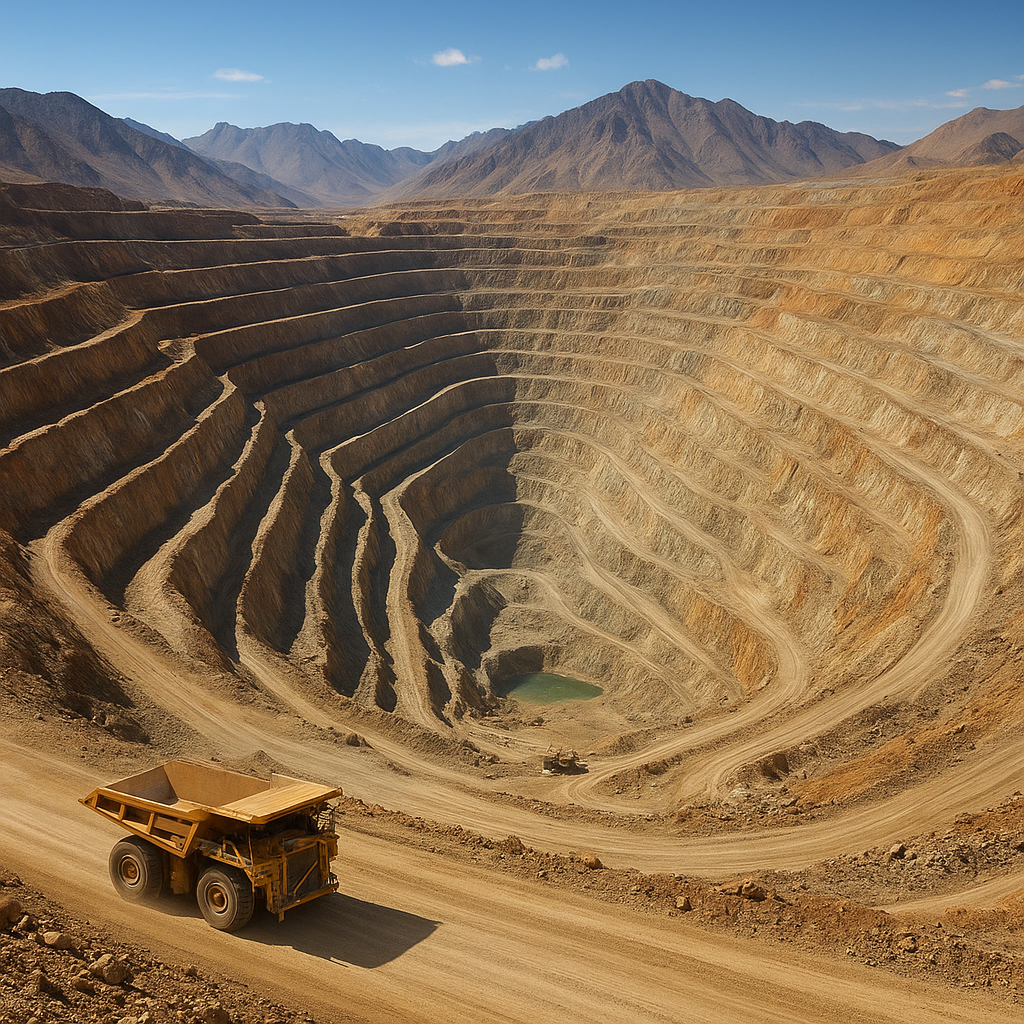
Located high in the Andean foothills south of Santiago, the mine known as El Teniente is one of the most important and storied mining complexes in the world. It is famed not only for its enormous copper output but also for its scale, engineering complexity and long influence on Chile’s economic and social development. The site combines deep underground workings with a legacy of mining towns, ambitious expansion projects and significant environmental and community challenges. This article explores where El Teniente is situated, what is extracted there, the mine’s economic significance and several intriguing aspects that make it unique.
Location, Setting and Geological Context
El Teniente sits in the central-southern portion of Chile, in the O’Higgins Region, to the east of the city of Rancagua and within the rugged Andes foothills. Its altitude and mountain setting shaped the way the operation developed: access roads, worker housing, and ore transport all had to be adapted to steep slopes, variable weather and seismic activity that characterizes the Chilean Andes. Historically the mine’s operations were linked to a company town built up the slope, known for its wooden houses and steep stairways.
From a geological perspective, El Teniente is a classic example of a porphyry copper deposit. These deposits form when hydrothermal fluids associated with cooling magmas concentrate copper, molybdenum and other metals in large, stockwork-style bodies of disseminated sulfides. The scale of El Teniente’s mineralization is vast: rather than a single narrow vein, the deposit consists of a broad body of sulfide-rich rock that can be mined economically at large scale. This geology is what enables long-lived, large-volume extraction that supplies copper markets around the world.
What Is Mined and How It Is Extracted
The primary commodity produced at El Teniente is copper, usually recovered as a copper concentrate after crushing and grinding of ore and flotation to separate sulfide minerals. In addition to copper, associated metals such as molybdenum and small amounts of precious metals can be recovered as byproducts, adding value to the ore processed.
One of the defining technical characteristics of El Teniente is its reliance on large-scale block caving and other mass underground mining methods. Block caving is a cost-efficient method for recovering low-grade, high-tonnage ore bodies. It involves undercutting an ore block and allowing the broken rock to collapse under its own weight, from which ore is drawn through a system of drawpoints and haulage drifts. The method is capital-intensive in terms of development but allows a high rate of tonnage at relatively low extraction costs once in full production.
Because the mine extends deep into the mountain, a complex network of tunnels, shafts and transport systems links the extraction faces to surface processing plants, freight systems and worker facilities. The underground infrastructure at El Teniente is among the most extensive in the world, requiring careful engineering to manage rock stresses, ventilation, water inflow and ore transport logistics over long distances.
Ownership, History and Institutional Role
El Teniente’s institutional history mirrors Chile’s relationship with copper as a national resource. Originally developed by foreign companies early in the 20th century, the mine later became central to Chile’s effort to control and benefit from its mineral wealth. Today El Teniente is operated by CODELCO, Chile’s state-owned copper corporation established after nationalization of the copper industry in the early 1970s. As part of CODELCO’s portfolio, El Teniente contributes to the Corporation’s mandate of maximizing public benefit from mining revenues.
Historically, the mine also gave rise to one of the most emblematic mining towns in Chile, Sewell, perched above the mine and designed to house workers and their families. Sewell’s steep streets and timber architecture are reminders of the era when company towns provided housing, schools and social infrastructure tightly linked to the mine’s operations. Sewell has since been partially abandoned as a residential community, but its historic quarter retains cultural value and has been recognized for its heritage.
Economic Significance
El Teniente plays a multi-faceted economic role at local, regional and national levels. As one of the world’s largest underground copper mines, its contributions include:
- Steady supply of copper concentrate feeding smelters and refineries both domestically and internationally, thereby affecting global copper markets.
- Significant employment and direct purchasing that support local economies around Rancagua and the O’Higgins Region.
- Major fiscal contributions via taxes, royalties and the revenue flows that accrue to the state through CODELCO, which in turn support public spending.
- Infrastructure development — roads, power lines and water systems — that extend beyond the mine to benefit broader communities.
Copper is a strategic commodity for Chile’s export economy. Revenues derived from mines like El Teniente have helped finance national investments in education, healthcare and public infrastructure. Because of the mine’s scale and the relative longevity of its reserves, it represents a stable pillar of mineral wealth for Chilean economic planning, influencing exchange rates, trade balances and industrial strategy.
Social and Environmental Considerations
Large mining operations inevitably carry social and environmental responsibilities and impacts. At El Teniente these include:
- Water use and availability: Mining and processing copper consume substantial water volumes. Ensuring sustainable water management in a semi-arid country like Chile is a major operational and social challenge.
- Tailings and waste rock management: Handling and long-term storage of tailings requires robust engineering to prevent contamination and minimize downstream risks.
- Air quality and dust control: Ore handling, crushing and transport can generate dust; controlling emissions is important for worker health and nearby communities.
- Community relations: Because of the mine’s presence for over a century, maintaining good relations with local communities, municipal governments and indigenous groups is vital to social license to operate.
In recent decades, CODELCO and El Teniente management have invested in modernization and environmental controls, reflecting both regulatory pressures and corporate commitments to sustainability. Projects to improve water recycling, reduce energy intensity and lower greenhouse gas emissions are priorities in an era of growing concern about mining’s environmental footprint.
Technological Development and Modernization
To keep a complex underground operation competitive over decades, ongoing technical innovation is essential. El Teniente has been a testbed for large-scale mechanization, automation and digital monitoring. Technologies applied include:
- Automated ore handling and loading equipment to improve safety and efficiency in deep workings.
- Advanced geotechnical monitoring systems to manage cave behavior, rock stress and ground stability in block caving sectors.
- Modern concentrator upgrades to enhance recovery rates and reduce energy consumption per tonne of processed ore.
- Data analytics and remote monitoring that optimize production scheduling and predictive maintenance.
These technological investments reduce operating costs over time and extend the economically mineable life of the deposit, while also improving safety for workers in a challenging subterranean environment.
Interesting Aspects and Historical Highlights
El Teniente is rich in stories that go beyond the purely technical. Some noteworthy and intriguing aspects include:
- Heritage and Sewell: The engineer-built town above the mine, Sewell, rose sharply up the mountain and became a community with schools, theatres and public services — a living monument to mining-era urban planning. Its architecture and setting have earned attention from historians and UNESCO-minded preservationists.
- Scale of Underground Operations: As one of the world’s largest underground mines, El Teniente challenges assumptions that the biggest mines must be open-pit. Its deep, cavernous workings demonstrate how underground techniques can rival or exceed open-pit operations in throughput when geology and economics align.
- Strategic Importance: The mine has been central to Chile’s national narrative about wealth and sovereignty over natural resources. The transition from foreign-owned operations to state control is a defining chapter in Chilean modern economic history.
- Engineering Feats: Building transport links, shafts and processing facilities on steep, seismically active terrain required innovative engineering solutions — from inclined railways in the early days to modern conveyor and tunnel systems.
Challenges and the Path Ahead
Even with strong reserves and modern methods, El Teniente faces ongoing challenges common to major mining operations:
- Resource depletion and grade decline: Over long lifespans, ore grades can decline and require shifting to lower-grade zones or deeper levels, which raises costs and demands new development work.
- Energy and emissions: Reducing the carbon footprint of mining — by improving energy efficiency, electrifying equipment and integrating renewable energy — is increasingly important for the industry and customers who demand lower-carbon supply chains.
- Water scarcity: Sustainable water sourcing and recycling are crucial in Chile’s climate context, and innovations in desalination and zero-liquid-discharge processes are being explored across the industry.
- Community and environmental compliance: Maintaining social license, meeting stricter environmental rules and fostering equitable local development remain ongoing priorities.
Strategic investments in modernization, coupled with careful social and environmental planning, will determine whether El Teniente continues to be a reliable contributor to Chile’s mineral wealth for many decades.
Conclusion
As a cornerstone of Chile’s mining landscape, El Teniente exemplifies the intersection of geology, engineering and national economic strategy. Its role as a major production center for copper, operated by CODELCO, underpins not only local employment and regional development but also contributes materially to Chile’s position as the leading copper producer globally. The mine’s combination of deep underground operations, historical communities like Sewell, and ongoing technological modernization make it a focal point for discussions about sustainable large-scale mining, national resource governance and the future of mineral-intensive economies. With robust reserves and continual innovation, El Teniente is likely to remain a defining feature of Chile’s industrial and cultural landscape for years to come.

