
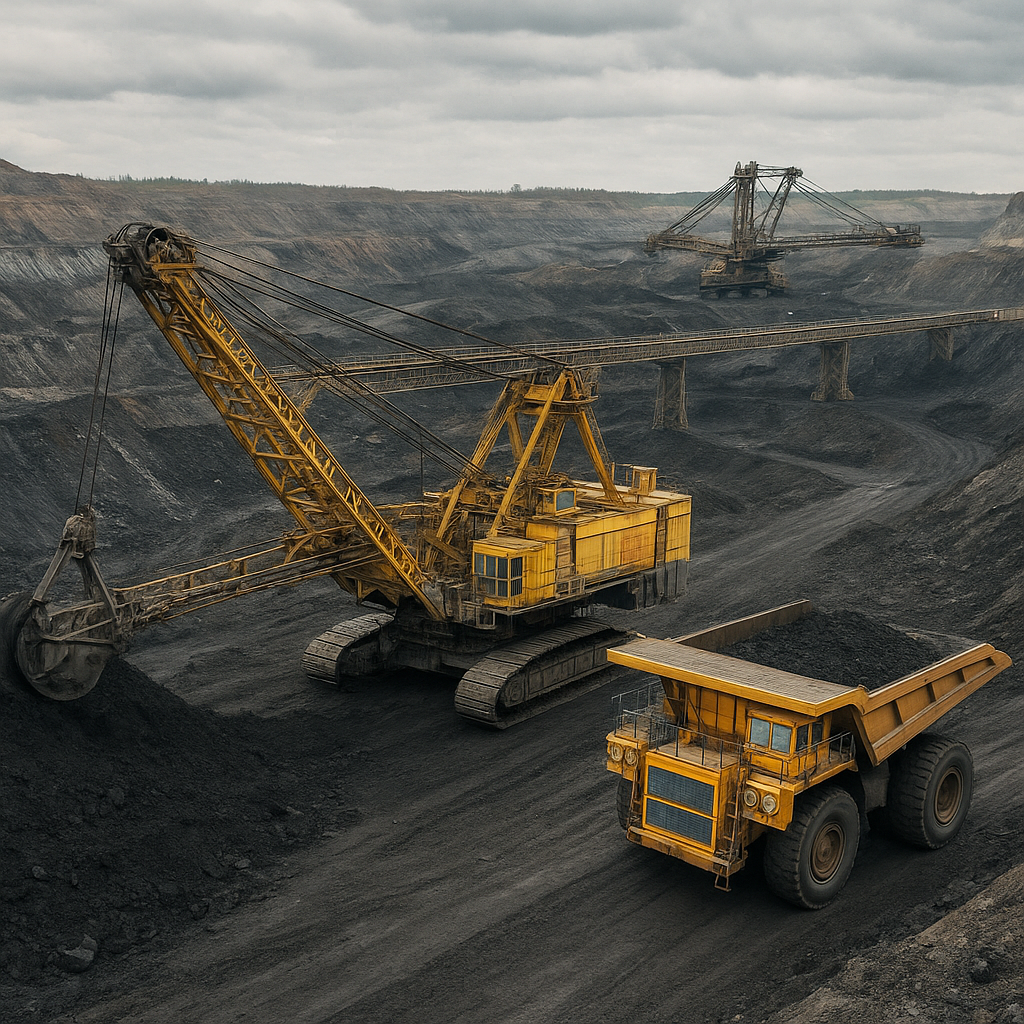
The Siberian Coal Energy Company, commonly referred to by the acronym SUEK, is one of the largest coal producers in Russia and a major player in the global coal market. Its operations span a vast territory of western and central Siberia, with a network of mines, processing facilities and logistic assets that have been developed over decades. This article examines where SUEK operates, what types of coal it extracts, the company’s economic significance at regional and national levels, and a selection of notable and sometimes surprising aspects of its business and technological profile.
Geographic location and geological setting
SUEK’s principal assets are concentrated in the coal-rich basins of Siberia, with the heart of its production located in the Kuzbass (Kuznetsk Basin) within Kemerovo Oblast. Kuzbass is one of the most important coal-bearing regions in the world and hosts a dense cluster of mines, both open-pit and underground. Beyond Kuzbass, SUEK operates mines and processing facilities in adjacent regions such as Krasnoyarsk Krai and the Republic of Khakassia, reflecting the broad distribution of coal-bearing strata across southwestern Siberia.
The geological context of these deposits is characterized by thick Carboniferous and Permian coal seams formed in ancient swamp environments. The seams vary in depth and thickness, which leads to a mix of mining methods: some deposits are amenable to large-scale open-pit extraction, while others require underground longwall operations. These geological conditions determine not only the mining techniques used but also the range of coal qualities available for different industrial uses.
Regional climate and logistical implications
Siberia’s harsh climate and expansive distances impose significant logistical challenges. Seasonal temperature extremes affect equipment, transport schedules and the reliability of rail links. To maintain continuous infrastructure operations, SUEK invests in weatherized facilities, year-round maintenance programs and coordinated rail-port logistics that link remote mines to international markets. The company’s logistics network often includes private rolling stock, rail terminals and port handling capabilities to ensure timely exports.
Types of coal produced and industrial uses
SUEK’s product portfolio covers the two primary commercial coal categories: thermal coal and metallurgical (coking) coal. Each category targets different industries and market segments, and SUEK’s asset base is diversified to serve both domestic and international demand.
- Thermal coal: Used principally for power generation and heat production. Thermal coal grades extracted by SUEK are shipped to coal-fired power plants within Russia and to importers in Asia and elsewhere. Thermal coal demand tends to be influenced by electricity consumption patterns, fuel-switching policies and regional energy supplies.
- Metallurgical coal: Also called coking coal, this higher-grade product is essential for iron and steel production. Metallurgical coal undergoes specific blending and preparation processes to meet the strict requirements of blast furnaces and direct reduced iron plants. SUEK’s coking coal output is strategically important for steelmakers both within Russia and in export markets.
In addition to raw coal shipments, SUEK operates coal preparation plants that wash and grade coal to improve its calorific value and reduce ash and sulfur content. These beneficiation processes increase the market value of the product and make it more competitive in demanding export markets.
Economic significance at regional and national levels
Coal mining has historically been a cornerstone of the regional economy in western Siberia. In areas like Kemerovo Oblast, coal represents a substantial share of industrial output, employment and municipal budgets. SUEK, given its scale, plays a central role in this economic structure.
- Employment: SUEK directly employs tens of thousands of workers across mines, plants and logistic operations. In many mining towns, SUEK is a major or principal employer, supporting not only miners but also a wide range of service industries and local businesses.
- Fiscal contributions: Royalties, taxes and fees associated with coal production contribute significantly to regional and federal budgets. These revenues support public services, infrastructure projects and social spending in mining regions.
- Trade balance and foreign currency earnings: Through exports of both thermal and metallurgical coal, SUEK contributes to Russia’s trade balance and provides foreign currency inflows that are valuable for national economic stability.
- Industrial supply chains: Metallurgical coal from SUEK feeds domestic steel production, supporting sectors such as construction, machinery and transport equipment. Thermal coal supports power generation in areas where alternative energy sources may be limited or more costly to deploy.
Because coal markets are cyclical, SUEK’s contribution to regional economies can fluctuate. However, the company’s investments in production capacity, logistic assets and value-added processing help stabilize employment and fiscal flows even during softer market periods.
Logistics, ports and global markets
One of SUEK’s defining attributes is its vertically integrated logistics footprint. Large-scale coal mining requires robust transport chains, and SUEK has developed rail fleets, loading terminals, and port access points to move millions of tonnes each year from interior Siberian basins to export customers.
- Rail networks: Coal is typically dispatched by rail to seaports or domestic power stations. SUEK often operates dedicated block trains and owns significant rolling stock to manage peak season flows and reduce dependency on third-party providers.
- Ports and transshipment: For Asian customers, Far Eastern ports serve as gateways; for European markets, western ports or multimodal routes are used. Port terminals are equipped for bulk handling, stockpiling and shiploading to accommodate a range of vessel sizes.
- Market destinations: Historically, large buyers of Russian coal include China, India, Japan, South Korea, Turkey and various European countries. Market shares and routes shift with pricing, trade policies and global demand for steel and electricity.
Efficient logistics underpin SUEK’s competitive position. Delays in rail or port throughput can erode value, so continuous investment in logistics modernization is a corporate priority.
Environmental and social considerations
Coal mining generates significant environmental footprints, and SUEK’s operations are subject to public scrutiny and regulatory oversight. Key environmental and social issues include greenhouse gas emissions associated with coal combustion, local air and water quality impacts, land disturbance and the socio-economic dependency of single-industry towns.
Environmental management and reclamation
SUEK has developed environmental management systems to mitigate operational impacts. Common measures include:
- Coal washing and dust suppression to reduce airborne particulates.
- Treatment of mine water and tailings management to protect surface and groundwater.
- Progressive land reclamation, whereby disturbed areas are stabilized and progressively landscaped or repurposed after mining activity ceases.
- Monitoring programs to assess ambient air quality and ecological recovery post-rehabilitation.
Despite these efforts, critics argue that coal production inherently conflicts with global climate targets. The combustion of coal remains a major source of CO2 emissions, and as policymakers and customers increasingly prioritize low-carbon alternatives, coal producers face long-term demand uncertainty.
Social impacts and community relations
Mining regions often exhibit tight economic coupling between large companies and local communities. SUEK typically engages in social programs including housing improvements, health and education initiatives, and local infrastructure projects. The company’s capacity to sustain community investment is tied to market performance, making diversification and skills training important components of long-term regional resilience.
Technological approaches and operational practices
SUEK applies a range of mining technologies to optimize safety, productivity and resource recovery. Techniques and systems in use include:
- Longwall mining in underground operations, where automated shearers and powered supports enable high recovery rates and continuous extraction.
- Large-scale open-pit mining utilizing draglines, electric shovels and heavy haulage trucks for bulk removal of overburden and extraction of near-surface seams.
- Coal preparation and beneficiation plants that employ washing, screening and density separation to produce market-grade products.
- Digital monitoring systems for equipment performance, safety alarms and production planning that increase operational efficiency.
Investment in mechanization and automation improves safety by reducing manual labor in hazardous conditions, and it also boosts per-worker productivity. Nevertheless, these technological shifts require workforce retraining and careful labor relations management.
Business strategy and market positioning
SUEK’s strategic positioning historically emphasized scale, vertical integration and access to export markets. Key strategic elements include:
- Diversified product mix between thermal and metallurgical coal to balance market cycles.
- Ownership or control of logistics assets to reduce bottlenecks and capture additional value along the supply chain.
- Investment in higher-quality coal washing and blending to meet stringent international specifications, particularly for steelmaking customers.
- Pursuit of operational efficiencies to lower unit costs and maintain competitiveness against lower-cost producers globally.
Market dynamics, including energy transition policies in importing countries and fluctuating commodity prices, influence SUEK’s strategic choices. The company monitors global demand trends and adapts its sales and logistics plans to shifting trade corridors.
Interesting facts and lesser-known aspects
Beyond the headline figures of production and exports, several features of SUEK’s operations and regional context are notable or surprising:
- Scale and integration: The complexity of coordinating dozens of mines with rail fleets and port terminals over thousands of kilometers makes SUEK an operationally sophisticated enterprise. It is less a single mine and more a national-scale logistics and resource company.
- Mining heritage: Many SUEK mining towns trace their origins to Soviet-era industrialization programs. Urban forms, worker housing and local institutions still reflect that legacy, even as modern business practices reshape operations.
- Adaptation to market needs: The company manufactures a range of coal products tailored to specific customers, from delicate coking blends for specialized steel plants to low-grade thermal coal for bulk electricity producers.
- Innovation in reclamation: Some reclamation projects in former mining areas have converted pit lakes and landscaped spoil heaps into recreational or ecological zones, demonstrating alternative paths for post-mining land use.
- Logistics ingenuity: In remote sectors, SUEK sometimes uses multi-modal chains that combine rail, river barges and coastal shipping to move coal economically across great distances and seasonal constraints.
- Regional employment multiplier: Mining wages often fuel local demand for services and retail, creating economic multipliers that extend beyond direct hires. In many towns, small-scale entrepreneurs depend on the steady income provided by mining-sector employment.
Challenges and future prospects
Looking ahead, SUEK faces a mix of industry-specific and macroeconomic challenges. Key issues include:
- Global energy transition pressures that may reduce long-term demand for coal in power generation as renewables and natural gas expand.
- Maintaining competitiveness amid fluctuating global commodity prices and the emergence of lower-cost producers.
- Adapting to regulatory changes and environmental expectations, which may require additional investments in emission controls, reclamation and community development.
- Ensuring secure and resilient logistics chains in a geopolitical environment that can affect trade routes and port access.
At the same time, there are near-term opportunities. Demand for metallurgical coal is closely tied to global steel production, and regions that are modernizing infrastructure or building new steel capacity can sustain demand. Additionally, efficiencies from automation and supply-chain integration can preserve margins even as market conditions tighten.
Concluding observations
SUEK’s presence in Siberia exemplifies the dual character of large-scale coal enterprises: they are both engines of regional economic activity and focal points of environmental debate. The company’s extensive operations across Russia—anchored in the Kuzbass basin—produce both thermal and metallurgical coal, support thousands of jobs, and sustain substantial export flows. Its investments in infrastructure, technological modernization and environmental management shape the lives of communities across western Siberia. As global energy systems evolve, the long-term trajectory of SUEK will depend on how effectively it navigates market shifts, regulatory pressures and the transition toward lower-carbon energy sources, while continuing to contribute to regional economies and national trade balances.

