
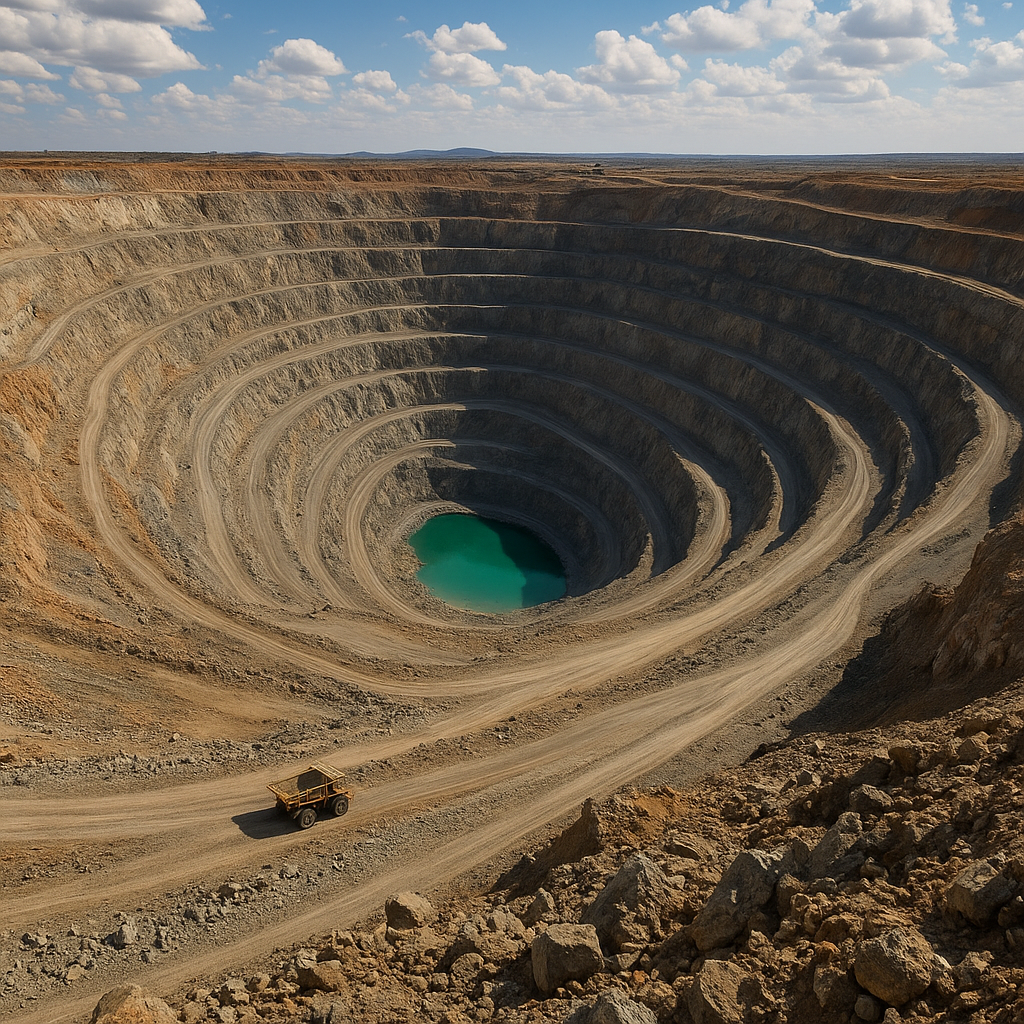
The Orapa mine is a defining feature of Botswana’s mining landscape, combining vast scale, long-term production and a central role in national development. Located in the heart of the Kalahari region, Orapa has produced millions of carats of rough stones since the early 1970s and remains a cornerstone of the country’s extractive sector. This article explores the mine’s location and geology, the nature of its operations and output, its economic and social significance, and a number of intriguing facts about how a remote pit transformed into a flourishing mining town and national asset.
Where Orapa Is and the Geological Context
The Orapa complex sits in the central part of southern Africa, in the country of Botswana, approximately in the northern-central zone of the country’s vast interior plateau. The mine is adjacent to the township known as Orapa and within reach of other diamond-producing centres such as Letlhakane and Jwaneng. Set against a broad, flat landscape of semi-arid savanna and Kalahari sands, the mine’s surface installations and open pit are distinct features on a largely unbroken landscape.
Geologically, the deposit at Orapa is hosted by kimberlite intrusions — the volcanic pipes that, over millions of years, transported diamonds from the deep mantle to near-surface levels where they could be accessed by humans. Kimberlite-hosted diamond mines are typical of the region: the diamondiferous pipes formed during multiple pulses of volcanic activity and then experienced the long journey to their current positions through erosion and geological uplift. Orapa’s pipes are among a constellation of kimberlite occurrences in Botswana that collectively underpin the nation’s vast diamond industry.
Exploration in the late 1960s identified Orapa as a deposit of exceptional potential. The mine was brought into production in the early 1970s and has since been subject to numerous expansions and modernisations to maintain output, improve recovery of gem-quality stones and adapt to changing market demands. The combination of favourable geology, accessible ore, and effective engineering turned a discovery into one of the country’s flagship operations.
Mining Operations and What Is Mined
Orapa is primarily an open-pit operation that processes kimberlite ore to recover diamonds. The mine’s life has been extended over decades through successive cutbacks and the development of satellite pits and extended ore bodies. Mining involves large-scale excavation, ore transport, crushing and concentration. The processed material is then treated in sorting facilities where diamonds are recovered and graded by size and quality.
The majority of diamonds recovered at Orapa are gem-quality stones used in jewellery markets worldwide, though the mine also yields industrial-grade material. Over its operational history Orapa has produced tens of millions of carats, making it one of the most productive diamond mines globally in terms of total lifetime output. The production profile has varied with market cycles, exploration success and technological upgrades that enhance recovery rates and allow more efficient processing of lower-grade material.
Operational management blends conventional open-pit mining techniques with modern ore-processing technologies. Water management, tailings handling and processing-plant optimisation are central concerns in a semi-arid setting. The mine’s infrastructure includes crushers, concentrators, recovery circuits, secure sorting facilities and extensive support services such as workshops, fuel farms and transport corridors. Security is also a major component of day-to-day operations, given the high value and small physical footprint of recovered diamonds.
Economic Significance for Botswana
Orapa’s contribution to the national economy is substantial. As a major diamond-producing operation, the mine and its associated facilities generate export earnings that have historically been central to Botswana’s fiscal stability and development strategy. Diamonds are among the country’s primary foreign-exchange earners and have underwritten large-scale public investment in infrastructure, education and health over successive decades.
The mine is operated by Debswana, a partnership between the Government of Botswana and De Beers. This joint-venture model has been credited with aligning mining revenues with national development goals and building local capacity. Revenues from Orapa, together with receipts from other Debswana operations, flow into government coffers through taxes, royalties and dividends. Those funds support national budgets and, by extension, a wide array of public services and capital projects.
Employment is another avenue of impact. Orapa provides direct employment to thousands of workers and supports indirect jobs through suppliers, contractors and service firms. The development of the mine prompted the growth of a local township with housing, schools, clinics and retail services that serve both employees and their families. For many years, the mine has been an important source of skilled and semi-skilled jobs in a region where alternative paid employment is limited.
At the macroeconomic level, Orapa helps stabilise Botswana’s fiscal base and supports foreign-exchange reserves. At the microeconomic and community levels, the mine facilitates household incomes, business opportunities for local entrepreneurs and the extension of utilities such as electricity and water. Government use of mining revenues for social services also means that the broader population benefits indirectly from the mine’s profitability.
Social and Community Impacts
Orapa triggered the growth of an entire settlement that serves the needs of the mine’s workforce and family population. The town boasts schools, healthcare centres, recreational facilities and other amenities that would not otherwise exist in such proximity to a remote mining area. Investment in housing and community services has been a consistent feature of the mine’s relationship with its host region.
Debswana and government agencies have supported various community initiatives in education, entrepreneurship and local procurement, seeking to ensure that the economic benefits of mining are shared beyond the company’s payroll. Training programs, scholarships and apprenticeships have helped build human capital and enabled local residents to access higher-paying roles within the mine and its supply chain.
However, mining communities also experience challenges: social disruptions from boom-and-bust commodity cycles, pressure on local services with changing population dynamics, and the need to transition economies when mines eventually decline. The Orapa context is no exception, and long-term planning to diversify local economies and invest in sustainable livelihoods remains an ongoing priority for stakeholders.
Environmental Management and Sustainability Efforts
Mining in a semi-arid environment like the Orapa region raises important environmental considerations. Water scarcity, dust control, habitat disturbance and the management of waste rock and tailings are persistent operational issues. To address these, the mine implements engineering and environmental-management systems aimed at minimising impacts and complying with national regulations.
Sustainability initiatives at Orapa include rehabilitation of exhausted pits and disturbed land, progressive revegetation programs, and water-recycling measures in processing operations. Energy efficiency and emissions reduction have been increasingly important as global and local stakeholders press for lower carbon footprints in extractive industries. Debswana has explored renewable-energy opportunities and efficiency upgrades across its operations, reflecting a broader industry trend toward reducing environmental externalities.
Community engagement is part of the sustainability framework: ongoing dialogue with local authorities, traditional leaders and residents helps to align operational practices with community priorities, mitigate negative effects and design benefit-sharing measures. Monitoring of environmental indicators and independent audits contribute to transparency and continual improvement.
Interesting Facts and Lesser-Known Aspects
- Orapa is one of Botswana’s earliest large-scale diamond mines and played a formative role in the country’s post-independence economic development. Its success helped validate Botswana’s strategy of leveraging mineral wealth to fund national development.
- The mine’s establishment led to the deliberate planning and expansion of the town of Orapa. The settlement is an example of a company town that evolved into a permanent community with broader civic infrastructure.
- Operational improvements over time have allowed Orapa to remain productive for decades; advances in processing technology and exploration have been crucial in sustaining output as ore grades and geology change.
- Security and secrecy around high-value diamond recoveries require specialised procedures — from secure transport corridors to controlled sorting and sale mechanisms — that shape much of the mine’s administrative and logistical culture.
- Orapa’s diamonds have fed the global gem market and, indirectly, helped promote Botswana’s international reputation for responsible resource governance. The model of public-private partnership in the sector is often cited in comparative discussions about resource management in developing countries.
Challenges and the Path Ahead
Like all commodity-dependent operations, Orapa faces a changing landscape: fluctuating global demand for luxury goods, pressure to lower environmental impacts, the need for technological upgrades and the imperative to build durable post-mining economies. Sustaining production while managing social and environmental responsibilities will require continued investment, innovation and collaborative governance.
Exploration may identify new resources at depth or in nearby locales, extending the mine’s life and providing a bridge to future opportunities. At the same time, diversification of the local economy — through skills development, small business support and infrastructure improvements — will be essential to ensure that the benefits of decades of diamond production endure for the regional population.
Governance and Institutional Learning
Orapa’s history illustrates the potential of well-structured partnerships between government and industry. The institutional arrangements that channel resource wealth into national development have evolved, producing lessons about taxation, sovereign revenue management and the role of state participation in strategic sectors. Continued transparency and accountability will be central to preserving the long-term public value of mineral wealth.
The mine remains a living laboratory for applying best practice in mine management, community relations and environmental stewardship. As Botswana and international partners confront the twin pressures of climate change and market volatility, Orapa’s combination of scale, experience and institutional backing positions it to adapt — provided that strategic investments and policies remain aligned with long-term national goals.

