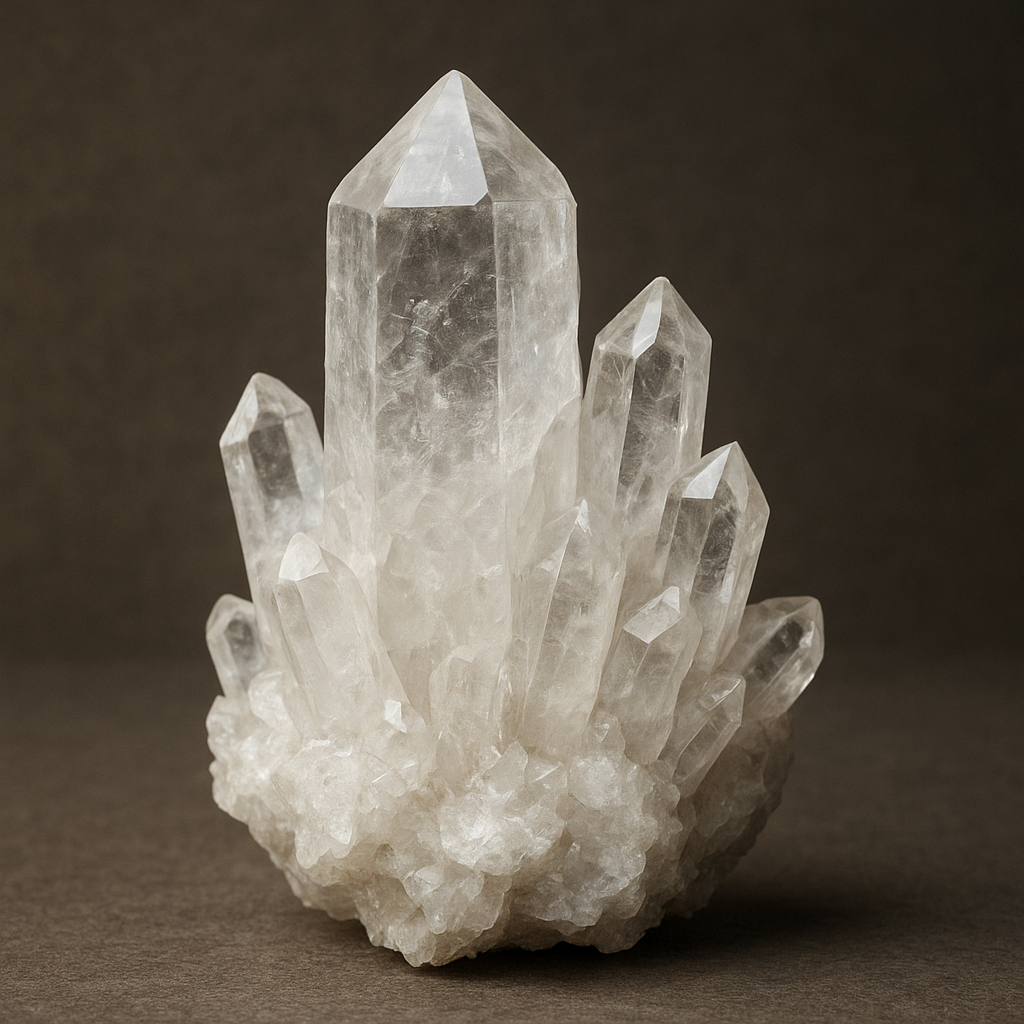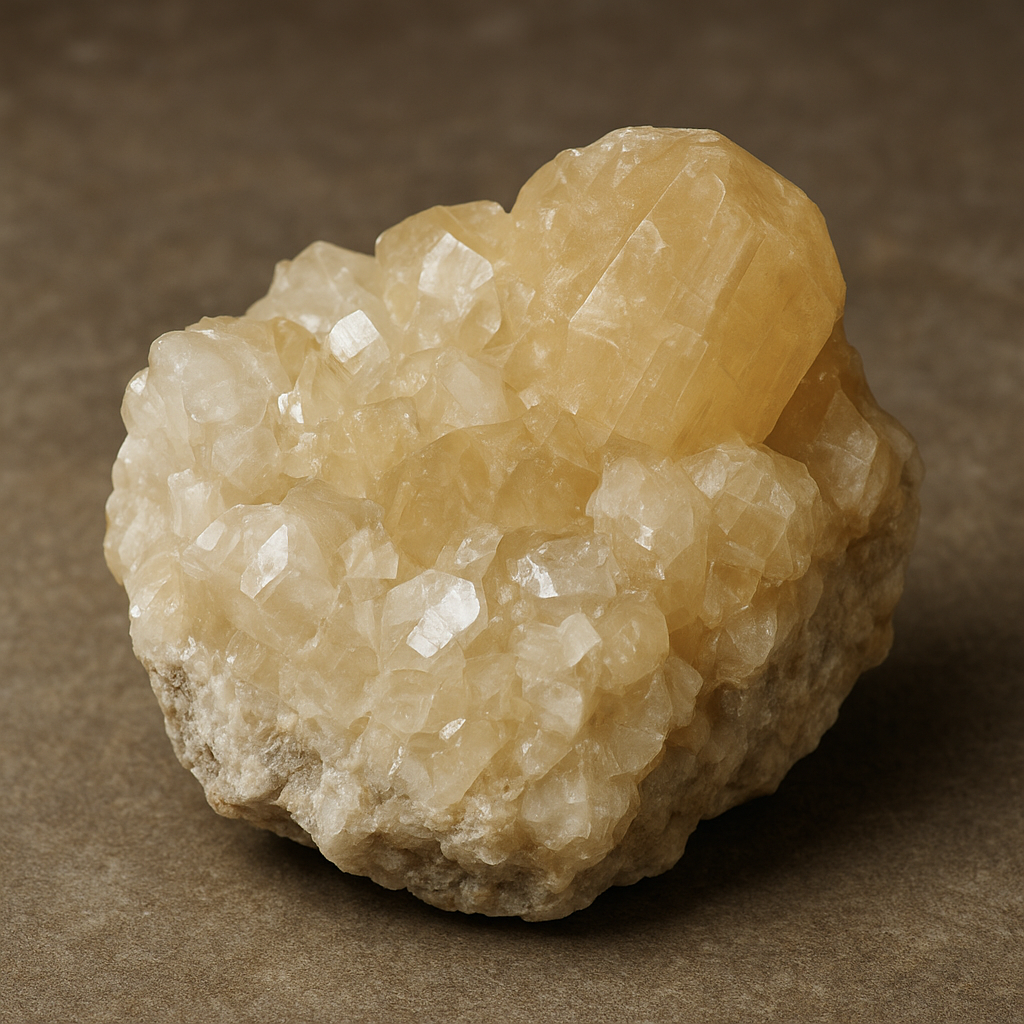
Calcite is one of the most abundant and versatile minerals on Earth, found from the depths of marine sediments to the peaks of metamorphic mountains and in hot spring deposits. Its chemical composition, calcium carbonate, and its range of crystal habits make it central to geology, industry and biology. This article explores the mineral’s physical and chemical properties, its global occurrences, its many uses, and a range of interesting phenomena and historical notes connected to it.
Physical and Chemical Properties
Calcite is a carbonate mineral with the chemical formula CaCO3. It crystallizes in the trigonal (rhombohedral) system and commonly forms well-developed single crystals as well as massive, granular, and crystalline aggregates. The mineral’s typical hardness on the Mohs scale is about 3, and its specific gravity averages around 2.7. A few hallmark properties set calcite apart from many other minerals.
Crystal habit and structure
- Common habits include scalenohedral (often termed “dogtooth spar”), rhombohedral, prismatic and tabular forms. These forms reflect the underlying trigonal symmetry of the mineral.
- Clefts and twinning are frequent: calcite exhibits perfect rhombohedral cleavage in three directions, producing characteristic rhombohedron-shaped fragments when broken.
Optical behavior
A particularly striking optical property is strong birefringence (double refraction) in transparent, well-formed crystals. Light entering a clear calcite crystal is split into two rays, producing doubled images of objects viewed through the crystal. Historically, large clear crystals known as Iceland spar were used in optical experiments and for early polarizing devices. Calcite is biaxial in optical classification, and many optical phenomena associated with it have been crucial in the development of mineral optics and crystallography.
Chemistry and reactivity
- Calcite reacts vigorously with dilute acids (e.g., hydrochloric acid) by effervescing and releasing carbon dioxide (CO2). This reaction is a classic field test used by geologists to identify carbonate minerals.
- Solubility is limited but significant in the presence of slightly acidic waters; calcite dissolution and precipitation play central roles in karst formation and speleothem growth.
Occurrence and Geological Context
Calcite appears in an extraordinary variety of geological environments. It is the principal constituent of sedimentary limestones and the major component of marine and freshwater carbonates, but it also forms in hydrothermal veins, in caves, around hot springs, and as a product of biological activity.
Sedimentary settings
Most of Earth’s calcite is tied up in sedimentary rocks such as limestone and chalk. These accumulate from the compacted and recrystallized remains of organisms (shells, corals, foraminifera), chemical precipitation in warm shallow seas, and the agglomeration of carbonate grains (ooids forming oolitic limestone). Extensive limestone platforms and plateaus form important reservoirs and aquifers and underpin much of the planet’s carbonate rock record.
Metamorphism and igneous associations
Under heat and pressure, calcareous sediments can recrystallize into marble, a coarse-grained metamorphic rock prized by sculptors and architects. Calcite can also be found as a gangue mineral in hydrothermal veins associated with metallic ore deposits and in veins cutting igneous rocks.
Cave deposits and surface precipitates
Caves are iconic locations for calcite deposition: water percolating through carbonate rocks dissolves CaCO3 and, upon entering cave passages with different CO2 conditions, precipitates calcite to form speleothems such as stalactites and stalagmites. Travertine and tufas form in surface settings where carbonate-rich waters precipitate calcite rapidly, often around springs and waterfalls. These deposits can form spectacular terraces and massive deposits over relatively short geological times.
Varieties and Aesthetic Forms
Calcite’s visual diversity is remarkable. It ranges from transparent, gem-like crystals to dull opaque masses. Colors can be white, colorless, yellow, orange, green, blue, pink, and brown depending on impurities, inclusions, or structural defects.
Special optical varieties
Iceland spar — a clear, colorless, well-formed crystal of calcite — is famous for its clearness and intense double refraction. Historically used in polarizing optics and in navigation devices, Iceland spar remains an object of fascination for collectors and optical researchers.
Common decorative and collector forms
- Dogtooth spar: sharp scalenohedral crystals resembling canine teeth.
- Massive calcite: forms large, compact nodules, often used in construction as limestone or marble.
- Onyx and banded calcite: banded varieties used as ornamental stone and sometimes mistaken for true onyx (an agate).
- Fluorescent calcite: some calcite specimens glow under ultraviolet light due to activator impurities such as manganese or rare earth elements.
Industrial and Practical Uses
The significance of calcite in human industry is enormous. The mineral and its rock forms (limestone, chalk, marble, travertine) have been fundamental to construction, manufacturing, agriculture, and chemistry for millennia.
Construction and materials
- Limestone and marble have been used as building stones and for sculpture since antiquity. Travertine was extensively used by Romans for architecture and is still chosen for facades, tiles, and decorative cladding.
- The production of lime (CaO) by calcination of limestone is a cornerstone of cement manufacture and steel production, and lime itself is used in mortar and to treat soils.
- Aggregates derived from carbonate rocks serve as base materials in road construction and concrete.
Manufacturing and fillers
Finely ground calcite, or precipitated calcium carbonate, is widely used as a filler and coating in paper, paint, plastics, rubber, and adhesives. It modifies physical properties, reduces production costs and can enhance brightness and opacity in paper and paints.
Chemical and environmental uses
- Calcite acts as an acid neutralizer in soil and water treatment (e.g., flue gas desulfurization uses limestone to remove sulfur dioxide).
- It is an ingredient in antacids and is used as a calcium supplement in animal feed.
- There is growing interest in mineral carbonation (using carbonate minerals to permanently trap CO2) where calcite and related reactions are a focus of carbon sequestration research.
Biological and Environmental Importance
Calcite plays a central role in biological systems and the broader carbon cycle. Many marine organisms build their shells and skeletons from calcite and aragonite (a polymorph of CaCO3), influencing how carbon is transferred between the atmosphere, ocean, and lithosphere.
Biomineralization
Organisms such as mollusks, echinoderms, corals and some plankton precipitate calcium carbonate to form shells and skeletons. The abundance and distribution of these organisms have historically shaped vast carbonate platforms and created sedimentary records that scientists use to reconstruct past environments.
Paleoclimate and isotope proxies
Isotopic compositions of carbonate minerals are powerful tools in paleoclimate research. Ratios such as 13C/12C and 18O/16O within calcite shells and speleothems provide records of past temperatures, ice volume, and bioproductivity. For this reason, calcite is often analyzed in geochemical labs to interpret ancient climates and sea-level changes. The term isotope measurements is central to many such studies, linking chemistry to geology and climate science.
Environmental vulnerabilities
Calcite is sensitive to acidification: acid rain and increased CO2 leading to ocean acidification can enhance dissolution of carbonate structures, threatening coral reefs and shell-forming organisms. Karst landscapes, underlain by soluble carbonate rocks, are also vulnerable to groundwater contamination and rapid geomorphological change due to dissolution processes.
Historical, Cultural and Scientific Anecdotes
Calcite’s historical footprint is broad: from architectural stone in ancient monuments to the optical experiments that shaped our understanding of light.
- Romans and Greeks extensively quarried and used calcitic marbles and travertines for temples, statues and public buildings.
- Iceland spar was instrumental in early optical research; the crystal’s double refraction puzzled and fascinated scientists such as Erasmus Bartholinus and Christiaan Huygens in the 17th century, leading to advances in the study of light and polarization.
- Speleothems from caves yield long-term climate records; dating and isotopic analysis of calcite deposits can reveal millennia of climatic variability with high resolution.
Collecting, Identification and Handling
Calcite is a favorite among mineral collectors due to its diverse habits and frequent appearance in attractive crystal forms. Identification in the field is straightforward due to several diagnostic features.
Practical identification tips
- Acid test: a drop of dilute HCl effervesces on calcite, producing CO2 bubbles.
- Cleavage test: calcite breaks along perfect rhombohedral planes, often yielding characteristic shapes.
- Optical test: clear crystals show double images for objects viewed through them, indicating crystal clarity and birefringence.
- Hardness: relatively soft—calcite can be scratched by a copper coin or a steel knife (Mohs ~3).
Conservation and safety
Collectors should avoid exposing calcite specimens to strong acids or prolonged moisture and store fragile crystals with padding. Because calcite can be easily scratched, display and storage with soft supports is recommended. In archaeological and architectural contexts, conservation of calcitic stonework must consider the impacts of pollution and biological colonization.
Scientific Research and Modern Applications
Calcite remains a lively subject in modern research across disciplines including materials science, environmental engineering, and geochemistry. Scientists explore crystal growth mechanisms, the role of organic molecules in biomineralization, and how carbonate systems respond to environmental change.
Materials science and biomimetics
Researchers study natural calcite growth to inspire synthetic materials with novel optical, structural, or surface properties. Understanding how organisms control calcite nucleation and growth at the nanoscale is informing biomimetic strategies for advanced composites and functional coatings.
Carbon management
Because calcite formation and dissolution are tied to carbon fluxes, they are central to proposed carbon management strategies. Studies of accelerated mineral carbonation, using silicate rocks or industrial wastes to form stable carbonate minerals, often take lessons from natural calcite precipitation kinetics and thermodynamics.
Geochemical archives
Speleothems, foraminifera shells and cave deposits composed of calcite are continuously mined by scientists for high-resolution climate and environmental records. Advances in micro-analytical techniques enable isotope, trace element and growth band studies at subannual scales, yielding insights into past droughts, monsoons, and oceanographic shifts.
Interesting and Lesser-known Facts
- Calcite and its polymorph aragonite have the same chemistry but different crystal structures; aragonite is more stable at higher pressures and often forms in marine organisms, while diagenetic processes can convert aragonite to calcite over geological timescales.
- Clear calcite crystals were once used by polar explorers as a primitive sunstone, a tool to locate the sun’s position under cloudy skies by analyzing polarization—an idea rooted in historical Viking sagas and modern experimental support.
- The largest single calcite crystals found are several meters across and have been recovered from certain carbonate vein deposits and evaporitic environments.
- Massive calcite precipitation in caves can record seasonal changes as growth bands, similar to tree rings, making speleothems excellent archives for seasonal and annual climate records.
Calcite’s ubiquity and versatility—spanning disciplines from architecture to cutting-edge climate science—make it a mineral of central importance. Whether encountered as a clear, double-refracting crystal, as the bedrock beneath a landscape, or as the skeleton of a tiny marine organism, calcite connects human culture, industry and natural systems in myriad fascinating ways. Its role in the carbon cycle alone ensures that calcite will remain an object of scientific and practical interest for centuries to come.