
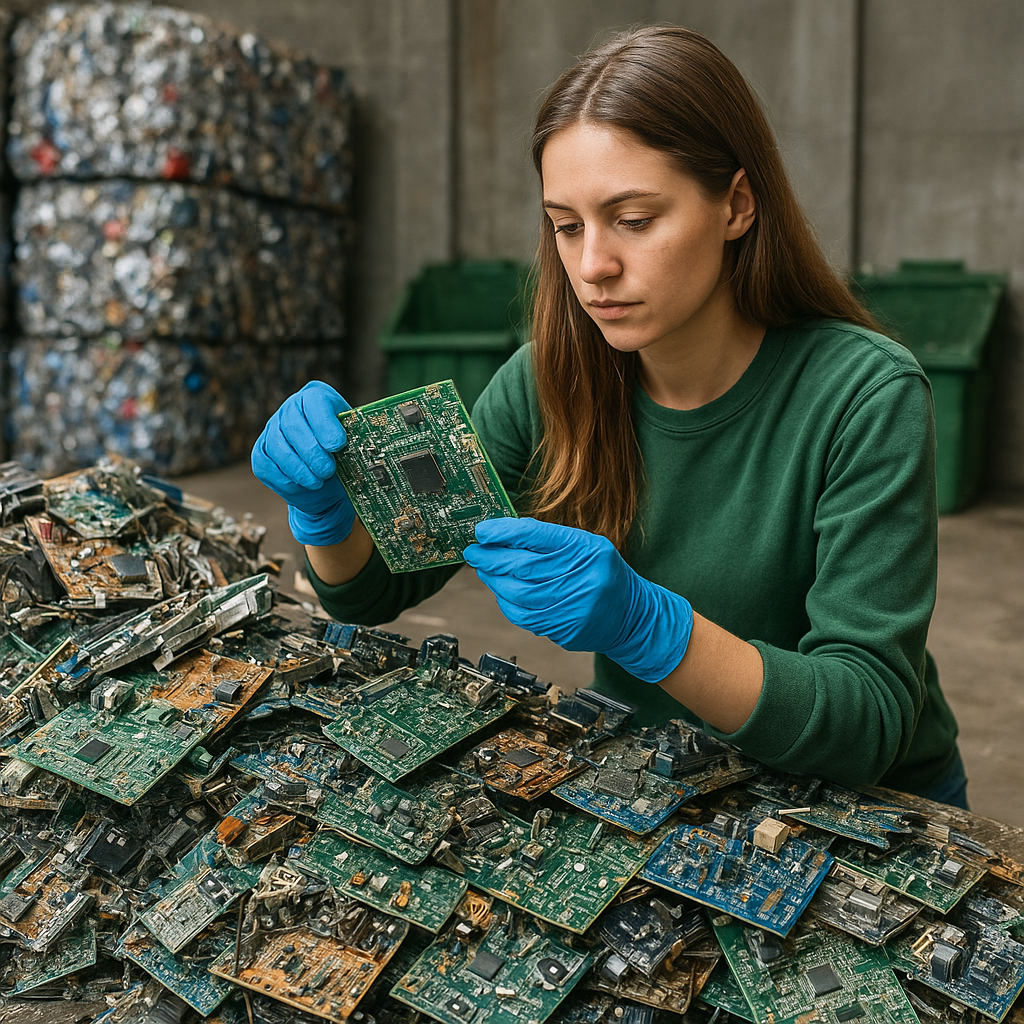
The transition to low-carbon technologies and the rapid growth of consumer electronics have thrust certain materials into the global spotlight. As scarcity, geopolitical concentration of reserves, and environmental concerns collide, new strategies for securing resources are emerging. This article explores how recycling could reshape the market for rare metals, examines the technical and economic pathways to scale secondary supply, and assesses the consequences for industry, policy, and the environment.
Market dynamics and strategic importance
Rare metals — often labeled critical or strategic — include elements such as lithium, cobalt, rare earth elements, platinum-group metals and others essential for batteries, magnets, catalysts, and electronics. The interplay of geological scarcity, concentrated production in a few countries, and surging demand from electric vehicles (EVs), renewable energy systems, and high-tech manufacturing has driven price volatility and supply concerns.
Two fundamental forces shape the market: long-term structural supply limits and rapidly rising demand trajectories for clean technologies. Mining expansions can take a decade or more, subject to permitting, social license, and capital constraints. In contrast, demand can surge quickly when policies accelerate EV adoption or when new technologies proliferate. This temporal mismatch creates opportunities for recycled materials to act as a flexible buffer, reducing dependence on primary extraction and mitigating supply shocks.
Beyond quantity, geopolitical risk is a major factor. Concentration of refining and processing capabilities in specific regions amplifies vulnerability to trade tensions. Diversifying sources via secondary supply chains — including urban recovery from end-of-life products — is increasingly considered a national security and industrial policy priority.
Technological pathways for recycling rare metals
Recycling of rare metals is not a single technology but a portfolio of processes tailored to material type and product form. Common approaches include mechanical disassembly, pyrometallurgical smelting, hydrometallurgical leaching, solvent extraction, and direct recycling techniques that preserve cathode structures. Each route offers trade-offs in recovery rates, environmental footprint, energy intensity, and economic viability.
Collection and pre-processing challenges
Effective recycling begins with collection. Fragmented waste streams — such as small consumer electronics, mixed batteries, or complex automotive components — complicate recovery. Designing systems to aggregate, sort, and pre-treat feedstock is as crucial as the downstream chemistry. Advances in sensor-based sorting, automated disassembly, and traceability can increase the efficiency of feedstock preparation.
Material-specific methods
- Battery materials: Mechanical separation followed by hydrometallurgical processes can recover lithium, cobalt, nickel, and manganese. New direct recycling approaches aim to refurbish cathode active material with lower energy input and less chemical waste.
- Rare earths: Physically separating magnets and applying chemical separation or electrochemical approaches can reclaim neodymium, dysprosium, and praseodymium used in permanent magnets.
- Precious metals: Established recycling flows exist for gold, silver, and platinum-group metals due to their high value, but scaling collection of low-volume sources remains a hurdle.
Technological innovation is improving recovery rates and reducing costs, but scaling requires integrating these technologies into robust supply chains and creating incentives to collect end-of-life products.
Economic, policy and environmental implications
Expanding recycling could have profound macroeconomic impacts. Increased secondary supply can moderate price spikes, reduce import dependency, and localize portions of the value chain. For companies, predictable access to recycled inputs may lower exposure to commodity cycles and strengthen sustainability credentials.
However, economics are complex. High labor and processing costs, low concentrations of target metals in many products, and variability in feedstock quality can make recycling uneconomic without policy support. Public policy tools to stimulate the sector include extended producer responsibility (EPR), recycling mandates, subsidies for collection infrastructure, tax credits for recycled content, and public procurement preferences for products with circular material sourcing.
Environmental considerations are central to the argument for expanded recycling. When properly managed, recycling can reduce greenhouse gas emissions, lessen land disturbance and water impacts relative to primary mining, and decrease tailings and waste. Yet, recycling processes themselves can be energy- and chemical-intensive; hence the lifecycle benefits depend on technology choices, energy sources, and regulatory standards.
Business models and market restructuring
As recycling scales, new business models will emerge. Options include specialized processors selling refined metals to smelters and manufacturers, vertically integrated firms controlling product take-back, and platform operators connecting consumers, collectors, and recyclers. Secondary material markets could develop indices and futures to hedge risk and improve price discovery.
Recycled metals may trade at a premium in some contexts due to lower carbon footprints or supply security benefits. Conversely, abundant secondary supply could depress prices for certain metals, affecting the economics of new mining projects and potentially creating winners and losers across producing regions and companies.
- Benefits: reduced import reliance, job creation in recycling and refurbishment, lower lifecycle emissions, and supply flexibility.
- Challenges: collection logistics, variable feedstock, capital expenditure for processing facilities, regulatory complexity, and ensuring environmental safeguards.
Regional and global implications
Different regions will experience the transformation unevenly. Industrialized economies with dense electronic waste streams and strong regulatory frameworks are well-positioned to capture early benefits of urban mining. Emerging economies that currently host primary extraction could face economic dislocation if downstream value migrates to recycling hubs elsewhere. At the same time, new opportunities arise for building local processing capacity and capturing more value domestically.
International cooperation and standard-setting can help. Harmonized definitions of recycled content, cross-border shipment rules, and best-practice environmental regulations reduce friction and prevent regulatory arbitrage. Public-private partnerships can accelerate collection networks and fund pilot plants demonstrating commercial viability.
Scenarios and outlook
Several plausible futures illustrate how recycling could reshape the rare metals market:
- Optimistic scenario: Rapid technological advances, supportive policies (EPR, mandates, subsidies), and robust collection systems scale recycling. Secondary supply meets a significant share of demand for certain metals, reducing price volatility and improving resilience of clean-tech supply chains.
- Incremental scenario: Gradual improvements in recovery technologies and modest policy support yield steady but limited growth in recycling. Secondary supply supplements but does not supplant primary mining, and localized benefits accrue in regions with strong waste infrastructure.
- Stalled scenario: High costs, weak collection, and lack of policy incentives keep recycling niche. Continued reliance on primary extraction perpetuates geopolitical concentration and environmental impacts.
Which path unfolds will depend on coordination among industry, governments, and consumers. Investment in R&D, expansion of collection networks, and transparent standards for recycled content are essential building blocks for any accelerated transition.
Practical steps to accelerate recycling adoption
Stakeholders can take concrete actions now:
- Policymakers: Implement EPR schemes, fund collection infrastructure, and set recycled-content targets for public procurement.
- Industry: Design products for disassembly and material recovery, invest in closed-loop supply chains, and create take-back programs with clear incentives for consumers.
- Researchers and innovators: Prioritize low-energy recovery processes, scalable direct recycling methods for batteries, and techniques to separate complex material blends.
- Consumers: Participate in take-back schemes and prefer products with transparent recycling pathways and lower lifecycle impacts.
Transitioning to a market where recycled materials play a central role is not a silver bullet, but it can be a powerful lever. By combining technological innovation, smart policy, and coordinated industry efforts, recycling can enhance resource security, support a circular economy, and contribute to broader sustainability goals.
