Moonstone is a captivating gem that evokes the cool, shifting light of the night sky. Its shimmering sheen and soft colors have inspired artisans, collectors, and storytellers for centuries. In this article I explore the geology, distribution, uses, cutting techniques, cultural meanings, and modern applications of this extraordinary stone, providing scientific background as well as engaging anecdotes and practical guidance for anyone interested in gemstones.
Geology and Formation: What Makes the Stone Glow
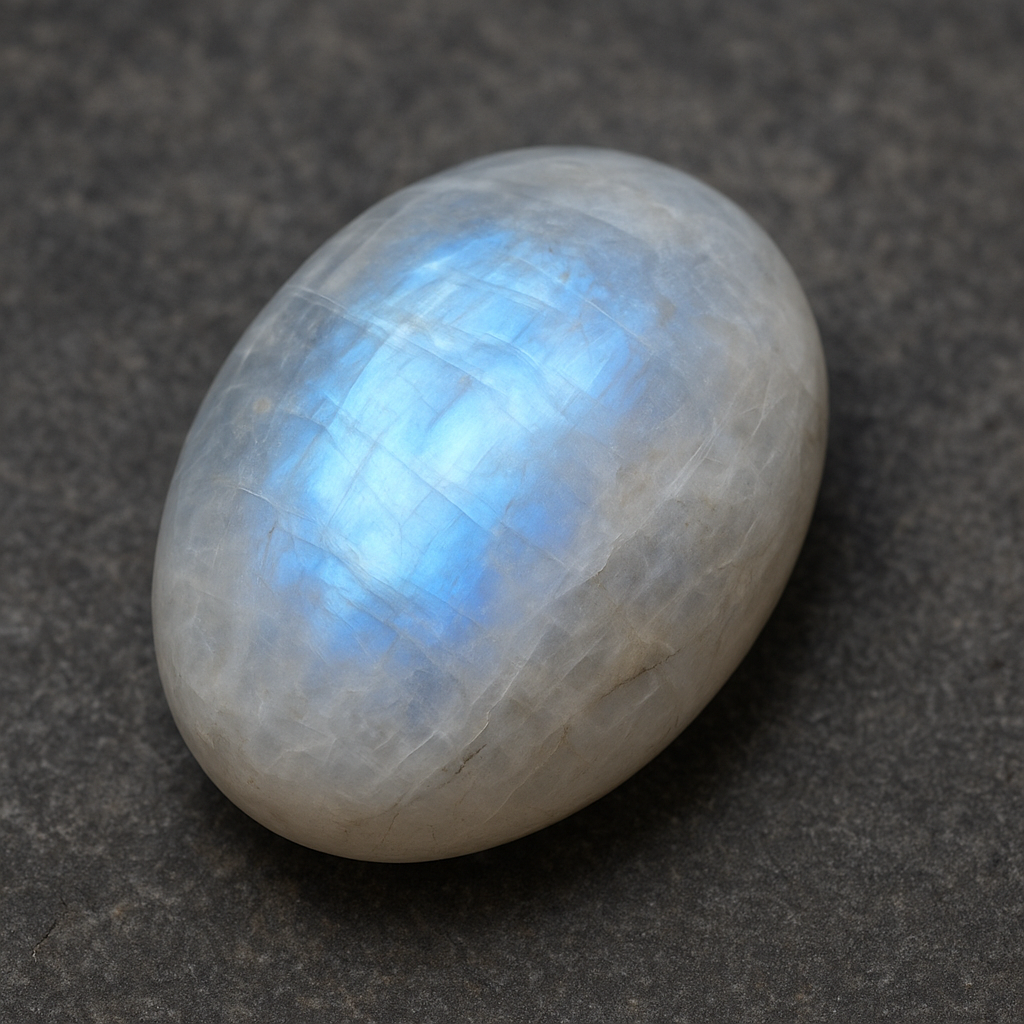
The gem commonly called moonstone belongs to the larger family of potassium and sodium feldspar minerals. The characteristic inner glow — an optical phenomenon often described as a floating, pearly light — is known as adularescence. This effect is produced by microscopic layering of two types of feldspar, typically orthoclase and albite, which form during the slow cooling of igneous rocks. Light entering the stone scatters across those thin lamellae and interferes, creating the appearance of light moving just under the surface. The precise color, intensity, and movement of the sheen depend on layer thickness, purity, and orientation.
Moonstone typically forms in pegmatites associated with granitic intrusions, and it can also occur in certain metamorphic environments where recrystallization allows feldspar to separate into thin lamellae. The crystallographic structure and cleavage of feldspar influence how the material fractures and splits, which in turn affects how stones are cut and oriented to maximize the optical effect.
Mineral Varieties and Related Optical Effects
- Adularescence — the hallmark bluish or white glow seen in many moonstones.
- Schiller and aventurescence — related phenomena produced by reflective mineral inclusions rather than lamellar interference.
- Diffraction effects — in a few rare specimens, a rainbow-like flash can appear when the lamellae create finer interference patterns; these are often marketed as “rainbow moonstone” or marketed with other trade names.
Primary Sources: Where Moonstone Is Found
Moonstone is mined in several parts of the world. Some locations produce large, high-quality gems; others yield material used for cabochons or ornamental carving. Notable sources include Sri Lanka, where the finest blue adularescent material is often found, and India, famous for more translucent and sometimes multicolored varieties. Madagascar and parts of East Africa produce strong, attractive stones that vary from pale cream to gray. Smaller deposits exist in Australia, Norway, Myanmar, the United States, and Brazil.
Each locality tends to produce distinctive material. Sri Lankan moonstone is prized for a clear body color with a deep, almost electric blue adularescence. Indian material is widely available and is often used for larger decorative pieces. Madagascar and Australian stones may have warmer tones and are increasingly important in the international trade.
How Deposits Are Worked
- Small-scale artisanal mining is common in many regions; miners search alluvial gravels or weathered pegmatite outcrops.
- In some areas pegmatite quarries operate with heavier equipment, extracting large blocks for cutting into slabs and then cabochons.
- Environmental and social concerns vary; responsible sourcing is an important consideration for buyers seeking ethically produced gemstones.
Cutting, Polishing, and Setting: Making the Most of the Sheen
To display adularescence most effectively, moonstone is almost always cut as a cabochon — a smooth, domed surface — rather than faceted. The cabochon shape allows light to skim across the layered structure and produce a visible sheen that appears to move. Cutters must orient the dome perpendicular to the lamellae to maximize the effect. If cut incorrectly, a stone will appear dull and its adularescence will be weak or entirely absent.
Skilled lapidaries look for the best direction of sheen in a rough piece and plan the cut accordingly. Thinner stones or slices can show a directional flash that is visible only at certain angles; for jewelry that will move with the wearer, a well-oriented cabochon provides continuous appeal.
Popular Settings and Styles
- Moonstone is widely used in rings, earrings, pendants, and brooches. It pairs well with both silver and gold settings.
- Because moonstone is relatively soft (see hardness below), bezel settings that protect the edge are often recommended for rings or pieces subject to wear.
- Art Nouveau and contemporary designers have used moonstone extensively for pieces that emphasize organic shapes and gentle light.
Physical Properties and Care
Understanding the physical properties is key to using moonstone safely in wearable pieces. The Mohs hardness typically ranges from about 6 to 6.5. The stone usually has perfect cleavage in two directions, making it susceptible to chipping or splitting when struck. Although it is durable enough for everyday jewelry if treated carefully, moonstone requires more care than harder gems like sapphire or diamond.
Care recommendations:
- Avoid ultrasonic cleaners and steam cleaning; these can damage the stone or worsen existing cleavage weaknesses.
- Clean gently with mild soapy water and a soft brush, then dry with a soft cloth.
- Protect from hard knocks; remove rings for heavy tasks and sports.
- Store separately from harder gems to prevent scratching.
Applications: Jewelry, Art, and Beyond
Moonstone is primarily valued as a gem material for jewelry. Its soft sheen lends itself to romantic and understated designs. In addition to conventional jewelry, moonstone has been used in small sculpture, intaglios, and inlay work. Because of its association with the moon, it sometimes appears in objects intended to convey symbolic meaning — talismans, wedding pieces, and items connected to feminine symbolism.
Beyond decorative uses, moonstone has little industrial application compared to other feldspars that are used in ceramics and glass. However, the study of its optical properties has informed research in crystallography and materials science, particularly regarding light scattering in layered structures — a principle used in engineered optical films and coatings.
Historical and Cultural Significance
Moonstone has a long cultural history. In antiquity, the Romans admired moonstone, believing it formed from moonlight. In Indian tradition, moonstone has been associated with love, fortune, and protection; it has been used in jewelry and as a talisman for travelers and lovers. European folklore sometimes linked moonstone with lunar cycles and feminine mystery, often making it a gemstone of choice for brides and those seeking emotional balance.
During the late 19th and early 20th centuries, moonstone enjoyed popularity in the Art Nouveau movement, where designers such as René Lalique and others used it for its dreamlike quality. The gem’s subtle shimmer complemented the flowing lines and natural motifs of that era.
Folklore and Modern Spiritual Uses
In contemporary metaphysical circles, moonstone is often credited with calming properties, emotional balance, and enhanced intuition. While such attributes are not scientifically proven, they form an important part of the gem’s cultural value and have contributed to its sustained popularity. Collectors and wearers sometimes choose moonstone for symbolic reasons — to mark new beginnings, support emotional healing, or celebrate connections to feminine cycles.
Varieties, Imitations, and Synthetics
There are several market names and trade distinctions that can confuse buyers. “Blue moonstone” generally refers to high-quality Sri Lankan material with a strong blue flash. “Rainbow moonstone” is often actually a form of white labradorite or feldspar that shows multiple colors in certain lights; it is sold under that name because the adularescence has a multi-hued, iridescent quality.
Imitations are common. Glass can be made to imitate adularescence by adding tiny reflective inclusions. Man-made materials such as synthetic opalescent glasses or plastic beads can be passed off as moonstone in lower-end markets. Some trade-named materials like “moonstone glass” are simply marketed as decorative substitutes. For collectors and serious buyers, gemological testing (refractive index, specific gravity, and microscopic examination) can distinguish natural feldspar from imitations.
Economic and Ethical Considerations
Moonstone is an accessible gemstone — prices vary widely depending on color intensity, clarity, size, and the quality of adularescence. High-quality blue-flashing stones from Sri Lanka can command considerable prices per carat, while common, milky material is affordable and widely used in fashion jewelry.
Like other gemstones, ethical sourcing is a concern. Mining can be artisanal and small-scale, sometimes taking place in communities with limited oversight. Buyers interested in responsible practices should ask jewelers about origin, labor practices, and whether any local environmental remediation is performed. Certifications and supply-chain transparency are emerging trends in the colored-gem market and can help conscientious consumers make informed choices.
Collecting and Appreciating Moonstone
Collectors prize specimens that combine clarity of body color with a strong, well-centered adularescence. A large cabochon with a clearly visible blue flash that appears to move as the stone is tilted is especially desirable. In specimen collecting, stones that reveal the underlying lamellar structure under magnification or display unusual interference patterns may command special interest.
When evaluating a moonstone, consider:
- Color — body color should be complementary to the flash; dark body colors can mute the sheen.
- Clarity — fewer internal fractures and inclusions generally increase value, though some inclusions can create attractive effects.
- Flash quality — its intensity, color, and movement are decisive in assessing desirability.
- Cut and orientation — a well-cut cabochon shows the effect cleanly and maximizes the optical play.
Scientific and Educational Interest
Moonstone continues to be of scientific interest because its adularescence is a clear, observable example of lamellar interference in minerals. Researchers study such structures to better understand how natural nanoscale layering influences optical properties. Insights gained from these studies can inform engineered materials that mimic natural optical effects for use in coatings, sensors, and decorative films.
Educationally, moonstone is an excellent gemstone to teach about crystallography, light interaction with matter, and how geological processes produce materials with particular optical characteristics. Museums with gem collections often feature moonstone as a demonstration of interference effects in nature.
Interesting Varieties and Famous Uses
Some of the most talked-about moonstones in the gem world are large carved pieces and museum-quality cabochons with exceptional blue flashes. Historically important pieces have been mounted in symbolic jewelry or kept as curiosities in private collections. In contemporary design, moonstone remains a favorite with jewelers who want a softer, more ethereal look than the brightness of faceted gems provides.
Because the stone is associated with the moon and its cycles, it frequently appears in themed collections — lunar-inspired designs, wedding jewelry to symbolize new phases of life, and spiritual pieces meant to encourage reflection and calm.
Conclusion: The Enduring Appeal of a Subtle Gem
Moonstone’s lasting appeal comes from its ability to capture a fleeting quality of light and hold it within a small stone. Whether admired for its geological story, used in carefully crafted jewelry, or cherished for its cultural and symbolic meanings, moonstone offers a bridge between the natural world and human imagination. From the pegmatite pockets that yield rough crystals to the hands of skilled cutters and the settings of thoughtful designers, the journey of moonstone is as layered and luminous as the mineral itself.