
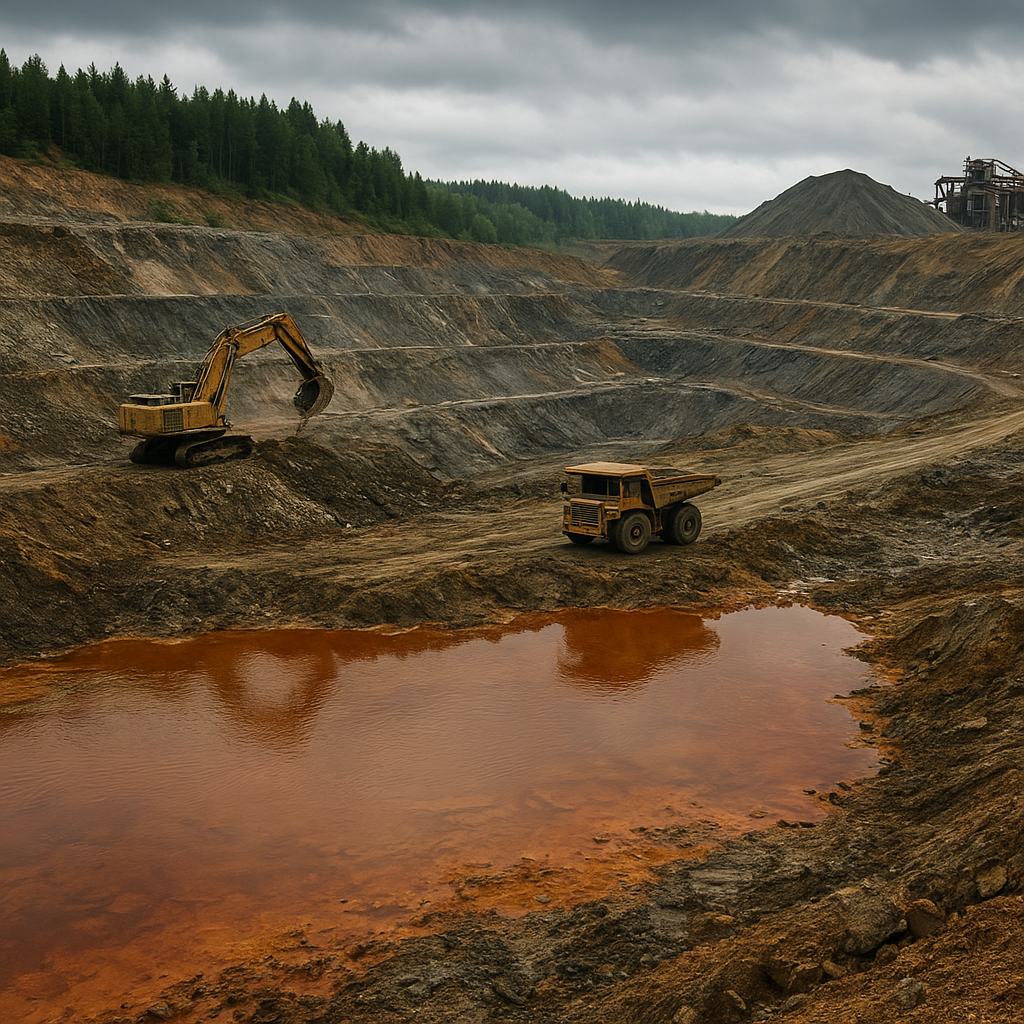
The global demand for technologies such as smartphones, electric vehicles, wind turbines and military systems has driven a rapid increase in extraction of rare and critical metals. These metals — including lithium, cobalt, rare earth elements, tantalum and others — are often concentrated in geographically restricted deposits that are difficult to mine without large-scale disturbance. This article examines the complex environmental impacts associated with rare metal mining operations, explores social and economic dimensions, and outlines mitigation pathways that policymakers, industry and communities can pursue to reduce harm while meeting material needs.
Environmental footprints of rare metal extraction
Mining activities create a suite of interlinked environmental pressures. At the most immediate scale, the clearing of vegetation and excavation for open-pit and underground mines result in habitat fragmentation and loss. The disturbance often extends beyond the active mine: access roads, processing plants, worker camps and power lines all expand the footprint. Soil erosion and altered hydrology change runoff patterns and can lead to sedimentation of downstream ecosystems.
Water contamination and tailings management
Ore processing commonly involves physical and chemical separation techniques that produce large volumes of waste rock and slurry known as tailings. These tailings may contain residual heavy metals and processing chemicals such as sulphuric acid, which can leach into groundwater or surface waters if not properly contained. A persistent risk is acid mine drainage, where sulfide minerals oxidize when exposed to air and water, producing acidic effluent that mobilizes toxic metals. Contaminated water can affect aquatic life, agriculture and human drinking supplies for decades.
Air quality and greenhouse gas emissions
Crushing, grinding and smelting operations release particulate matter and gaseous pollutants including sulfur dioxide and nitrogen oxides. These emissions degrade local air quality and pose respiratory risks. The energy-intensive nature of mineral processing results in significant carbon dioxide emissions, contributing to the broader issue of greenhouse gases. Where fossil fuels power operations, the carbon footprint of extracted metals can be substantial.
Biodiversity loss and ecosystem change
Rare metal deposits are often found in biologically rich regions such as tropical forests, mountain ranges, and wetlands. Clearing these habitats reduces species richness and can eliminate endemic organisms. Indirect impacts — such as increased hunting, invasive species introduction, and disruption of pollinator networks — further erode ecosystem resilience. The loss of biodiversity undermines ecosystem services that communities rely on for food, water regulation and cultural values.
Human health, social and economic impacts
Communities near mining operations can experience a range of socioeconomic disruptions. While mines can provide employment and infrastructure, benefits are frequently uneven. Conflicts over land tenure, displacement, and loss of traditional livelihoods can exacerbate poverty and social tensions. Occupational hazards for miners include exposure to dust, heavy metals and chemical hazards that can lead to chronic illnesses and acute poisonings.
Contamination pathways and public health
Metals like lead, mercury and arsenic often occur as impurities or are used in processing. These elements can enter food chains via contaminated water, soils and crops, posing long-term risks such as neurological damage and increased cancer incidence. Bioaccumulation of certain elements through fish and livestock can extend exposure to humans far from the mine site. Monitoring and health surveillance are often lacking in regions with rapid mining expansion.
Economic dependence and governance
Mining-driven economies can become dependent on a single commodity, creating vulnerability to price volatility. Weak governance structures may enable illicit mining, unfair contracts, and inadequate environmental safeguards. Strengthening governance — through transparent permitting, benefit-sharing agreements and regulatory enforcement — is critical to ensuring that revenues support long-term development rather than short-lived booms.
Mitigation, remediation and sustainable alternatives
Reducing the environmental footprint of rare metal extraction requires a combination of operational best practices, policy reform and innovation. Approaches range from on-site mitigation measures to supply chain transformations and circular economy strategies.
Best practices in mining operations
- Implementing progressive rehabilitation to restore vegetation and landscape function during the life of the mine rather than after closure.
- Investing in robust tailings storage facilities with modern liners, monitoring systems and emergency plans to prevent catastrophic failures.
- Adopting water-efficient processing technologies and closed-loop water systems to minimize freshwater withdrawals and effluent discharges.
- Using renewable energy sources and electrifying equipment where feasible to reduce the carbon intensity of extraction and processing.
Remediation and pollution control
Where contamination has occurred, active remediation techniques include treatment wetlands to remove metals, chemical neutralization of acidic waters, and physical containment of contaminated soils. Phytoremediation — using plants to uptake and stabilize metals — can be a cost-effective complement in some contexts, though it is often slow and species-specific. Long-term monitoring is essential to ensure remedial measures remain effective.
Designing for recycling and resource efficiency
Improving material efficiency and recycling can dramatically reduce the need for primary extraction. Designing products for disassembly and material recovery, expanding recycling infrastructure, and recovering metals from electronic waste and spent batteries are central strategies. Urban mining — reclaiming metals from discarded devices and industrial residues — can supply significant quantities of critical metals if supported by technology and policy. Prioritizing recycling reduces ecological impacts, energy use and reliance on geopolitically concentrated resources.
Policy, governance and international cooperation
Effective responses to the environmental challenges of rare metal mining require integrated policy frameworks that align environmental protection with economic development. This includes clear environmental impact assessment processes, strict permitting criteria, and community consultation mechanisms. International cooperation can address transboundary pollution risks and supply chain transparency.
Certification, transparency and supply chains
Certification schemes and mandatory due diligence can improve accountability throughout supply chains. Traceability initiatives help companies and consumers identify the origin of metals and prefer sources with higher environmental and social standards. Trade policies and import regulations can incentivize responsible sourcing and penalize practices that lead to severe environmental harm.
Supporting a circular economy and innovation
Transitioning to a circular model reduces primary extraction pressures. Policies to promote product longevity, repairability and recycling create markets for secondary materials. Public investments in research can lower the cost and increase the efficiency of metal recovery technologies, alternative material development, and less polluting processing techniques.
Emerging technologies and future pathways
Technological innovation offers promising directions to lessen environmental impacts. Direct extraction methods for lithium from brines aim to reduce water consumption and surface disturbance. Advances in hydrometallurgy and metallurgical recycling can recover metals with lower energy use compared with traditional smelting. Autonomous monitoring using remote sensing and real-time sensors improves environmental compliance by detecting leaks and contamination earlier.
Community-centered and indigenous approaches
Meaningful engagement with local and indigenous communities can improve outcomes by integrating traditional ecological knowledge into planning and by ensuring informed consent for land use changes. Benefit-sharing schemes, local hiring and capacity-building strengthen social license to operate and can reduce conflict.
Investment in resilience and research
Research priorities include understanding long-term ecological recovery trajectories, improving low-cost remediation methods, and developing robust lifecycle assessments for metals that incorporate environmental and social externalities. Financial mechanisms — such as environmental bonds, mine closure funds and insurance — can ensure that companies are held accountable for post-closure responsibilities.
Addressing the environmental impacts of rare metal mining will be a defining challenge of the transition to low-carbon and digital economies. Balancing material demand with ecosystem protection requires integrated actions across technology, governance, market design and civil society. Combining operational improvements, expanded recycling, stronger governance and community engagement can reduce harm while maintaining access to materials essential for modern life.
