
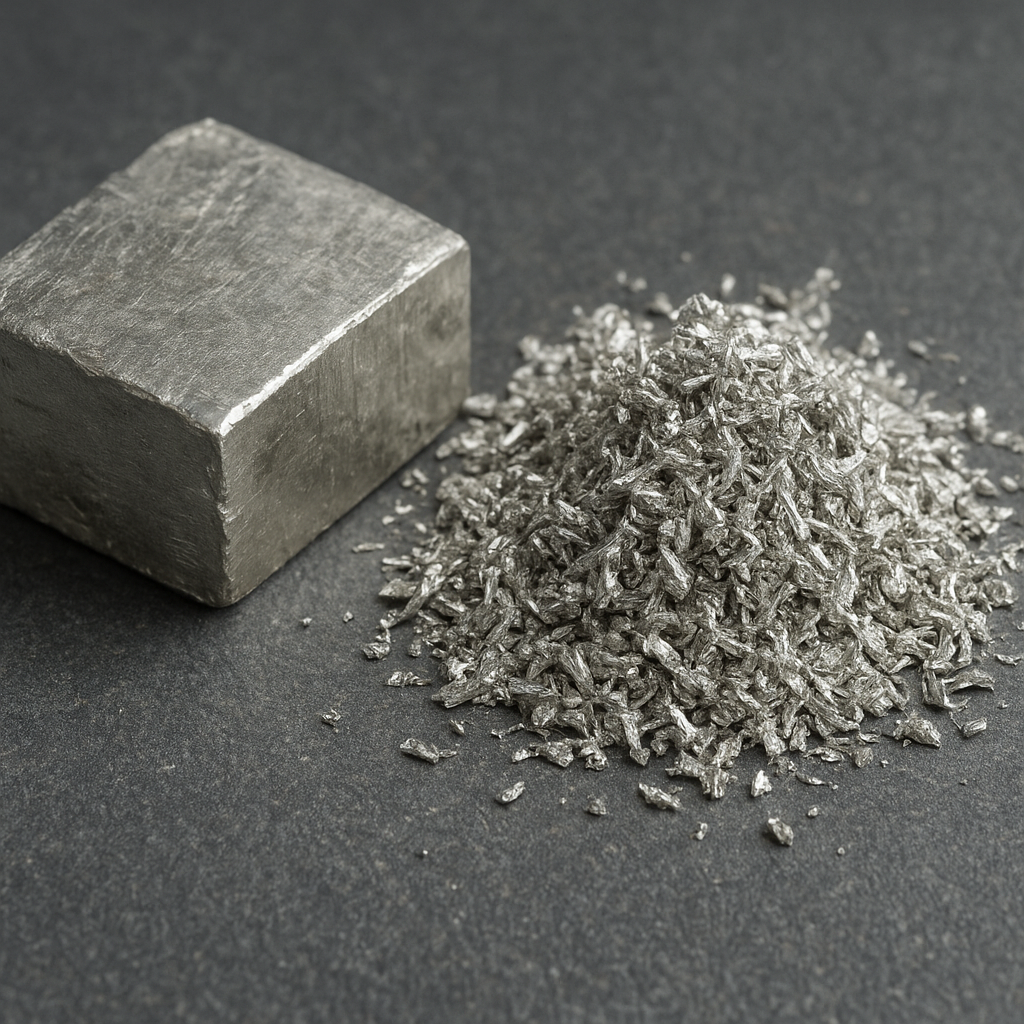
Neodymium is a quietly influential element whose applications touch many modern technologies, from tiny headphones to the motors that will drive future transportation. This article explores what neodymium is, where it is found, how it is produced and processed, and the surprising ways it shapes industry, technology, and geopolitics. Along the way, I will highlight scientific properties, commercial uses, environmental issues, and some emerging research that make neodymium both valuable and controversial.
What neodymium is: identity, properties and history
The element at the center of this story is neodymium, atomic number 60, a member of the lanthanide series on the periodic table. As a metallic element it is silvery and relatively soft, with chemical behavior typical of the heavier rare-earths: it most commonly exhibits the +3 oxidation state in compounds, forms complex ions in solution, and is readily oxidized in air. The electron configuration and atomic structure give neodymium notable magnetic and optical properties when incorporated into alloys and matrices.
The discovery and naming of neodymium have an interesting historical twist. In the late 19th century, chemists working with mixtures from mineral deposits believed they had identified a substance called „didymium.” Later, careful separations revealed that didymium was actually a mixture of two distinct elements; one of them was named neodymium, from the Greek for „new twin.” That era of chemistry—fractional crystallization and painstaking separations—set the tone for how rare-earth chemistry would be pursued for many decades.
Physical and chemical characteristics
- Metallic character: malleable and ductile in pure form, although it tarnishes easily in air.
- Common oxidation state: +3 in most stable compounds; a few +2 states can be stabilized under special conditions.
- Optical behavior: certain neodymium-doped glasses and crystals show sharp absorption and emission bands, making them useful as active laser media.
- Magnetic significance: when alloyed appropriately, neodymium atoms contribute to very strong magnetic anisotropy and high remanence—properties prized in permanent magnet technology.
Where neodymium occurs and how it is produced
Neodymium is not found in nature as a free metal. Instead it occurs in several mineral forms, typically together with other rare-earth elements, which is why the group is collectively known as the rare earths. Major mineral hosts include bastnäsite and monazite, both of which are carbonate or phosphate minerals rich in light rare-earth elements (LREEs). In some regions, notably parts of Southeast Asia, neodymium and other REEs occur in so-called ion-adsorption clays, which are easier to leach than hard-rock ores.
The global geography of neodymium production is uneven. For decades China has dominated mining and processing of rare earths, due to abundant deposits and an integrated refining industry. Other countries with significant reserves or production capacity include the United States, Australia, Brazil, and certain African nations. In recent years there has been renewed interest in diversifying supply chains and developing alternative sources outside of China.
From ore to separated metal
Producing usable neodymium involves multiple stages, each technically demanding:
- Mining and concentration: ore is mined, crushed and concentrated to increase the rare-earth content.
- Physical and chemical separation: because ores contain mixtures of several rare-earth elements, separation of neodymium from neighbors like praseodymium, cerium and samarium typically requires solvent extraction, ion-exchange, or other separation chemistry. These processes are energy- and chemistry-intensive.
- Reduction and alloying: once neodymium oxide or salts are separated, they are reduced (commonly using calcium or other reducing agents) to produce metallic neodymium or master alloys (for example, with iron and boron) for magnet production.
Each step can have significant environmental impacts if not managed properly, due to the large volumes of tailings, use of acids and solvents, and the potential for radioactive elements (thorium and uranium) to be associated with some rare-earth ores.
Primary applications and why neodymium matters
The primary reason neodymium is considered strategically important today is its central role in high-performance permanent magnets, especially the NdFeB (neodymium-iron-boron) family. These magnets have revolutionized designs across consumer electronics and heavy industry by offering exceptional strength and energy density in compact forms.
Magnets and motors
Neodymium-containing magnets deliver high magnetic coercivity and remanence, which means they can generate powerful magnetic fields without large size or weight. This enables several key applications:
- Portable electronics: loudspeakers, microphones, and compact actuators rely on strong, small magnets.
- Data storage: hard disk drive motors and actuators historically used Nd magnets (though solid-state storage has changed demand patterns).
- Electric vehicles and wind turbines: the high torque and efficiency of permanent-magnet motors depend on strong magnetic materials. As the automotive industry shifts toward electrification, demand for Nd-based magnets has surged.
Because motors for traction and renewable-energy generators benefit directly from magnet performance, neodymium links to two global trends: electrification and decarbonization.
Lasers, glass and optical uses
Another major area of use is in optical materials. Lasers based on neodymium-doped crystals and glasses—most famously Nd:YAG (neodymium-doped yttrium aluminum garnet)—are workhorses in industry and medicine. They are used for metal cutting and welding, engraving, dermatological and ophthalmic procedures, and in scientific instruments. Neodymium-doped glass absorbs and emits at wavelengths convenient for many laser designs.
Neodymium also acts as a colorant in glass, producing a distinctive violet or purple hue that has been prized in decorative and art glass. Some historic glassworks inadvertently show neodymium coloration because trace amounts of rare earths in raw materials impart subtle tints.
Other applications
- Alloys: neodymium is alloyed with other metals to create specialized materials with improved mechanical or magnetic properties.
- Catalysts and chemical uses: rare-earth elements can serve as catalysts in petroleum refining and other chemical processes, though neodymium itself is less prominent here than some neighboring lanthanides.
- Phosphors and lighting: certain neodymium compounds can be components of phosphors and specialty lighting applications.
Industry, supply chains and geopolitical context
Because neodymium is so integral to modern high-tech hardware, its supply chain has strategic implications. The fact that extraction, refining, and magnet manufacturing are concentrated geographically raises concerns about supply security. Governments and industry players have responded in various ways:
- Developing alternative mines and refining capacity in countries with known reserves.
- Investing in recycling technologies to recover neodymium and other rare earths from end-of-life products.
- Researching substitute materials and magnet designs that either reduce critical element content or use more abundant alternatives.
Market dynamics are influenced by demand from the automotive and renewable-energy sectors. As electric vehicle penetration increases and wind power scales up, the demand profile for high-performance magnets — and thus for neodymium — is expected to remain strong. Price volatility can be significant, driven by policy changes, export controls, and shifts in mining output.
Recycling and circular economy
Recycling is becoming a major focus for reducing dependence on primary mining. Recovering neodymium from discarded magnets, hard drives, and motors presents technical challenges: magnets are often embedded in assemblies and alloyed with other elements that complicate recovery. Nevertheless, technologies are maturing:
- Hydrometallurgical routes dissolve materials and then separate REEs using selective precipitation or solvent extraction.
- Pyrometallurgical routes melt or burn surrounding components to isolate alloy phases.
- Direct physical recovery or re-magnetization can be feasible for certain end-of-life products.
Scaling recycling will require better collection systems, standardization for disassembly, and economic incentives to make recovery competitive with primary production.
Environmental, health and safety considerations
Mining and processing of rare-earth materials, including those containing neodymium, carry environmental risks if not properly managed. Tailings can contain radioactive elements like thorium and uranium, and chemical separation often uses acids and organic solvents that must be handled with care. Poorly regulated operations have led to contamination of soil and water in some regions, attracting public scrutiny and regulatory responses.
From a human health perspective, metallic neodymium and many of its compounds have relatively low acute toxicity compared to heavy metals like lead or mercury, but inhalation of fine particulates and dust can pose occupational hazards. Safety protocols in machining, alloying and handling must emphasize dust control, ventilation, and appropriate personal protective equipment.
Scientific frontiers and emerging research
Research into neodymium-related science continues on several fronts, often driven by a mix of curiosity and practical need. Some notable directions include:
Materials science and magnet optimization
Scientists are constantly seeking improved magnet compositions that enhance temperature stability, reduce reliance on critical dopants (like heavy rare-earth elements), or lower manufacturing costs. Tweaks to microstructure, grain boundary chemistry, and the addition of small alloying elements can significantly alter performance. Innovations in manufacturing—such as additive manufacturing and rapid solidification—are also being explored for magnet production.
Quantum and photonic applications
Because of its well-defined optical transitions, neodymium can be integrated into photonic devices and quantum optics experiments. Rare-earth ions in crystalline hosts are being tested as quantum memory elements or for coherent optical processing because they can show long coherence times under the right conditions.
Substitutes and strategic diversification
Researchers evaluate alternative magnetic materials (e.g., ferrites, Alnico, or emerging iron-nitride compounds) and system-level design changes (such as reluctance motors) that reduce dependency on rare-earth magnets. In parallel, policy and investment aim to diversify the raw material base and build refining capability in new geographies.
Interesting cultural and niche uses
Beyond industrial importance, neodymium has left marks in unexpected places. Collectors and artisans prize neodymium-doped glass for its shifting color under different lighting conditions—an effect that can look almost magical as the glass transitions between lavender, purple and gray-blue. In art and restoration, detecting trace neodymium in pigments or glass fragments helps archaeologists and conservators understand historical materials and trade routes.
In consumer culture, the convenience of lightweight high-performance magnets has enabled designs that would have been impractical before: ultra-thin headphones with powerful drivers, compact motors in drones, and slim speakers in portable devices all owe something to neodymium technology.
Risks, controversies and the road ahead
As demand grows, tensions between economic opportunity and environmental stewardship intensify. Some controversies center on mining practices in developing regions, local community impacts, and the geopolitics of supply concentration. At the same time, the technological momentum behind electrification and renewable energy creates strong pressure to secure reliable sources of neodymium.
Addressing these challenges calls for a combination of approaches: improved mining standards and remediation practices, investment in recycling and urban mining, strategic stockpiles and trade policies, and accelerated research into both enhanced magnet technology and viable substitutes. Multidisciplinary cooperation—linking materials science, environmental engineering, economics and policy—will shape how sustainably and equitably the world can use this remarkable element.