
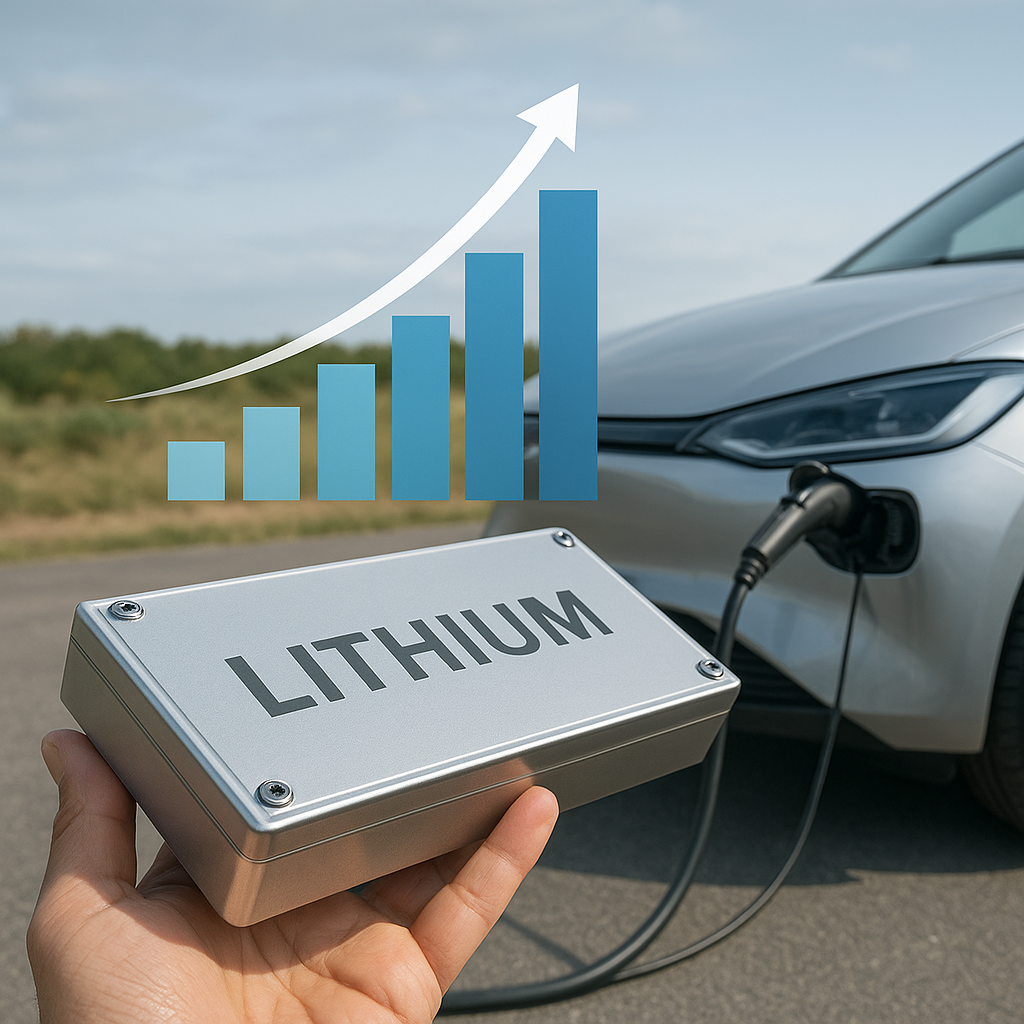
The rapid electrification of transport is reshaping global commodity markets, with lithium becoming a strategic focal point for industry planners, governments, and investors. This article examines the projected trajectory of future demand for lithium in the electric vehicle industry, exploring the drivers behind growth, the constraints and opportunities in supply, technological shifts in batteries, and the environmental and policy dimensions that will shape outcomes. Readers will find an analysis of markets, supply chain resilience, recycling prospects, and the broader implications for energy systems and industrial strategy.
Market projections and primary demand drivers
Analysts forecast a steep rise in lithium demand linked to the global transition to electric vehicles and the broader push for decarbonization. Vehicle electrification targets set by many nations and automakers, combined with improving economics of battery electric vehicles (BEVs), are increasing the installed base of battery capacity at a rate that outpaces historical projections. Key demand drivers include:
- Policy mandates and incentives that accelerate EV adoption.
- Declining costs of battery packs per kilowatt-hour, making EVs more competitive with internal combustion alternatives.
- Corporate fleet electrification and ride-hailing services electrifying for operating cost savings and regulatory compliance.
- Expansion of energy storage systems that use similar chemistries and cathode materials, creating secondary sources of demand.
Integrated modeling of vehicle fleets, battery chemistries, and manufacturing throughput suggests that demand for lithium carbonate equivalent (LCE) could grow severalfold within the next two decades. Factors such as average battery size per vehicle and the share of BEVs versus hybrid vehicles significantly influence total raw material requirements. For instance, higher average battery capacities per vehicle—driven by consumer preference for longer range—translate directly into larger per-vehicle lithium needs.
Supply chains, mining, processing, and geopolitical risks
Meeting the rising supply needs for lithium requires expansion across the resource-to-refinery chain: discovery and extraction, chemical conversion, and battery-grade material production. There are several dominant sources of lithium today—brine deposits, hard-rock spodumene, and emerging direct lithium extraction (DLE) technologies—each with distinct cost and environmental profiles.
Resource types and production dynamics
- Brine operations, predominant in the Lithium Triangle of South America, offer large-scale production but are typically slower to ramp due to evaporation-based processes.
- Hard-rock mining, especially in Australia, produces spodumene that can be converted to LCE quickly and has been the backbone of recent supply growth.
- DLE and geothermal co-production are technological paths that could raise recoverable volumes while reducing land and water footprints.
Political stability, export controls, and processing capacity concentration create geopolitical risks. Some countries host significant lithium reserves but lack upstream or downstream processing infrastructure, creating chokepoints where ore is exported and value added is captured elsewhere. This has prompted investment into refining capacity in key consuming regions to secure supply chains.
Technology and chemistry changes that alter material intensity
Battery innovation is a critical determinant of long-term lithium demand. Changes in cell chemistry, energy density, and pack-level design can alter the amount of lithium required per unit of energy stored. Key trends to watch:
- Shift toward high-nickel cathodes (e.g., NMC 811) reduces reliance on cobalt but still requires lithium for the anode and electrolyte.
- Development of lithium iron phosphate (LFP) batteries, which have lower energy density but avoid nickel and cobalt, affects lithium intensity per kWh differently depending on cell design.
- Solid-state batteries and silicon-rich anodes promise higher energy density and potentially lower lithium consumption per kWh if they lead to reduced overall cell mass for a given capacity.
While some innovations could lower lithium intensity per kWh, others—such as larger batteries for longer ranges or heavier-duty vehicles—may increase absolute lithium demand. The net effect depends on the mix of technologies adopted globally and the pace at which new chemistries achieve commercial scale.
Recycling, circular economy, and material security
Recycling is often cited as a partial solution to raw material constraints. As the first large cohorts of EV batteries reach end-of-life over the coming decade, the volume of secondary lithium available for re-introduction into supply chains will rise. However, several factors limit how rapidly recycling can alleviate primary demand:
- Timing: significant volumes of retired batteries only become available after many years of vehicle operation.
- Collection and logistics: efficient systems for retrieving, transporting, and sorting batteries are required.
- Processing economics: recovering lithium economically at scale remains more challenging than recovering higher-value metals like cobalt and nickel, though technological advances are improving recovery rates.
Policy frameworks and industry initiatives that standardize battery design, labeling, and end-of-life responsibilities can enhance recycling rates. A mature circular system could significantly reduce the need for virgin mining over the very long term, but in the near- and medium-term, primary production will remain the dominant source of lithium for the EV industry.
Environmental, social and governance (ESG) considerations
Environmentally responsible extraction and processing will be pivotal for the social license to operate in many regions. Concerns over water use in arid areas, tailings management, and local community impacts are driving stricter permitting regimes and higher ESG expectations from financiers and automakers. Important considerations include:
- Water footprint of different extraction methods and potential impacts on agriculture and ecosystems.
- Greenhouse gas emissions associated with mining and refining operations.
- Community consultation, indigenous rights, and benefit-sharing mechanisms.
Automakers and battery manufacturers are increasingly requiring traceability and sustainability certification for critical minerals. Investments in low-carbon processing, renewable-powered facilities, and community engagement programs are becoming prerequisites for long-term project viability. This trend amplifies the need for transparent supply chains and comprehensive lifecycle assessments that factor in both direct and indirect environmental impacts.
Policy, market instruments, and industry responses
Government policy will heavily influence the pace and geographical distribution of both demand and supply. Incentives for EV adoption, tariffs, strategic stockpiling, and subsidies for domestic processing can accelerate investment in local supply chains. Market instruments such as long-term offtake agreements, futures markets for battery metals, and public-private partnerships are already reshaping the investment landscape.
Strategic options for stakeholders
- Automakers: diversify supplier portfolios, invest in upstream projects, and design vehicles for easier battery recycling.
- Governments: support processing capacity, streamline permitting for critical mineral projects, and implement standards for sustainable sourcing.
- Investors: evaluate projects on both reserve quality and ESG credentials, considering long lead times and price cyclicality.
Implications for the broader energy transition and grid integration
Beyond passenger EVs, the electrification of commercial transport, buses, light trucks, and two- and three-wheeler segments, as well as expansion of stationary storage for renewable energy integration, will further increase demand for lithium-containing batteries. Grid-scale and distributed storage deployments provide flexibility services, enabling higher shares of variable renewables. This creates a cross-sectoral competition for the same materials, meaning that planning must consider the total system needs rather than treating transport in isolation.
Additionally, the interplay between vehicle-to-grid (V2G) technologies and battery lifecycle management could optimize resource use by offering second-life applications for EV batteries before recycling, thereby stretching the effective material utility over multiple use phases.
Key uncertainties and scenarios to watch
Several variables will determine the trajectory of lithium demand:
- Adoption rates of EVs across different markets and vehicle segments.
- Rate of battery innovation and shifts in chemistry that alter material intensity.
- Speed and scale of new mining, DLE, and refining projects coming online.
- Effectiveness of recycling and second-life markets in offsetting primary demand.
- Policy decisions regarding trade, environmental standards, and strategic reserves.
Robust scenario planning should incorporate both high-demand pathways—driven by rapid EV adoption and rising average battery sizes—and lower-demand pathways where breakthroughs in energy density or alternative storage technologies reduce reliance on lithium. Stakeholders that hedge across scenarios by investing in diversified supplies, recycling capabilities, and technology R&D will be better positioned to manage volatility.
Strategic takeaways for industry participants
Proactive management of supply risk and investment in sustainable practices are central to securing the materials needed for electrification. Companies that combine long-term procurement contracts, vertical integration into refining, commitments to recycling, and participation in innovation to lower material intensity will be most resilient. The path for lithium demand is shaped by technical, economic, and policy forces: anticipating their interaction and preparing flexible strategies will allow industry players to navigate a fast-evolving landscape while supporting the broader goals of decarbonization and sustainability in transport and energy systems.
