
Pink quartz, often referred to as rose quartz, has long been admired for its gentle blush of color that seems to carry both warmth and serenity. This mineral belongs to the quartz family, which makes it structurally strong and widely available, yet its delicate shade sets it apart from other varieties. The coloration is usually linked to trace amounts of titanium, iron, or manganese within the crystal lattice, giving it an appearance that is at once refined and natural.
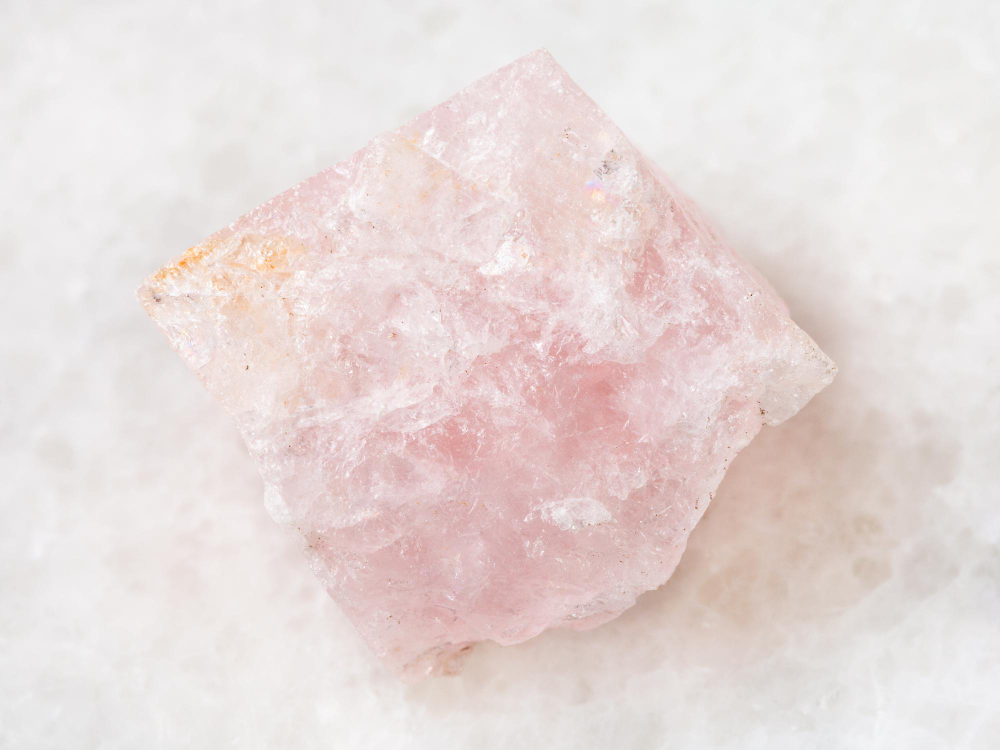
Unlike some gemstones that dazzle with brilliance, pink quartz captures attention through soft translucence. Light filters through its structure in a subtle, almost ethereal way, which makes it particularly suitable for decorative objects, fine jewelry, and even architectural applications. What fascinates many collectors and geologists alike is the way each specimen tells a slightly different story, with hues ranging from barely perceptible pale pink to rich, velvety tones that resemble blossoming petals.
Geological formation and unique properties of pink quartz
Quartz is one of the most abundant minerals on Earth, yet pink quartz forms under very specific conditions. It typically develops in pegmatites, where slow cooling of silica-rich magma allows larger crystals to emerge. The mineral’s durability, registering 7 on the Mohs scale of hardness, makes it highly resistant to scratching and ideal for long-lasting uses. At the same time, its glass-like luster and conchoidal fracture reflect the versatility of quartz as both an industrial and ornamental material.
Scientists and lapidaries value pink quartz for its clarity and uniform coloration, although perfectly transparent pieces remain rare. Most specimens exhibit a cloudy or milky quality, which only enhances their gentle charm rather than detracting from their worth. When cut and polished, the mineral reveals depth and softness that synthetic imitations rarely achieve, further highlighting its authenticity.
Cultural significance and contemporary use of pink quartz
Beyond its mineralogical characteristics, pink quartz carries a cultural weight that stretches across civilizations. Ancient societies often regarded it as a stone of harmony and affection, using it in amulets and carvings intended to inspire trust and closeness. Modern designers frequently choose it for interior accents, from countertops to sculptural pieces, because its soothing tone adapts effortlessly to both contemporary and classical styles.
In the world of jewelry, pink quartz continues to enjoy enduring popularity. Rings, pendants, and bracelets crafted from this mineral appeal not only because of their aesthetic beauty but also because of their durability and accessibility. The balance of elegance and strength ensures that pink quartz remains a timeless choice, valued equally by gem enthusiasts and everyday wearers.