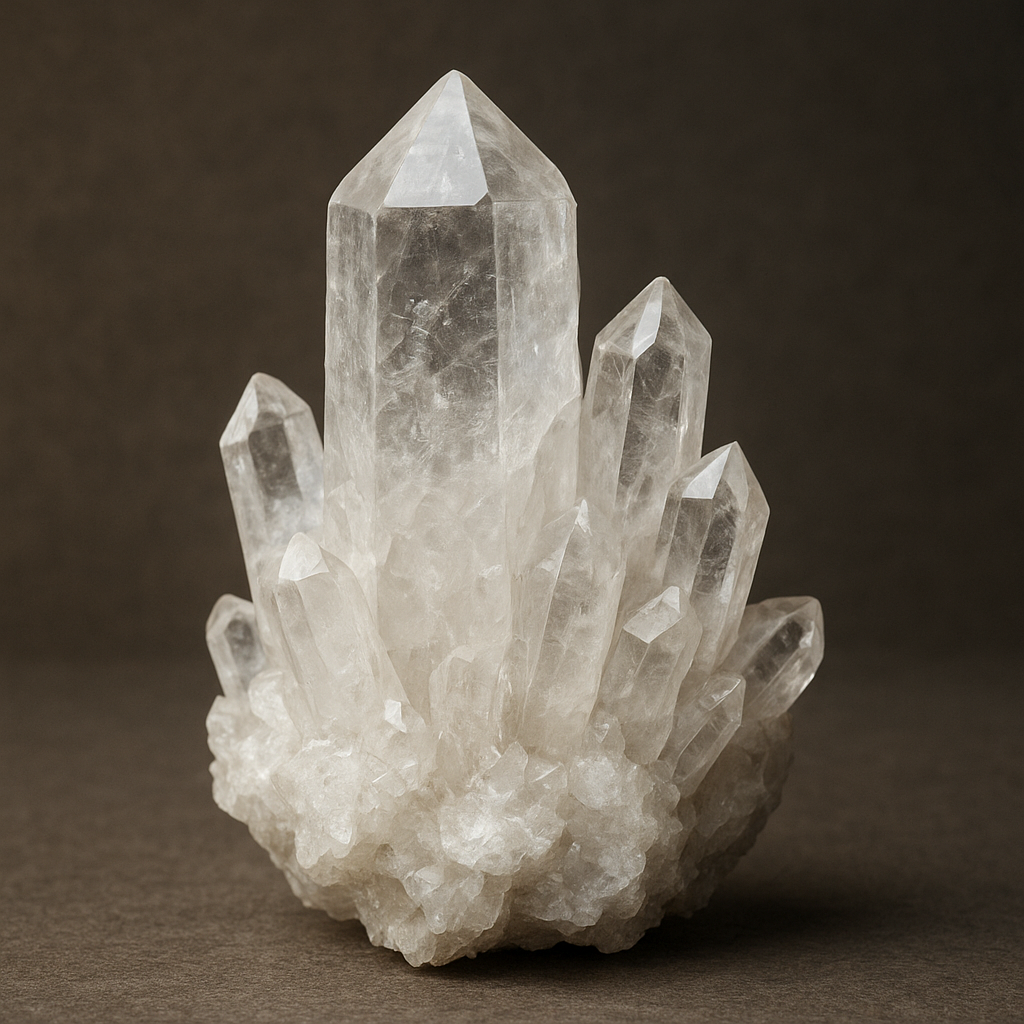

Hollandite is a fascinating manganese oxide mineral that bridges the worlds of geology, materials science and environmental technology. Best known as a naturally occurring component of some hydrothermal and metamorphic manganese deposits, it has gained renewed attention because its crystal structure can host a wide variety of cations, including elements of environmental concern such as barium, lead and even radioactive cesium. This combination of geological relevance and technological promise makes hollandite an important subject of study both in the field and in the laboratory.
Chemical composition, crystal structure and physical properties
At its core, hollandite is a mixed-valence manganese oxide with a typical idealized formula Ba(Mn4+)8O16, although in nature and in synthetic materials the composition is much more variable. The mineral belongs to a broader group of tunnel-structure manganese oxides sometimes referred to as the hollandite group. In these structures, a framework of edge-sharing MnO6 octahedra forms channels, or tunnels, that run parallel to one crystallographic axis. These tunnels are large enough to accommodate relatively big cations such as Ba2+, K+, Sr2+, Pb2+ or Cs+, which explains much of the scientific interest in hollandite-like phases.
The crystal structure of hollandite is tetragonal and consists of double chains of MnO6 octahedra linked to form characteristic 2 × 2 tunnels. These tunnels are the key to many of the mineral’s properties. They provide sites for charge-balancing cations, control the diffusion of ions through the structure and influence the electrical and magnetic behaviour. Because manganese can exist in multiple oxidation states (commonly Mn3+ and Mn4+ in these oxides), the framework can adapt to different charge requirements, making hollandite a flexible host lattice in both natural and synthetic environments.
In hand specimen, hollandite typically appears as dark grey to black, with a metallic to submetallic lustre. It often forms fine-grained aggregates, acicular or prismatic crystals, or fibrous masses intergrown with other manganese minerals. Individual crystals may show striations along their length, reflecting the tunnel-oriented structure. The mineral is opaque in transmitted light but can be studied in reflected light microscopy, where it displays characteristic anisotropy and reflectance patterns. Its hardness is moderate (usually around 4–6 on the Mohs scale), and its density is relatively high because of the presence of heavy cations such as barium.
An important physical aspect is the tendency of hollandite to incorporate trace elements. Because the tunnels can host different cations, the mineral often carries measurable amounts of elements like barium, strontium, lead, and sometimes rare earth elements. This capacity has turned hollandite-group phases into useful geochemical indicators. The distribution of these elements can reveal the conditions under which the mineral formed, such as the temperature, fluid composition and redox state. Moreover, in synthetic analogues, the same behavior is exploited deliberately to trap hazardous elements in a stable crystal framework.
From a thermodynamic standpoint, hollandite is usually stable under relatively oxidizing conditions where Mn is largely in the +4 state. Under more reducing environments, other manganese minerals, such as hausmannite, bixbyite or manganite, may become more stable. Understanding these stability fields is essential for interpreting metamorphic and hydrothermal processes and for designing processes in which hollandite-type oxides are produced or used in technological applications.
Relation to the hollandite mineral group
The name hollandite is commonly used both for the specific Ba-rich mineral and for the structural group that includes several related phases. Within this broader group, cations such as K, Ba, Sr and Pb occupy the tunnel sites, while manganese is partly substituted by other transition metals like Fe, Ti or even Cr. Examples of related minerals include cryptomelane (K-rich), coronadite (Pb-rich) and manjiroite (Na-rich). All share the fundamental 2 × 2 tunnel motif, which is why they are often grouped under the structural term “hollandite-type” even when their compositions differ significantly from the pure Ba-dominant endmember.
This structural family is particularly important in materials science, where the term “hollandite-type oxide” often refers to synthetic compounds that may not be found in nature at all but retain the same tunnel architecture. In nuclear waste research, for instance, hollandite-type titanates are engineered to host cesium and other radionuclides, drawing direct inspiration from the accommodating nature of natural hollandite’s channels.
Geological occurrence and global distribution
Hollandite occurs in a wide range of geological settings, though it is rarely the dominant mineral in an ore body. It is most commonly associated with manganese-rich deposits that formed under hydrothermal, sedimentary or metamorphic conditions. Because of its stability under oxidizing conditions and its ability to incorporate large cations, hollandite frequently appears as a late-stage phase overprinting or replacing other manganese minerals.
Hydrothermal and vein-type deposits
One of the key environments where hollandite is found is in hydrothermal veins and fracture fillings. In such systems, hot, manganese-bearing fluids migrate through cracks in the crust, precipitating a suite of manganese oxides as they cool or react with surrounding rocks. Hollandite can crystallize alongside pyrolusite, cryptomelane, psilomelane-group minerals and other Mn oxides. These assemblages are often associated with polymetallic systems containing lead, zinc, silver or copper, and hollandite may incorporate some of these elements into its lattice.
Vein-type occurrences have been documented in diverse localities, including parts of Europe, Asia, Africa and the Americas. In many cases, hollandite forms slender prisms or fibrous aggregates lining fracture walls, sometimes showing radial or sheaf-like habits. Such textures can preserve fluid-flow directions and the sequence of mineralizing events, helping economic geologists reconstruct the history of ore-forming systems.
Metamorphic manganese deposits
Another common occurrence is in regionally metamorphosed manganese-rich sediments, sometimes referred to as manganiferous schists, quartzites or banded formations. These rocks may have started as marine manganese ooze or Mn-rich chemical sediments that were later buried, heated and deformed during tectonic events. Under suitable pressure–temperature conditions and in the presence of oxidizing fluids, earlier Mn phases transform into assemblages dominated by Mn oxides and silicates, among which hollandite can play a significant role.
In such metamorphic contexts, hollandite often coexists with minerals like braunite, hausmannite, rhodonite, spessartine garnet and various Mn-bearing amphiboles and pyroxenes. The precise buffering of oxygen fugacity and the availability of large cations like Ba and K often determine whether hollandite forms or whether other phases such as cryptomelane or coronadite are more abundant. These assemblages are valuable indicators of metamorphic grade and fluid composition. Mineral geochemists commonly analyze hollandite grains in these rocks to infer the mobility of elements like barium and lead during regional metamorphism.
Supergene and weathering environments
In the near-surface environment, hollandite may form as a supergene mineral in the oxidation zones of Mn-rich ore deposits. Here, primary sulfides and carbonates are exposed to oxygenated meteoric waters, releasing manganese and other metals into solution. As these fluids percolate downward, they can precipitate Mn oxides, including hollandite, along with goethite, hematite and secondary clay minerals. The presence of barium in the host rock or fluids encourages the crystallization of Ba-dominant hollandite instead of K- or Pb-bearing analogues.
These supergene occurrences are crucial from an environmental perspective because manganese oxides are among the most reactive solid phases in soils and regolith. Hollandite and related minerals can strongly sorb or structurally incorporate trace metals, influencing their mobility and bioavailability. Studying natural hollandite in weathering profiles aids in understanding the long-term fate of contaminants in mine-impacted landscapes and in natural terrains enriched in heavy metals.
Notable localities and type area
The mineral was first described from manganese-bearing deposits in the Belgian Congo (now the Democratic Republic of the Congo) and was named in honor of the British geologist Sir Thomas Henry Holland. Since that original recognition, hollandite has been reported from many countries, commonly in association with major manganese districts. Significant occurrences include parts of central and southern Africa, eastern Europe, the Indian subcontinent, Australia and several regions of North and South America where manganese ore bodies are exploited or studied.
In some of these regions, hollandite is abundant enough to be recognized in standard petrographic and ore microscopy studies, while in others it appears only as a minor accessory phase identifiable chiefly by X-ray diffraction or electron microprobe analyses. Regardless of its abundance, its presence can carry important geochemical information and occasionally influences the beneficiation of Mn ores, especially when barium content affects processing steps or the quality of manganese concentrates.
Applications, technological relevance and research directions
Beyond its role as a natural mineral, hollandite has become a model structure for a wide range of technological materials. The distinctive tunnel architecture and flexible chemistry of hollandite-type oxides are central to their potential uses in nuclear waste immobilization, catalysis, battery technology, environmental remediation and electronic devices. Synthetic analogues are often engineered with compositions that differ from natural Ba(Mn8)O16 but retain the same structural framework.
Immobilization of radioactive cesium
One of the most intensively studied applications involves the immobilization of cesium, particularly the long-lived radioisotope cesium-137. In the context of high-level nuclear waste management, scientists have designed hollandite-type titanates in which Cs+ ions occupy the tunnels of a robust oxide lattice. These ceramics aim to lock cesium into a durable phase that can withstand radiation damage, elevated temperatures and interaction with groundwater over geological timescales.
Hollandite-type titanates typically replace much of the manganese with titanium and other transition metals while preserving the tunnel topology. Cesium ions are accommodated in the channels, balanced by the charge of Ti and other framework cations. Extensive laboratory studies show that these phases have relatively low leach rates and retain cesium in their structure under a wide range of conditions. Consequently, hollandite-like ceramics are key components in some proposed multiphase waste forms, where they coexist with zirconolite, perovskite and other host phases, each optimized for different radionuclides.
The choice of a hollandite-type host is not coincidental; it is directly inspired by the natural mineral’s capacity to incorporate large cations and remain stable in oxidizing environments. By studying the alteration and weathering of natural hollandite in geological settings, researchers gain insight into how engineered hollandite-type phases might behave over tens of thousands of years in a repository environment.
Energy storage and ion transport
The tunnel structure of hollandite-type manganese oxides also lends itself to electrochemical applications, especially as cathode materials in lithium and sodium-ion batteries. In these systems, small alkali ions move into and out of the tunnels during charge and discharge cycles. The framework of MnO6 octahedra provides redox-active centers, while the tunnels act as diffusion pathways.
Compared to layered manganese oxides, tunnel structures can exhibit different transport properties and stability profiles. Some studies suggest that hollandite-type Mn oxides offer good cycling stability and reasonable capacity, especially in sodium-ion systems where the larger Na+ ion fits relatively comfortably into the 2 × 2 channels. However, challenges remain in controlling capacity fading, optimizing particle morphology and mitigating structural changes associated with repeated insertion and extraction of ions.
Even when not used directly as commercial cathodes, hollandite-type oxides serve as valuable model compounds for understanding how tunnel geometry, cation size and Mn oxidation state affect ion mobility and electrochemical performance. This knowledge is transferable to other energy storage materials and informs the design of improved cathode architectures.
Catalysis and environmental remediation
Manganese oxides are widely known for their catalytic activity in oxidation–reduction reactions, and hollandite-type phases are no exception. The mixed-valence Mn framework facilitates electron transfer, while the tunnels and external surfaces provide sites for adsorption and reaction of molecules. In heterogeneous catalysis, hollandite-type Mn oxides have been explored for applications ranging from the oxidation of volatile organic compounds to the decomposition of ozone and the treatment of wastewater contaminants.
In environmental systems, hollandite and related Mn oxides act as powerful natural oxidants. They can promote the oxidation of As(III) to the less mobile As(V), Cr(III) to Cr(VI), and various organic contaminants to more benign forms. At the same time, their surfaces can sorb metal cations strongly, either by surface complexation or by slow incorporation into the structure. The ability of hollandite to host elements like Pb and Ba is an extreme example of this tendency, but even trace amounts of other metals can be sequestered.
This combination of redox activity and sorption capacity has sparked interest in using synthetic hollandite-type oxides as engineered sorbents for remediation. For instance, finely divided hollandite-like materials could be added to contaminated soils or groundwater treatment systems to capture lead or other toxic metals. While practical deployment requires careful consideration of stability, regeneration and cost, the underlying mineralogy provides a robust scientific foundation.
Electronic and magnetic properties
The electronic structure of hollandite-type oxides is inherently complex, owing to the mixed-valence nature of manganese and the presence of different cations in the tunnels. As a result, these materials can exhibit a range of electronic behaviors, from semiconducting to more metallic, depending on composition and defect chemistry. Researchers have measured variable-temperature conductivity, thermopower and magnetic susceptibility to probe the underlying physics.
Magnetically, hollandite-type Mn oxides often show complicated ordering phenomena, with antiferromagnetic, ferromagnetic or spin-glass-like behavior reported in different compositions. The arrangement of Mn3+ and Mn4+ ions, their orbital states and the geometry of Mn–O–Mn linkages all play roles in determining the magnetic ground state. While these properties have not yet driven mainstream technological uses, they contribute to fundamental understanding of strongly correlated electron systems and may inspire future applications in spintronics or magnetoresistive devices.
Analytical methods and ongoing research
Because hollandite is often fine-grained and intergrown with other Mn oxides, advanced analytical tools are essential for its characterization. X-ray diffraction remains the primary method to identify its tetragonal tunnel structure, but electron microprobe analysis, scanning electron microscopy and transmission electron microscopy provide crucial information about composition, texture and defects. Spectroscopic techniques such as X-ray absorption spectroscopy shed light on Mn oxidation states and local coordination environments, while secondary ion mass spectrometry can reveal trace-element distributions within individual crystals.
Current research focuses not only on natural occurrences but also on synthetic analogues tailored for specific functions. Materials scientists experiment with varying tunnel cations and framework substitutions to optimize properties for energy storage, catalysis or immobilization of hazardous waste. In parallel, environmental scientists study how hollandite forms, dissolves and transforms in soils, sediments and mine tailings, aiming to predict the long-term fate of metals and radionuclides associated with Mn oxides.
These overlapping interests ensure that hollandite, once regarded as just one of many dark manganese minerals in complex ore assemblages, now occupies a central position in multidisciplinary research. Its natural occurrences help calibrate thermodynamic and kinetic models, while its synthetic counterparts act as platforms for designing advanced materials. In this sense, hollandite exemplifies how a mineral species can connect deep-time geological processes with modern technological challenges, from safe nuclear waste disposal to the development of more sustainable energy systems.